
Perge, Aspendos, Side & Kursunlu — Four Ancient Sites in a Day
Antalya
Overview
The stretch of coastline east of Antalya holds more Roman and Hellenistic ruins per kilometer than almost anywhere in the Mediterranean. This tour connects four of the best into a single day — each one different in character, all of them within an hour’s drive of your Antalya hotel.
You’ll start at Perge, a city that was already ancient when Alexander the Great marched through its gates in 333 BC. The colonnaded main street, Roman baths, and 12,000-seat stadium are all still legible in the landscape. From there, you’ll drive to Aspendos — home to a 2nd-century Roman theater so well preserved that it still hosts performances today. The acoustics are the proof: a coin dropped on the stage can be heard in the top row.
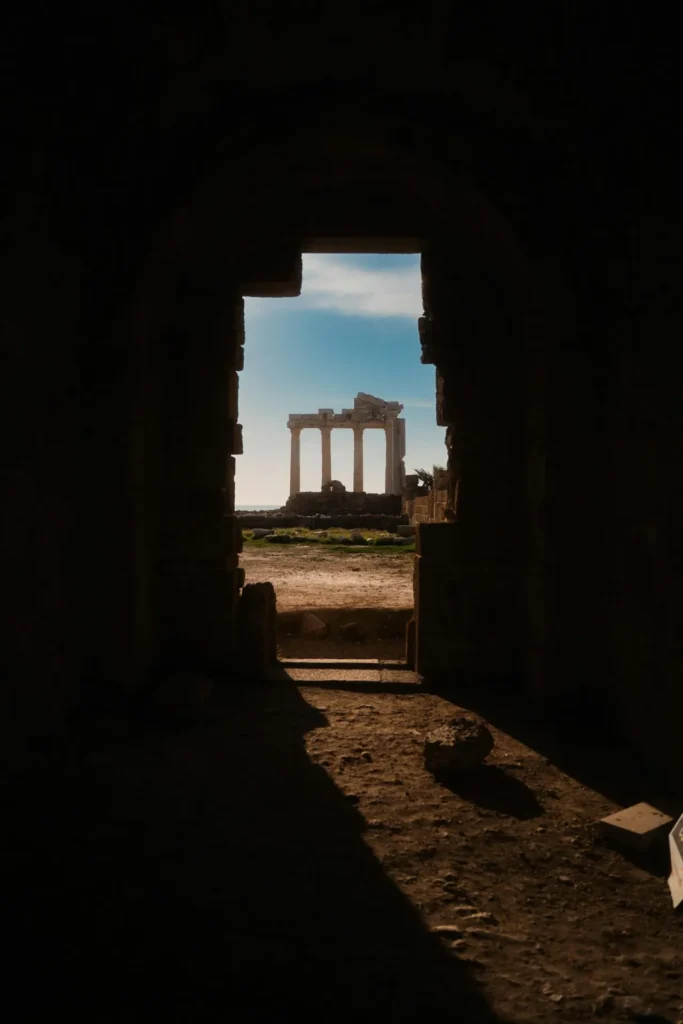
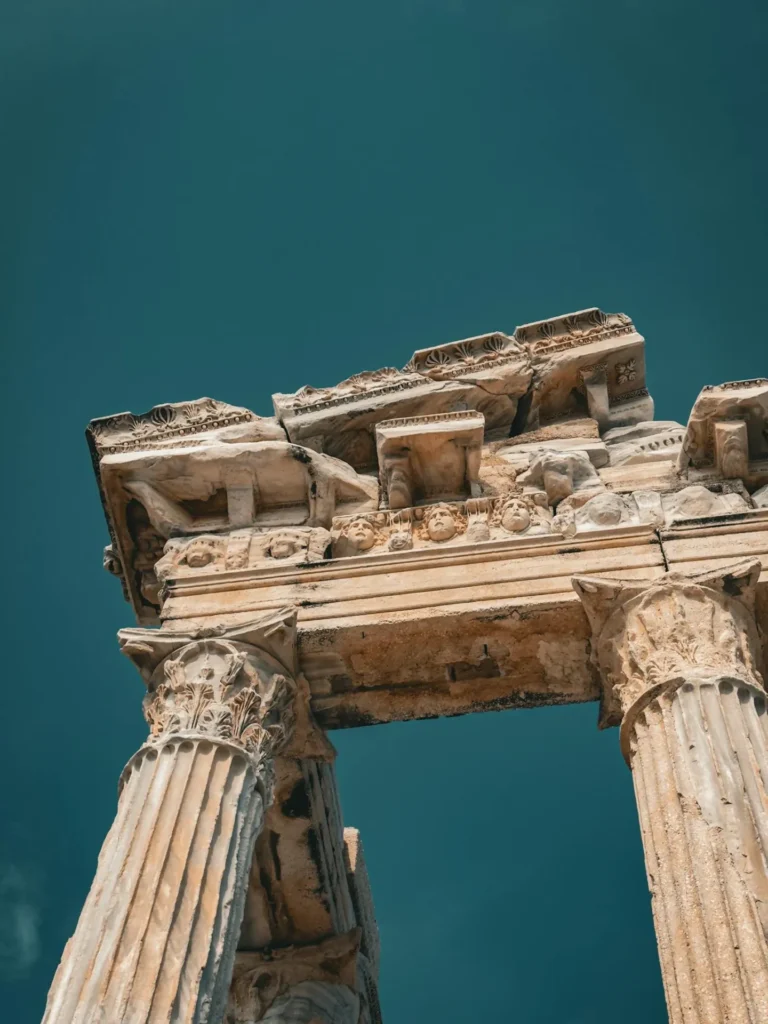
After lunch, you’ll head to Side — a harbor town where the Temple of Apollo stands five columns high against the sea, and a Roman theater faces the Mediterranean instead of a hillside. The day ends at Kursunlu Waterfall, where a river drops through a pine-forested canyon into turquoise pools — a different kind of ancient, and a cool finish to a warm day.
Day-by-Day Itinerary
Hotel Pickup
Your guide picks you up from your Antalya hotel. Drive east along the Mediterranean coast.
Perge Ancient City
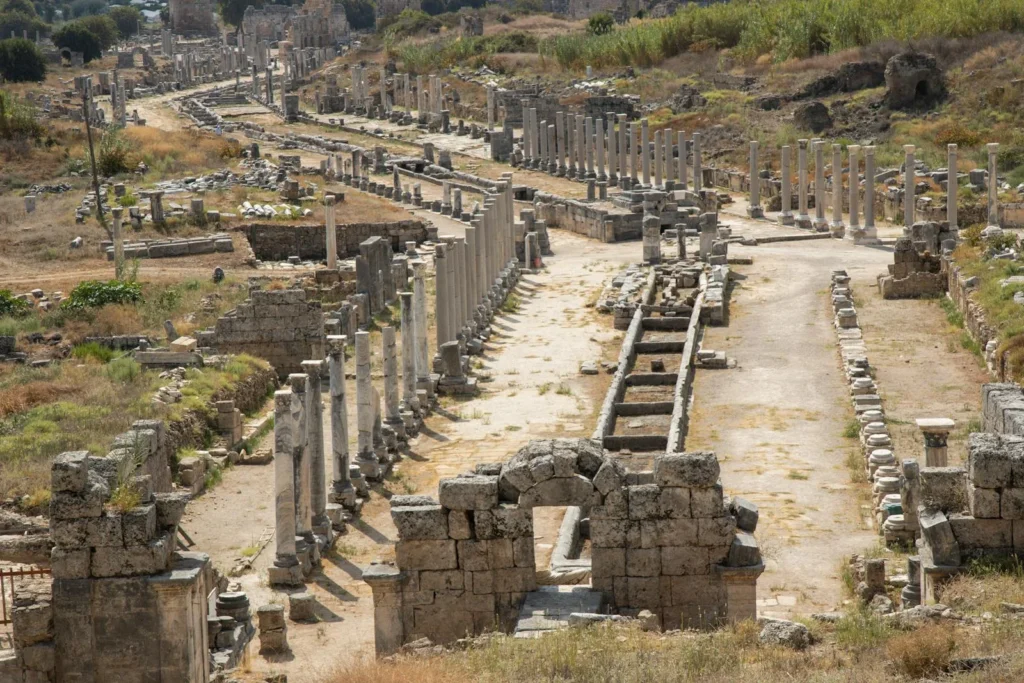
Perge was one of the most important cities in ancient Pamphylia — a crossroads of Greek, Roman, and early Christian influence. Your guide walks you through:
- Colonnaded main street — a wide avenue lined with columns, water channels running down both sides
- Roman baths — a sprawling bath complex with intact floor plans showing hot, warm, and cold rooms
- Stadium — seating for 12,000 spectators, with barrel-vaulted galleries beneath the stands that once housed shops
- Hellenistic Gate — the original entrance to the city, older than the Roman additions by centuries
This is where St. Paul began his first missionary journey into Anatolia. Your guide provides the context that connects the ruins to the people who built them.
Aspendos Theater
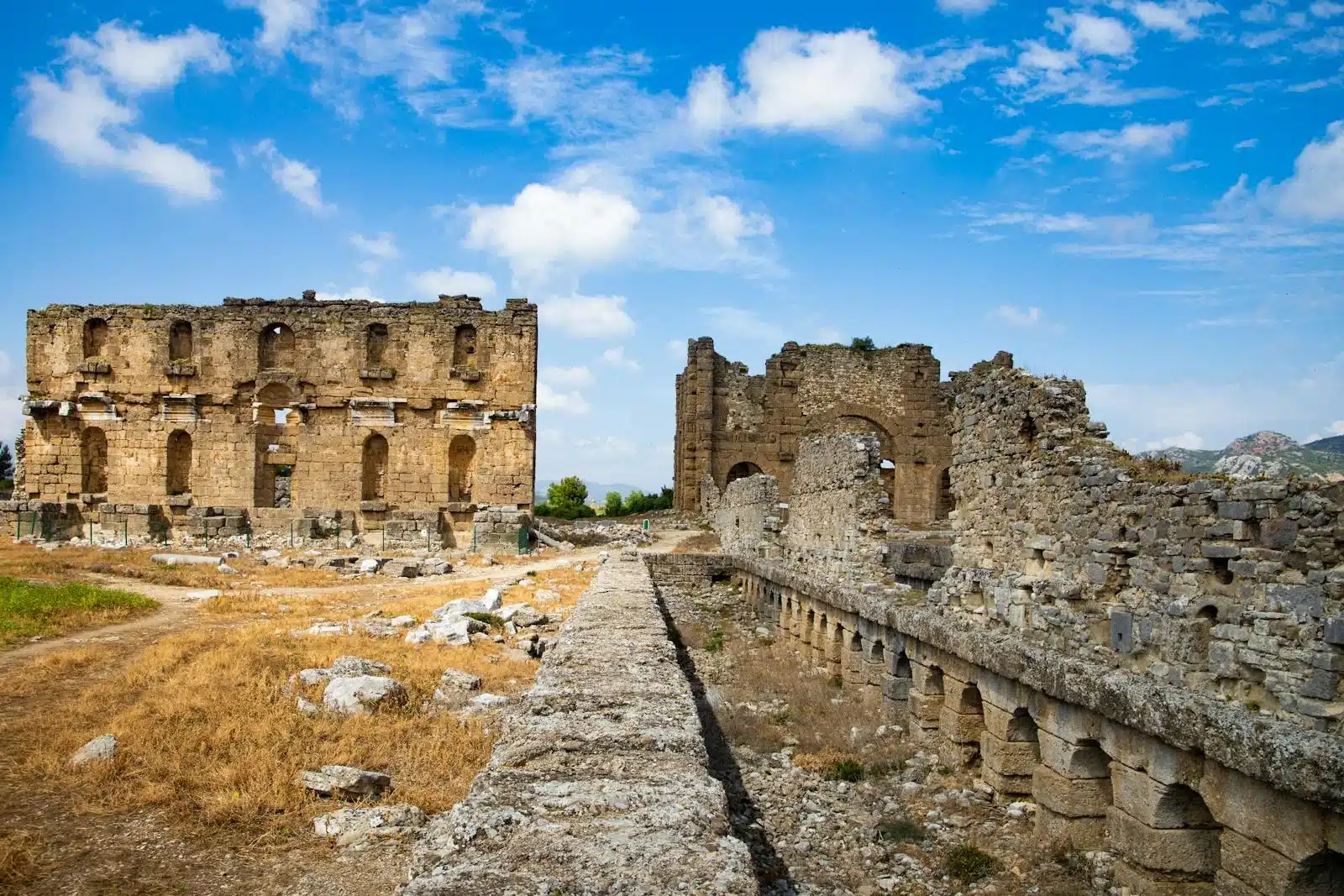
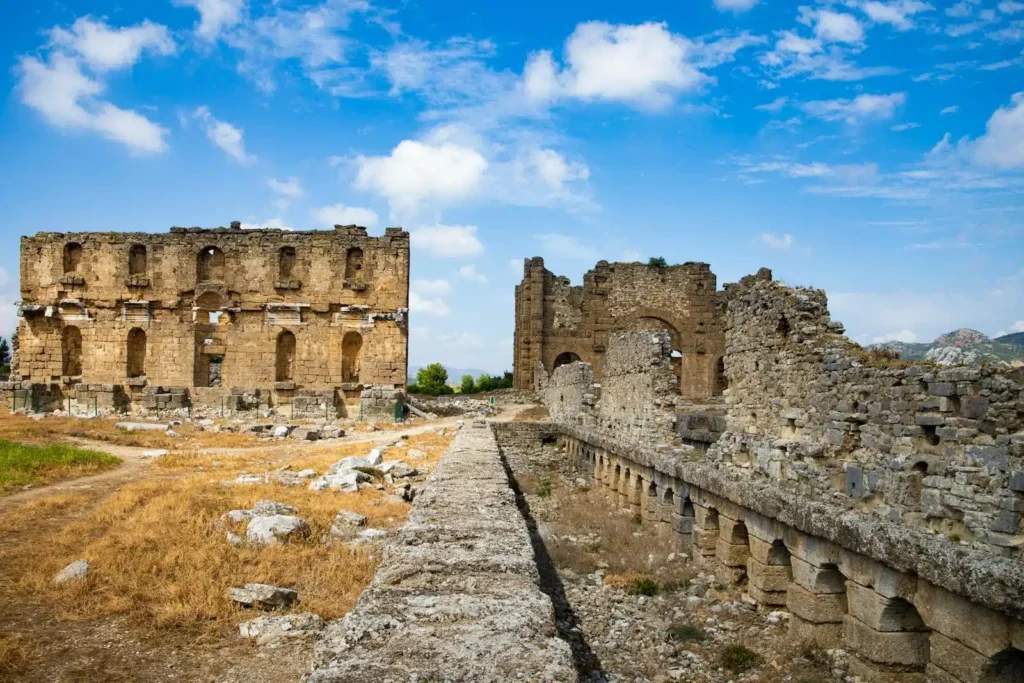
A short drive to the most intact Roman theater in the world. Built in the 2nd century AD by architect Zenon, the Aspendos Theater seats 15,000 and retains its original stage building, orchestra pit, and upper gallery — a rarity among Roman theaters.
- Acoustics — the engineering is precise enough that unamplified voice carries to every seat
- Stage wall — the two-story facade with its original doorways and niches
- Aqueduct ruins — visible on the approach, part of the Roman water system that served the city
The theater is still used for performances and festivals — it’s not a museum piece, it’s a functioning venue that happens to be 1,800 years old.
Lunch
A sit-down meal at a local restaurant between Aspendos and Side — Turkish cuisine, included in the tour.
Side
Side occupies a small peninsula that juts into the Mediterranean. It was a major Roman port and slave market, and the ruins sit directly among the modern town’s restaurants and shops.
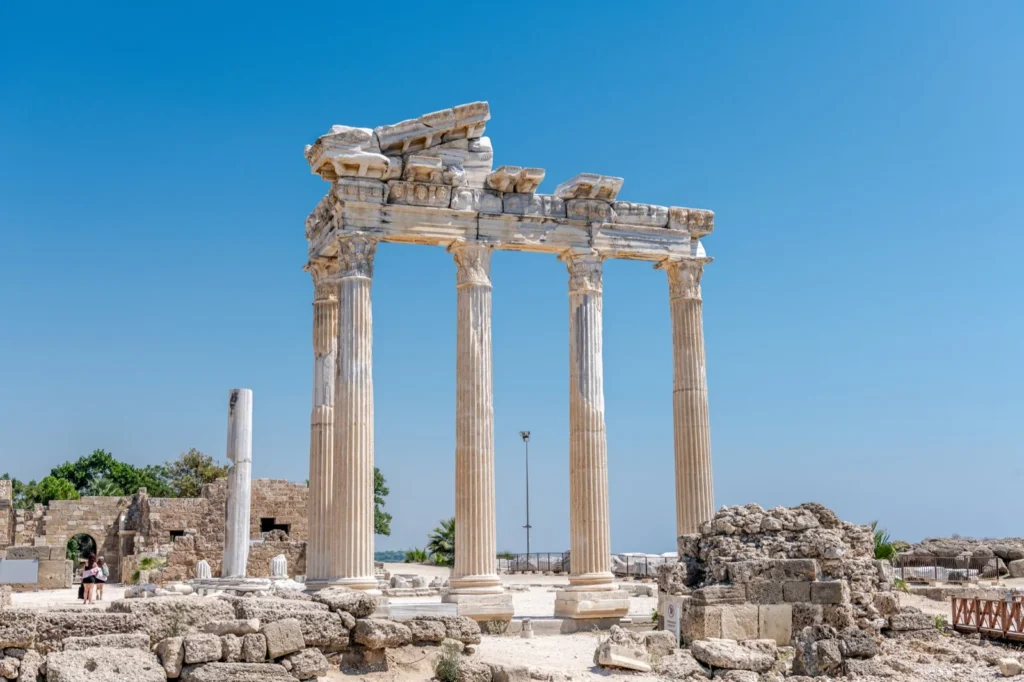
- Temple of Apollo — five restored columns standing on a platform at the water’s edge, facing the sea. The most photographed ruin on the Turkish Mediterranean, especially at sunset
- Roman theater — unusual in that it’s freestanding (not built into a hillside), seating 15,000 with views over the harbor
- Ancient harbor — still in use today, lined with fishing boats where Roman trading vessels once docked
You’ll have free time in Side to walk the harbor, browse the town, or sit with a tea overlooking the temple.
Kursunlu Waterfall
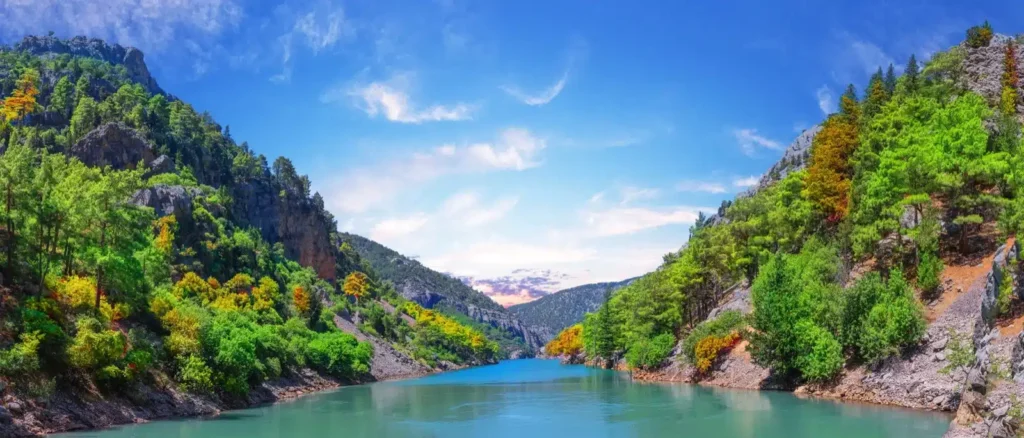
The final stop. Kursunlu Waterfall drops through a forested canyon of umbrella pines and plane trees into a series of turquoise pools. The path through the canyon is shaded and takes about 30 minutes to walk. After a day of open ruins in the sun, the cool air under the canopy is a deliberate contrast.
Return to Hotel
Drive back to Antalya. Drop-off at your hotel.
What's Included
- Hotel pickup and drop-off in Antalya
- Professional licensed English-speaking guide
- Entrance fees to all four sites
- Lunch at a local restaurant
- Air-conditioned transportation
Not Included
- Drinks at lunch
- Personal expenses
- Gratuities (optional, appreciated)
Who Is This Tour For?
This tour works well for:
- Roman history enthusiasts — Aspendos alone justifies the day. A 15,000-seat theater with original acoustics, still used for performances 1,800 years after construction. Perge and Side add two more major sites to the timeline
- Theater and architecture lovers — between the Aspendos stage wall, Perge’s colonnaded streets, and Side’s freestanding Roman theater, you’re seeing three distinct approaches to monumental construction in a single day
- Travelers wanting culture between beach days — if you’ve spent a few days on boats and beaches along the Antalya coast, this is the counterweight. Four sites, one guide, and a waterfall at the end to cool down
- Photography enthusiasts — Side’s Temple of Apollo at the water’s edge and Kursunlu’s turquoise canyon pools give you two very different but equally strong compositions
Frequently Asked Questions
Moderate. Each site involves walking on uneven surfaces — Perge and Side on stone paths, Aspendos on theater steps, Kursunlu on forest trails. Total walking across the day is approximately 5–6 km, spread over four stops. Comfortable walking shoes with grip are essential.
Approximately 45 minutes to 1 hour at each major site. The pace is flexible — your guide can adjust based on your interest level. If you want more time at Aspendos and less at Kursunlu, or vice versa, just say so.
Yes. Want to skip a site and spend more time at Side’s harbor? Add a swim stop? Replace Kursunlu with a different activity? Let us know and we’ll adjust.
Yes. The ruins are open year-round, and the moderate coastal climate makes this comfortable in most seasons. April–June and September–November are the most pleasant. Summer is hot — the morning starts early to take advantage of cooler hours.
The Antalya coast — including the areas around Perge, Aspendos, and Side — is one of Turkey’s most established tourism corridors, with well-maintained roads and regular visitor traffic year-round. Your TURSAB-licensed guide stays with you at every site, and all transport is in a private vehicle.
Gallery
1 Day · Guided Tour
Get Your Personalized Quote
From
$
80
/per person
You Might Also Like
 1 Day
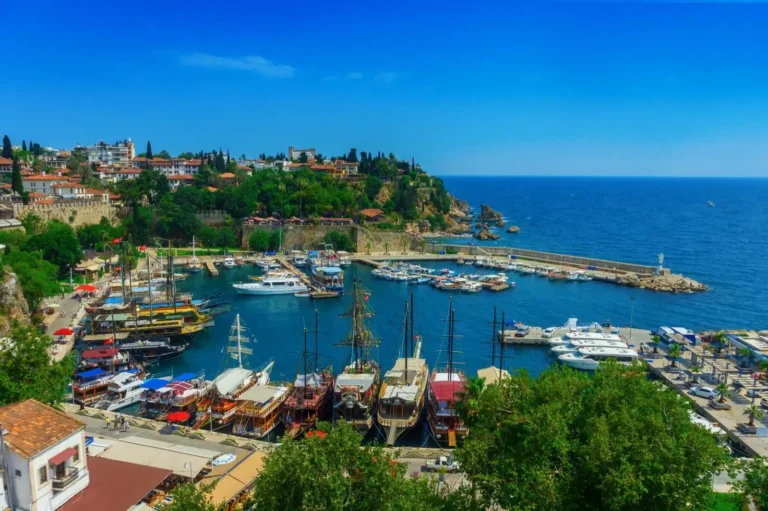
1 DayAntalya City Tour
Antalya is a city built in layers. Romans left their gates. Seljuks left their minarets. Ottomans left their wooden…
 8 Days
8-Day Istanbul, Cappadocia & Antalya Tour
You'll start in Istanbul, where your guide walks you through 1,500 years of layered history — from the Hagia Sophia's…
 1 Day
1 DayAntalya Kemer Boat Tour
The coastline west of Antalya is backed by the Taurus Mountains and fronted by water so clear it barely looks real.…