The Antalya Archaeological Museum sits on the western edge of the city, facing Konyaaltı Beach. Its modesty from the outside gives no indication of what is inside: one of the largest archaeological collections in Turkey, with approximately 5,000 works on display across thirteen exhibition halls spanning prehistory to the Ottoman period.
The museum’s strength is its Roman collection — statues, sarcophagi, and architectural fragments recovered primarily from Perge, the ancient city 18 kilometers to the east. The quality of the individual pieces is high enough that several would be headline objects in any museum in Europe. When I bring travelers here before visiting Perge, the statues they see in the gallery become real presences when they later walk the colonnaded streets where these figures once stood.
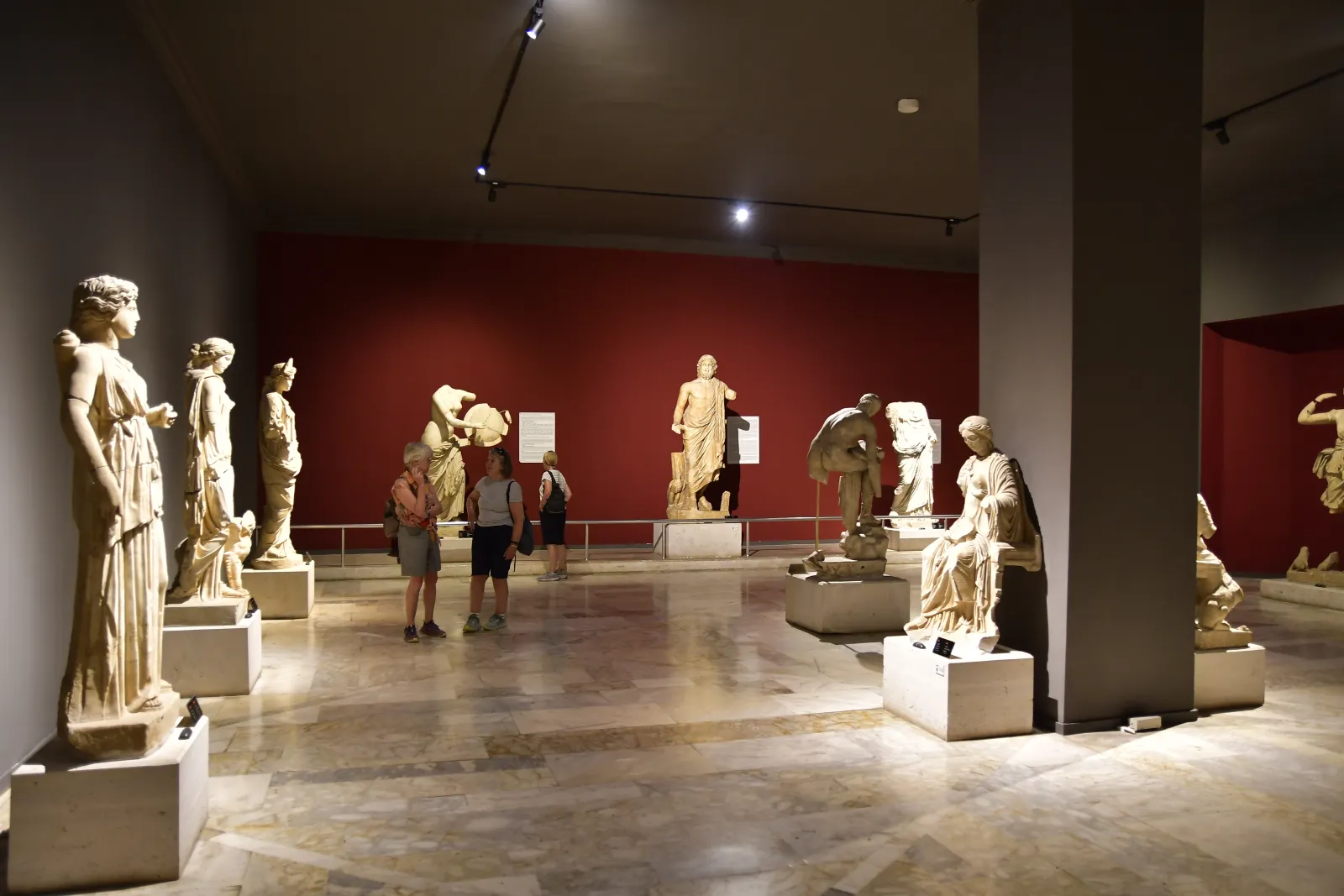
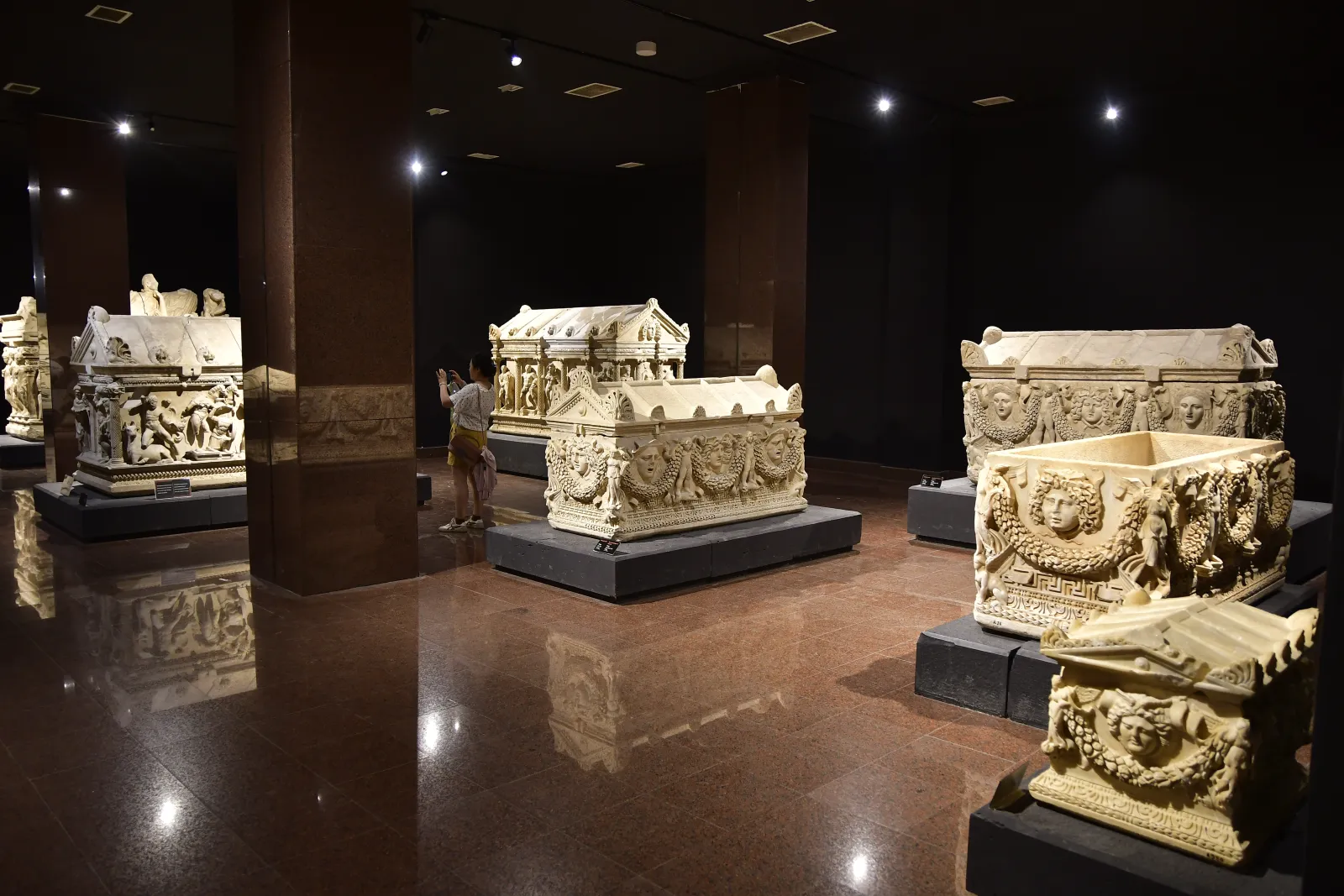
The Hall of Gods is the museum’s centerpiece: a gallery of Roman-period marble statues from Perge, displayed in a row — Aphrodite, Artemis, Hermes, Apollo, Athena, and others, many life-size or larger, carved in the confident naturalism of the second-century Roman imperial style. The Dancer Sarcophagus, carved on all four sides with scenes of Dionysiac revelry, is one of the finest Roman sarcophagi outside of Italy.
Key Galleries
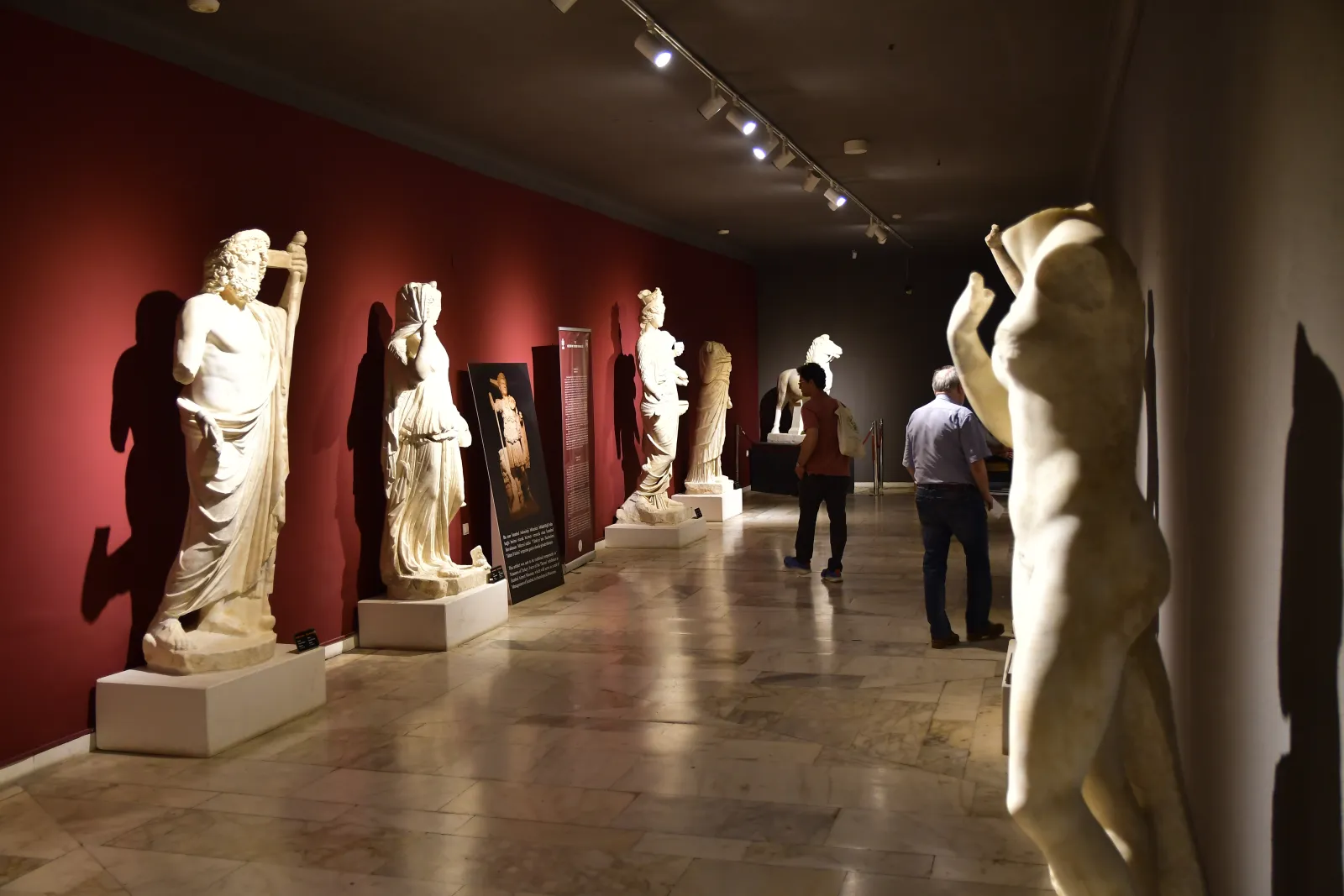
Hall of Gods: Life-size and larger Roman statues from Perge — the Aphrodite of Perge, the Hermes, and others. The carving quality is exceptional.
Sarcophagi Hall: Ornately carved Roman stone coffins from across the region, including the Dancer Sarcophagus and the Heracles Sarcophagus with twelve labors depicted in relief.
Mosaic Hall: Floor mosaics from Roman villas in the Antalya region, displayed on walls for close viewing.
Prehistoric and Bronze Age Halls: Artifacts from Karain Cave (one of the oldest known human habitation sites in Turkey, 150,000+ years of occupation) and Bronze Age settlements.
Icon Gallery: Byzantine and medieval Christian icons, many recovered from churches in the Antalya region.
Ethnographic Section: Ottoman-era textiles, ceramics, jewelry, and domestic objects.

Practical Information
Getting there: The museum is on Konyaaltı Caddesi, western Antalya, accessible by tram (Müze stop) or a short taxi ride from Kaleiçi. Parking is available.
How much time: One and a half to two hours for a thorough visit. The thirteen halls are arranged chronologically, and the route flows naturally from prehistory to the modern period.
Entry fee: Standard museum admission. A Museum Pass Turkey covers entry. Check the museum’s official page for current hours and admission fees.
When to go: Any time — the museum is indoors and climate-controlled. Visiting before or after the outdoor sites (Perge, Aspendos) provides context for the artifacts you see in the field.
Combining with other visits: The museum pairs naturally with a visit to Perge — seeing the statues in the museum and then walking the city they came from creates a complete experience. Konyaaltı Beach is immediately adjacent for a post-museum break. If your Antalya itinerary includes Aspendos, the museum provides context for artifacts found across the region.
Plan Your Antalya Visit
The Antalya Archaeological Museum is where the region’s scattered ruins come together under one roof — Roman gods from Perge, sarcophagi from across Pamphylia, and artifacts spanning 150,000 years. If you would like to visit with a private guide who can connect the gallery to the field, tell us what interests you.
Frequently Asked Questions
What is in the Antalya Archaeological Museum?
Approximately 5,000 works across thirteen halls — Roman statues from Perge, carved sarcophagi, Bronze Age artifacts, Byzantine icons, mosaics, and Ottoman ethnographic objects. The Roman sculpture collection is one of the finest in Turkey.
How long should you spend at the Antalya Museum?
One and a half to two hours for a thorough visit. The thirteen halls are arranged chronologically, so the route flows naturally from prehistory to the modern period.
Is the Antalya Museum worth visiting?
Yes — particularly if your itinerary includes Perge, Aspendos, or Side. The museum provides context and houses the best artifacts from these sites. The Hall of Gods alone holds more intact Roman imperial statues than most European collections outside Rome.
Where is the Antalya Archaeological Museum?
On Konyaaltı Caddesi in western Antalya, accessible by tram (Müze stop). Adjacent to Konyaaltı Beach.
Can you visit the Antalya Museum with a private guide?
Yes. A guide with an archaeology background can connect the artifacts to the sites you will visit — explaining which temple a statue stood in or which city a sarcophagus was carved for. This context turns a gallery walk into a narrative.
Is the Antalya Archaeological Museum suitable for children?
The museum works well for families. The statues in the Hall of Gods are visually striking enough to hold younger visitors’ attention, and the chronological layout gives older children a clear sense of historical sequence. Allow 60–90 minutes with children rather than the full two hours.