Beneath Sultanahmet: A Guide to the Basilica Cistern in Istanbul
Step off Divan Yolu and in under two minutes you descend into a vaulted underground chamber the size of a cathedral nave, built in 532 AD, forgotten for centuries, and still holding the silence of the city above. The contrast is immediate. The street is noisy, bright, relentless. Down here the light is amber and low, the columns stretch into the half-dark, and water still fills the floor in a shallow reflecting pool where carp drift between the ancient stone bases.
This is the Basilica Cistern — Yerebatan Sarnıcı in Turkish, meaning “sunken palace” — and it is one of the more genuinely arresting places in Istanbul. Not because it is visually overwhelming, but because the scale of what it represents takes a moment to settle in. A city that needed this much water. Engineers who could build this. And then: centuries of people living directly above it, apparently unaware it existed.
The cistern was rediscovered in 1545 by the French scholar Petrus Gyllius, who noticed residents in the Sultanahmet neighborhood drawing water — and the occasional fish — through holes in their basement floors. The structure had been in use long enough after the fall of Constantinople for anyone who knew it to have died or moved on, and the Ottoman city had simply built over it. Gyllius descended into one of those basements and found himself standing at the edge of a forest of columns.
Built to Last 1,500 Years
Emperor Justinian I commissioned the cistern in 532 AD, the same year he began rebuilding Hagia Sophia after the Nika riots left much of Constantinople in ruins. The two projects are connected by more than timing: the cistern was designed to supply water to the Great Palace of Constantinople, the imperial complex that once occupied the hillside between today’s Hagia Sophia and the Sea of Marmara.
The numbers are not small. The cistern measures approximately 140 by 70 meters — roughly the footprint of a large city block. It holds up to 100,000 tons of water, drawn from a reservoir 19 kilometers away in the Belgrade Forest and delivered by aqueduct. The ceiling is supported by 336 marble columns arranged in 12 rows of 28, each column standing 9.8 meters high.
The columns themselves come from different eras and different buildings. Justinian’s engineers were pragmatic: they used what the empire had. Some columns have Corinthian capitals, others Ionic or plain. The heights vary slightly, which is why some columns sit on raised plinths to bring them level with the vault. Stand in the middle of the cistern and look along a row — the slight variations in style and proportion tell you this was an empire that repurposed everything, including its own history.
The vaulted ceiling above is Byzantine brick, still intact, still keeping out fifteen centuries of city life.
What You’ll See
The visitor route winds through the cistern on wooden walkways elevated just above the water line, which gives you a useful perspective on the scale of the space — the columns recede into the distance in every direction, and the reflection in the water below doubles the visual depth of the room.
The columns are worth slowing down for. The Corinthian capitals — with their carved acanthus leaves — are the most dramatic. Others are smooth cylinders with only a simple capital at the top. A few still have traces of carved decoration on their shafts. Because they were gathered from different sites across the empire, each one carries a slightly different visual weight. The collective effect is of a room assembled from fragments, which is exactly what it is.
The lighting is atmospheric by design. The original 2022 renovation introduced a warmer, more layered lighting scheme that does what good museum lighting should do: it draws your eye without overwhelming the subject. The water at your feet catches the light in shifting patterns, and the sound — a faint drip from somewhere in the brick — adds to the sense of being sealed inside a very old, very quiet space.
There are carp in the water. They have been here long enough to become part of the mythology — local legend claims they were introduced to test for water quality and simply stayed. Whether or not that story is historically accurate, they move unhurriedly through the columns, unbothered by the walkway above them.
The Medusa Heads
At the far end of the cistern, two columns rest on carved marble bases in the shape of Medusa heads. One is positioned sideways, the other upside down. They are the most photographed features of the cistern and the question I hear most often from travelers: why are they oriented that way?
The honest answer is that no one knows for certain. Three explanations have circulated for decades, and none can be definitively confirmed.
The first theory holds that the orientation was deliberate — meant to negate Medusa’s gaze. In classical mythology, direct eye contact with Medusa turned onlookers to stone. Turning the heads sideways or inverting them was, on this reading, a protective measure: a way of using the power of the image without activating it. This theory has a pleasing logic but no supporting documentation.
The second theory is more structural. The columns that rest on the Medusa bases are slightly taller than the standard columns in the cistern. Tilting or inverting the carved heads — which are irregular in shape — may have been the most practical way to achieve the correct height for the vault above, with the carved surface functioning as a rough spacer.
The third explanation, favored by many archaeologists, is simply that the builders were indifferent to orientation. The Medusa blocks were cut from an older monument, brought to the site, and placed where they were needed. The faces happened to end up sideways and inverted not from intention but from expediency. The cistern was a utility structure; the decorative significance of a carved face on a repurposed column base may not have registered as relevant.
All three may contain partial truth. What is certain is that the heads are Roman, likely carved in the 2nd or 3rd century AD, and that they were already antiques when Justinian’s engineers used them in 532 AD. When I bring travelers to this corner of the cistern, the theories are worth discussing not because one is correct, but because the question itself opens a conversation about how Byzantine builders understood the ancient material they were working with.
The Practical Side
The cistern reopened in 2022 after a multi-year renovation that reshaped the visitor experience significantly. The old wooden walkway — a single fixed route — has been replaced by a more spacious, meandering path that allows for different sight lines. The lighting has been redesigned. New art installations now occupy parts of the space: large-format photographs and visual projections that respond to the atmosphere of the cistern rather than competing with it. Opinions on the installations vary, but the structural restoration work is thorough, and the cistern itself is in better condition than it has been in decades.
Tickets and hours: The cistern is a ticketed site. Tickets can be purchased on-site or in advance online, and advance purchase is worth doing in peak season (June through August) to avoid queue time at the entrance. Hours shift seasonally — generally open from early morning to late evening, but confirm current times before your visit as these change. The cistern is managed by the Istanbul Metropolitan Municipality.
How long to allow: Most visitors spend 30 to 45 minutes inside. If you move slowly, look at the columns carefully, and spend time at the Medusa heads, 45 to 60 minutes is comfortable. The space is not vast but rewards attention.
Crowd patterns: Weekday mornings are quieter. Late afternoons and weekends during summer peak season can be crowded on the walkways, which are narrow enough that a busy hour makes unhurried movement difficult. Arriving before 10:00 AM gives you a noticeably different experience.
Temperature: The cistern holds a constant temperature of around 13–15°C year-round. In summer this feels refreshing. In winter, particularly if you have been walking outside, bring a light layer. Sensible shoes are recommended — the walkways can be slightly slippery from the moisture in the air.
Accessibility: The entrance involves a staircase of approximately 50 steps to descend and return. As of the 2022 renovation, there is no elevator access. Visitors with mobility limitations should check current accessibility arrangements directly with the site before visiting.
Pairing It With the Rest of Sultanahmet
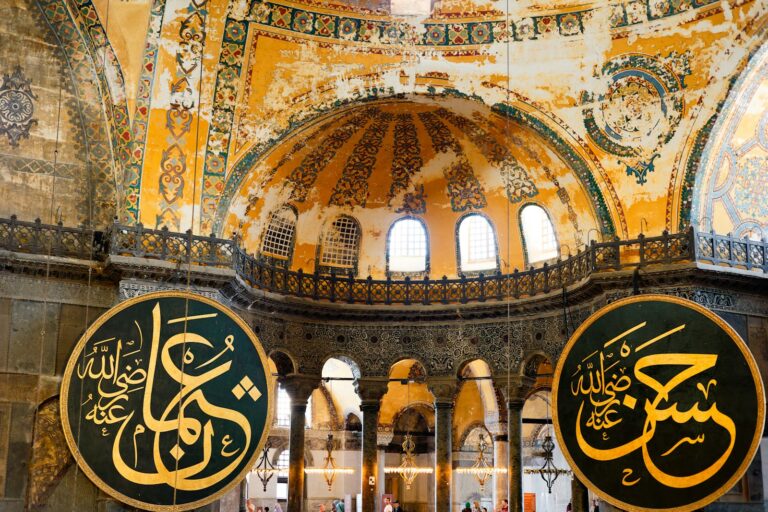
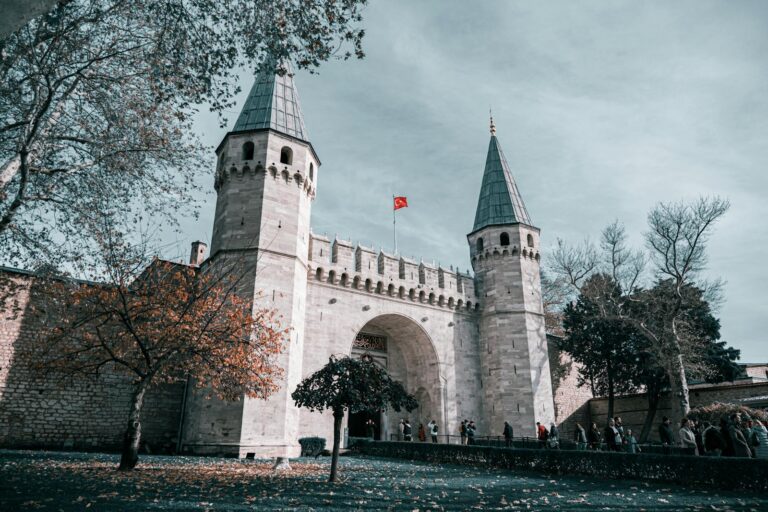
The Basilica Cistern sits in a genuinely dense historical quarter. Hagia Sophia is a five-minute walk. The Blue Mosque (Sultanahmet Mosque) is across the square. The remains of the Hippodrome — the chariot-racing track that was the social center of Byzantine Constantinople — are immediately adjacent. Topkapi Palace is a ten-minute walk through the park.
These sites are not just geographically close; they are historically interconnected. The cistern supplied water to the same Great Palace whose ceremonial axis is traced by the Hippodrome. Hagia Sophia was Justinian’s showpiece of the same building campaign. Understanding one site makes the others more readable.
When I plan a Sultanahmet day for travelers, the sequence matters. The cistern works well as the first stop of the morning, before crowds build and while the temperature underground is most welcome. Hagia Sophia follows, with its own relationship to that same Byzantine moment. The Hippodrome and Blue Mosque fill the late morning into early afternoon. That order builds a coherent picture of the city rather than a list of separate attractions.
With a private guide, the day can also flex around what interests you. If you want more time in the cistern, more time looking at specific columns, more time asking questions about the Medusa theories — there is no group schedule to catch up to. The sequencing is a starting point, not a constraint.
Plan Your Istanbul Day
The Basilica Cistern, Hagia Sophia, and the rest of Sultanahmet together form a full day that rewards a thoughtful, unhurried approach. If you would like a private guide to walk you through this quarter of Istanbul — at your pace, with the context that makes each site more than a photo stop — tell us what you are looking for and we will build a day around it.
Frequently Asked Questions
How long does the Basilica Cistern take to visit?
Most visitors move through in 30 to 45 minutes. If you take your time with the columns, the Medusa heads, and the art installations added in the 2022 renovation, allow up to an hour. The space is not physically large, but it is layered enough to reward slower attention.
Is the Basilica Cistern worth visiting after the renovation?
Yes. The 2022 renovation improved the lighting significantly and widened the visitor route, making the space easier to navigate and more comfortable at busy times. The new art installations are a matter of taste, but the cistern itself — the columns, the brick vaults, the water — is better presented than before. The renovation also addressed structural issues in the brick ceiling, so the site is in strong condition.
What are the Medusa heads in the Basilica Cistern?
Two columns at the far end of the cistern rest on Roman-era carved Medusa heads, one turned sideways and one inverted. They were repurposed from an older monument when the cistern was built in 532 AD. Why they are oriented that way is genuinely uncertain — theories include deliberate placement to neutralize Medusa’s power, a practical need to adjust column height, and simple indifference to orientation on the part of the builders. All three explanations have credible support and the question has not been resolved by archaeology.
Is the Basilica Cistern accessible for visitors with limited mobility?
The entrance requires descending and ascending approximately 50 steps. As of the most recent renovation in 2022, there is no elevator access. Visitors with significant mobility limitations should contact the site directly before visiting to check current arrangements, as accessibility accommodations can change.
Is it cold inside the Basilica Cistern?
The underground temperature stays around 13–15°C throughout the year, regardless of the season above ground. In summer this is a welcome contrast after walking through Sultanahmet in the heat. In cooler months, or if you are coming in from cold outside air, it can feel damp rather than cold — a light layer is sensible precaution in any season.
Can you visit the Basilica Cistern without a guide?
Yes. The cistern has clear signage and information panels, and most visitors explore independently. A guide is not required to understand the basic history or find the Medusa heads. That said, a private guide adds context that the panels do not cover — the relationship between the cistern and the Great Palace, what the different column styles tell you about Byzantine construction methods, the historiography behind the Medusa head theories — and that context changes the visit from observation to understanding. It also allows you to move at your own pace and ask questions as you go.