The Blue Mosque, Istanbul: A Practical and Personal Guide to Sultan Ahmed Mosque
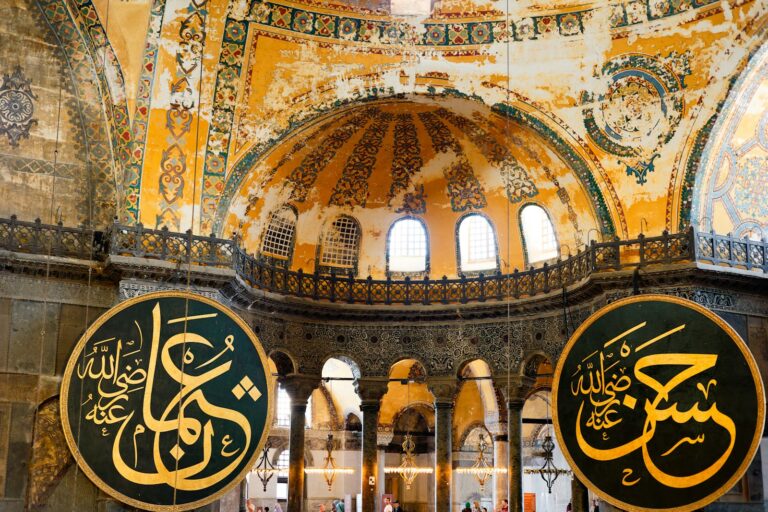
The two buildings face each other across a stretch of garden and Roman hippodrome in Sultanahmet, and the tension between them is deliberate. Hagia Sophia — built by the Byzantine Emperor Justinian in 537 AD, for a thousand years the largest church on earth — stands on one side. Across the square, Sultan Ahmed Mosque, completed in 1616, stands on the other. The young sultan who commissioned it was nineteen years old when construction began. He had never won a military campaign. He wanted to leave something that would endure.
What he built, the mosque the world now calls the Blue Mosque, is not simply an imitation of Justinian’s building. It is an Ottoman response to it — built on the same symbolic ground, rising on a comparable scale, with its own logic, its own materials, and its own light. Understanding that intention changes how you see both buildings.
Most visitors to Istanbul see the Blue Mosque in passing. They photograph the six minarets from the courtyard, step inside for ten minutes, and leave without grasping what makes it different from the hundreds of Ottoman mosques built during the same century. A slower visit, with the right context, tells a more layered story.
Built to Rival Hagia Sophia
Sultan Ahmed I came to the throne in 1603 at the age of thirteen. He commissioned the mosque in 1609 from his chief architect Sedefkar Mehmed Agha — a student of the legendary Mimar Sinan, who had designed the Süleymaniye Mosque in Istanbul and the Selimiye in Edirne. Ahmed died before his mosque was completed, in 1617, at the age of twenty-seven. He never saw it finished. He is buried in a türbe — a mausoleum — directly beside it.
The choice of site was not accidental. The mosque was built on the former palace grounds of the Byzantine emperors, steps from the Hippodrome where chariot races had been held since the 3rd century AD, and directly across from the greatest church of the Christian world. The symbolism was architectural and political at once.
The six minarets caused a controversy that reached Mecca. The Great Mosque of Mecca — the holiest site in Islam — also had six minarets at the time, and adding a sixth to a new mosque in Istanbul was read by some religious scholars as an act of hubris. The dispute was resolved by funding the addition of a seventh minaret to the mosque in Mecca. Sultan Ahmed’s six remain.
Inside, the tiling programme is what still draws architectural historians. The mosque contains approximately 21,000 hand-painted Iznik tiles — produced in the kilns of Iznik, a town about 90 kilometres southeast of Istanbul, which had been producing ceramic ware since the 15th century. The tiles in the Blue Mosque were made largely during the declining years of the Iznik workshops, and the quality varies from piece to piece. The finest panels — predominantly cobalt blue and turquoise, with carnations, tulips, and cypress trees rendered in deep red and white — are in the galleries and upper levels, above the eyeline of most visitors.
Sedefkar Mehmed Agha’s central dome is 23.5 metres in diameter and 43 metres above the floor — smaller than Hagia Sophia’s 31-metre dome, but supported by a different structural system: four massive pillars, each 5 metres in diameter, that architects of the period nicknamed “elephant feet.” The semi-domes cascade down from the central dome in four directions, and the whole interior opens into a wide, bright hall that feels less enclosed than Hagia Sophia and more suffused with light.
That light is the building’s most deliberate effect. The 260 windows — many fitted with original stained glass in the 17th century, though most have been replaced over the years — were placed to ensure the interior is never dark. When I bring travelers here on a clear morning, the light through those windows catches the blue and white of the tiles and the whole interior shifts. It is a different building in different weather, at different hours.
What to See Inside
The Iznik Tiles
The dominant colours — the deep cobalt blue that gave the mosque its popular name — are most concentrated in the upper registers of the interior. The lower walls have plainer tiles and stencilled patterns added in later restorations. Look up and to the sides rather than straight ahead to find the finest tilework. The carnation motif, a symbol associated with Ottoman imperial culture, appears repeatedly across the panels. The cypress trees — stylised, elongated, dark green against white — are a quieter motif worth finding.
The 260 Windows
The window arrangement in the four semi-domes creates a soft, diffuse light across the tiled surfaces. The original 17th-century stained glass panels were produced in Venice; the replacements are more recent Turkish work. The effect is still worth studying: the windows are positioned to illuminate the tiles at specific angles, and the colour temperature inside the mosque changes noticeably over the course of the morning.
The Courtyard
The outer courtyard — şadırvan — is a large arcaded space with a central ablution fountain, currently decorative rather than functional. The courtyard is roughly the same footprint as the mosque interior, an intentional proportion. It is a quieter space than the interior during busy periods and gives you the best ground-level view of the six minarets. Early morning, before the main groups arrive, the courtyard is particularly calm.
The Imperial Loge
In the upper-left section of the interior — the section reserved for the sultan — is the imperial loge, separated from the main prayer hall by a screen. This is where Sultan Ahmed and subsequent Ottoman sultans would have prayed, visible to the congregation but elevated and private. It is not accessible to visitors but visible from the nave.
Visiting as an Active Mosque
The Blue Mosque is a functioning house of worship, not a museum. That distinction matters for how you plan your visit and what you should expect when you arrive.
Prayer times
The mosque closes to non-Muslim visitors during each of the five daily prayer times. Each closure lasts approximately 60 to 90 minutes — longer than at Hagia Sophia, where the closures are shorter. The timing of prayers shifts throughout the year as it follows the solar calendar. On a typical spring morning, the first tourist closure often begins around 12:30 PM for the midday prayer. Visiting before noon is the most reliable way to avoid an extended wait outside.
Entrance
Tourists enter through a separate door from the main worshipper entrance — typically the door on the south side (Sultanahmet side), not the main gate. Follow the signs; there is a queue system in place during busy periods. The entrance is free.
Dress code
Modest dress is required for everyone. Women should cover their hair — a scarf is provided at the entrance at no charge if you do not have one, though bringing your own is more practical. Shoulders and knees should be covered for both men and women. Shoes must be removed and carried in a bag provided at the door.
Atmosphere inside
During tourist hours, the Blue Mosque can be crowded in the central nave. Visitors are directed along a roped path through the main hall. The sides of the mosque — away from the central axis — are quieter and give you better angles on the tilework. A private guide will steer you toward the peripheral sections rather than following the crowd along the main route.
Visiting the Blue Mosque With a Private Guide
The architecture is generous enough that even a rushed visit leaves a strong impression. But the details — the ones that give you a genuinely different understanding of what you are looking at — require time, positioning, and someone who has stood in this building many times.
When I bring travelers to the Blue Mosque, I time the arrival around the prayer closures so there is no waiting outside in the heat or the cold. I know which sections of the interior are consistently less trafficked and which panels of tilework reward longer attention. I know where to stand to understand how Sedefkar Mehmed Agha solved the structural problem of creating a large central space without the forest of columns that earlier mosques required.
What groups typically miss: the tilework above head height, which is where the finest panels are. The transition between the structural pillars and the arches above them, which shows you the building’s logic. The courtyard in the early morning before the main tours arrive, when it is possible to stand in the centre and simply look at the six minarets without another tour group in the frame.
The Blue Mosque and Hagia Sophia are across a ten-minute walk from each other — literally in the same square — and pairing them in the same private morning is one of the most coherent single-day programmes available in Istanbul. You see the building that the sultan was answering and the building he built in answer, and the conversation between them becomes visible. That comparison, done slowly and with context, is something a forty-five-minute group visit to either site cannot offer.
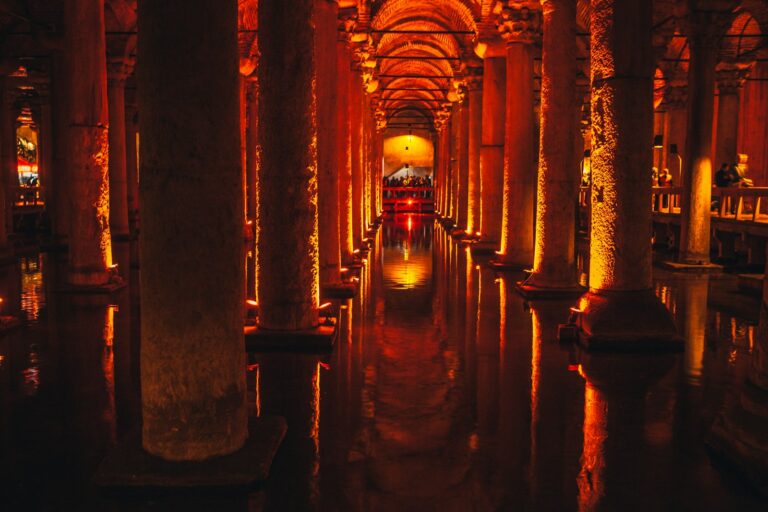
A full Sultanahmet morning might also include the Hippodrome — the ancient Byzantine racetrack whose obelisks and Serpent Column still stand in the garden between the two buildings — and the Basilica Cistern beneath the square, where the city’s 6th-century water infrastructure survives intact.
Plan Your Private Istanbul Visit
If the Blue Mosque is part of what draws you to Istanbul, tell us what else you want to understand — the Ottoman palaces, the Byzantine layers, the Bosphorus, the neighborhood markets. We’ll build a private itinerary at your pace, timed around the sites and designed around what actually interests you.
Frequently Asked Questions
Is the Blue Mosque free to enter?
Yes. Entry to the Blue Mosque (Sultan Ahmed Mosque) is free for all visitors, including non-Muslims. There is no ticket and no reservation required. Donations are welcome but not expected.
Do you need to cover your head to enter the Blue Mosque?
Women are required to cover their hair inside the mosque. Scarves are provided free of charge at the tourist entrance if you do not have one with you. It is more comfortable to bring your own — a light scarf that you can fold into your bag works well for a full day in Sultanahmet. Men do not need to cover their heads.
Can you visit the Blue Mosque during prayer times?
No. The mosque closes to non-Muslim visitors for approximately 60 to 90 minutes during each of the five daily prayer times. These windows shift throughout the year. Visiting in the morning — ideally arriving before 11:00 AM — is the most reliable way to ensure uninterrupted access. A private guide will build the timing into your itinerary so you do not arrive at a closure.
How long does a visit to the Blue Mosque take?
Allow 30 to 45 minutes for a self-guided visit. With a private guide covering the architecture, the tilework, and the history in depth, plan for 45 to 60 minutes inside, plus time in the courtyard. If you are combining the Blue Mosque with Hagia Sophia across the square, a full morning of two to three hours covers both properly without rushing.
What is the difference between the Blue Mosque and Hagia Sophia?
They are two entirely different buildings from different eras and different traditions. Hagia Sophia was built in 537 AD as a Byzantine Christian cathedral; the Blue Mosque was completed in 1616 as an Ottoman Islamic mosque. Hagia Sophia is now an active mosque that was previously a museum; the Blue Mosque has been a mosque since it was built. Hagia Sophia is larger and older; the Blue Mosque has more uniform architecture and the most significant surviving collection of Iznik tiles in Istanbul. They face each other deliberately, and the story of why is one of the most interesting things about Sultanahmet.
When is the best time to visit the Blue Mosque?
Weekday mornings before noon offer the best combination of light, manageable crowds, and uninterrupted access before the midday prayer closure. The interior light is softest and most evenly distributed in the morning hours, which is when the tile colours read most clearly. High summer weekends draw the largest crowds; spring (April–May) and autumn (September–October) are the most comfortable seasons to visit Istanbul overall.