Göreme Open Air Museum: A Private Guide to Cappadocia’s Rock Churches
You walk through a low doorway carved directly into the volcanic rock, let your eyes adjust to the dimness, and look up. The ceiling is covered — entirely covered — in frescoes painted more than a thousand years ago. Deep cobalt blue, ochre, rust red, and the kind of green that doesn’t exist in nature anymore. The faces of saints look back at you from all sides.
This is the Göreme Open Air Museum, and it is unlike any other site in Turkey.
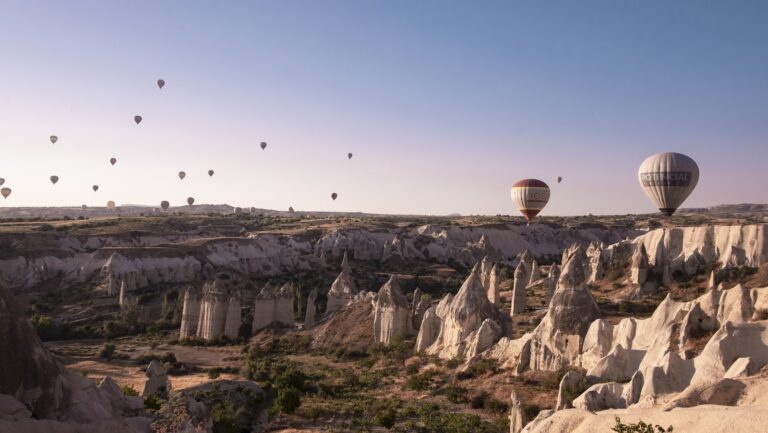
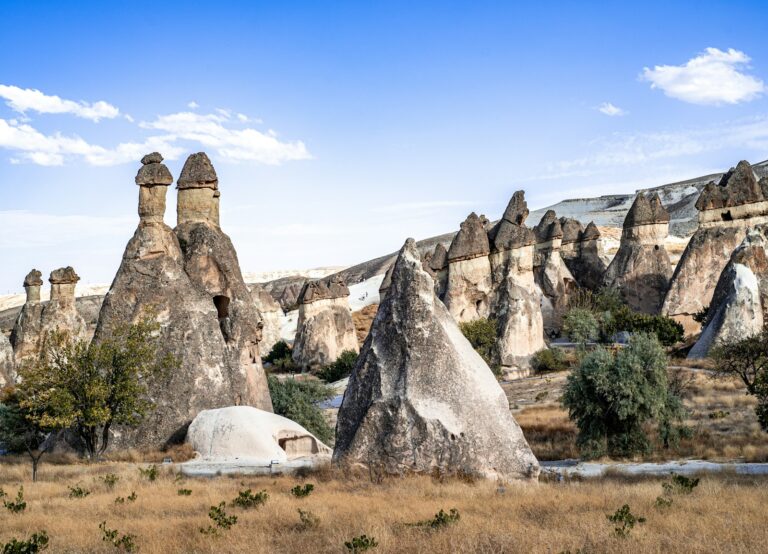
UNESCO added Cappadocia to the World Heritage list in 1985, and the Open Air Museum sits at the heart of that designation. What looks from the outside like a cluster of soft volcanic rock formations — the tuff that makes Cappadocia’s landscape so distinctive — contains, on the inside, a medieval monastic settlement. Monks carved churches, chapels, refectories, and living quarters directly into the rock face from the 10th century onward, then decorated every interior surface with Byzantine frescoes. The rock preserved what weather, war, and time would otherwise have destroyed.
Most visitors spend 40 minutes here, camera in hand, moving from one entrance sign to the next. When I bring travelers here on a private visit, we take two to three hours. The site rewards that patience — not in the way that any museum rewards reading every label, but in the specific way that standing in silence inside a painted cave does something to your sense of time.
What most people miss is not the main churches. It’s everything around them: the small chapels tucked between formations, the refectory where monks ate together with a stone table carved from the same rock as the floor, and the one church that sits completely outside the main ticketed complex, larger than anything inside it, painted in a color palette that belongs in a different century.
A Brief History
Christian communities began moving into Cappadocia’s volcanic landscape in earnest during the 4th century, fleeing Roman persecution and then, later, Arab raids from the south. The tuff — volcanic ash compressed over millions of years into soft, workable rock — made it possible to carve a room in weeks. A church took longer, but not much.
By the 9th and 10th centuries, monastic communities were well established throughout the valleys around Göreme. The churches in the Open Air Museum date primarily from the 10th and 11th centuries, a period of relative stability under Byzantine rule when craftsmen and painters could travel to Cappadocia and decorate the interiors properly.
The region changed hands many times — Byzantine, Seljuk, Ottoman — but the rock-cut churches survived because they were difficult to repurpose and easy to ignore. The tuff sealed the interiors, blocking light and moisture. Frescoes that would have flaked away from stone walls in a century held on here for ten.
One complication: the iconoclast controversy of the 8th and 9th centuries left its mark on several churches. Byzantine emperors banned religious images twice during this period, and in some churches you can see where figures were scratched out — faces removed from bodies, saints reduced to outlines. In others, the paintings came later, after iconoclasm ended, which is why the color and technique vary so much from one church to the next.
The Churches
The Open Air Museum contains around 30 churches and chapels in various states of preservation. These four are the ones worth knowing before you arrive.
Dark Church — Karanlık Kilise
The single most important interior in the complex. A separate admission fee applies (currently 100 TL above the standard ticket), and it is worth every lira.
The church takes its name from its near-total darkness — a single small window meant that light barely entered for centuries, and the frescoes paid no price for it. The colors are extraordinary: deep lapis blue used in backgrounds and robes, figures drawn with confident lines, expressions on the faces of the apostles that feel less formal than the standard Byzantine formula. The Nativity, the Betrayal of Judas, the Crucifixion — each scene occupies its own panel with a clarity that paintings in better-lit churches lost long ago.
Stand in the center of the nave and look up at the dome. Christ Pantocrator — Christ as ruler of the universe — painted looking directly down. This composition was standard for Byzantine church domes, but the condition here is not standard. It looks as though the painter left last week.
When I bring travelers here, I ask them to stand quietly for a minute before we start talking about what we’re seeing. The room earns that.
Apple Church — Elmalı Kilise
Right at the entrance to the complex, which means most visitors pass through it first, often before they’ve found their footing. It deserves a second, slower look.
The name may come from an apple tree that once stood nearby, or from the globe held by Christ in the dome fresco — historians disagree. The Christ Pantocrator here is slightly more formal than the one in the Dark Church, but the surrounding scenes are detailed and well-preserved: the Annunciation, the Last Supper, the women at the empty tomb.
The rock-cut columns inside are worth noticing. They were carved to imitate a stone basilica — free-standing columns with capitals, arches overhead — all of it cut from the same single mass of tuff. The monks who built this were not improvising. They had a model in mind and reproduced it in rock.
Snake Church — Yılanlı Kilise
This is the church where iconoclasm left its most visible trace. Several figures — particularly St. Onuphrius, depicted with a long beard and a body that is partly female — show deliberate damage. Faces scratched out. Figures partially erased and repainted in a different style.
The Snake Church takes its name from the image of St. George and St. Theodore killing a serpent on one of the walls. The painting is rougher than the work in the Dark Church or the Apple Church — a different hand, a different period, possibly a local craftsman rather than a trained Constantinople-school painter. That roughness makes it feel closer, somehow. Less like a monument, more like evidence.
Buckle Church — Tokalı Kilise
This one sits entirely outside the main entrance, about 50 meters back down the road. Most visitors on group tours never see it. It is the largest church in Göreme, and it may be the most important.
Tokalı was built in two phases — an older, smaller church from the early 10th century and a larger nave added later in the same century. The later addition is painted almost entirely in blue: a deep, consistent Byzantine blue that covers walls, arches, and ceilings in a continuous narrative of the life of Christ. Forty-five scenes, read like a manuscript from left to right around the walls.
The scale and the color together do something that the smaller churches cannot. You are inside a painted book. The Nativity, the flight into Egypt, the miracles, the Passion — all of it in sequence, all of it in that blue.
Tokalı is included in the standard museum ticket. The only reason visitors miss it is that they follow the signs into the main complex and never look back.
What Most Visitors Miss
The main churches are well-signed and easy to find. What the signs don’t point you toward are the unmarked chapels between them — small openings in the rock face with a few square meters of painted ceiling inside. Some have names; most don’t. Several have fragments of fresco that survived better than the more famous interiors because fewer people looked at them.
The refectory — the monks’ dining hall — sits near the center of the complex. A long stone table runs the length of the room, carved from the same rock as the floor and walls. Benches on each side. A carved niche at one end that may have held an icon. It is not a church, so some visitors walk past it. It is the room that makes the monastic community feel real.
And then there is timing. The Open Air Museum opens at 8:00 am, and the first group tours typically arrive between 9:30 and 10:00. The hour between opening and the first buses is genuinely quiet. On a private visit, your guide can adjust the start time so you see the Dark Church before the day’s main crowds arrive.
The Practical Side
Tickets: The standard admission currently covers all churches in the main complex, including Tokalı. The Dark Church (Karanlık Kilise) requires a separate ticket purchased at a second booth inside the complex. Both are worth buying.
Opening hours: Generally 8:00 am to 7:00 pm in summer (April–October) and 8:00 am to 5:00 pm in winter. Hours and prices change; confirm before visiting.
How long: 45 minutes is enough to see the main churches quickly. Two hours is enough to see everything at a reasonable pace. If you want to sit with the Dark Church frescoes the way they deserve, plan for closer to three.
What to wear: Comfortable, flat-soled shoes. The paths are paved but uneven in places, and several church entrances require ducking or stepping over a low threshold. Dress modestly — shoulders and knees covered — as a matter of respect for the religious significance of the site.
Getting there: Göreme town center is a 10-minute walk from the museum entrance, or a short drive. On a private tour, transfers are handled. Parking for private vehicles is available at the site.
With a Private Guide
A private visit to the Open Air Museum is a different experience from a group visit in ways that are specific, not abstract.
Your guide can spend twenty minutes in the Dark Church if that is where your attention goes — or five minutes, and twenty minutes in Tokalı instead. The day shapes itself around what interests you.
The iconography in Byzantine fresco is not self-explanatory to most Western visitors. The hand gestures, the color-coding of robes, the positioning of figures in the composition — all of it carries meaning that your guide can explain as you stand in front of the painting, rather than in a general lecture before you enter. You leave knowing what you looked at, not just that you looked at it.
The crowd question is also real. A private guide who knows the site can route your visit to start with the churches that are empty when the groups are still at the entrance, and work toward the popular ones as the crowds redistribute through the day.
When I bring travelers here, I ask what they already know about Byzantine art and history — and then I start from there. Not from the beginning of a script.
Plan Your Cappadocia Visit
The Open Air Museum is one part of Cappadocia’s story. Underground cities, valley hikes, village kitchens, cave hotels carved from the same rock as the churches — the region rewards two or three days of unhurried attention.
If you’d like to visit Göreme and the rest of Cappadocia at your own pace, with a private guide who can adjust each day around what interests you, we’d be glad to plan it with you.
Explore our Cappadocia tours →
Frequently Asked Questions
Is the Göreme Open Air Museum worth visiting?
Yes. It is the reason UNESCO gave Cappadocia its World Heritage status, and the Byzantine frescoes inside the rock-cut churches are among the best-preserved in the world. The Dark Church alone justifies the visit. Allow at least two hours to see it properly.
How long do you need at Göreme Open Air Museum?
Most group tours allocate 40 to 60 minutes. That is enough to walk through the main churches but not enough to spend real time with the frescoes. Two to three hours, without a group schedule to follow, is what the site actually deserves.
What is the Dark Church at Göreme, and is it worth the extra ticket?
The Dark Church — Karanlık Kilise — is a 10th-century rock-cut church with the best-preserved Byzantine frescoes in Cappadocia. Because it had almost no natural light, the paintings survived in extraordinary condition. The separate admission fee (on top of the standard museum ticket) is modest and worth paying. It is the highlight of the complex.
Is Tokalı Kilise (Buckle Church) included in the museum ticket?
Yes. Tokalı is covered by the standard admission, but it sits outside the main gate — about 50 meters back down the road — so many visitors miss it entirely. It is the largest church in the Göreme complex and worth walking back for. The blue fresco cycle on the walls of the main nave is unlike anything inside the ticketed area.
When is the best time to visit Göreme Open Air Museum?
Arrive at opening (8:00 am) to have the churches largely to yourself before group tours begin arriving around 9:30 to 10:00. Spring (April–June) and autumn (September–October) offer the most comfortable temperatures and lower overall visitor numbers than July and August.
Is the Göreme Open Air Museum suitable for children?
Yes, with some adjustment. Young children may find the low doorways and the time spent looking at frescoes less engaging than the landscape and fairy chimneys elsewhere in Cappadocia. Older children and teenagers who have some background in Byzantine history tend to find it genuinely interesting. A private guide can pitch the explanations to the right level for whoever is in the group.