You have seven days. Maybe ten. You know you want Turkey, but the map has too many pins and the itineraries online all seem to require a month. Istanbul is obvious. Cappadocia is on every list. Ephesus keeps appearing. Pamukkale looks close to Ephesus. And someone mentioned the coast.
The real question isn’t “which is best” — they’re all worth the trip. The question is: which combination fits the time you actually have?
Here’s what each destination offers, how long it takes, and how to decide.
Istanbul: The One You Shouldn’t Skip
If you only have time for one place in Turkey, this is it.
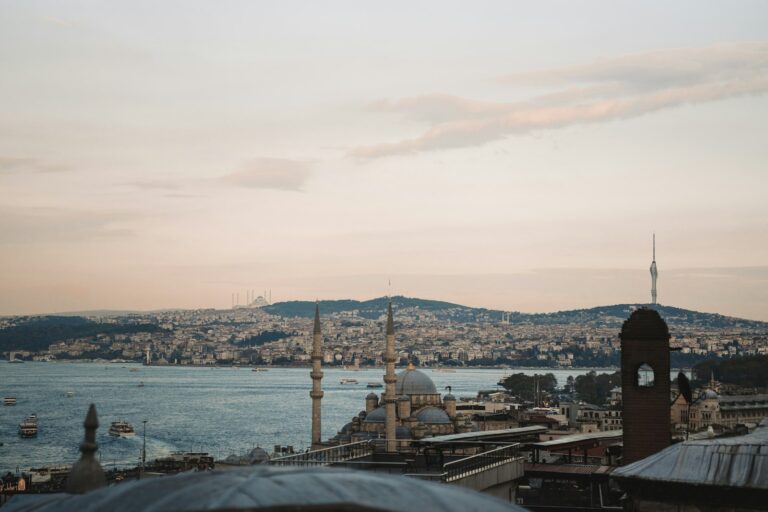
Istanbul isn’t a city with history — it’s a city made of history. Roman cisterns under Byzantine churches inside Ottoman mosques, with a modern neighborhood two streets over where people drink cortados and argue about football. Fifteen centuries of empire layered on top of each other, still functioning as a city of 16 million.
What you’ll see:
– Hagia Sophia — Built as a cathedral in 537, converted to a mosque in 1453, now a mosque again. The interior is what gets you: Roman engineering holding up a dome that seems to float, with Byzantine mosaics and Ottoman calligraphy sharing the same walls.
– Blue Mosque — 20,000 handmade İznik tiles. When the afternoon light hits the interior, you understand the name.
– Basilica Cistern — 336 marble columns in an underground Roman water reservoir. Cool, quiet, and atmospheric.
– Grand Bazaar — 4,000 shops under one roof. Overwhelming, but with a guide who knows the real craftsmen, it becomes specific and personal.
– Bosphorus cruise — The strait that divides Europe and Asia. A 90-minute boat ride past Ottoman waterfront palaces, the Rumeli Fortress, and fishing villages.
– Galata Tower — Panoramic view of the city from a 14th-century Genoese tower.
What Istanbul feels like: Fast, layered, sensory. The call to prayer echoing off Byzantine walls while someone sells fresh simit from a cart. Tea in tulip-shaped glasses on a rooftop with the Bosphorus below. A city that rewards both the major sites and the aimless walk through a neighborhood you didn’t plan to visit.
How long: 3 days minimum. Two days covers the Sultanahmet core — Hagia Sophia, Blue Mosque, Cistern, Hippodrome, Grand Bazaar. A third day adds the Bosphorus cruise, Galata, and the Spice Bazaar. A fourth opens up Topkapı Palace, Dolmabahçe Palace, or the Asian side.
Best for: History lovers who want cultural depth. City people. Anyone who likes food (Istanbul’s restaurant scene rivals any European capital). First-time visitors to Turkey — the infrastructure is built for international travelers.
Cappadocia: The One That Doesn’t Look Real
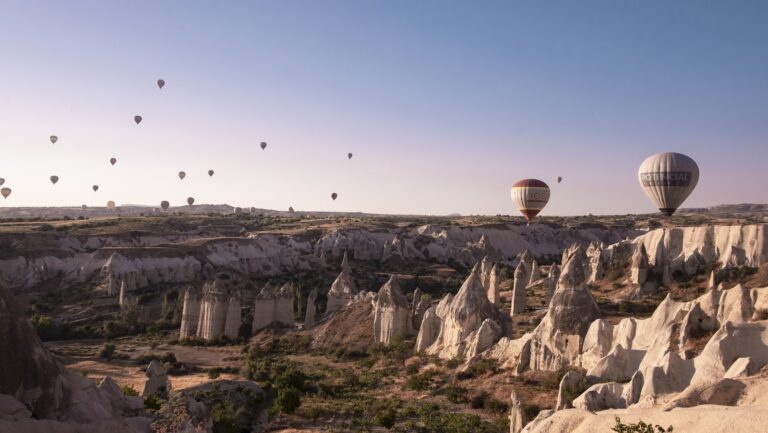
Cappadocia is the opposite of Istanbul in every way — quiet, rural, geological, surreal. If Istanbul is about human history, Cappadocia is about what happens when 60 million years of volcanic ash meets wind and water.
What you’ll see:
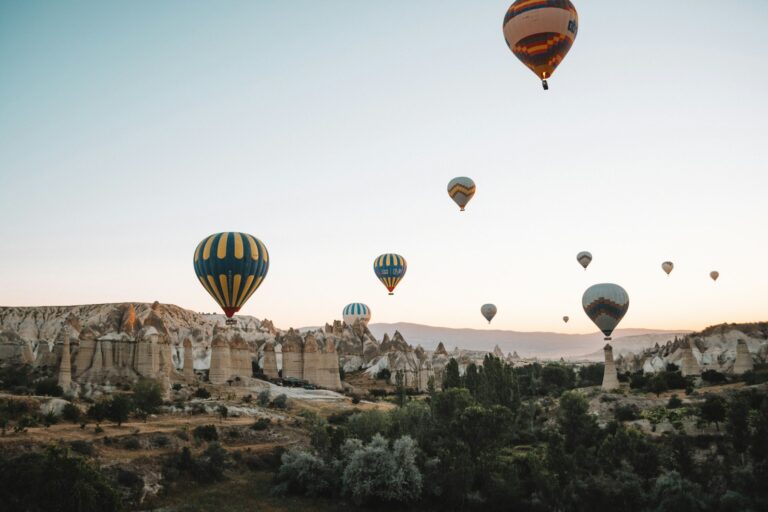
– Sunrise balloon flight — One hour floating silently over fairy chimneys, valleys, and vineyards at 300 meters. The silence is the part nobody warns you about.
– Göreme Open Air Museum — UNESCO World Heritage. A cluster of rock-cut monasteries with 10th-century Byzantine frescoes sealed inside volcanic tuff for a thousand years.
– Kaymaklı Underground City — Eight levels deep, built to shelter 3,500 people. Ventilation shafts, storage rooms, a winery, a church — all carved beneath the surface.
– Red Valley hike — 3–4 kilometers through rose-colored rock formations and hidden chapels. Mostly downhill, moderate difficulty.
– Uçhisar Castle — The highest point in the region. A natural rock fortress with a panoramic view that puts the entire landscape in context.
What Cappadocia feels like: Otherworldly and slow. Breakfast on a cave hotel terrace watching balloons drift overhead. Walking through a valley where the only sound is your footsteps on gravel. Standing inside a church that monks carved into rock a thousand years ago, alone. The pace here is the opposite of a group tour — and the landscape rewards it.
How long: 2 days minimum. Day one: Göreme Open Air Museum, Paşabağ, Devrent Valley, Avanos, Uçhisar. Day two: balloon flight, Red Valley hike, underground city, Pigeon Valley. A third day adds deeper exploration — Soğanlı Valley, Love Valley, a cooking class in a village kitchen.
Getting there: 1 hour 20 minutes by air from Istanbul. Flights are frequent and affordable. Your guide meets you at the airport.
Best for: Photographers. Hikers. Anyone who wants a landscape that exists nowhere else. Couples — the cave hotels and valley walks are inherently romantic. People who want to decompress after Istanbul’s intensity.
Ephesus: The One That Communicates Scale
Ephesus is the most complete classical city in the Mediterranean. At its peak, 250,000 people lived here — the second-largest city in the Roman Empire. Unlike most ancient ruins, Ephesus isn’t scattered fragments. It’s standing structures at a scale that photographs consistently fail to capture.
What you’ll see:
– Library of Celsus — A two-story facade that was once the entrance to the ancient world’s third-largest library. This is the image on every Turkey poster, and it’s more impressive in person.
– Great Theater — 25,000 seats carved into a hillside, where St. Paul once preached. The acoustics still work.
– Temple of Hadrian — An ornate archway on the main marble street, with a Medusa carved into the keystone.
– Marble Street — The main boulevard of a Roman city, complete with ruts from chariot wheels.
– House of the Virgin Mary — A pilgrimage site in the hills above Ephesus, recognized by the Vatican. Quiet and shaded.
– Şirince village — A former Greek village 8 kilometers from Ephesus. Cobblestone streets, fruit wines, handmade crafts, and a pace that’s the inverse of the ancient city.
What Ephesus feels like: Grand and legible. You walk down the same streets Romans walked, past buildings that still announce their purpose. It’s history at a human scale — not behind glass, not reconstructed, just there. And then you drive 15 minutes to Şirince and eat gözleme under a vine canopy while someone pours you homemade peach wine.
How long: 1 full day covers the ancient city, the House of the Virgin Mary, and Şirince. If you’re combining with Pamukkale (3 hours by road), add a second day.
Getting there: Fly to İzmir (1 hour from Istanbul), then a 1-hour drive to Ephesus. Or by road from Pamukkale or the coast.
Best for: History and archaeology enthusiasts. Anyone who studied classics, Roman history, or early Christianity. Travelers who want a powerful single-day experience. People combining Ephesus with Pamukkale or the Aegean coast.
The Comparison at a Glance
| Istanbul | Cappadocia | Ephesus | |
|---|---|---|---|
| Type | Living city | Geological landscape | Archaeological site |
| Pace | Fast, layered | Slow, contemplative | Focused, walkable |
| Minimum days | 3 | 2 | 1 |
| Physical demand | Moderate (hills, cobblestones) | Moderate (valley hikes) | Moderate (uneven marble) |
| Best season | Year-round | April–June, Sept–Oct | Spring and fall (summer 35°C+) |
| Signature moment | Hagia Sophia interior | Sunrise balloon flight | Standing in the Great Theater |
| Evening scene | Rooftop restaurants, Bosphorus views | Cave hotel terrace, quiet | Limited (base in Kuşadası or Selçuk) |
| Connects easily to | Everywhere (hub) | Flights to Istanbul or coast | Pamukkale, coast, İzmir |
How to Combine Them
5 Days: Istanbul + Cappadocia
The essential first-trip combination. Three days in Istanbul, fly to Cappadocia for two days, fly back. This covers the cultural depth and the landscape — the two sides of Turkey that make people come back.
7 Days: Istanbul + Cappadocia + Ephesus
Add a day for Ephesus between Cappadocia and your return. Fly from Cappadocia to İzmir, full day at Ephesus and Şirince, evening flight back to Istanbul. Three distinct experiences in a week.
10 Days: All Three + Pamukkale + Coast
Istanbul (3) → Cappadocia (3) → Ephesus + Pamukkale (2) → coast or return (2). This is the comprehensive first trip. Each region gets enough time that nothing feels rushed.
13 Days: The Full Picture
All of the above plus Antalya and a Blue Cruise along the Turquoise Coast. For travelers who want to see the range — from Byzantine churches to Roman cities to turquoise water.
If You’re Still Deciding
Choose Istanbul if you want cultural density, world-class food, and a city that operates on multiple layers at once. If you only have 3–4 days total, spend them all here.
Choose Cappadocia if you want a landscape that resets your sense of what’s possible. If the balloon flight is what brought Turkey onto your radar, start here — but stay for the valleys and underground cities.
Choose Ephesus if you want the single most impactful day of ancient history available in the Mediterranean. Combine it with Pamukkale and you have two days that cover Roman, Greek, and natural history.
Choose all three if you have 7+ days and want a trip that’s hard to match anywhere in the world. Istanbul’s depth, Cappadocia’s strangeness, Ephesus’s scale — together, they’re why people describe Turkey as underrated and then struggle to explain why.
The honest recommendation for a first trip: start with Istanbul and Cappadocia. If you have a seventh day, add Ephesus. You’ll come back for the rest.
Tell us what you have in mind →
Frequently Asked Questions
Should I visit Istanbul or Cappadocia first?
Start with Istanbul. Most international flights arrive there, and the city serves as a natural introduction to Turkish culture, food, and history. After two or three days, fly to Cappadocia for a change of pace. The contrast — from a city of 16 million to a valley where you might not see another person — is part of what makes the trip.
Can I do Istanbul and Cappadocia in 3 days?
It’s technically possible but not recommended. You’d get one full day in each, which means choosing between sites rather than experiencing them. Five days — three in Istanbul, two in Cappadocia — is the minimum for both destinations to feel unhurried.
Is Ephesus worth a full day?
Yes. The ancient city alone takes 2–3 hours to walk properly, and adding the House of the Virgin Mary and Şirince village fills the day. Rushing Ephesus in a half-day means walking through a 2,000-year-old city at the pace of a mall — possible, but you miss what makes it powerful.
How do I get between Istanbul, Cappadocia, and Ephesus?
Domestic flights connect all three. Istanbul to Cappadocia (Kayseri or Nevşehir airport): 1 hour 20 minutes. Istanbul to İzmir (for Ephesus): about 1 hour. Cappadocia to İzmir: about 1.5 hours. Flights are frequent and affordable — often $40–80 one way. On a private tour, all flights and airport transfers are arranged for you.
Which destination is best for photography?
Cappadocia, without question. The balloon-filled sunrise, the fairy chimneys, the cave hotels, the valley light — it’s one of the most photographed landscapes in the world for a reason. That said, Istanbul’s rooftops and backstreets produce equally compelling images if you know where to look.
Can I combine Ephesus with Pamukkale?
Yes, and most itineraries do. Pamukkale is about 3 hours by road from Ephesus. A common routing: fly to İzmir, day one at Ephesus and Şirince, drive to Pamukkale, day two at the travertines and Hierapolis, then fly out from Denizli or continue to the coast.
Is one week enough for a first trip to Turkey?
One week gives you a strong first experience — typically Istanbul (3 days) + Cappadocia (2 days) + Ephesus (1 day) + travel. You won’t see the coast or the south, but you’ll experience the three most distinctive faces of the country. Most travelers who do this trip come back within two years to explore the rest.