What a Week in Turkey Actually Looks Like (Day by Day)
Seven days in Turkey is enough time to understand why people come back. Not enough to see everything — Turkey rewards repeat visits — but enough for the three experiences that define the country for most travelers: Istanbul’s depth, Cappadocia’s strangeness, and the Roman world at Ephesus.
This is what those seven days actually look like.
Not a highlight reel. The timing, the transitions, the decisions you make on the ground, and the moments that don’t make it into the itinerary but end up mattering the most.
Before You Leave
Two things to sort before your flight:
Visa: US citizens enter visa-free. UK and Canadian citizens need a quick e-visa (online, five minutes, roughly $35). Most EU nationalities enter visa-free — check your specific passport.
Balloon flight: Book it before you arrive. Cappadocia balloon flights fill weeks ahead in spring and fall. If you wait until you land, you may find there’s no space. Your tour operator handles this — it’s one less thing to manage.
Everything else — airports, hotels, transfers, entrance tickets — is arranged in advance on a private tour. You land, your guide meets you, and the trip runs from there.
Day 1: Arrival in Istanbul
Morning/Afternoon: Land at Istanbul Airport (IST). Your guide meets you at arrivals — no taxi negotiation, no navigation app, no guessing which bus to take.
Check in to your hotel in or near Sultanahmet. The historic peninsula puts everything within walking distance: the Hagia Sophia from your window, the Blue Mosque two streets over.
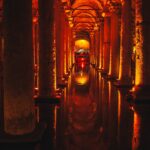
If your flight lands early enough, your guide takes you to the Basilica Cistern — underground, cool, and quiet. Built by the Byzantines to supply water to the Great Palace, 336 marble columns supporting a reservoir that held 80,000 cubic meters. Good for jet lag: calm, manageable, striking enough to signal that this trip is different.
Evening: Walk to a restaurant in Sultanahmet. Not the tourist strip — your guide knows a lokanta two streets in where the lentil soup comes from a pot that’s been on the stove since morning. Early to bed. Tomorrow starts at the Hagia Sophia.
Day 2: Istanbul — Sultanahmet and the Bosphorus
Morning: Hagia Sophia opens early. Your guide takes you before the main crowds arrive. Stand in the nave and look up at the dome — it was the largest in the world for nearly a thousand years, and the light through the windows at this hour makes the interior feel like something between a cathedral and a cloud.
Then across the square to the Blue Mosque, entering between prayer times. 20,000 handmade İznik tiles, six minarets, and an interior that’s quieter than you expect.
Walk the Hippodrome — the Byzantine chariot racing track, now a long public square with the Egyptian Obelisk still standing where it’s stood for 1,600 years.
Lunch: Your guide takes you to a local place in Kumkapı, the old fishing quarter south of Sultanahmet. Mezze, grilled fish, bread that came out of the oven this morning.
Afternoon: Topkapı Palace, if you want it — the administrative center of the Ottoman Empire for four centuries, with the Imperial Treasury, the Harem, and a terrace overlooking the Bosphorus. Or the Grand Bazaar, with a guide who knows the real craftsmen, not just the carpet hawkers at the entrance.
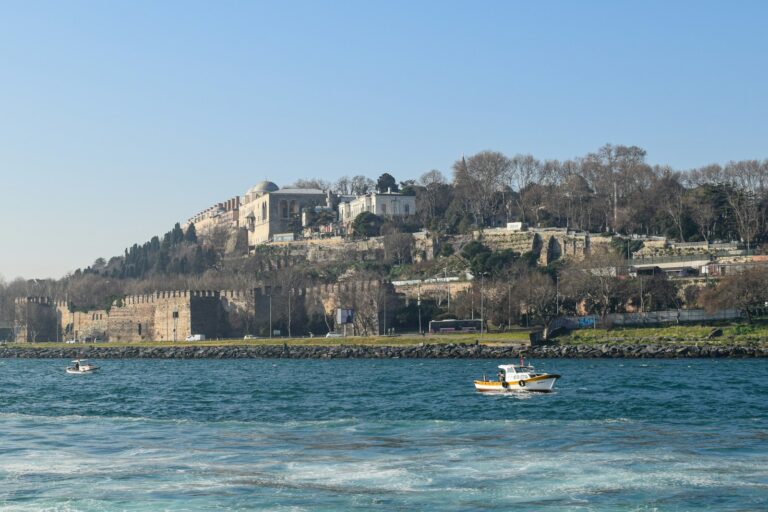
Evening: Bosphorus cruise. A 90-minute boat ride at dusk, past Ottoman waterfront mansions, the Rumeli Fortress where the Ottomans cut Constantinople off from the sea, and the point where Europe becomes Asia. Back in time for dinner on a rooftop with the Bosphorus below and the city lit up across the water.
Day 3: Istanbul — Neighborhoods and Departure Prep
Morning: This is the day for the parts of Istanbul that aren’t on the standard itinerary. Your guide takes you to Balat — the old Greek, Jewish, and Armenian quarter on the Golden Horn — where the buildings are painted in fading colors and the streets are too narrow for cars. Coffee at a cafe that’s been there since your guide’s grandmother was young.
Then the Spice Bazaar, smaller and more navigable than the Grand Bazaar, with saffron and dried figs and Turkish tea in colors you haven’t seen before.
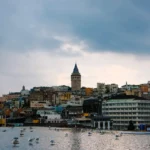
Afternoon: Galata Tower for the panoramic view — the whole city from above, both sides of the strait, the mosques and the bridges and the ferry traffic. Then the neighborhood around it: Karaköy and Beyoğlu, Istanbul’s modern heart, where the restaurants and galleries and coffee shops signal a city that isn’t only its monuments.
Evening: Early dinner, early night. Tomorrow’s flight to Cappadocia is early.
Day 4: Istanbul → Cappadocia — North Valley Route
Morning: Airport transfer at 6:00 AM. One hour and twenty minutes in the air. Your guide meets you at Kayseri or Nevşehir airport.
By 10:00 AM you’re in a different world. The volcanic landscape of Cappadocia — fairy chimneys, eroded valleys, cave hotels — is visible from the road.
Göreme Open Air Museum: A UNESCO World Heritage site, a cluster of rock-cut churches and monasteries from the 10th and 11th centuries. The Dark Church — Karanlık Kilise — has the best-preserved frescoes in Cappadocia, sealed from light for centuries. You spend as long as you want.
Paşabağ (Monks Valley): Multi-headed fairy chimneys and hermit cells carved into the rock. Your guide explains the geology — why some chimneys have caps and others collapsed, what the underground looks like. The formation that took three million years begins to make sense.
Devrent Valley: No church, no entrance fee, no tour bus. Just rock formations shaped like animals and the quiet that comes from being the only people on a particular road at a particular moment.
Avanos: A small town on the Kızılırmak River where potters have worked for 4,000 years. You sit at a wheel in a working studio. A master potter guides your hands while your cup takes a shape that surprises you.
Check in: Your cave hotel in Göreme or Uçhisar. A room carved from soft volcanic tuff, arched stone ceilings, natural temperature regulation, a terrace with a view into a valley. Dinner in Göreme.
Day 5: Cappadocia — Balloon at Sunrise, South Valley Route
4:30 AM: Pickup from your hotel. Still dark.
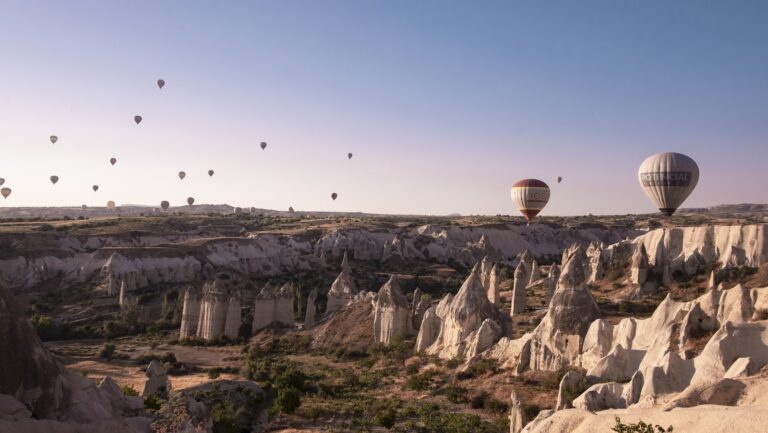
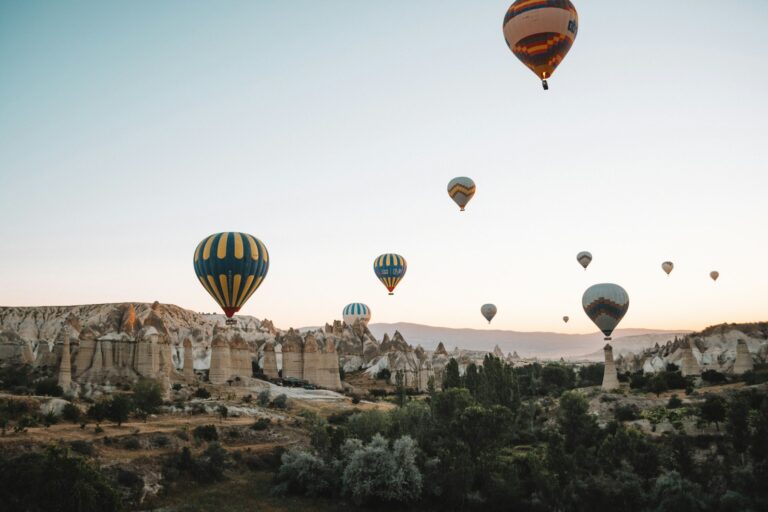
The balloon launches before sunrise — you’re in the basket before the sky turns, watching the horizon change color. Below: the fairy chimneys of Göreme, the Red Valley, vineyards, the distant outline of Erciyes volcano. Sixty minutes of silence interrupted only by the occasional burst of the burner. At 300 meters, there’s no sound from the ground.
Landing comes with a small celebration — a glass of sparkling wine, a flight certificate, and the particular satisfaction of having done something that required getting up at 4:30.
Back at the hotel by 9:00. Breakfast on the terrace. Balloons still visible, drifting east.
Late morning: Red Valley hike. Three to four kilometers through rose-tinted rock formations, past hidden chapels you’d never find without a guide who knows where the paths go. Mostly downhill, unhurried.
Çavuşin: A village abandoned in the 1950s after rockfalls made the cliff dwellings unsafe. The old settlement climbs the rock face — doorways opening to nothing, staircases ending at air. A 5th-century basilica at the base.
Kaymaklı Underground City: Eight levels down. Built to shelter 3,500 people during raids from the surface — ventilation shafts, storage rooms, a winery, a church, all carved beneath the plateau. The tunnels are narrow. The ceilings are low. It’s more claustrophobic than it looks in photos, and more impressive.
Pigeon Valley: The last stop. Hundreds of dovecotes carved into the cliff face, built by farmers who used pigeon droppings to fertilize vineyards. The valley runs from Göreme to Uçhisar, with a view at the end that makes a good final image of Cappadocia.
Evening: Dinner in Cappadocia. Your guide recommends a restaurant in Göreme where the testi kebab — meat slow-cooked in a sealed clay pot — is cracked open at your table. Alternatively, a quiet terrace in Uçhisar if you’d rather eat overlooking the valley.
Day 6: Cappadocia → Ephesus
Morning: Flight from Kayseri or Nevşehir to İzmir. About 1.5 hours. Your guide arranges the transfer and meets you at İzmir airport with a driver.
One hour by road to the ancient city.
Ephesus: You arrive mid-morning, ahead of the cruise ship passengers who typically reach the site after lunch. Your guide walks you through the marble streets — past the Temple of Hadrian, up to the Library of Celsus, down to the Great Theater. The theater held 25,000 people and the acoustics still work; your guide demonstrates this somewhere in the middle of it.
The detail that gets everyone: the ruts in the marble street from chariot wheels, worn two thousand years ago, still exactly where they were.
House of the Virgin Mary: Fifteen minutes uphill from Ephesus, in the hills above the ancient city. A small stone chapel recognized by the Vatican as the house where Mary lived her final years. Quiet and shaded, with candles and prayer notes from every religion.
Şirince: Eight kilometers from Ephesus, a former Greek village now inhabited by Turkish families who make fruit wines and handwoven goods. Cobblestone streets, a Byzantine church, and a vine-shaded terrace where someone pours you a glass of peach wine. Your guide knows which shop is actually worth going into.
Check in: A boutique hotel in Kuşadası or Selçuk, depending on your preference. Dinner at a restaurant overlooking the marina or in the village.
Day 7: Return to Istanbul — Final Hours
Morning: A slower start. Breakfast at the hotel, a walk through Selçuk or the Kuşadası market if you’re inclined.
Midday flight: İzmir to Istanbul. About one hour.
Istanbul airport: Depending on your international departure time, you may have a few hours in the city. Your guide can arrange a final lunch — something specific, not airport food. Sultanahmet or the Spice Bazaar if you want a last look; the airport lounge if you’d rather decompress before the long flight.
What you leave with: Seven days, three cities, roughly 3,000 years of human history, one balloon flight, a handmade pottery cup, and a list of what to see when you come back.
A Few Things No One Mentions
The transitions are part of the trip. The drive from Kayseri airport through the Cappadocian plateau, watching the landscape shift from flat farmland to something from another planet. The road from İzmir into the hills toward Ephesus. These aren’t gaps between sites — they’re context.
Your guide is the variable that changes everything. The same itinerary with a guide who adjusts to your pace, notices what catches your attention, and knows the back entrance to the Underground City looks completely different from the same itinerary with a guide who’s running a schedule. Ask about your guide before you book.
The balloon may cancel. Weather grounds roughly 15–20% of flights in peak season. Build two mornings into Cappadocia and you’ll almost certainly fly. Build one and it’s a coin flip. If it cancels and doesn’t rebook, a sunrise hike through Love Valley is not a consolation prize — it’s genuinely worth the early alarm.
Leave evenings unscheduled. Every town has a restaurant your guide can recommend that didn’t exist when the review sites were last updated. Every evening has a direction you didn’t plan to walk. The best moments of most Turkey trips were unscheduled.
This Itinerary Is a Starting Point
Seven days, three destinations, day by day. But no two trips look exactly like this, because no two travelers want exactly the same thing.
More time in Istanbul, less in Cappadocia. Skip Ephesus and add the coast. A cooking class instead of one of the valley drives. A second balloon window. Pamukkale between Ephesus and İzmir.
Tell us what you have in mind — what you want to see, how you like to travel, how many days you have — and we’ll build the version that fits.
Tell us what you have in mind →
Frequently Asked Questions
Is 7 days enough for Istanbul and Cappadocia?
Seven days lets you spend 3 days in Istanbul, 2 days in Cappadocia, and still add Ephesus for a day. None of it feels rushed if you have a private guide and don’t lose time to group logistics. For Cappadocia alone, two full days covers the essential sites and the balloon flight. Istanbul rewards more time if you have it — but 3 days gives you the core.
How do I get from Istanbul to Cappadocia?
By air: a 1-hour 20-minute domestic flight to Kayseri or Nevşehir. Flights are frequent (multiple departures daily) and typically cost $40–80 one way. Trains exist but take 12+ hours. On a private tour, flights and airport transfers are included.
Can I do this itinerary solo?
Yes. Solo travelers are a significant portion of our bookings, particularly women over 40. A private guide handles all transitions, logistics, and local navigation — which removes the friction that makes solo travel in an unfamiliar country complicated. You have independence in the evenings; the days are supported.
What if I want to add the coast or Pamukkale?
A 10-day itinerary adds 3 more days after Ephesus: drive to Pamukkale (3 hours from Selçuk) for the travertines and Hierapolis, then continue to Fethiye or Antalya for the coast. A 13-day itinerary adds a Blue Cruise along the Turquoise Coast. We can map any combination.
What’s included in a private 7-day tour?
Typically: private vehicle and driver for all transfers, licensed English-speaking guide on every touring day, domestic flights (Istanbul–Cappadocia, Cappadocia–İzmir), hotels with breakfast, all entrance fees, lunches on touring days, 24/7 local support. The balloon flight in Cappadocia is usually an add-on.
Which month is best for this itinerary?
April and May for wildflowers and ideal temperatures. September and October for harvest light and lighter crowds. Both seasons offer weather that’s warm enough for the valley hikes without being hot enough to limit Ephesus. Summer works but Ephesus exceeds 35°C in July and August — go early in the morning.
What should I pack for 7 days in Turkey?
Comfortable walking shoes — non-negotiable. Layers for Cappadocia’s cool evenings. A scarf or light shawl for mosque visits (available at the entrance, but better to have your own). Light, breathable clothing for Ephesus in warmer months. One slightly smarter outfit if you plan a rooftop dinner in Istanbul.