Private Tours in Turkey: What to Expect and Why It’s Worth It
You’re standing in the Hagia Sophia, and a guide is explaining the Byzantine mosaics on the upper gallery. She points to a detail in the Deësis — the way Christ’s face shifts expression depending on where you stand. You ask a question. She answers. You ask another. There’s no group waiting, no schedule to keep, no one checking their watch.
That’s the difference. Not a better bus or a fancier hotel — though those come too. The difference is that the tour bends around you, not the other way around.
Turkey has been a group-tour destination for decades. Coaches from Istanbul to Cappadocia, fixed itineraries, lunch at the restaurant that has a deal with the operator. It works. But there’s another way to do it, and in the last few years, more travelers are choosing it — especially those who’ve done the group thing before and want something that feels less like logistics and more like travel.
Here’s what private touring in Turkey actually looks like.
What “Private” Means in Practice
A private tour isn’t a group tour with fewer people. The entire structure is different.
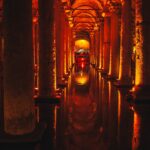
Your own guide. A licensed, English-speaking guide assigned to you for the duration of your trip. Not a tour leader managing thirty people — a specialist who adjusts their commentary, pace, and route based on what interests you. Want to spend an extra twenty minutes in the Basilica Cistern because the light on the water is doing something extraordinary? Done. Want to skip the Grand Bazaar because you’d rather walk through the backstreets of Balat? Also done.
Your own vehicle. A private, air-conditioned car or minivan with a professional driver. No group coach, no fixed stops, no waiting for the last person to get back on the bus. Your driver stops when you see something worth stopping for — a roadside fruit stand on the way to Ephesus, a viewpoint over the Mediterranean near Fethiye, a tea house that a local pointed out.
Your own schedule. Start times are suggestions, not orders. If you want to begin at 10 instead of 8 because you stayed up watching the sunset from your hotel terrace in Cappadocia, your guide adjusts the day. If you’re an early riser who wants to catch the fish market in Karaköy before the crowds, that works too.
Everything arranged in advance. Domestic flights, hotel transfers, entrance tickets, restaurant reservations, balloon flights — all handled before you arrive. You don’t queue, you don’t negotiate, you don’t figure out which bus goes where. Your guide meets you at the airport, and from that point on, the trip runs itself.
A Typical Day on a Private Tour
To make this concrete: here’s what a day in Istanbul looks like on a private tour versus what the same day looks like on a group tour.
Group tour, Day 2 — Istanbul:
8:00 AM hotel lobby. Coach to Sultanahmet. Hagia Sophia (45 min, timed entry with the group). Walk to Blue Mosque (30 min, shoes off and on with forty people). Hippodrome (15 min, photo stop). Lunch at a fixed restaurant (set menu, 1 hour). Grand Bazaar (1.5 hours free time). Coach back to hotel. 5:00 PM.
Private tour, same day:
You and your guide leave the hotel when you’re ready. Hagia Sophia first — your guide walks you through the nave, then upstairs to the mosaics, spending time where you have questions. The Blue Mosque is across the square; you enter when it’s between prayer times, no queue. Your guide suggests lunch at a small lokanta two streets off the tourist strip — lentil soup, pide, tea. After lunch, instead of the Grand Bazaar, your guide takes you through the Arasta Bazaar — the quieter market behind the mosque, where the carpet sellers still bargain properly. You end the day walking through the backstreets of Sultanahmet as the muezzin calls for afternoon prayer. Back at the hotel by 4 — or 6, if you decided to add Topkapı Palace because the morning moved faster than expected.
Same city. Same landmarks. Completely different experience.
What’s Included (and What Isn’t)
This varies by tour and operator, but here’s the standard for a well-run private tour in Turkey:
Typically included:
– Private vehicle and professional driver for all transfers
– Licensed English-speaking guide on every touring day
– Hotel accommodation with breakfast (4-star or boutique; cave hotels in Cappadocia)
– Domestic flights on multi-day tours (Istanbul to Cappadocia, Cappadocia to coast, etc.)
– All entrance fees for sites on the itinerary
– Lunches on guided days
– Airport and hotel transfers
– 24/7 local support
Typically not included:
– International flights
– Dinners (your guide recommends restaurants; you choose and pay)
– Optional add-ons: balloon flights in Cappadocia, palace entries in Istanbul, paragliding in Fethiye
– Travel insurance
– Gratuities
The dinner exclusion is intentional, not a cost-cutting measure. Your evenings are free. Your guide can make a reservation at a rooftop restaurant overlooking the Bosphorus or point you to the fish sandwich boats at Eminönü — but that choice is yours.
Who Books Private Tours (It’s Not Who You Think)
The assumption is that private tours are for wealthy travelers or honeymooners. Some are. But the fastest-growing segments are:
Solo travelers, especially women over 40. A private guide eliminates the navigation anxiety and safety concerns that come with solo travel in an unfamiliar country. You have a local expert beside you who speaks the language, knows the neighborhoods, and handles every interaction. Several travelers have described it as “having a knowledgeable friend in the country.”
Couples and small groups who’ve outgrown group tours. They’ve done the European coach circuit. They’ve seen Rome with forty strangers. They know what they don’t want. A private tour in Turkey costs less than you’d expect — and the value gap between private and group is larger here than almost anywhere in Europe.
Multi-generational families. Grandparents who can’t walk 10 kilometers a day, parents who want cultural depth, teenagers who need variety. A private guide adjusts the day for everyone: shorter walks, longer lunches, detours to the things that catch someone’s attention. No one compromises.
Travel advisors booking for their clients. A growing number of our bookings come through travel advisors who need a ground operator they can trust. Licensed guides, signed contracts, verifiable credentials — the operational backbone that advisors require.
What It Costs (Honest Numbers)
Private touring in Turkey is more expensive than group touring. It’s also significantly less expensive than private touring in Western Europe.
A rough framework:
- Day trip (Istanbul or Cappadocia, full day with guide, vehicle, entrance fees, lunch): €150–300 per person, depending on group size and inclusions
- Multi-day tour (5–7 days, multiple destinations, domestic flights, hotels): €800–1,500 per person
- Extended tour (10–13 days, coast-to-coast): €1,200–2,500 per person
These are per-person rates, and they drop as group size increases. A couple pays less per person than a solo traveler. A family of four pays meaningfully less per person than a couple.
For context: a comparable private tour in Italy or Greece runs 2 to 3 times higher for similar inclusions. Turkey’s cost structure — lower hotel rates, lower guide fees, lower domestic flight costs — makes private touring accessible to travelers who wouldn’t consider it in Western Europe.
The balloon flight in Cappadocia, the most common add-on, runs €250–350 per person on top of the tour price.
How Customization Actually Works
“Customizable” is a word every tour operator uses. Here’s what it means in practice:
Before the trip: You tell us your interests, physical limitations, dietary needs, pace preferences, and must-sees. We build the itinerary around those inputs. Want to spend three days in Istanbul instead of two? We adjust. Want to skip Pamukkale and add more time on the coast? We adjust. The itinerary is a draft until you approve it.
During the trip: Your guide adapts on the fly. If a site takes longer than expected because you’re genuinely interested, the afternoon reshuffles. If the weather turns, indoor alternatives appear. If you pass a village market that wasn’t on the plan, your driver can stop. The itinerary is a framework, not a contract.
Examples from actual trips:
– A couple skipped the second day in Antalya to spend more time hiking in Cappadocia’s Soğanlı Valley
– A solo traveler replaced the boat trip in Fethiye with a paragliding flight over Ölüdeniz
– A family with elderly parents shortened every walking day by an hour and added longer, sit-down lunches at local restaurants
– A traveler with claustrophobia skipped the underground city and spent that time in the valleys instead
None of these changes cost extra. They’re part of what “private” means.
What to Look for in a Private Tour Operator
Not all private tours are equal. Turkey’s tourism market ranges from excellent to exploitative. Here’s how to evaluate:
TURSAB license. Every legitimate tour operator in Turkey holds a license from TURSAB, the Association of Turkish Travel Agencies. Ask for the license number. Group A is the highest tier — it means the operator can handle both domestic and international tourists with full liability coverage.
Licensed guides. In Turkey, guiding is a licensed profession regulated by the Ministry of Tourism. Unlicensed guiding is illegal. Ask whether your guide holds a professional license — and whether they’re a regional specialist or a generalist assigned by rotation.
Cancellation policy. Reputable operators offer free cancellation up to 30–60 days before departure. Anything less flexible is a warning sign.
Named contacts. Can you reach a real person before, during, and after the trip? The best operators have a named point of contact who handles your booking from inquiry to departure — not a rotating call center.
Reviews that mention specifics. “Great tour!” tells you nothing. Look for reviews that name the guide, describe a specific moment, or mention how a problem was handled. Those are real.
You’ve Read Enough. Let’s Talk About Your Trip.
If you’ve been researching Turkey and you’re past the “should I go?” stage, we’re the next conversation. Tell us where you want to go, how long you have, and what matters to you. We’ll come back with an itinerary and a price — no commitment, no pressure, just a plan to look at.
Tell us what you have in mind →
Frequently Asked Questions
How far in advance should I book a private tour in Turkey?
Six to eight weeks is ideal for peak season (April–June, September–October). This ensures availability for cave hotels in Cappadocia, balloon flights, and specialist guides. Off-season tours can often be arranged with two to three weeks’ notice.
Can I customize the itinerary after booking?
Yes. The itinerary remains flexible until the trip starts — and during the trip, your guide adjusts on the day based on your energy, interests, and weather. Changes that don’t affect flights or hotel bookings cost nothing extra.
Is a private tour safe for solo female travelers?
Yes. Your licensed guide is with you throughout every touring day, handles all local interactions, and knows the areas you’re visiting. Several of our most frequent travelers are solo women over 40 who specifically chose private touring for the combination of independence and local support.
Do I need to tip the guide and driver?
Tipping is not mandatory in Turkey but is customary for good service. A common guideline is €10–20 per day for the guide and €5–10 per day for the driver, adjusted to your satisfaction.
What happens if my balloon flight is cancelled due to weather?
Your guide rebooks for the next available morning. If you have two mornings in Cappadocia, the chances of flying are high. If weather cancels both, a sunrise valley walk is arranged as an alternative — and many travelers find it equally memorable.
Can I combine a private tour with a Blue Cruise?
Yes. Multi-day itineraries often pair guided city and site visits with a gulet cruise along the Turquoise Coast. The transition is seamless — your guide arranges the handoff between land touring and the boat crew.
What’s the difference between a private tour and hiring a local guide for the day?
A day guide shows you around a single city or site. A private tour operator manages the entire trip: multi-city logistics, domestic flights, hotel bookings, ground transport, multiple specialist guides at each destination, contingency planning, and 24/7 support. For a single-day visit, a local guide may be enough. For anything beyond that, the logistics are the part that makes or breaks the trip.