
2 Days
Gallipoli, Troy
2-Day Gallipoli & Troy Tour from Istanbul
View Itinerary →
Home » 5-Day Istanbul, Gallipoli & Troy Tour
From
€
/per person
You’ll begin in Istanbul, where Roman engineering, Ottoman ambition, and Byzantine devotion share the same skyline. Your guide walks you through whichever side of the city draws you — the imperial mosques and palace walls of Sultanahmet, or the waterfront mansions and merchant quarters along the Bosphorus.
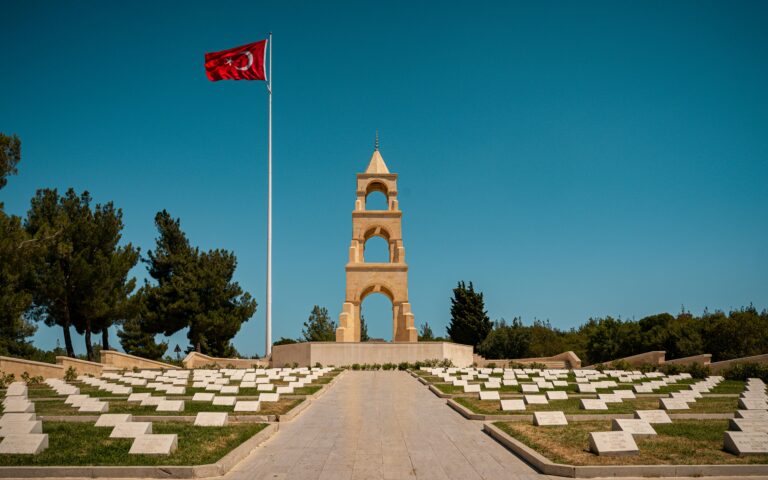
Then you’ll head west across Thrace to the Gallipoli Peninsula, where the 1915 campaign reshaped four nations. You’ll stand at ANZAC Cove, walk through Lone Pine Cemetery, and hear the story your guide tells not from a textbook but from the ground you’re standing on. A short ferry ride takes you across the Dardanelles to Canakkale, and the next morning you’ll walk the ruins of Troy — nine cities built on top of each other over 4,000 years, the place where archaeology finally caught up with Homer.
Every transfer, guide, entrance fee, and meal is arranged. You focus on the history. We handle the roads.
Arrive in Istanbul and hand off the logistics immediately — a driver with your nameplate takes you from the terminal to your hotel in the Sultanahmet or Taksim area. Tomorrow’s guided Istanbul tour covers serious ground, so tonight is about finding your rhythm. Walk down to the Golden Horn waterfront, scope out the streets near your hotel, or grab a window table at a local restaurant. Your guide calls to set the morning schedule.
You pick the Istanbul that interests you most:
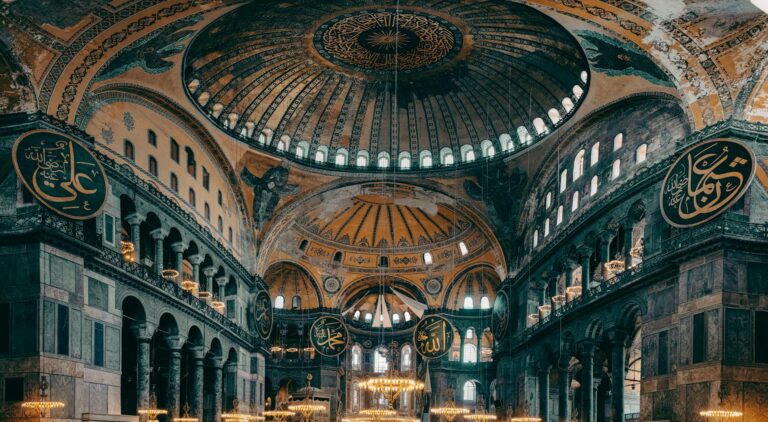
Option A — Sultanahmet & the Old City Walk through the Hagia Sophia — a building that has been a cathedral, a mosque, and a museum in its 1,500-year life. Cross to the Blue Mosque, where 20,000 handmade Iznik tiles line the interior walls. Continue to the Hippodrome, the center of Byzantine public life, then navigate the Grand Bazaar’s 4,000-plus shops, some of which have been in the same family for generations.
Optional add-on: Topkapi Palace — where Ottoman sultans ruled for 400 years (entrance fee not included)
Option B — Bosphorus & Beyond Descend into the Basilica Cistern — 336 marble columns supporting a 6th-century water reservoir. Browse the Spice Bazaar for Turkish delight and dried figs, then board a 1.5-hour Bosphorus cruise past Ottoman waterfront mansions and the 15th-century Rumeli Fortress. Finish at the top of the Galata Tower for a 360-degree view across two continents.
Optional add-on: Dolmabahce Palace — 14 tons of gold leaf and the largest Bohemian crystal chandelier in the world (entrance fee not included)
Early departure from Istanbul for the drive across Thrace — approximately 4 to 5 hours. Your guide uses the travel time to set the historical context: why the Dardanelles mattered, what the Allied and Ottoman forces were each trying to achieve, and why it went the way it did.
Once on the peninsula, you’ll visit:
After the tour, a short ferry crossing takes you across the Dardanelles strait to Canakkale — a waterfront city with a relaxed atmosphere and a good restaurant scene.
Morning visit to the archaeological site of Troy — the place Heinrich Schliemann started digging in 1870, convinced Homer was writing history, not fiction. What he found (and what archaeologists have uncovered since) is nine distinct cities layered on top of each other, spanning roughly 3000 BC to 500 AD.
Your guide walks you through:
After Troy, your driver takes you back to Istanbul — approximately 5 to 6 hours by road. You’ll arrive in the evening.
Breakfast at your hotel. Your driver picks you up 3 to 4 hours before your international flight for a straightforward airport transfer. Seamless from start to finish.
This itinerary works well for:
Istanbul, Gallipoli, and the Canakkale region around Troy are well-traveled destinations with a long history of hosting international visitors, including large ANZAC commemorative groups each April. Your guide carries a local phone throughout the trip and is your direct point of contact for anything you need — from navigating the Grand Bazaar to adjusting the next day’s schedule.
Light to moderate. Istanbul involves walking on cobblestone streets. Gallipoli requires walking across uneven ground between memorials and trenches — comfortable shoes are essential. Troy is an open archaeological site with some inclines. Your guide can adjust the pace at any point.
Yes — that’s what private tours are for. Want to spend two days in Istanbul instead of one? Add Pergamon on the return from Troy? Extend to the Aegean coast? Tell us what you’re interested in and we’ll rebuild the routing.
The standard itinerary visits the Gallipoli sites as a guided day tour. If you’re planning to attend the Dawn Service on April 25, special arrangements are needed — access is restricted and attendance requires advance registration. Contact us early and we’ll help coordinate.
March through June and September through November. Spring is particularly good for Gallipoli when the wildflowers are in bloom across the peninsula. Summer is hot, especially at Troy, but still manageable with an early start. Winter is quiet and cooler — fewer visitors at every site.
Two to four weeks is usually enough for this route, as it doesn’t depend on balloon availability or limited-capacity experiences. For ANZAC Day period (late April), book as early as possible — hotel availability in Canakkale fills quickly.
From
€
/per person