Visiting Hagia Sophia: A Private Guide to Istanbul’s Greatest Monument
You can stand in the same building that has witnessed fourteen centuries of human history — the collapse of empires, the rise of new ones, the weight of devotion from millions of people across radically different faiths. Hagia Sophia is not a ruin. It is not a museum piece frozen in amber. It is a living building that has been remade several times, each layer visible if you know where to look.
Most visitors spend 45 minutes here on a tight city tour. They photograph the dome, buy a scarf at the entrance, and move on to the Blue Mosque next door. That’s one way to do it. The other way is to arrive when the light is right, walk slowly, and let someone who has spent years studying this building help you read what’s actually in front of you.
When I take travelers to Hagia Sophia, I always ask them to look up first and say nothing. The dome — 31 meters wide, sitting on a ring of 40 windows that floods the interior with shifting light — has a way of stopping conversation before it starts. Then we begin to talk.
That combination of quiet and context is what a private visit offers. The building doesn’t change. The experience does.
The Building Itself
Hagia Sophia — Αγία Σοφία in Greek, meaning “Holy Wisdom” — was commissioned by the Byzantine Emperor Justinian I and dedicated in 537 AD. It remained the largest church in the world for nearly a thousand years. The architects Anthemius of Tralles and Isidorus of Miletus designed something that had never been built before: a massive dome appearing to float over a square base, held up not by solid walls but by a cascading system of half-domes and arches that transfer the load outward. Contemporary accounts said the dome seemed “suspended from heaven by a golden chain.” The structural engineering behind that impression took four years to build and has mostly held for fifteen centuries.
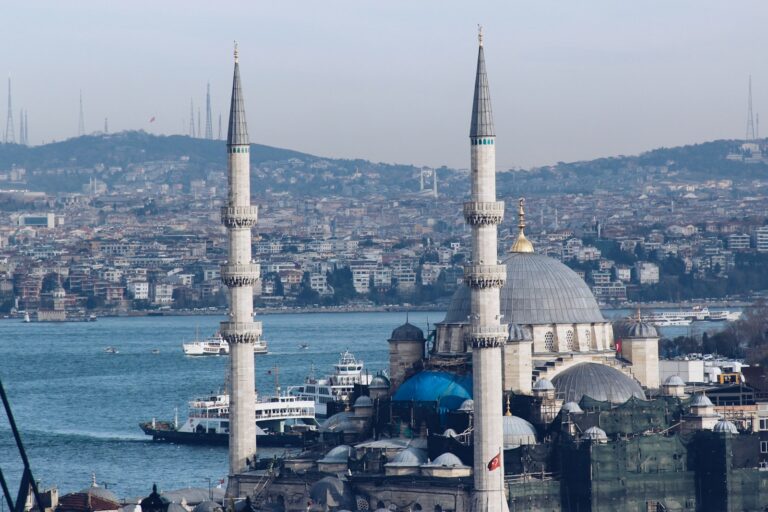
In 1453, Sultan Mehmed II conquered Constantinople and converted the church into a mosque. The mosaics were plastered over, minarets were added to the exterior, and the Islamic character of the building was layered over the Christian one — calligraphy medallions, a mihrab indicating the direction of Mecca, and a minber for Friday prayers. For nearly 500 years it functioned as an imperial mosque.
In 1934, Mustafa Kemal Atatürk converted it into a secular museum, and the plaster was carefully removed from many of the mosaics. It became one of the most visited museums in the world.
In 2020, Turkey’s Council of State reversed that decision, and Hagia Sophia was reconverted to a mosque. It remains open to non-Muslim visitors outside of prayer times. The mosaics are still visible.
That’s four distinct lives in one building. Understanding which layer you’re looking at — Byzantine Christian, Ottoman Islamic, Kemalist secular, contemporary Turkish — is most of what makes a visit here genuinely interesting.
What to See Inside
The Deësis Mosaic
In the upper gallery, accessible by a stone ramp from the ground floor, a fragment of a 13th-century mosaic shows Christ flanked by the Virgin Mary and John the Baptist. Only a portion survives — the left side was destroyed — but what remains is widely regarded as one of the finest examples of Byzantine art anywhere. The faces have a psychological depth that is quite different from the flat, symbolic style of earlier Byzantine mosaics. Stand close and look at the eyes. There is an expressiveness there that feels startlingly modern.
The Empress Zoe Mosaic
Also in the upper gallery, this mosaic panel from around 1042 shows the Byzantine Empress Zoe and her husband Constantine IX flanking Christ. Zoe was married three times, and the mosaic was altered with each husband — the face, hands, and name of the male figure were changed to match whoever sat on the throne at the time. You can still see the seams in the tesserae where the updates were made. It is, in its way, a record of political history written in tiny glass tiles.
The Marble Floor
The original marble floors date to Justinian’s building, though they have been repaired and patched many times over the centuries. Look for the Omphalos — a circular marble design in the floor that marks the symbolic center of the Byzantine world, the spot where emperors were crowned. Your guide can point it out; it is easy to walk past without noticing.
The Minber and Calligraphy Medallions
The carved marble minber — the pulpit — was added during the Ottoman period and is a fine piece of craftsmanship in its own right. The eight large circular calligraphy medallions hanging from the walls bear the names of Allah, the Prophet Muhammad, and the first four caliphs. They were added in the 19th century. In the mosque period today, the Byzantine mosaics visible from the nave are covered with curtains during prayer times, then uncovered afterward.
The Upper Gallery
The south gallery — where the Deësis and Empress Zoe mosaics are — also has a faint chalk outline on the floor near the balcony: a cross scratched by a Viking Varangian guardsman named Halvdan sometime in the 9th century. It was identified through runic inscription. Your guide will find it. It is the kind of detail that makes a building feel inhabited rather than curated.
The Practical Side
When to visit
The quietest windows are weekday mornings between 9:00 and 11:00 AM, before the group tours arrive in force. Friday midday is the busiest time of the week due to the jumu’ah prayer. Hagia Sophia closes to tourists during the five daily prayer times — typically 15 to 30 minutes each — so factor those in if you’re planning a self-guided visit. Your guide will time the arrival to avoid these closures without any guesswork.
How long to spend
Allow 60 to 90 minutes for a thorough visit. That includes the ground floor, the upper gallery, and time to simply sit and look at the dome from different positions. Groups typically rush through in 30 to 40 minutes. The difference is that you miss everything that requires stillness.
Tickets
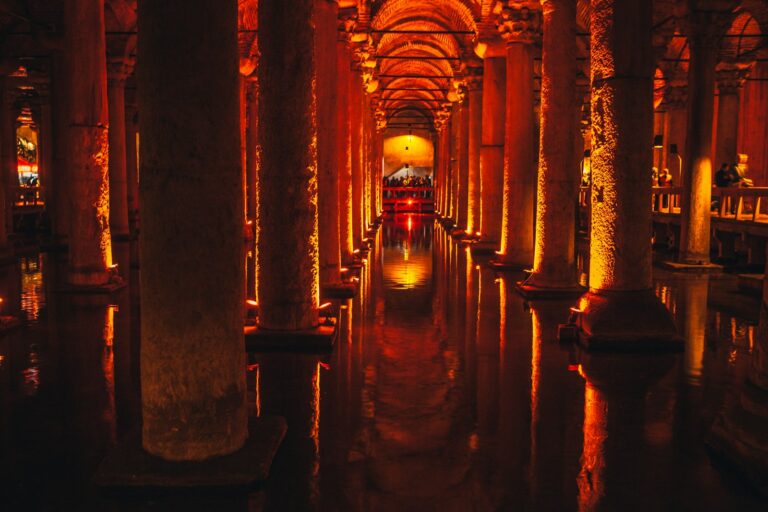
Since its reconversion to a mosque in 2020, Hagia Sophia is free to enter for all visitors. Donations are welcome but not required. Note that the Basilica Cistern directly across the square and the Topkapi Palace grounds nearby have separate admission fees.
What to wear
As an active mosque, Hagia Sophia requires modest dress. Women should cover their hair with a scarf and have shoulders and knees covered. Men should have knees covered. Scarves are available at the entrance if needed. Shoes must be removed before entering — bags are provided to carry them. Arrive with slip-on shoes if you can.
Hagia Sophia With a Private Guide
The difference is not that a private guide unlocks a door nobody else can open. The difference is in what the visit becomes.
On a group tour, you hear the facts. The dome is 55.6 meters high. It was built in under six years. It was the largest church in the world for nearly a millennium. These are accurate and essentially useless without context.
With a private guide, you understand why the dome appears to float — the architectural trick of the window band that cuts the dome from its supports visually, making the weight disappear. You understand what the shift from mosaic faces to abstract geometry on the walls tells you about the Ottoman theological position on figurative art. You understand why the mihrab is slightly off-center from the main axis — because the building was originally oriented toward Jerusalem, and Mecca is a different direction.
You also move at your own pace. If you want to stand in the upper gallery for 20 minutes watching the light change on the Deësis mosaic, you can. Nobody is rushing you toward the exit. If you want to sit on the ground floor and simply absorb the scale of the space, there is time for that too.
When I bring solo travelers here — particularly women traveling alone — the private setting also means no need to navigate a crowd, no need to keep up with a group, and no pressure to photograph and move on. You can experience the building the way it was built to be experienced: slowly, with attention.
Hagia Sophia pairs naturally with nearby sites that share the same history — the Basilica Cistern, the mosaics inside the Chora Church (Kariye Mosque), and the city walls that still trace Justinian’s Constantinople. A full day in this quarter of Istanbul, unhurried and in sequence, builds a picture of Byzantium that no single site can give on its own.
Explore Istanbul at Your Own Pace
Istanbul deserves more than a checklist. If Hagia Sophia is on your list, tell us what else matters to you — the Grand Bazaar, the Bosphorus, the Ottoman palaces, the neighborhood markets that don’t appear in guidebooks — and we’ll build a private itinerary around it.
Frequently Asked Questions
Is Hagia Sophia free to enter?
Yes. Since its reconversion to a mosque in July 2020, entry to Hagia Sophia is free for all visitors, including non-Muslims. There is no ticket required. The nearby Topkapi Palace, Basilica Cistern, and Blue Mosque (Sultanahmet Mosque) each have their own separate arrangements.
Do you need to remove your shoes to enter Hagia Sophia?
Yes. As an active mosque, shoes must be removed before entering the prayer hall. Plastic bags are provided at the entrance to carry your shoes with you inside. Slip-on shoes make this much easier than laced boots.
What is the best time to visit Hagia Sophia?
Weekday mornings between 9:00 and 11:00 AM offer the fewest crowds and the best light inside the building. Avoid Friday midday, which draws the largest prayer attendance of the week. Summer weekends are the busiest overall — if possible, plan your visit for spring (April–May) or autumn (September–October).
How long should I spend at Hagia Sophia?
A thorough visit takes 60 to 90 minutes — enough time to cover the ground floor, climb to the upper gallery for the Byzantine mosaics, and spend a few unhurried minutes simply taking in the scale of the building. Most group tours allow 30 to 40 minutes, which covers the basics but misses the details that make the visit worthwhile.
Can non-Muslims visit Hagia Sophia?
Yes. Non-Muslim visitors are welcome during non-prayer times. The five daily prayer periods each last approximately 15 to 30 minutes, during which tourists wait outside or in the vestibule. A private guide will plan your arrival to work around these windows so there is no waiting. Modest dress is required for everyone regardless of faith.
Is Hagia Sophia very crowded?
During peak season (June through August) and on weekends, the main hall can be extremely busy. The upper gallery is less trafficked, and early morning arrivals make a significant difference. A private guide also knows which routes through the building avoid the worst bottlenecks and when the main prayer hall is at its quietest.