
Istanbul to the Aegean — Gallipoli, Troy, Ephesus & Pamukkale
Istanbul, Ephesus, Gallipoli, Pamukkale & Troy
Overview
This itinerary covers ground most travelers try to cram into a two-week trip. You’ll move from Istanbul‘s layered Ottoman and Byzantine history to the Gallipoli Peninsula, where ANZAC and Allied forces fought one of the defining campaigns of World War I. Then across the Dardanelles to the plains of Troy — nine cities built on top of each other over 4,000 years.
From there, the route follows the Aegean coastline south. Pergamon‘s hilltop acropolis, once home to a library rivaling Alexandria’s. Ephesus, the best-preserved classical city in the eastern Mediterranean. And finally Pamukkale, where calcium-rich thermal springs have built white travertine terraces down the hillside for thousands of years — with the ruins of Hierapolis sitting right on top.
Every transfer, flight, and entrance fee is handled. You travel in small groups with licensed guides, and Istanbul includes a free day to explore at your own pace.
Day-by-Day Itinerary
Arrival in Istanbul
Land in Istanbul and skip the arrivals chaos — your driver is already there with a nameplate. The transfer to your Sultanahmet or Taksim hotel is direct and private. Tomorrow is a free day in the city before the route south through Gallipoli and Troy to Ephesus, so tonight is yours to preview what is coming: walk past the illuminated Sultanahmet mosques, or take a quiet seat at a waterfront cay bahcesi.
Free Day in Istanbul (Optional Guided Tour)
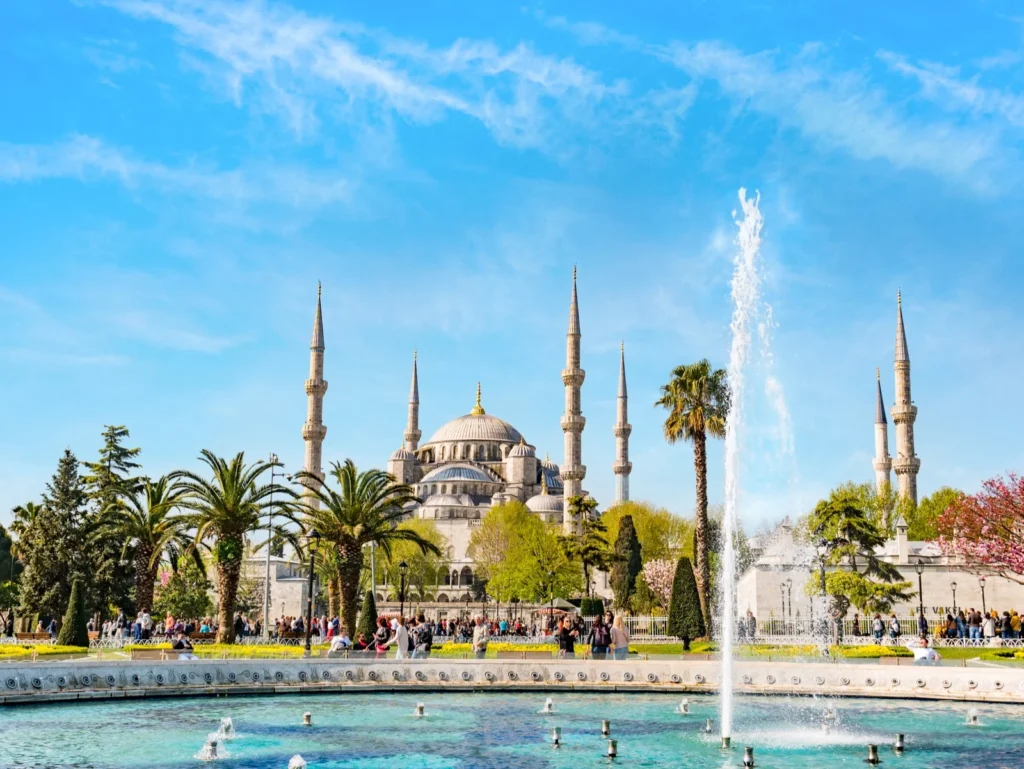
A free day to explore Istanbul at your own pace. The Hagia Sophia, the Blue Mosque, the Hippodrome and the Grand Bazaar sit close together in the old city, and a public ferry across the Bosphorus is an easy half day on your own.
Optional guided tours (extra cost), with a licensed guide:
Option A · Sultanahmet & the Old City The Hagia Sophia, the Blue Mosque, the Hippodrome and the Grand Bazaar, with Topkapi Palace as an add-on.
Option B · Bosphorus & Beyond The Basilica Cistern, the Spice Bazaar, a 1.5-hour Bosphorus cruise and the Galata Tower, with Dolmabahce Palace as an add-on.
Ask us and we will add one to your booking.
Istanbul to Gallipoli, Ferry to Canakkale
Early departure for the Gallipoli Peninsula — roughly a four-hour drive from Istanbul. This is ground that carries serious weight, especially for Australian, New Zealand, British, and Turkish visitors.
Your guide walks you through:
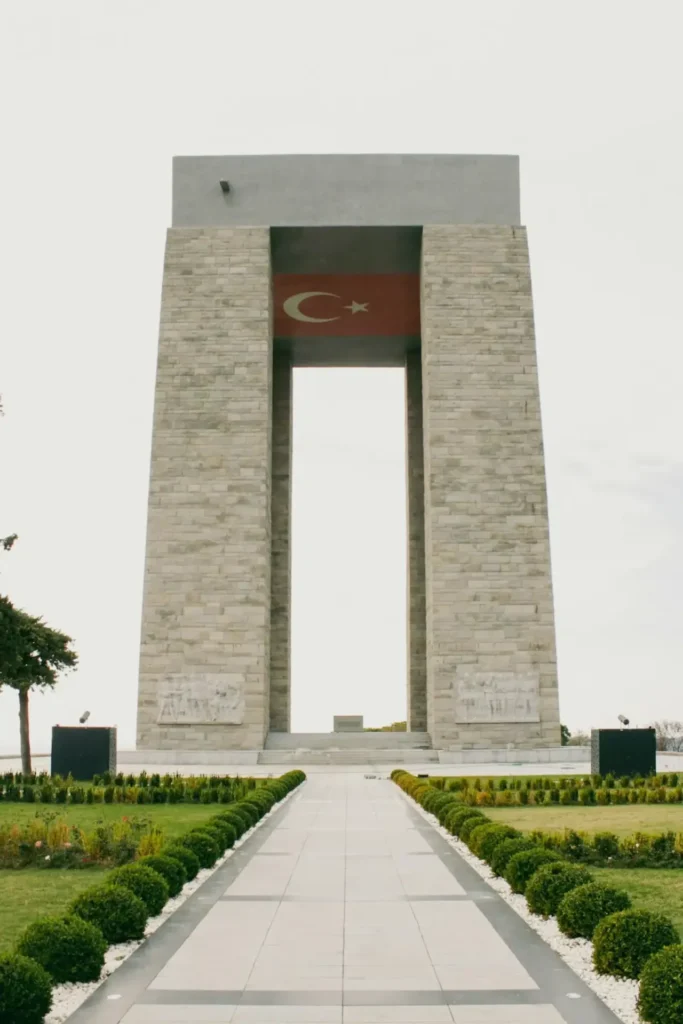
- ANZAC Cove — the beach where Allied troops landed on April 25, 1915. Every year on that date, thousands of Australians and New Zealanders gather here for a dawn service that begins in darkness, just as the original landing did. Even outside ANZAC Day, this shoreline carries a weight you feel before your guide says a word.
- Lone Pine Cemetery & Memorial — site of one of the fiercest close-quarters battles of the campaign
- Chunuk Bair — the New Zealand memorial marking the highest point reached by Allied forces
- Kabatepe War Museum — personal effects, letters, and artifacts recovered from the battlefields
After the tour, you’ll cross the Dardanelles by ferry to Canakkale — a short, scenic ride across the strait.
Troy & Pergamon, Drive to Kusadasi
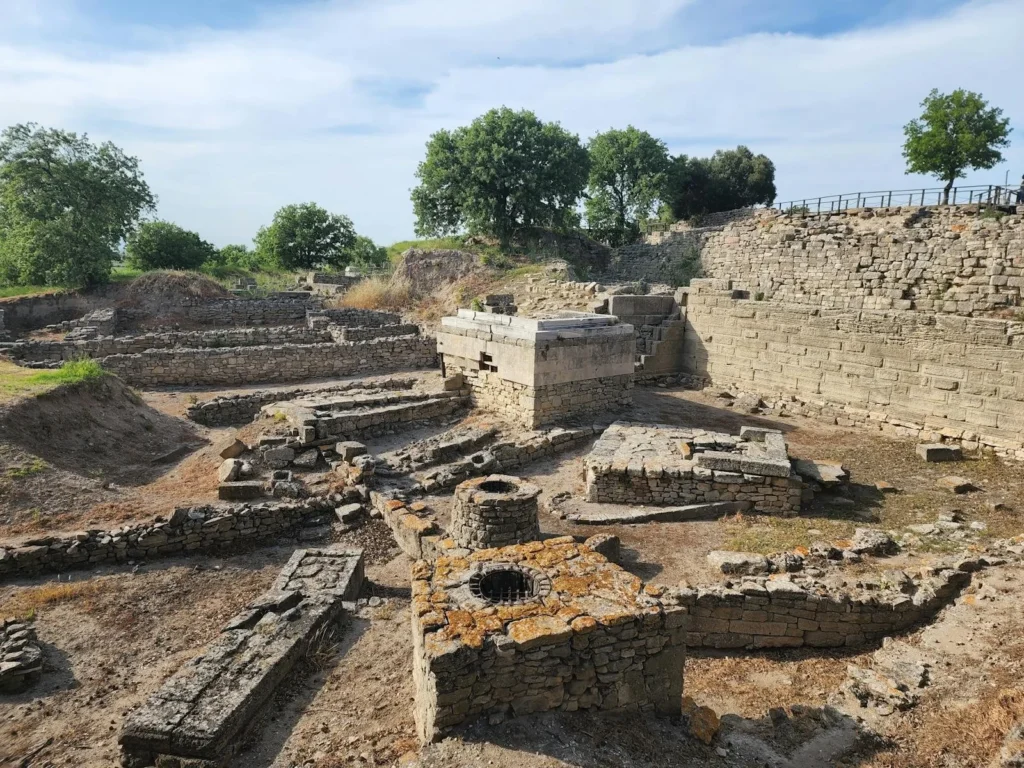
Morning visit to Troy, roughly 30 minutes from Canakkale. This is not a single ancient city — it is nine layers of civilization built one on top of the other over 4,000 years. Your guide walks you through the excavation trenches, the fortification walls, and the ramp where Schliemann first believed he had found Priam’s treasure. The reconstructed Trojan Horse stands at the entrance — a photo opportunity, yes, but the real story is in the ground beneath it.
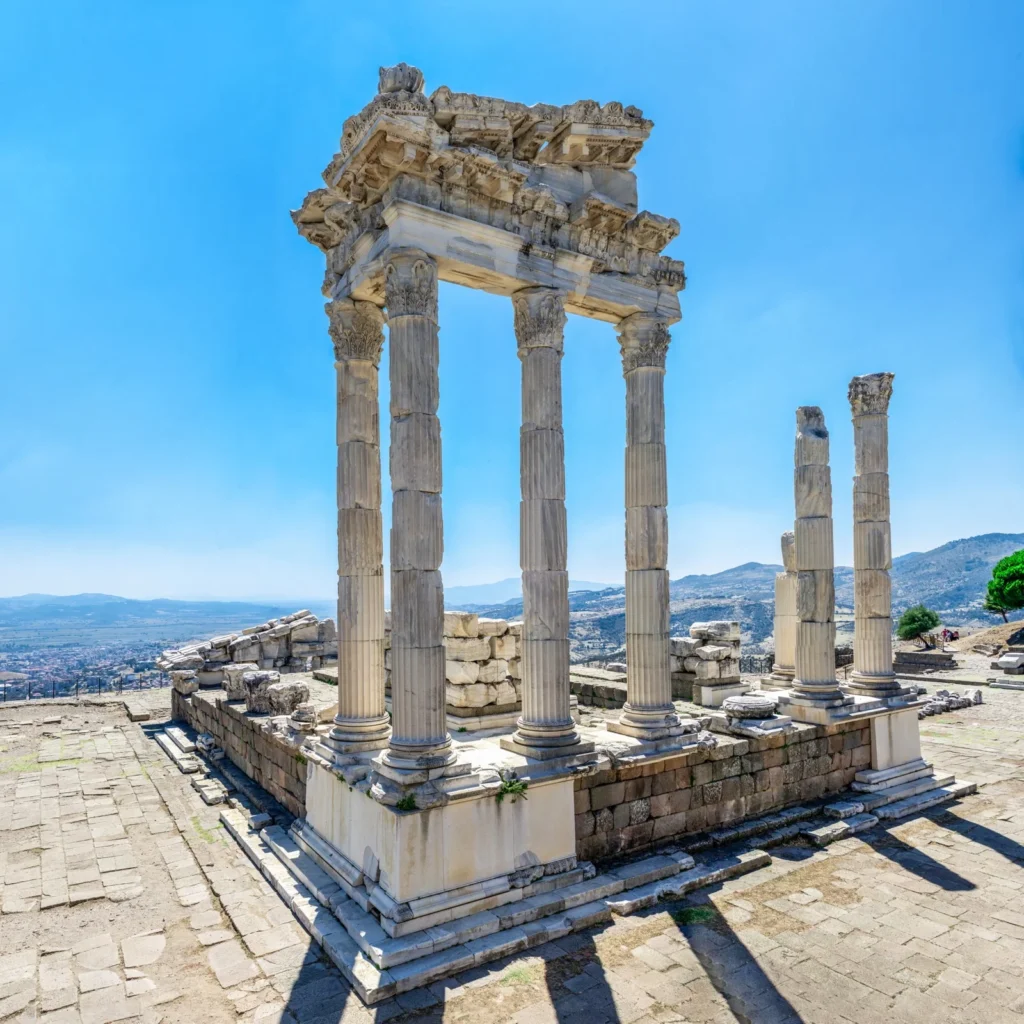
Then south to Pergamon, one of the great intellectual centers of the ancient world. You’ll visit:
- The Acropolis — perched on a hilltop with views across the valley, home to the steepest theater in the ancient world (10,000 seats carved into the hillside)
- The Asklepion — an ancient healing center where patients were treated with water therapy, herbal medicine, and dream interpretation. Think of it as the Mayo Clinic of 200 BC.
Continue south to Kusadasi for the night. The waterfront promenade is worth an evening walk.
Ephesus Full Day
A full day dedicated to the most complete classical city in the Mediterranean region. Ephesus was once the second-largest city in the Roman Empire, home to 250,000 people, and the site of one of the Seven Wonders of the Ancient World.
Your guide takes you through:
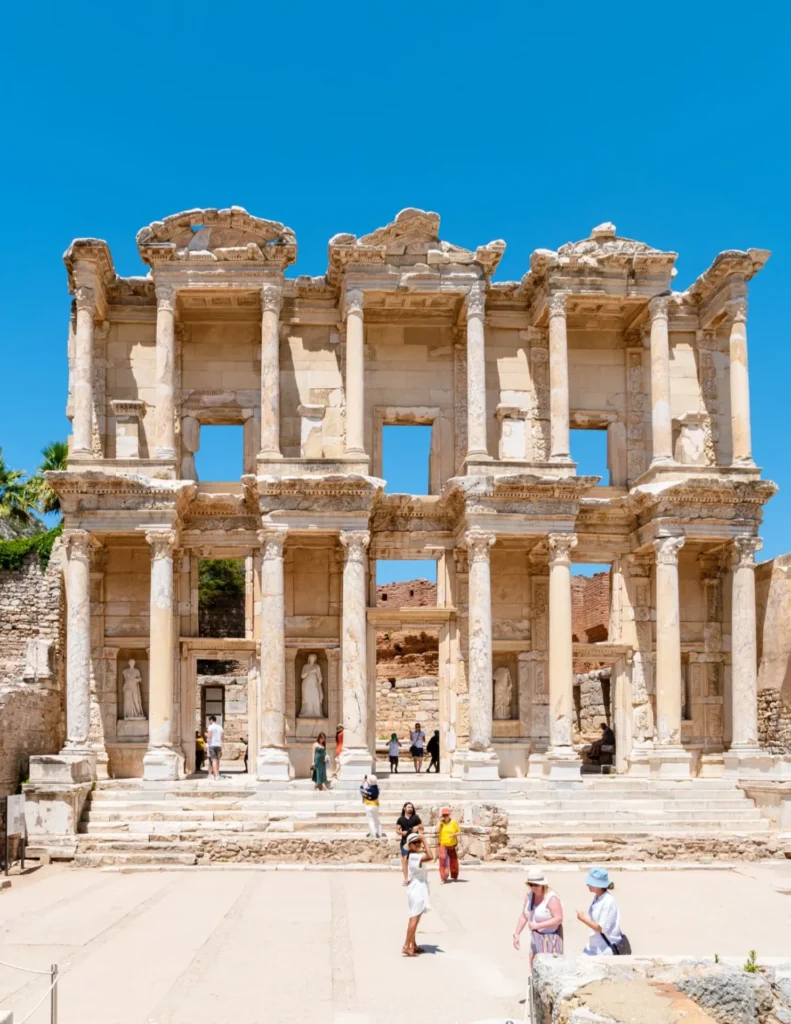
- The Library of Celsus — built in 117 AD to hold 12,000 scrolls. Look closely at the columns: they curve slightly outward, an architectural trick Roman builders used to make the facade appear larger than it actually is
- The Great Theater — seating 25,000, where St. Paul once preached (and was nearly mobbed for it)
- The Temple of Hadrian — intricate reliefs depicting the city’s mythological founding
- The House of the Virgin Mary — a small chapel on the hillside above Ephesus, recognized by the Vatican as a pilgrimage site
- The Temple of Artemis — one remaining column marks where the Wonder of the Ancient World once stood
Lunch is included today.
Pamukkale & Hierapolis, Flight to Istanbul
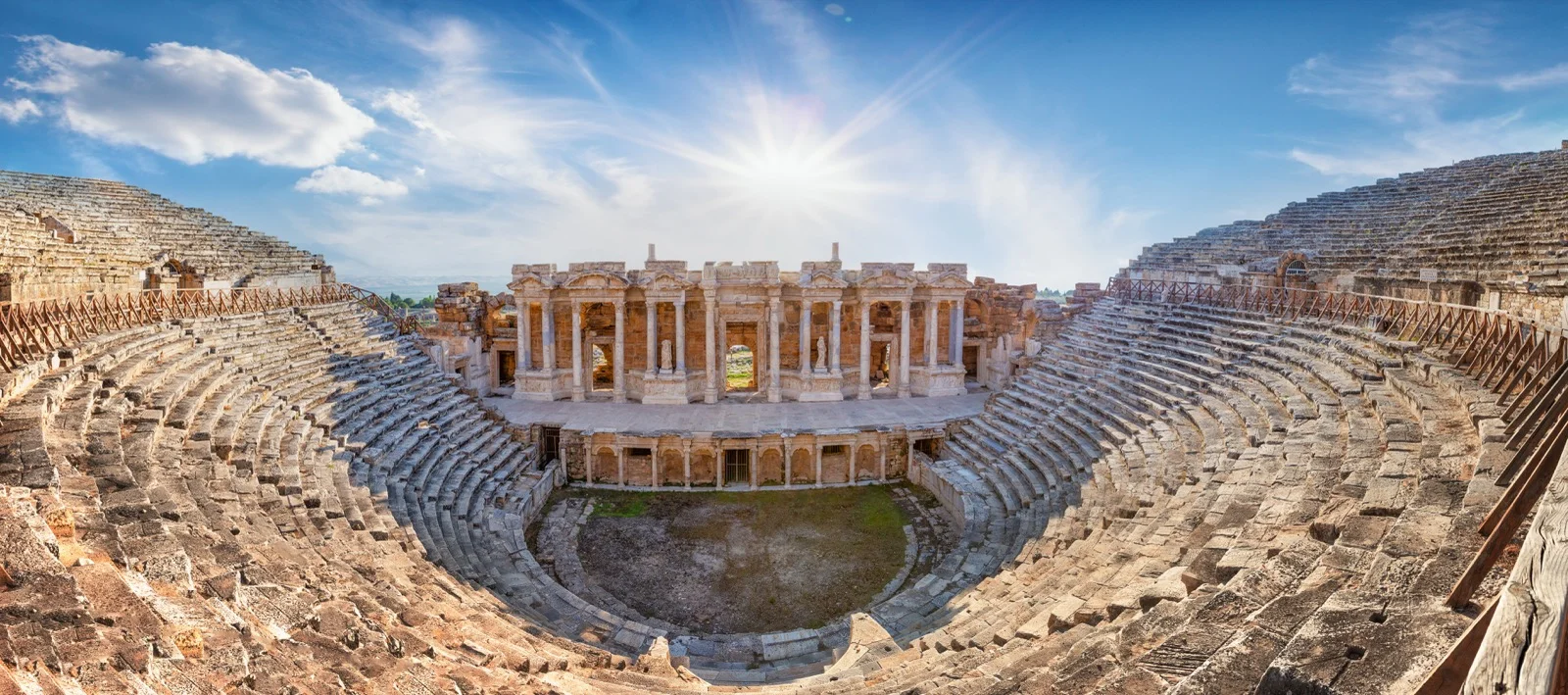
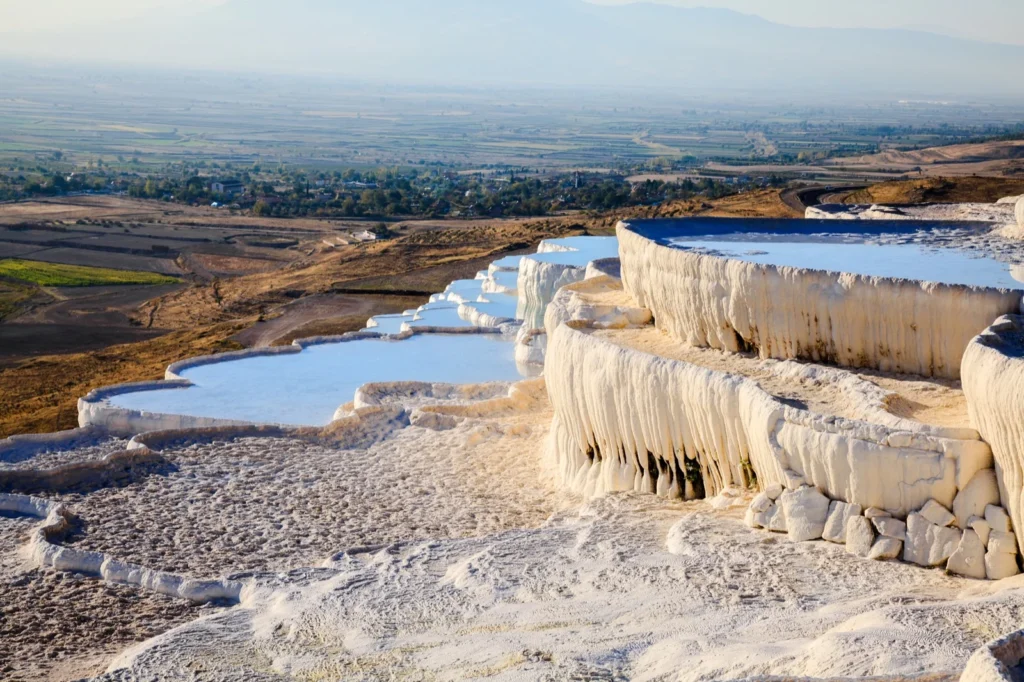
Drive inland to Pamukkale — the name means “Cotton Castle,” and you’ll see why the moment you arrive. Calcium-laden thermal water has been depositing travertine here for thousands of years. You walk barefoot across the shallow warm pools while the ruins of Hierapolis sit directly above. The terraces earned UNESCO protection in 1988 after hotel construction in the 1980s damaged sections of the surface — since then, careful water management has restored much of what was lost.
At Hierapolis, you’ll see:
- The ancient theater — remarkably well preserved, with ornate stage carvings still intact
- The necropolis — one of the largest ancient cemeteries in Anatolia, stretching along the road into the city
- The colonnaded street and Roman baths — the skeleton of a thriving spa city
Optional: Cleopatra’s Antique Pool — swim among sunken Roman columns in naturally heated mineral water (entrance fee not included)
After the visit, transfer to the nearest airport for your domestic flight back to Istanbul.
Departure
Breakfast at your hotel. Your driver picks you up 3-4 hours before your international flight for a relaxed airport transfer. Seven days, six UNESCO-level sites, and not a single moment spent figuring out logistics.
What's Included
- All airport transfers and ground transportation in air-conditioned vehicles
- Domestic flights: Pamukkale region to Istanbul
- 6 nights accommodation in 4-star hotels with daily breakfast
- Professional licensed English-speaking guides on all tour days
- Entrance fees to all sites listed in the itinerary
- Lunches on guided tour days (including Ephesus full-day)
- Ferry crossing: Gallipoli to Canakkale
- 24/7 local support throughout your trip
Not Included
- International flights
- Dinners and drinks
- Optional experiences: Topkapi Palace, Dolmabahce Palace, Cleopatra's Antique Pool
- Optional guided tour in Istanbul (Day 2)
- Personal expenses
- Travel insurance
- Guide and driver gratuities (optional, appreciated)
Who Is This Tour For?
This itinerary works well for:
- Ancient civilization enthusiasts who want to trace a line from Bronze Age Troy through Pergamon’s Hellenistic libraries to Ephesus’s Roman streets and Hierapolis’s thermal spa city — all in seven days
- ANZAC families making the Gallipoli pilgrimage who want the battlefield visit surrounded by a proper Turkey trip, not just a quick day tour from Istanbul and back
- Couples who lean toward culture over beaches — the Aegean coastline is here, but the focus is on what the civilizations left behind, not on sunbathing
- Travelers with exactly one week who want Turkey’s western arc covered thoroughly — Gallipoli, Troy, Pergamon, Ephesus, and Pamukkale with no wasted days
Frequently Asked Questions
Turkey’s western corridor — from Istanbul through the Dardanelles to the Aegean coast and Pamukkale — is one of the country’s most established tourism routes, regularly visited by travelers from over 100 countries. Your guide is a TURSAB-licensed professional who knows each destination personally, and every logistic from hotel check-ins to site entries is handled before you arrive.
Moderate. Ephesus and Pergamon involve walking on uneven ancient stone — comfortable shoes are essential. The Pergamon Acropolis is reached by cable car. Pamukkale requires walking barefoot on wet travertine (gentle slope, manageable for most). Your guide can adjust the pace or skip sections based on your comfort.
That is the entire point. Want an extra night in Istanbul? Prefer to skip Pamukkale and spend more time in Ephesus? Interested in adding a cooking class or a wine tasting along the Aegean? Tell us what matters to you and we will rebuild the itinerary around it.
The Gallipoli tour is respectful and historically detailed. Your guide provides military and human context — not just dates, but the stories of the soldiers on both sides. If you have a specific connection (a relative who served, a regiment you want to trace), let us know and we will tailor the visit.
For the best hotel availability, especially along the Aegean coast during May-October, 4-6 weeks ahead is ideal. Shorter notice is often possible — contact us and we will see what we can arrange.
April through June and September through November. The Aegean coast is warm but not overwhelming, Ephesus and Pamukkale are less crowded, and the light across the Gallipoli peninsula is worth photographing. July and August are hotter and busier. Winter is quiet but some outdoor sites are less comfortable.
Gallery
7 Days · Guided Tour
Get Your Personalized Quote
From
$
1459
/per person
You Might Also Like
 6 Days
6-Day Istanbul, Gallipoli, Troy, Pergamon & Ephesus Tour
Six days is enough to cover Turkey's most historically dense western corridor — if you plan it right. This itinerary…
 10 Days
10-Day Istanbul to Fethiye Tour
This is Turkey's western arc — the route that follows the Aegean rather than the interior. You'll start in Istanbul…