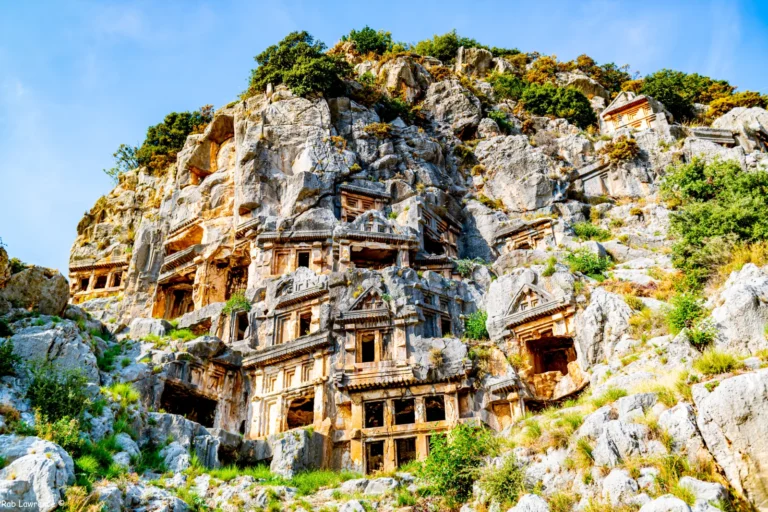
The Gallipoli Peninsula is quiet now. Pine forests cover the ridgelines where trenches were dug, wildflowers grow on the slopes where men charged into machine-gun fire, and the beaches where the landings took place are narrow strips of sand between cliffs. The quietness is the first thing that registers, and it stays with you through the visit. The battlefields of the 1915 Gallipoli Campaign are among the most emotionally concentrated landscapes in the world — a place where the geography is inseparable from the suffering it hosted, and where three nations’ founding narratives converge on the same hillsides.
The campaign lasted eight months, from April 25 to December 20, 1915. The Allied plan — to force the Dardanelles strait, capture Constantinople, and open a supply route to Russia — failed at every stage. The landings were met with fierce Ottoman resistance. The advance stalled on the beaches and ridgelines. The trenches, in places, were close enough for soldiers to hear each other talk.
By the time the Allies withdrew in December, approximately 130,000 soldiers from both sides were dead — around 87,000 Ottoman Turks and 44,000 Allied troops (including 8,700 Australians and 2,700 New Zealanders). For a peninsula less than six kilometers wide, the density of loss is staggering.
The Sites
ANZAC Cove
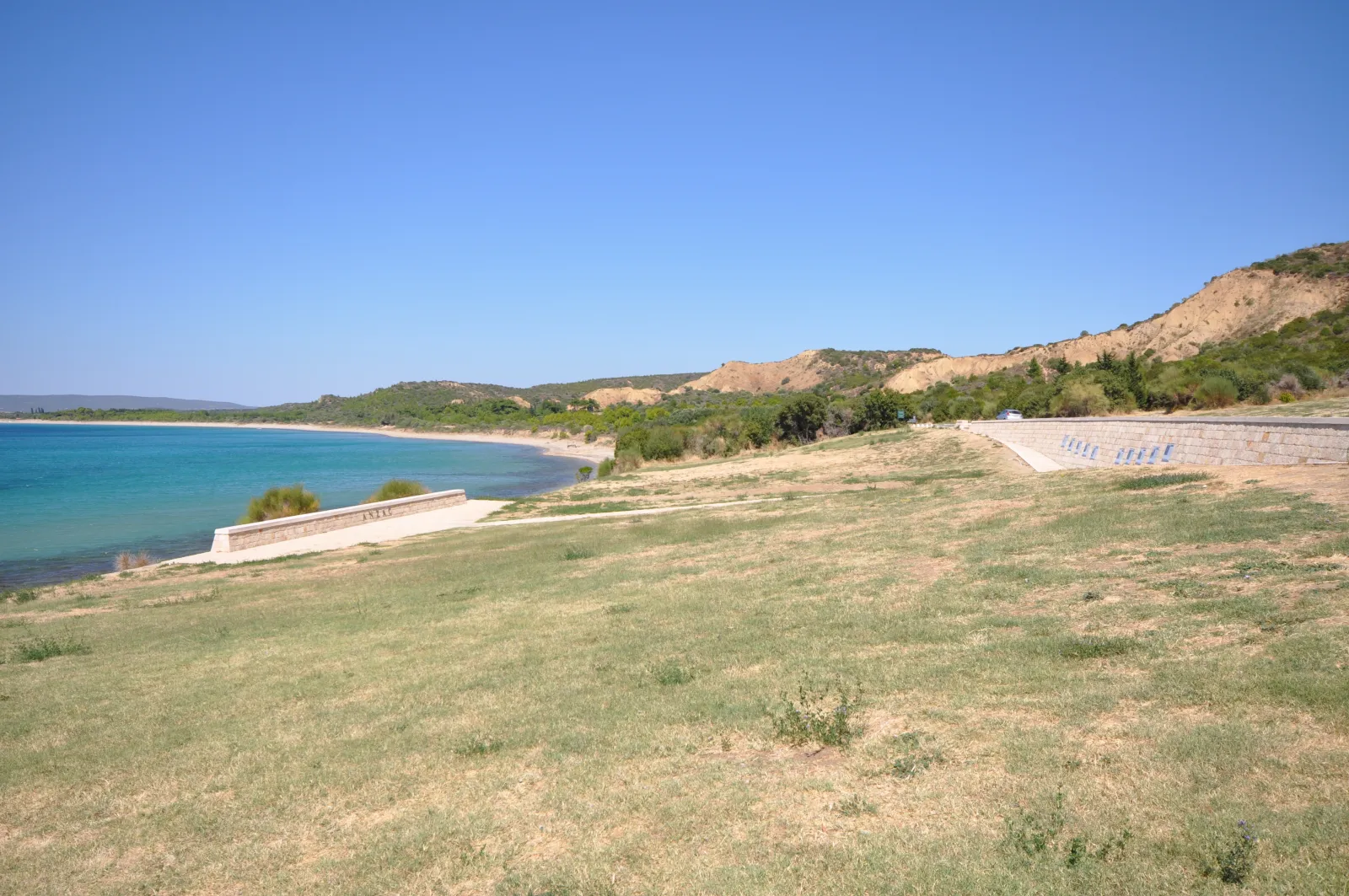
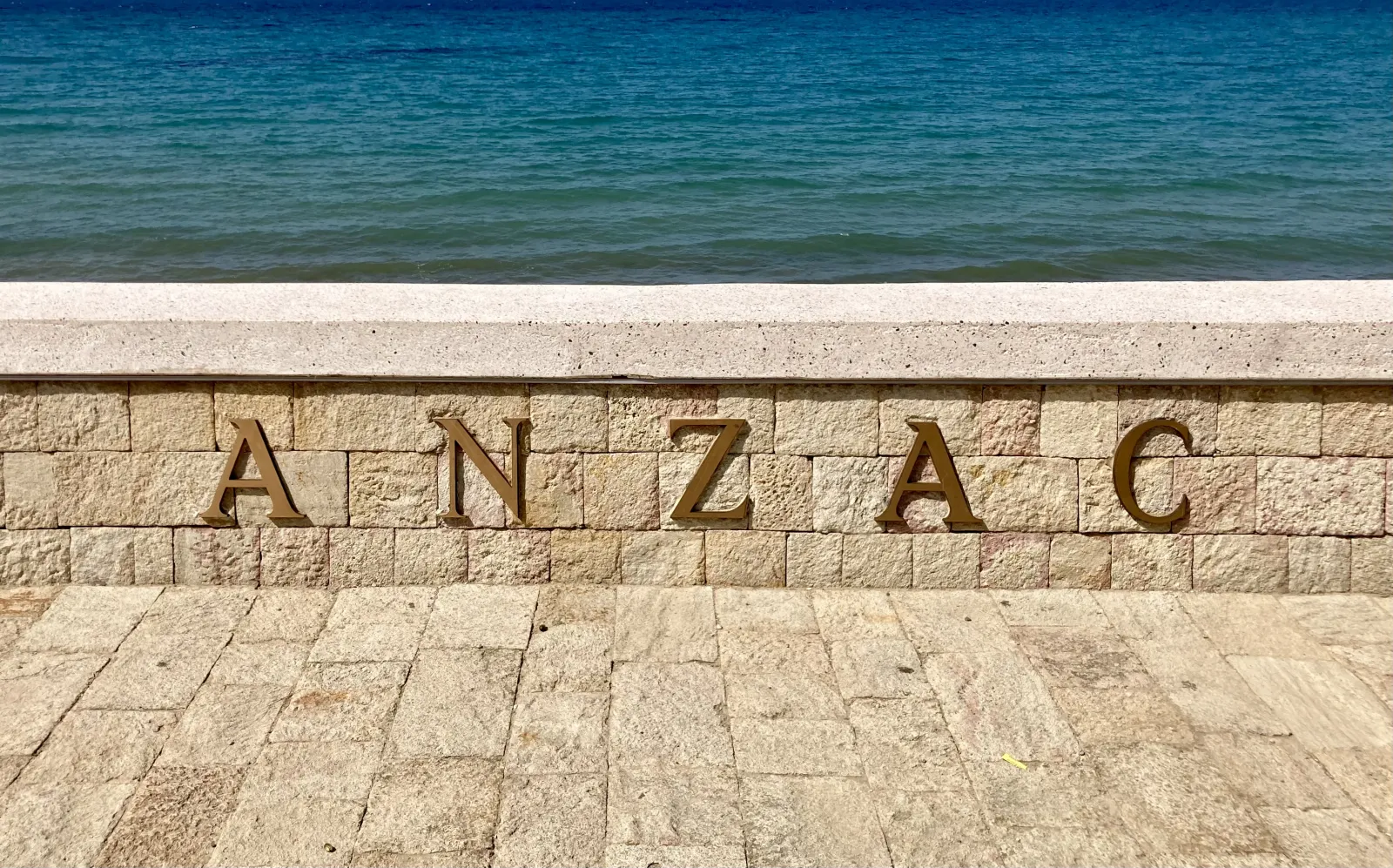
The small beach where the Australian and New Zealand Army Corps (ANZAC) landed at dawn on April 25, 1915. The plan called for a landing further south, at a wider beach with gentler terrain. Instead — by navigational error, strong currents, or both — the boats came ashore here, beneath steep cliffs that the planners had not anticipated. The troops climbed directly into Ottoman fire from the ridgelines above.
The cove is small — about 600 meters of narrow beach between two headlands. Standing on the sand and looking up at the cliffs, you understand immediately why the campaign stalled: the terrain was vertically against the attackers from the first moment. The Turkish name for the cove was Arı Burnu (Bee Point); it was renamed ANZAC Cove after the campaign, and the name has been used since on every map.
A memorial wall at the cove carries the words attributed to Mustafa Kemal Atatürk, written in 1934 and addressed to the mothers of the fallen Allied soldiers: “Those heroes that shed their blood and lost their lives… you are now lying in the soil of a friendly country. Therefore rest in peace. There is no difference between the Johnnies and the Mehmets to us where they lie side by side here in this country of ours.”
Lone Pine Cemetery and Memorial
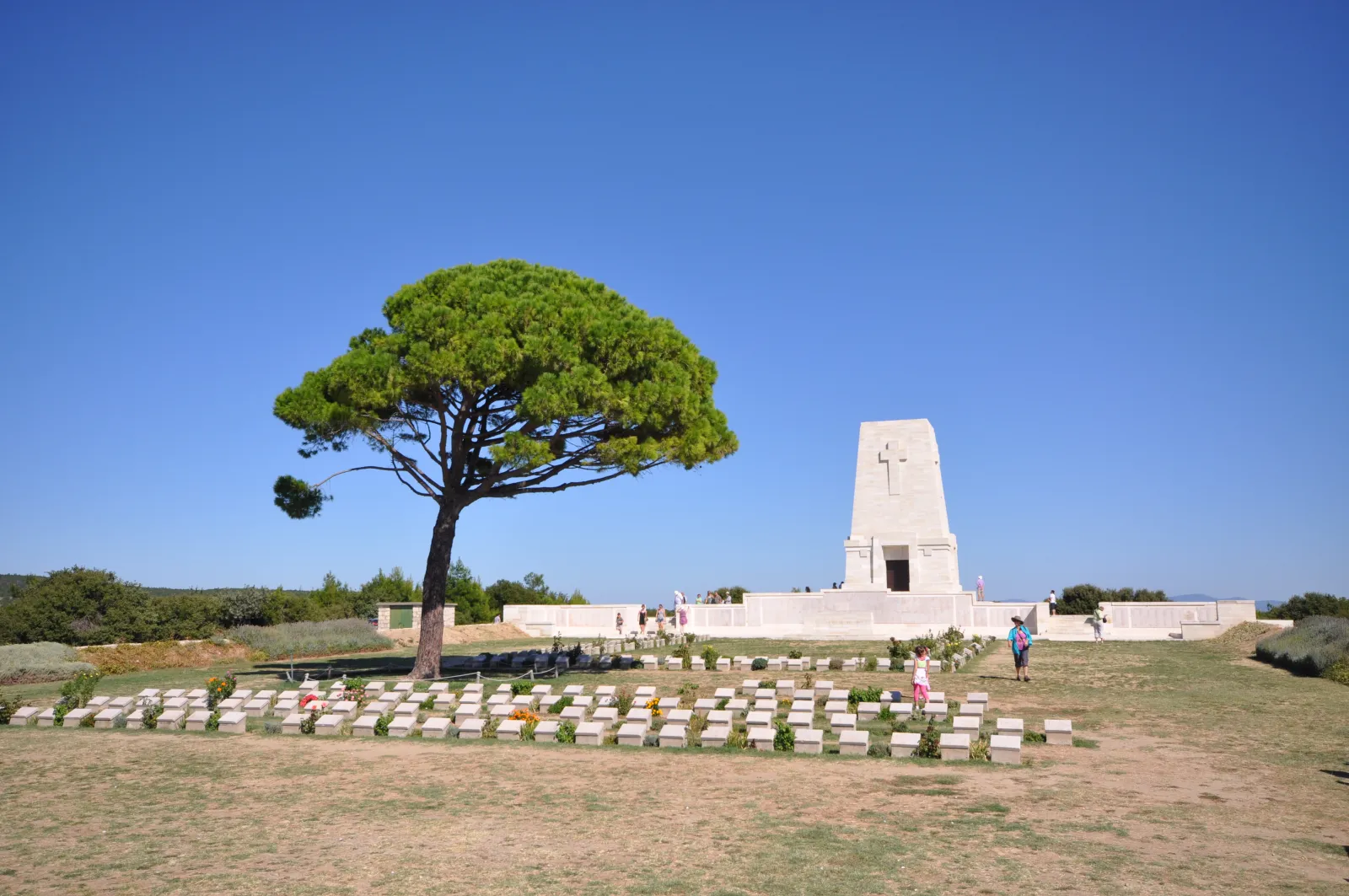
Lone Pine (Kanlısırt to the Turks) was the site of a diversionary attack on August 6-10, 1915 — some of the most ferocious fighting of the entire campaign. Australian troops charged trenches covered with pine logs, fighting hand-to-hand in enclosed spaces for four days. Seven Victoria Crosses were awarded, the highest concentration for a single action in Australian military history. Over 2,000 Australians and an estimated 5,000-7,000 Ottoman soldiers were killed in a battle whose tactical objective — diversion — was achieved but whose strategic outcome was nil.
The cemetery contains 1,167 graves, many marked “Known unto God” — unidentified remains in ground so contested that bodies from both sides were intermingled. The lone pine that gave the battle its name — the only tree standing on the ridge — was destroyed in the fighting. A replacement, grown from a seed brought back to Australia by a soldier, was planted in the 1990s.
Chunuk Bair (Conkbayırı)
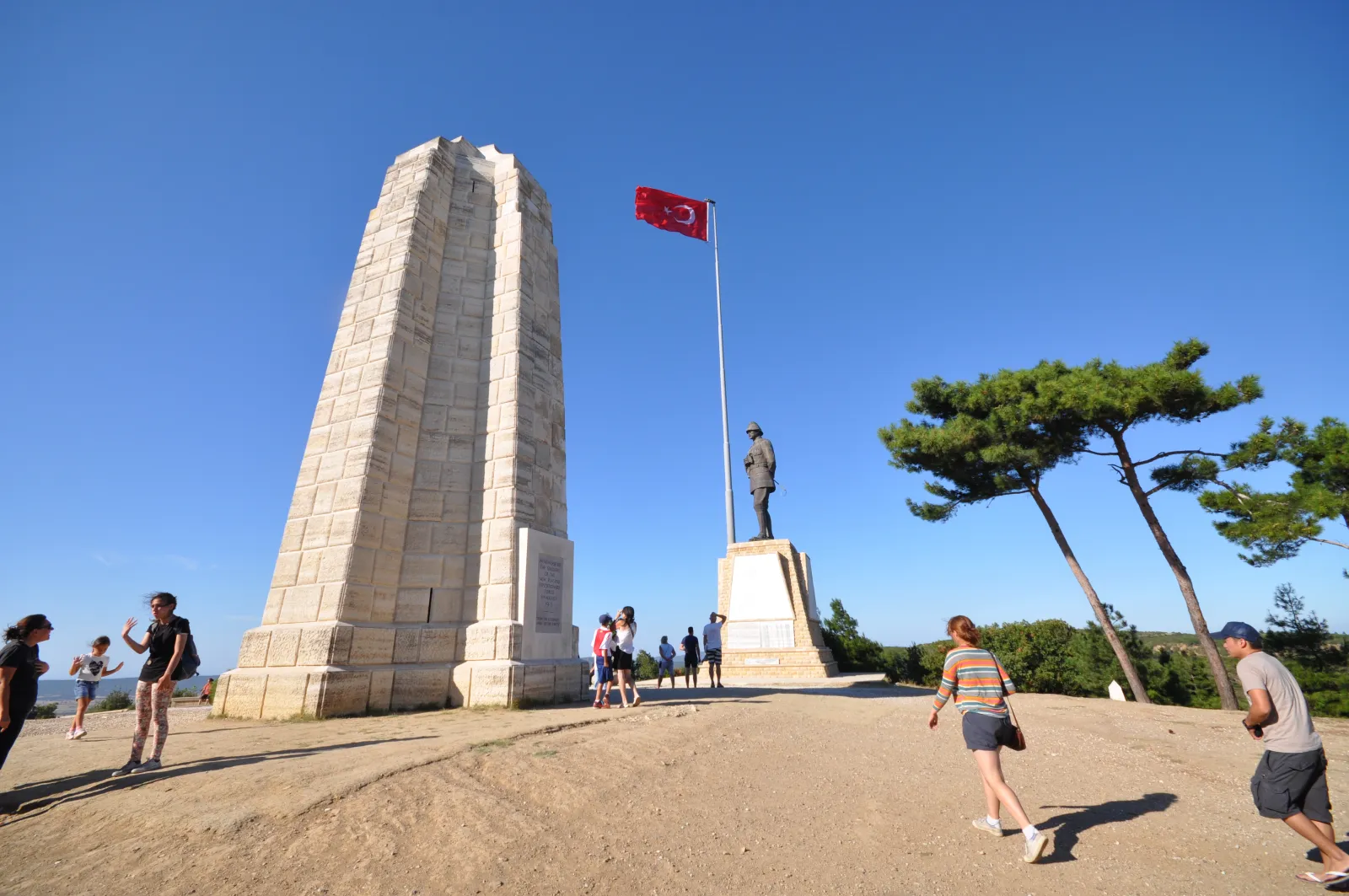
The ridgeline that was the objective of the August offensive — the high ground that, if taken and held, would have given the Allies a commanding position over the strait. New Zealand troops reached the summit on August 8, 1915, and held it for two days before an Ottoman counterattack led personally by Mustafa Kemal (later Atatürk) drove them off. The counterattack cost the Ottoman 28th Regiment nearly its entire complement — approximately 10,000 men — in a single day.
The New Zealand memorial at Chunuk Bair is one of the most affecting monuments on the peninsula — a stone wall inscribed with the names of 852 New Zealand soldiers who have no known grave. The view from the ridge shows the Dardanelles strait to the west and the Aegean to the south — the strategic prize that neither side could secure.
The Nek
A narrow ridge connecting two sections of the ANZAC position, where Australian light horsemen charged across a space less than thirty meters wide directly into concentrated Ottoman machine-gun fire on August 7, 1915. The charge — four successive waves, each cut down within seconds of standing — was memorialized in Peter Weir’s 1981 film Gallipoli. The Nek is now a small, grassy saddle between pine-covered slopes. The space is so small that the futility of the charge is physically obvious.
Kabatepe War Museum
A small museum near the southern beaches displaying artifacts recovered from the battlefields — personal effects, weapons, uniforms, letters, and medical equipment from both sides. The most affecting exhibits are the personal items: a bullet-pierced pocket watch, a letter home that was never sent, a pair of boots. The museum is modest in scale but effective in impact.
The Turkish Perspective
For Australian and New Zealand visitors, Gallipoli is a place of sacrifice and national origin — ANZAC Day (April 25) is the most solemn date in both countries’ civic calendars. For Turkey, the campaign holds a parallel significance: it was the battle where Mustafa Kemal Atatürk emerged as a national military leader. His order to the 57th Regiment — “I am not ordering you to attack. I am ordering you to die. In the time it takes us to die, other forces and commanders can take our place.” — is inscribed at the 57th Regiment Memorial and is one of the founding texts of modern Turkish nationalism.
The 57th Regiment was annihilated at Lone Pine. Every year on March 18 (Çanakkale Victory Day), Turkey commemorates the naval victory in the Dardanelles and the land campaign that followed. The Turkish monuments on the peninsula are as numerous and as carefully maintained as the Commonwealth ones.
This parallel significance — the same battle, read as foundational by all sides — gives Gallipoli a quality that other battlefields do not share. When I guide visitors through these sites, I always present both perspectives — walking the same ground and explaining what each side saw, experienced, and remembers transforms the visit from a pilgrimage into a history lesson in empathy.
Practical Information
Getting there: The Gallipoli Peninsula (Gelibolu Yarımadası) is approximately 310 kilometers from Istanbul — roughly four to five hours by road. Most visitors come on guided day tours from Istanbul or on multi-day tours that combine Gallipoli with Troy and Ephesus. The town of Eceabat, on the peninsula’s eastern shore, is the nearest base.
How much time: A guided battlefield tour takes four to five hours and covers the major ANZAC sites (ANZAC Cove, Lone Pine, Chunuk Bair, The Nek, Johnston’s Jolly) and the Kabatepe Museum. A more comprehensive visit, including the Cape Helles sites (the British landing beaches at the peninsula’s southern tip), requires a full day.
When to go: Spring (April-May) and autumn (September-October) offer the most comfortable weather. April 25 (ANZAC Day) draws the largest crowds — a dawn service at ANZAC Cove is attended by thousands, primarily Australian and New Zealand visitors. March 18 (Çanakkale Victory Day) is the major Turkish commemoration.
What to expect: When I take travelers to Gallipoli, I always prepare them for the emotional weight — many visitors are moved in ways they do not expect. The battlefield sites are spread across the peninsula — a vehicle is necessary. The terrain involves moderate walking on paths and grass. Some memorials (Chunuk Bair, the trenches at Johnston’s Jolly) require short uphill walks.
Guide value: A knowledgeable guide is essential. The sites are spread out, the signage is limited, and the history is complex. A guide who can narrate both sides — what the ANZAC troops experienced and what the Ottoman defenders faced — gives the landscape its full meaning.
Plan Your Gallipoli Visit
Gallipoli is the place where geography became history and loss became identity — for three nations simultaneously. If you would like to walk the battlefields with a private guide who can tell both sides of the story, tell us what interests you and we will build the itinerary around it.
Frequently Asked Questions
What happened at Gallipoli in 1915?
The Gallipoli Campaign (April 25 – December 20, 1915) was an Allied attempt to force the Dardanelles strait, capture Constantinople, and open a supply route to Russia. Allied forces — including Australian, New Zealand, British, French, and Indian troops — landed on the peninsula but were met with fierce Ottoman resistance. The campaign ended in Allied withdrawal after eight months. Approximately 130,000 soldiers died on both sides.
Why is ANZAC Day important?
ANZAC Day (April 25) commemorates the anniversary of the 1915 landing at Gallipoli. For Australia and New Zealand, the campaign — though a military defeat — is considered a foundational national experience, the moment when both countries’ identities were forged independently of Britain. A dawn service is held annually at ANZAC Cove.
How long does a Gallipoli tour take?
A standard guided battlefield tour takes four to five hours and covers the major ANZAC sites — ANZAC Cove, Lone Pine, Chunuk Bair, The Nek, and the Kabatepe Museum. A comprehensive visit including the Cape Helles sites requires a full day. Most visitors combine Gallipoli with Troy in a multi-day itinerary.
Can you visit Gallipoli independently?
Yes, but a guide is strongly recommended. The battlefield sites are spread across the peninsula and require a vehicle. Signage is limited, and the history is complex — the terrain makes little sense without narration. Guided tours from Istanbul, Eceabat, or Çanakkale are the most practical option.
Is Gallipoli significant for Turkey too?
Yes — deeply. The Gallipoli Campaign is where Mustafa Kemal Atatürk (later the founder of the Turkish Republic) emerged as a national military leader. The battle is commemorated on March 18 (Çanakkale Victory Day), and Turkish memorials on the peninsula are as numerous and maintained as the Commonwealth ones. The Turkish perspective — defending homeland against invasion — is central to the modern Turkish national narrative.
Can you combine Gallipoli with Troy?
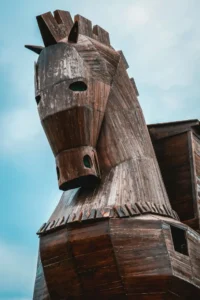
Yes, and it is one of the most popular multi-day itineraries in western Turkey. Gallipoli and Troy are on opposite sides of the Dardanelles strait, about 30 minutes apart by ferry. A common two-day route covers the Gallipoli battlefields on day one and Troy on day two, with an overnight in Çanakkale or Eceabat. Some travelers extend to three days to add Pergamon or continue south to Ephesus.