The Golden Horn is not the Bosphorus. The Bosphorus is a strait — a channel between two continents, deep and fast-moving, carrying tankers and currents between the Black Sea and the Mediterranean. The Golden Horn is an inlet — a sheltered, horn-shaped body of water that curves inland from the point where the Bosphorus meets the Sea of Marmara. It is seven kilometers long, between 200 and 750 meters wide, and naturally deep enough to shelter a fleet. For sixteen centuries, this geography decided Istanbul’s fate.
The inlet divides the European side of Istanbul in two. The southern shore is the historic peninsula — Sultanahmet, the Grand Bazaar, Eminönü, the old walled city of Constantinople. The northern shore is Galata, Karaköy, Kasımpaşa, and the neighborhoods that climbed the hill toward Beyoğlu and Taksim. The Golden Horn is the seam between them. Every bridge, every ferry, every waterfront warehouse and fish restaurant along its banks exists because of what this inlet has been: the best natural harbor in the eastern Mediterranean.
The name is old. The Byzantines called it Chrysokeras — Golden Horn — possibly because of the way the water caught the light at sunset, possibly because of the wealth that flowed through its docks. The Ottomans called it Haliç, which means simply “the inlet.” Both names survive. The golden part is most visible in the late afternoon, when the water turns amber and the minarets on both shores are backlit. It is a good time to be on the Galata Bridge.
Why the Golden Horn Mattered

The inlet’s military and commercial value was straightforward: it offered deep, calm water in a position that could be defended. The Byzantines stretched a great chain across its mouth — from the point at Galata to the seawalls of Constantinople — to block enemy fleets. The chain held against Arab, Bulgarian, and Russian attacks for centuries. When it finally failed, in 1453, it was because Mehmed the Conqueror did not attack the chain directly. He dragged his ships overland, across the hills behind Galata, on greased wooden rollers, and launched them into the Golden Horn behind the chain. Constantinople fell three weeks later.
Under the Ottomans, the Golden Horn became the empire’s principal shipyard and naval base. The Kasımpaşa Naval Arsenal, on the northern shore, built and maintained the fleet that controlled the eastern Mediterranean for two centuries. The Fener and Balat neighborhoods, on the southern shore, housed the Greek and Jewish communities that served as the empire’s merchants, translators, and financiers. The Eyüp mosque, at the far end of the inlet, became the holiest site in Ottoman Istanbul — the place where new sultans were girded with the sword of Osman.
The waterway was, in other words, not scenic background. It was the operating system. The city’s religion, commerce, military power, and ethnic diversity were all organized around its banks.
Walking the Golden Horn Today
The Golden Horn today is cleaner than it has been in decades. Through much of the twentieth century, the inlet was heavily polluted — industrial waste, untreated sewage, and the runoff from tanneries and slaughterhouses turned it into an environmental disaster. The factories that lined its upper reaches produced not golden light but a persistent odor that kept residents away from the waterfront. A major cleanup campaign in the 1990s and 2000s — involving dredging, sewage infrastructure, and the relocation of industrial facilities — restored the water to a state where fish have returned and waterfront parks are usable.
The result is a waterway that is becoming, slowly, a public space again. Parks, walking paths, and cultural venues now line sections of both shores. The transformation is uneven — some stretches are beautifully landscaped, others are still industrial or under construction — but the direction is clear.
Eminönü and the Galata Bridge
The mouth of the Golden Horn is where most visitors first encounter it. Eminönü, on the southern shore, is one of Istanbul’s busiest transit points — the ferry terminals, the Spice Bazaar, the Yeni Cami (New Mosque, completed in 1665), and the fish sandwich boats that have been selling balık ekmek from bobbing vessels for generations all converge here.
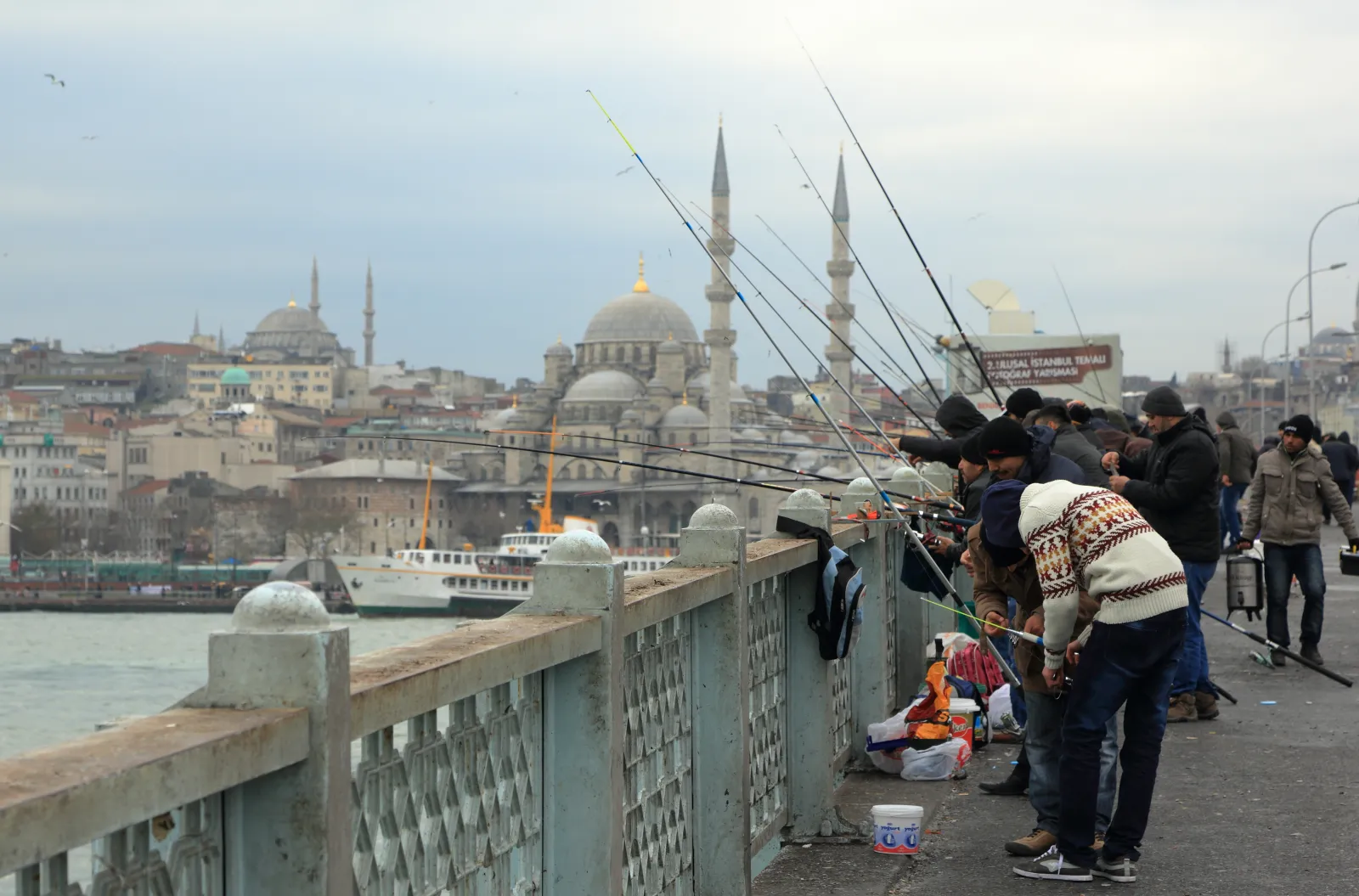
The Galata Bridge spans the inlet at this point — 490 meters of roadway with a lower deck lined with fish restaurants and an upper deck where fishermen lean over the railing at all hours, lines trailing into the water. The bridge is not historic in its current form — the present structure dates to 1994, replacing earlier versions — but the crossing is ancient. People have been getting from one side to the other at this point for as long as the city has existed. Walking across the Galata Bridge, with the Sultanahmet skyline to the east and the fishing lines overhead, is one of Istanbul’s essential experiences. When I walk travelers across this bridge for the first time, I ask them to stop halfway and look both directions — the silhouette of Sultanahmet on one side, the Galata Tower rising on the other. That single vantage point explains the city’s geography better than any map.
Fener and Balat
The southern shore, heading west from Eminönü, passes through the neighborhoods of Fener and Balat — the historic Greek and Jewish quarters. The Ecumenical Patriarchate, the Bulgarian Iron Church, the Ahrida Synagogue, and the colorful Ottoman houses that have made Balat a destination in recent years all face the Golden Horn. This stretch is covered in detail in a separate guide to Balat and Fener.
Eyüp and Pierre Loti
At the far end of the Golden Horn, where the inlet narrows and the city gives way to hillside cemeteries and green space, sits Eyüp Sultan Mosque — the holiest site in Istanbul outside of Mecca-facing worship. The mosque marks the burial place of Abu Ayyub al-Ansari, the companion of the Prophet Muhammad who died during the first Arab siege of Constantinople in 674-678 AD. His tomb was rediscovered by Mehmed the Conqueror’s spiritual adviser during the 1453 siege — conveniently, just when a rallying symbol was needed.
The mosque complex is a pilgrimage site. Families come for blessings, for circumcision ceremonies, and for the particular peace of a place that has been sacred for over five centuries. The atmosphere is devotional rather than touristic, and visitors should dress and behave accordingly. When I bring travelers here, I always suggest arriving early on a weekday — the courtyard is quieter, the light is softer, and you can sit by the fountain without the weekend crowds.
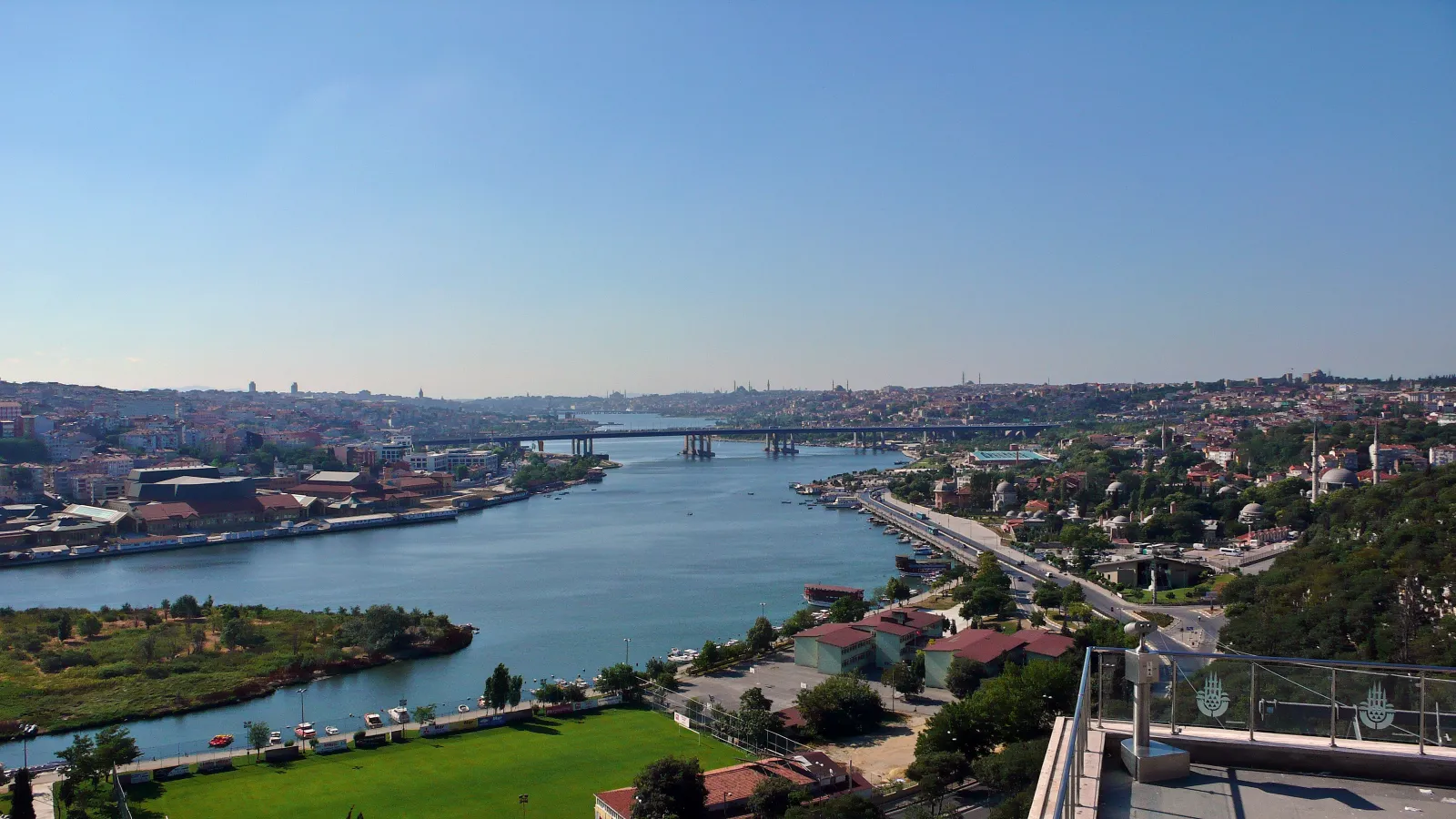
Above Eyüp, a cable car or a steep walk through the Ottoman cemetery — one of the most atmospheric landscapes in Istanbul, with carved marble headstones tilted among cypress trees — leads to the Pierre Loti café and viewpoint. The name honors the French novelist who lived in the neighborhood in the 1870s and wrote about Istanbul with romantic intensity. The view from the top looks back down the full length of the Golden Horn, with the city’s domes and minarets layered along both shores. On a clear day, you can trace the waterway from Eyüp to the Galata Bridge to the Bosphorus.
Miniaturk and Rahmi Koc Museum
The northern shore of the upper Golden Horn has been redeveloped with cultural attractions. Miniaturk is an open-air park with 1:25 scale models of Turkey’s architectural landmarks — useful as an orientation to the country if you are early in your trip, or as a family-friendly stop. The Rahmi M. Koc Museum, housed in a converted Ottoman anchor foundry, covers the history of transport, industry, and communications with a collection that ranges from vintage cars to submarines. Both are on the northern waterfront, accessible by bus or the Golden Horn ferry.
The Golden Horn Ferry
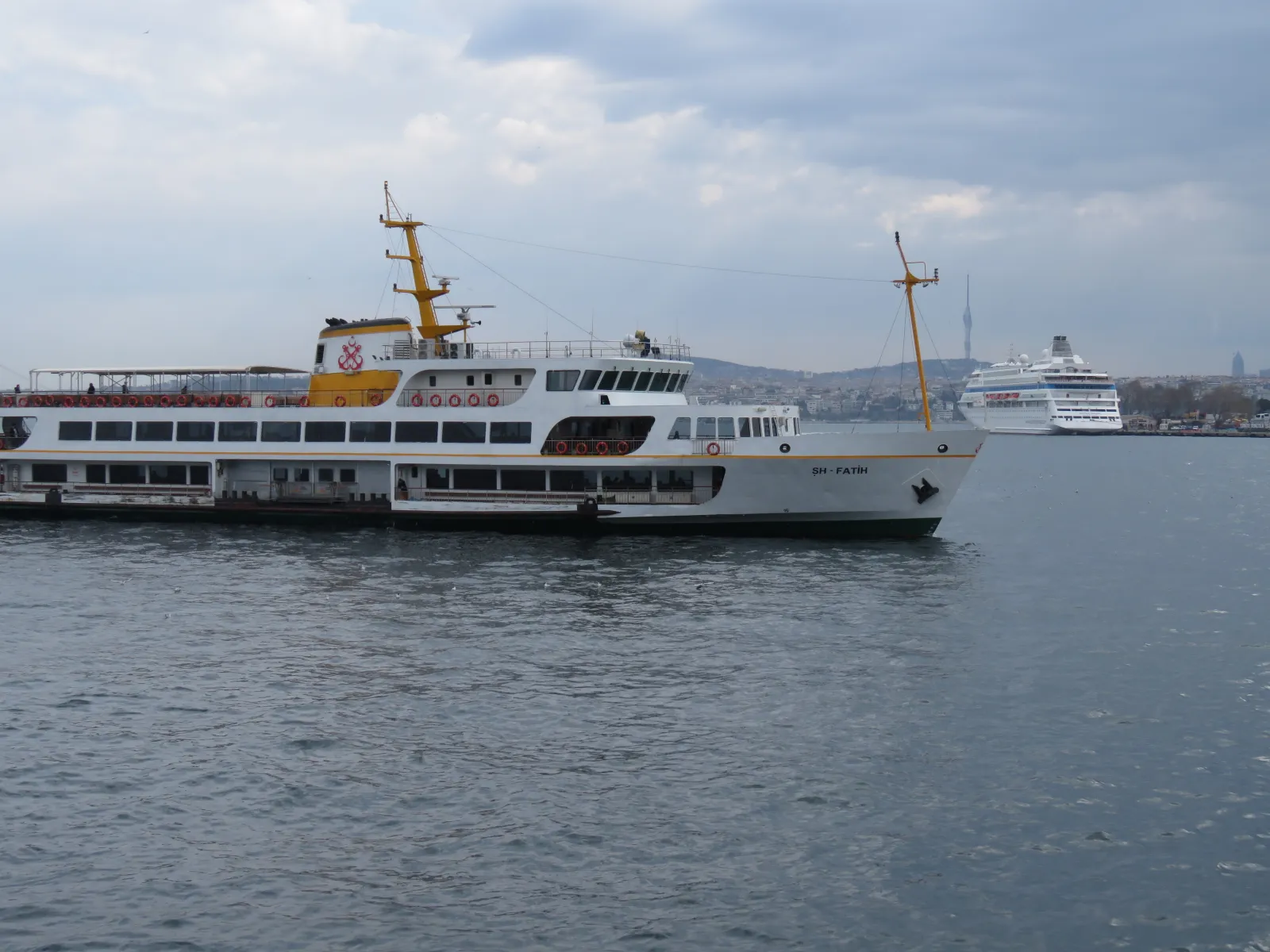
The ferry service that runs the length of the Golden Horn — from Üsküdar or Eminönü to Eyüp, with stops at Karaköy, Kasımpaşa, Fener, Balat, and Eyüp — is one of Istanbul’s best-kept transit secrets. The boats are small, the crossing takes forty-five minutes end to end, and the fare is standard Istanbulkart. You see both shores, pass under the Galata Bridge and the Atatürk Bridge, and arrive at Eyüp without traffic, without navigation, and without the cost of a tourist cruise.
The ferry is not marketed as a tour. It is a commuter service. But the route it follows — the full length of the Golden Horn, from the Bosphorus junction to the historical endpoint — is exactly the route a thoughtful tour would take. You simply need to know to get on.
Practical Information
Best approach: Walk across the Galata Bridge to start — it gives you the full panorama. For the full Golden Horn experience, take the ferry from Eminönü to Eyüp, walk up to Pierre Loti for the view, and return by ferry or bus.
How much time: The Galata Bridge crossing and Eminönü waterfront take thirty minutes to an hour. Adding the ferry to Eyüp and the Pierre Loti viewpoint makes it a half-day. A full exploration of both shores — including Balat, Fener, and Eyüp — is a full day.
When to go: Late afternoon gives the best light on the water — the “golden” in Golden Horn is most visible between 4 and 6 pm depending on the season. The Galata Bridge fishermen are present at all hours but are most numerous in the morning and late afternoon. The Eyüp mosque is busiest on Fridays and religious holidays.
Official resource: Istanbul Metropolitan Municipality — Haliç (Golden Horn)
Combining with other visits: The Golden Horn connects several of Istanbul’s most interesting but less-visited areas. A route from Eminönü (Spice Bazaar) to Balat (colorful houses, Iron Church) to Eyüp (mosque, Pierre Loti viewpoint) follows the waterway and covers history, architecture, food, and a perspective on the city that the Sultanahmet-to-Galata axis does not provide.
Plan Your Istanbul Visit
The Golden Horn is the waterway that explains Istanbul — why the city is here, how it was defended, where its communities settled, and what happens when geography, religion, and commerce share the same shore. If you would like to explore the Golden Horn neighborhoods with a private guide who can connect the waterfront to the history, tell us what interests you and we will shape the route around it.