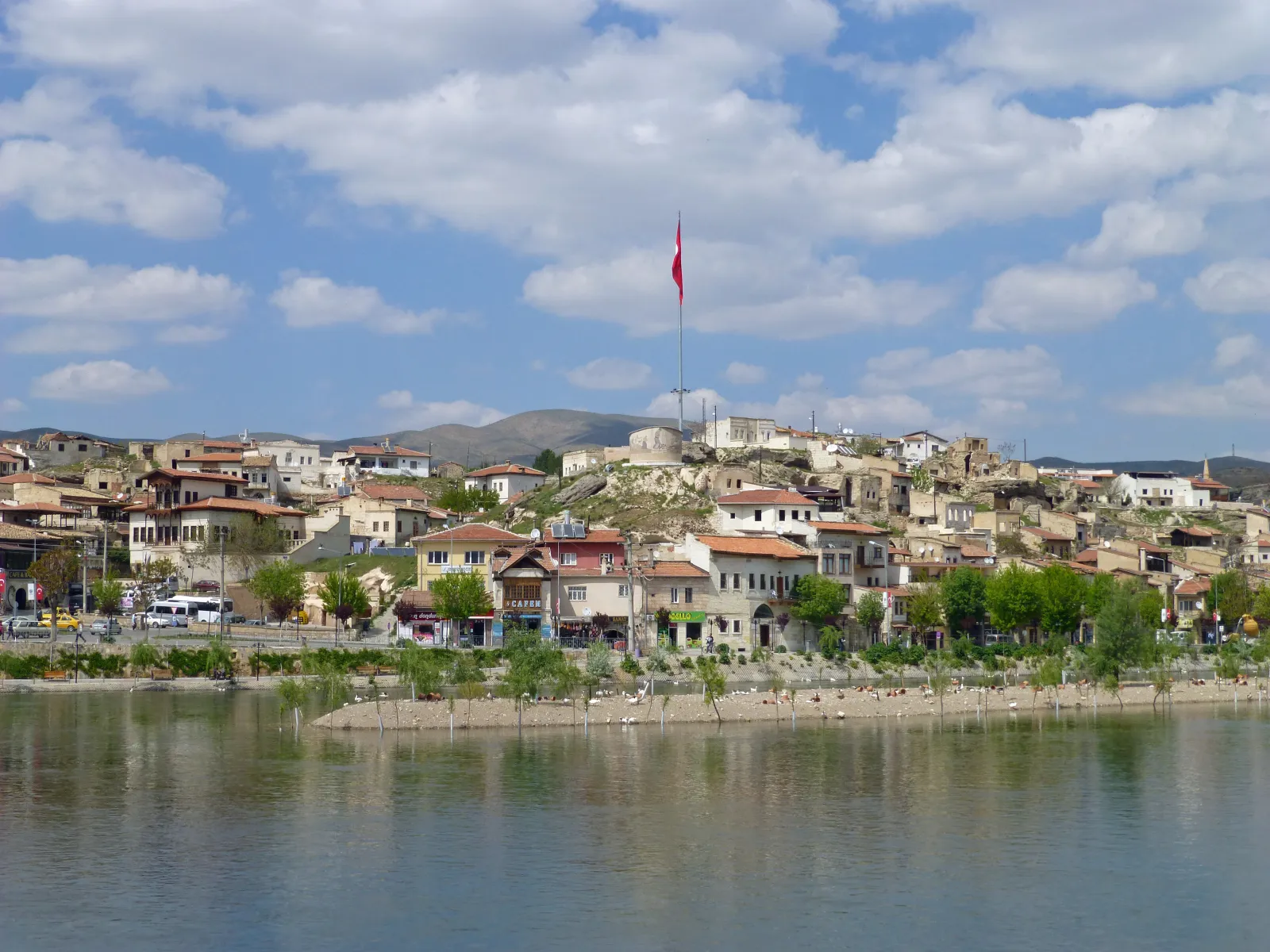
Avanos sits on the banks of the Kızılırmak — the Red River — Turkey’s longest river, which curves through Cappadocia carrying the iron-rich sediment that gives it its name and its color. The river provides something specific: a fine-grained red clay that has been the raw material for pottery in this town for at least four thousand years. The Hittites worked this clay. The Romans worked it. The Seljuks and the Ottomans worked it.
Today, the workshops along the river and in the old town still work it — potters sitting at kick wheels, shaping the same material from the same riverbank, using techniques that have changed in degree but not in kind since the Bronze Age. When I bring travelers here between the valleys and the underground cities, the workshop stop changes the texture of the day — you go from looking at landscapes to touching something with your hands.
Avanos is a working town, not a museum. The pottery workshops are production facilities — they make and sell ceramics, from simple utilitarian bowls to elaborate hand-painted decorative pieces. The workshops that accept visitors typically offer a demonstration at the wheel and, in many cases, the chance to sit down and try throwing a pot yourself. The experience is brief — fifteen to twenty minutes — but the tactile reality of centering clay on a spinning wheel tells you something about the craft that looking at finished pots does not.
The Clay
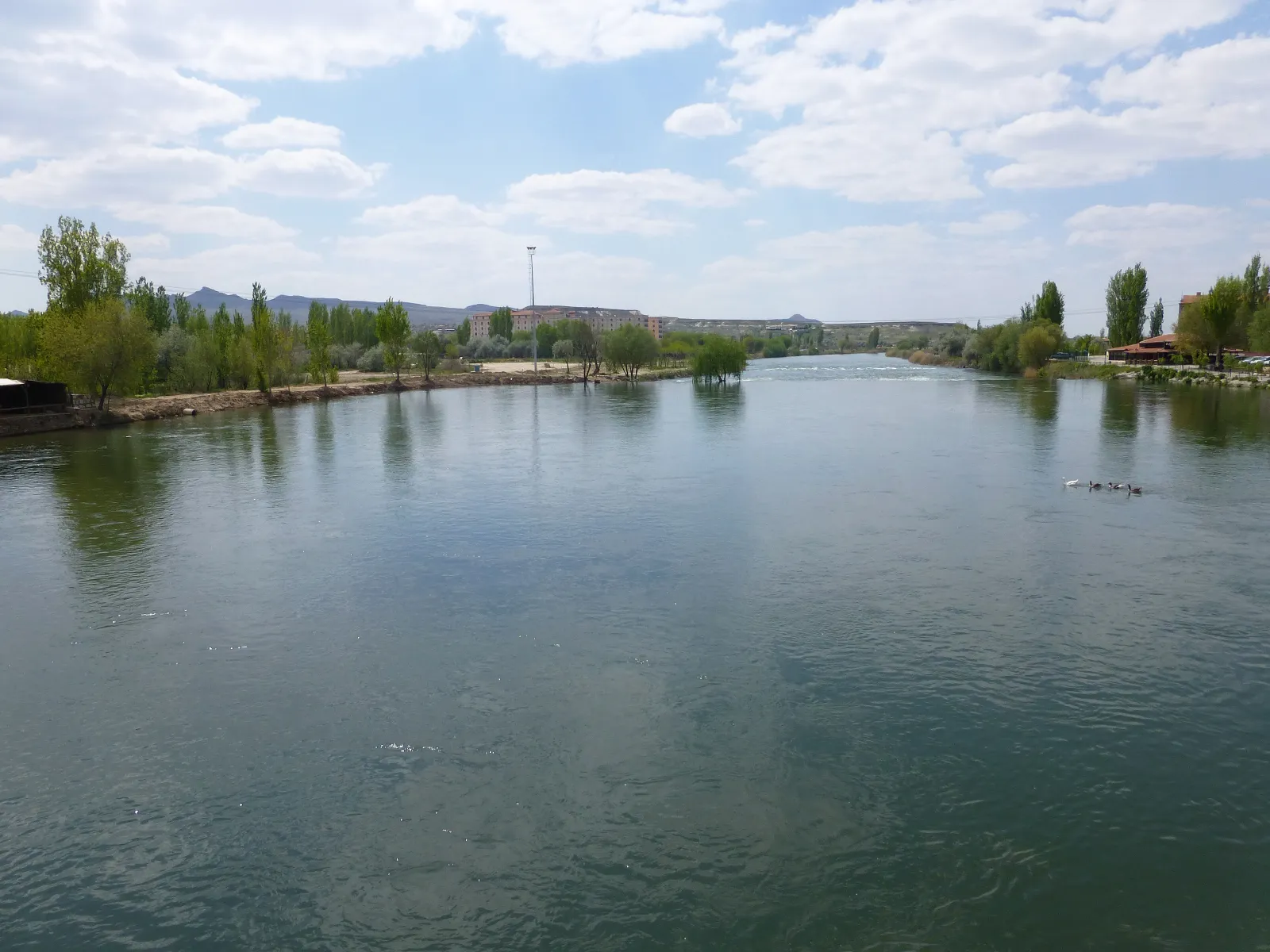
The Kızılırmak clay is what makes Avanos’s pottery distinct from ceramics produced elsewhere in Turkey. The iron oxide content gives the fired clay a warm terra-cotta tone — reddish-brown, sometimes veering toward orange, depending on the firing temperature and duration. The clay is fine-grained and plastic (in the ceramic sense — it holds its shape when formed), which makes it suitable for both wheel-thrown and hand-built forms.
Potters collect the clay from riverbank deposits, process it by hand — removing stones, roots, and impurities — and age it in damp conditions to improve its workability. The preparation is labor-intensive and unglamorous, but it is the step that determines the quality of the finished piece. A well-prepared clay body throws cleanly, holds thin walls, and fires to a consistent color. A poorly prepared one cracks, warps, and disappoints.
The river has been depositing this clay for millennia, and the supply shows no sign of exhaustion. The relationship between river and town is direct: the Kızılırmak provides the material, the town shapes it, and the tradition continues because the raw material continues to arrive.
The Workshops
Avanos has dozens of pottery workshops, ranging from one-person operations in small rooms to multi-floor production facilities with showrooms, kilns, and painting studios. The workshops that welcome visitors are concentrated in the old town and along the riverfront.
A typical visit includes a wheel demonstration — a master potter throws a pot in a few minutes, making it look easy, then invites you to try. The kick wheel (or, in some workshops, an electric wheel) spins, you center the clay, you open it, you pull up the walls, and you experience the gap between watching and doing. Most visitors produce something lopsided and charming. The potter rescues it with a few adjustments, and you can take the piece home or have it shipped after firing.
The painting studios are the other draw. Avanos ceramics are often decorated with patterns drawn from Seljuk, Ottoman, and Iznik tile traditions — geometric interlocking designs, floral motifs, and the distinctive cobalt blue and turquoise that characterize Ottoman ceramic art. Painters work with fine brushes on unfired or bisque-fired surfaces, applying mineral-based pigments that develop their final color only in the kiln. Watching a painter lay down a geometric pattern freehand — no stencil, no guide, just muscle memory and spatial instinct — is a quiet demonstration of skill that rivals the wheel work.
The Testi Kebabı Connection
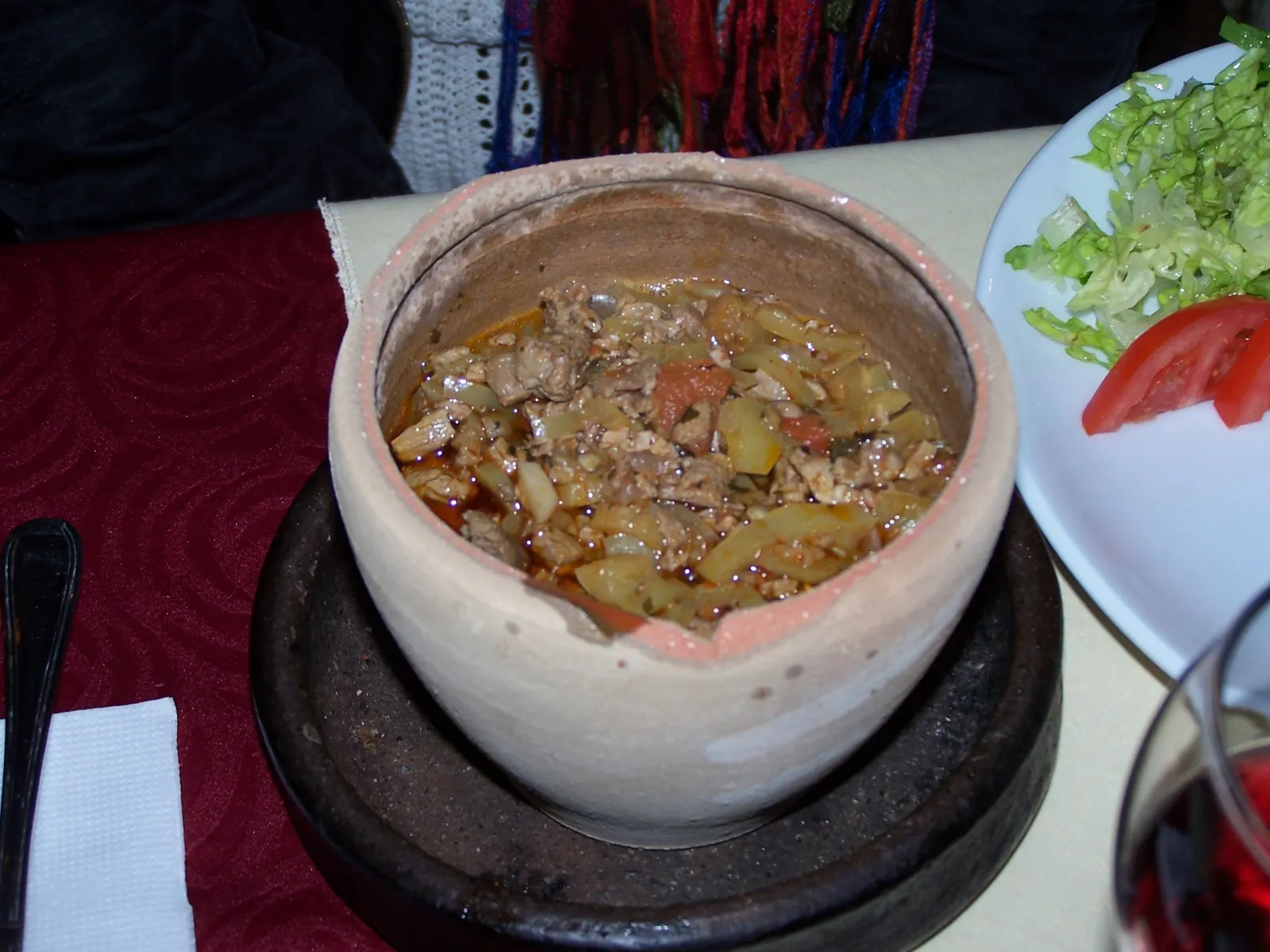
Cappadocia’s signature dish — testi kebabı, pottery kebab — exists because of Avanos’s clay. The dish is a slow-cooked stew of meat, vegetables, and spices sealed inside a clay pot and baked in a wood or gas oven. When the pot is brought to the table, the waiter cracks it open with a knife or small hammer, and the steam and aroma escape in a theatrical moment that has become a Cappadocian dining ritual.
The clay pots are made in Avanos, specifically for this purpose — single-use vessels designed to be sealed, heated, and broken. The porosity of the unglazed clay allows moisture to circulate during cooking, and the sealed pot traps pressure and flavor in a way that a metal pot cannot. The dish is traditional, but its current popularity as a restaurant experience owes much to the tourism economy — the visual drama of cracking the pot is as important as the flavor.
Beyond Pottery
Avanos is worth a short walk beyond the workshops. The old town has a pleasant riverside promenade, a historic Ottoman bridge, and a neighborhood of traditional stone houses that are quieter and less visited than Göreme or Uchisar. The Avanos Hair Museum — a basement room containing locks of hair from thousands of visitors, pinned to the walls and ceiling — is one of the stranger museum experiences in Turkey. It holds a Guinness World Record and is exactly as odd as it sounds.
The town’s weekly market (Fridays) brings produce, cheese, dried goods, and textiles from the surrounding villages — a functioning agricultural market rather than a tourist bazaar.
Practical Information
Getting there: Avanos is approximately eight kilometers north of Göreme, connected by dolmuş bus (every thirty minutes during the day) and by the standard North Cappadocia tour route. The town is also accessible by car — parking is available near the riverfront.
How much time: A workshop visit with demonstration and hands-on pottery takes thirty to forty-five minutes. Adding a walk through the old town and the riverside extends the visit to an hour or more.
Cost: Workshop demonstrations are typically free — the workshops earn their income from ceramic sales. Hands-on sessions (throwing your own pot) may have a small fee, depending on the workshop.
Which workshop to visit: The quality of the experience varies. Workshops that focus on traditional techniques and use Kızılırmak clay offer the most authentic experience. A knowledgeable guide will know which workshops are production-focused (genuine artisans) versus which are primarily retail showrooms.
Combining with other visits: Avanos is a natural midpoint on the North Cappadocia route — between Devrent Valley / Paşabağ and the Göreme Open Air Museum. The pottery stop provides a change of pace between geological sites. A 3-Day Cappadocia Tour typically includes Avanos on the North Cappadocia day, alongside the valleys and Kaymakli Underground City.
Official resource: The Avanos Municipality website lists local events, festivals, and pottery fair schedules.
Plan Your Cappadocia Visit
Avanos is where you touch the material that built Cappadocia’s craft tradition — the red clay from the longest river in Turkey, shaped on wheels that have been spinning here since the Hittites. If you would like to include a pottery workshop in your Cappadocia itinerary, with a guide who knows which artisans do the best work, tell us what interests you and we will shape the day around it.
Frequently Asked Questions
What is Avanos known for in Cappadocia?
Avanos is Cappadocia’s pottery town — a center of ceramic production that dates back at least four thousand years to the Hittite period. The town sits on the Kızılırmak (Red River), which provides the iron-rich red clay used by local potters. Workshops offer wheel demonstrations, hands-on pottery experiences, and hand-painted ceramics in traditional Ottoman and Seljuk patterns.
Can you make pottery in Avanos?
Yes. Many workshops in Avanos offer hands-on experiences where visitors can sit at a potter’s wheel and try throwing a pot with the guidance of a master potter. Sessions typically last fifteen to twenty minutes. Some workshops will fire and ship your piece if you want to keep it.
How long should you spend in Avanos?
A workshop visit takes thirty to forty-five minutes. Adding a walk through the old town and the riverside promenade extends the visit to an hour or more. Most visitors experience Avanos as one stop on the North Cappadocia day tour, combined with Devrent Valley, Paşabağ, and the Göreme Open Air Museum.
What is testi kebabı?
Testi kebabı (pottery kebab) is Cappadocia’s signature dish — a slow-cooked stew sealed inside an Avanos-made clay pot and baked. The pot is cracked open at the table, releasing steam and aroma. The porous clay and sealed cooking method produce a distinctive flavor. The dish is served in restaurants throughout Cappadocia.
Is the Avanos Hair Museum real?
Yes. The Hair Museum is a basement room in an Avanos pottery workshop containing locks of hair from thousands of visitors, pinned to the walls and ceiling. It holds a Guinness World Record for the largest collection of human hair. The museum is free to visit and is exactly as unusual as it sounds.
Can you buy Avanos pottery and have it shipped home?
Yes. Most workshops offer international shipping for purchased ceramics, packed professionally to survive the journey. Prices vary — simple wheel-thrown pieces start at a few dollars, while hand-painted decorative plates and bowls with Iznik-style patterns can be considerably more. If you are buying, ask whether the piece uses local Kızılırmak clay and whether the painting is done by hand — both affect quality and price.