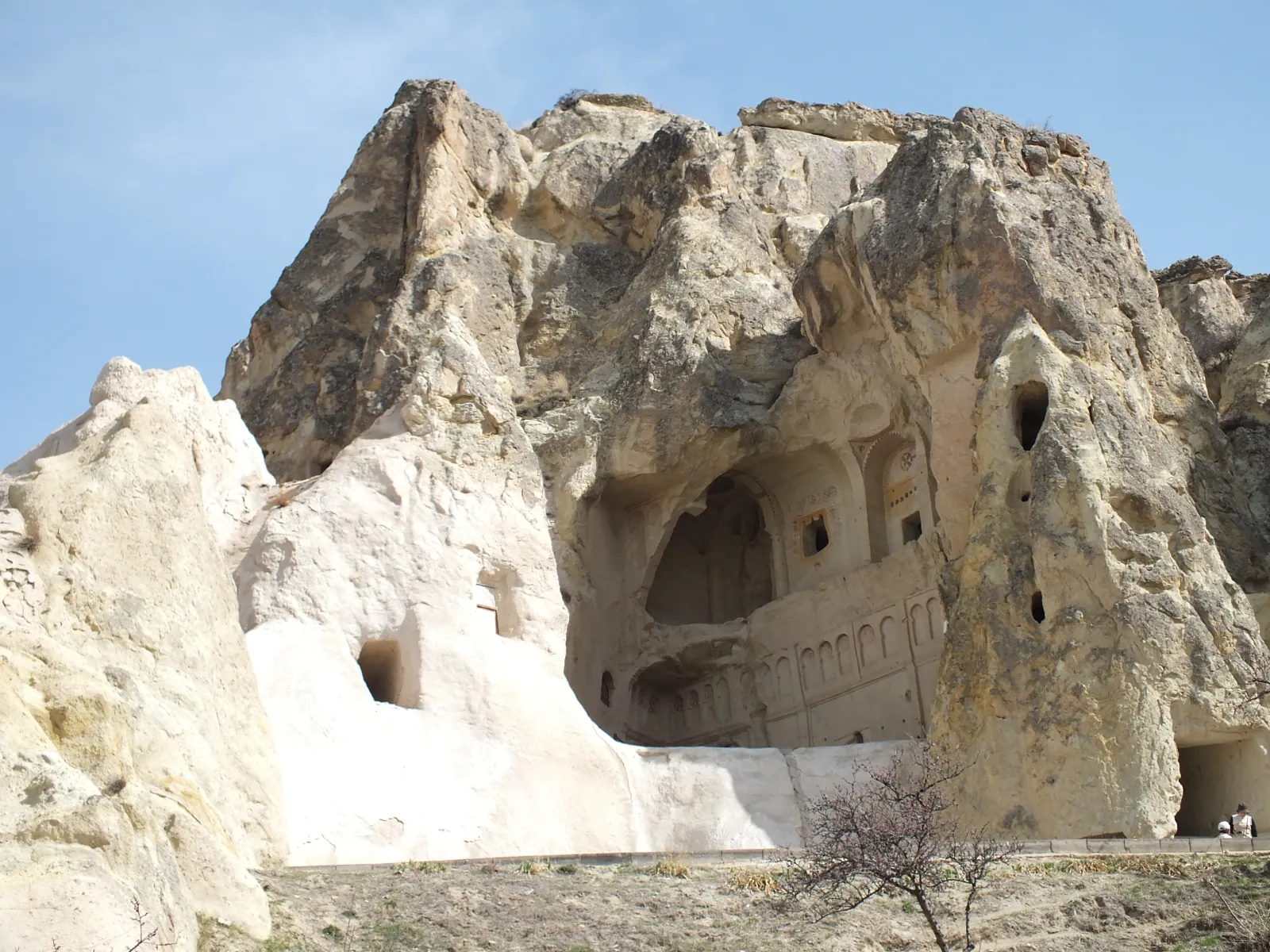
The Dark Church is dark because its builders wanted it that way. Carved into a rock face at the Göreme Open Air Museum — Cappadocia’s UNESCO World Heritage Site — the church has only a single small window, and for centuries that opening was partially blocked, leaving the interior in near-total darkness. The darkness preserved what light would have destroyed: a set of eleventh-century Byzantine frescoes that retain their original color intensity to a degree that is rare in any rock-cut church, anywhere.
The formal name is Karanlık Kilise. It is one of approximately thirty rock-cut churches and chapels in the Göreme Open Air Museum complex, but it is the one that draws art historians, and it is the one that justifies the separate entrance fee the museum charges for access.
The frescoes — scenes from the life of Christ painted in a palette of deep blue, rich red, gold, and green — look as if they were completed recently. They were not. They are approximately a thousand years old, and they survive because the room that holds them was too dark for the soot, sunlight, and moisture that degraded the paintings in the other churches.
The Frescoes
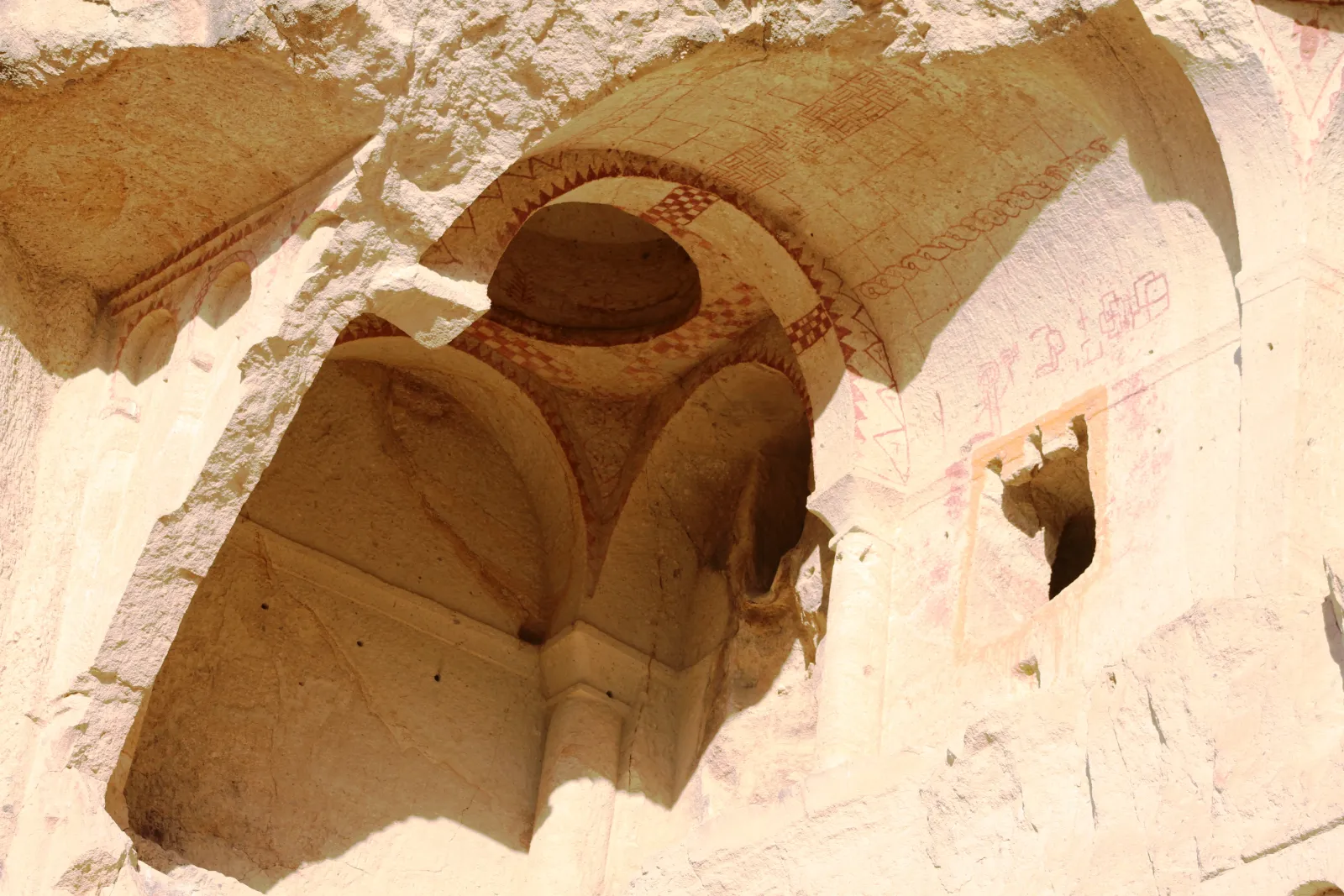
The paintings date to the mid-eleventh century and represent the mature phase of Cappadocian church art — the period when the region’s monastic communities had the resources and the artistic confidence to commission high-quality work. The program follows the standard Byzantine liturgical cycle: scenes from the Nativity, the Baptism, the Raising of Lazarus, the Entry into Jerusalem, the Last Supper, the Betrayal of Judas, the Crucifixion, and the Anastasis (the Harrowing of Hell).
The quality is immediately visible. The figures have weight and expression. The drapery falls naturally. The faces — particularly in the Nativity and the Betrayal scenes — show emotional range that is absent from the more schematic paintings in the other Göreme churches. The blues are lapis lazuli — a pigment imported over vast distances and reserved for the most important commissions. The reds are iron oxide, sourced locally. The gold backgrounds, where they survive, were applied as thin leaf over a prepared surface.
The preservation is the remarkable element. In most Cappadocian churches, the frescoes have been damaged by smoke (from fires lit by later inhabitants who used the churches as shelters or storage), by water infiltration, by deliberate defacement (faces scratched out, a common act of iconoclasm or superstition), and by light exposure that faded the pigments over centuries. The Dark Church escaped most of this because the darkness discouraged habitation, the limited opening reduced moisture circulation, and the overall inaccessibility of the space meant fewer people passed through.
A major restoration in the 1960s cleaned soot from the surfaces and stabilized the paintings. The result is the closest you can get, in Cappadocia, to seeing the frescoes as their painters intended them — vivid, narrative, and functioning as the visual theology they were designed to be.
The Architecture
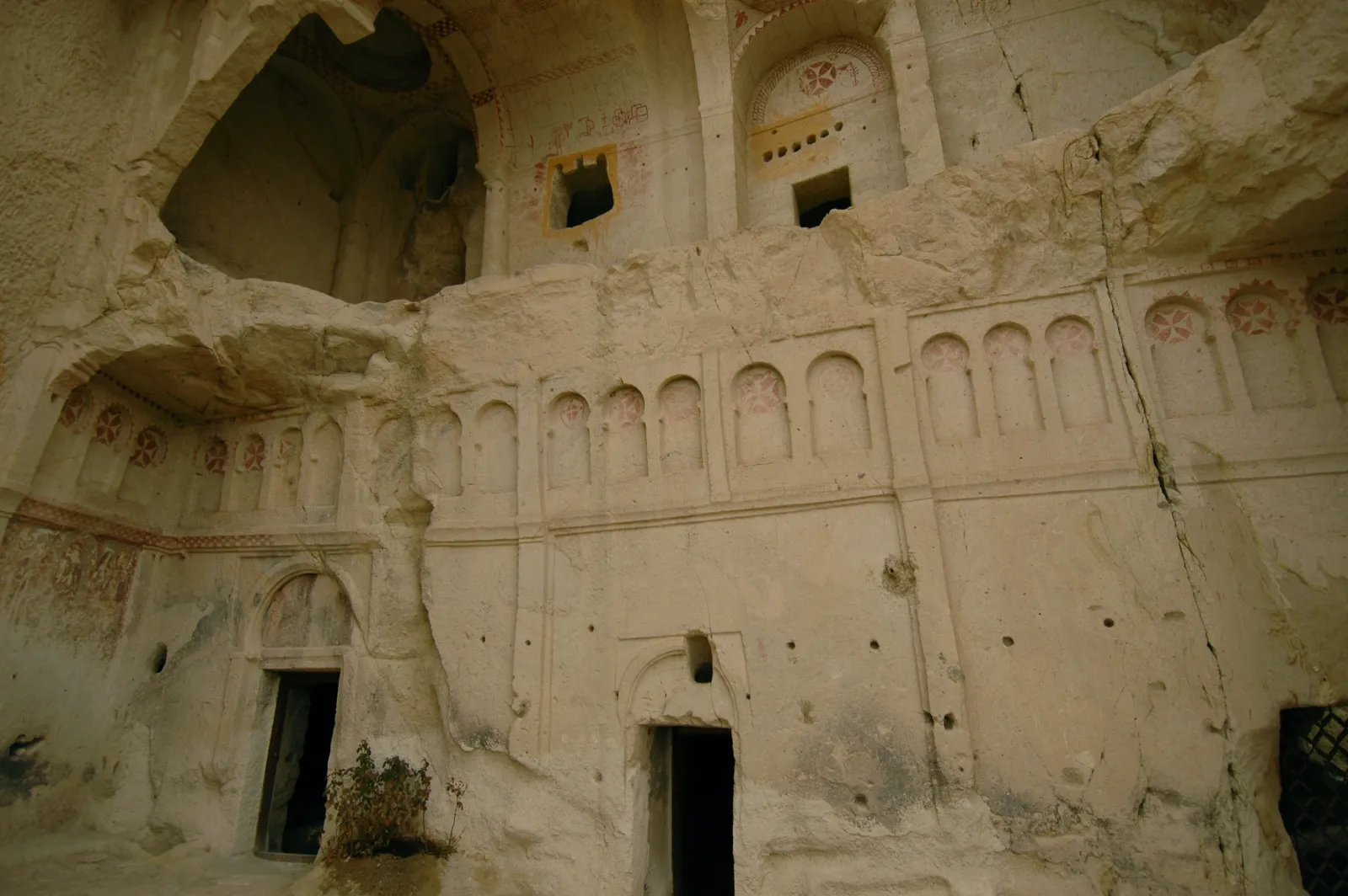
The church is carved from a single block of tuff — walls, columns, arches, dome, and apse all cut from the living rock. The plan is a cross-in-square layout with four columns supporting a central dome — a standard Byzantine church plan, translated here into stone rather than constructed from masonry. The dome is approximately three meters in diameter. The narthex (entrance hall) leads to the naos (main worship space), which opens to three apses in the east wall.
The carving is precise. The columns are proportional, the arches are round, and the dome transitions smoothly from its square base. The craftsmen who carved this space understood the architectural language of masonry construction and reproduced it in rock — a translation that required different skills (cutting in rather than building up) but achieved the same spatial result. The interior feels like a small church, not like a cave.
The single window — the one that kept the church dark — is in the narthex, and its limited light reaches the naos only indirectly. Modern lighting has been installed for visitors, controlled to protect the pigments while making the paintings visible.
Context: The Göreme Open Air Museum
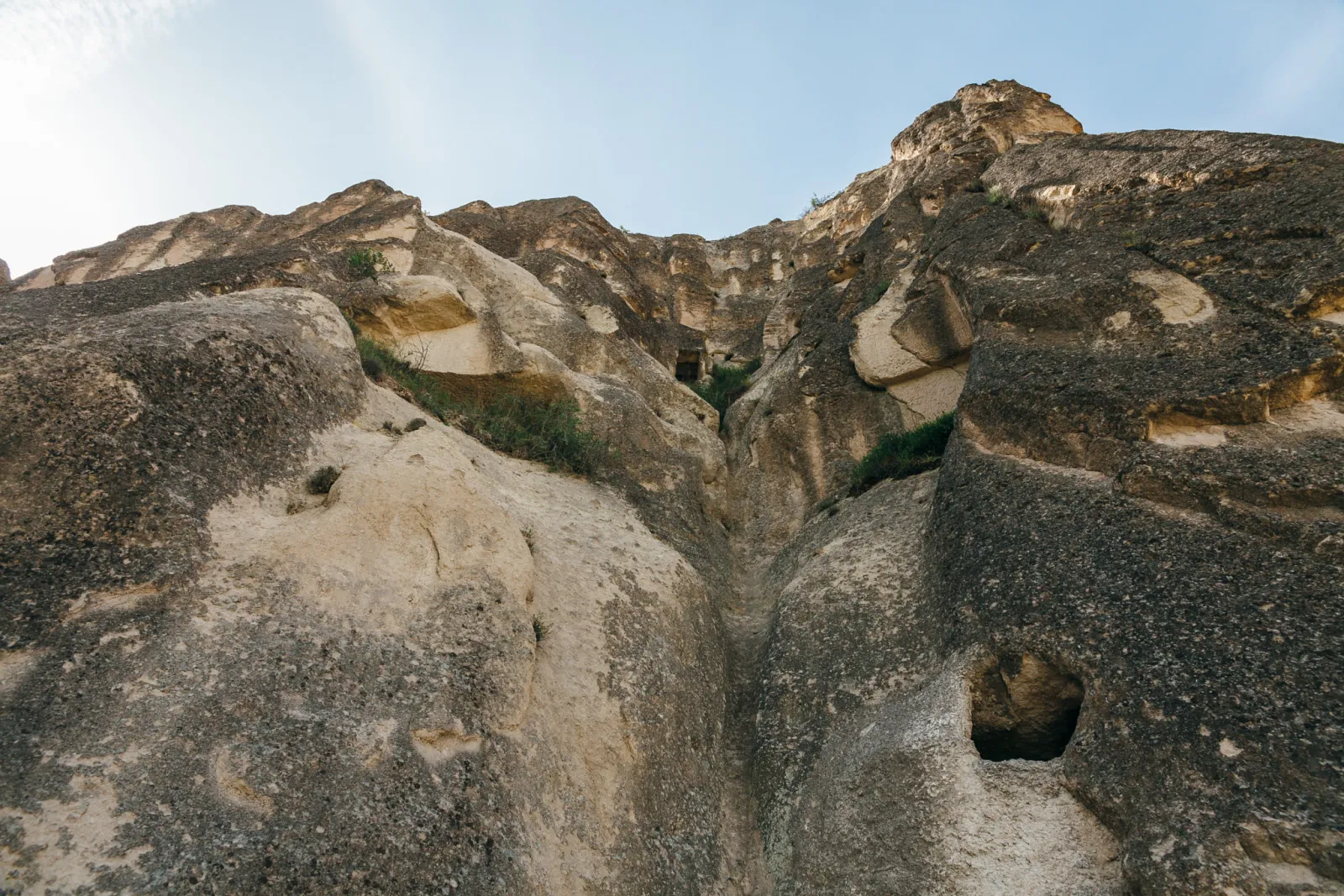
The Dark Church is part of the Göreme Open Air Museum — a cluster of rock-cut churches, refectories, and monastic spaces carved into a valley of fairy chimneys approximately one kilometer outside Göreme town. The complex dates primarily from the tenth to twelfth centuries, when Cappadocia’s monastic communities were at their most active. The museum is a UNESCO World Heritage Site and Cappadocia’s most visited attraction.
The other notable churches in the complex — the Apple Church (Elmalı Kilise), the Snake Church (Yılanlı Kilise), the Buckle Church (Tokalı Kilise), and the Chapel of St. Barbara — all have frescoes, but none match the Dark Church in preservation quality. The Apple Church has vivid paintings in a smaller space; the Buckle Church (outside the main complex, free entry) has the largest and most elaborate program. Together, they represent the fullest surviving archive of Byzantine church art outside of Istanbul and the major Greek monasteries.
Visiting
The Dark Church is inside the Göreme Open Air Museum but requires a separate ticket in addition to the general museum admission. The additional fee is modest and is worth paying — the Dark Church is the single most valuable artistic site in Cappadocia.
Getting there: The Göreme Open Air Museum is approximately one kilometer from Göreme town center, walkable in fifteen minutes or a short drive. Parking is available. The museum is on every Cappadocia tour itinerary.
How much time: The Dark Church itself takes fifteen to twenty minutes — the space is small, and the viewing is focused. The full Göreme Open Air Museum, including all the churches and the walking route, takes one and a half to two hours.
When to go: When I plan Cappadocia itineraries, I always schedule the Open Air Museum first thing in the morning. Early morning (opening time) avoids the worst of the tour group crowds. The churches are interior spaces, so lighting conditions are not affected by time of day, but the outdoor walking between churches is more comfortable before midday heat in summer.
Photography: Photography is not permitted inside the Dark Church. This restriction protects the frescoes from flash damage and keeps the visit focused on looking rather than recording.
With a guide: A knowledgeable guide transforms the Dark Church visit. When I take travelers here, the moment a guide begins reading the frescoes — explaining why Judas is positioned where he is, what the hand gestures mean, how the scenes relate to each other liturgically — the room changes from a dark cave with old paintings into a thousand-year-old sermon in color. A guide who can read the program turns the visit from art appreciation into historical interpretation.
Plan Your Cappadocia Visit
The Dark Church is twenty minutes in a dark room looking at paintings that have survived a thousand years because the room was dark. It is also the single most important work of art in Cappadocia. If you would like to visit with a private guide who can read the frescoes and connect them to the monastic world that produced them, tell us what interests you and we will build the itinerary around it.
Frequently Asked Questions
What is the Dark Church in Cappadocia?
The Dark Church (Karanlık Kilise) is a rock-cut Byzantine church inside the Göreme Open Air Museum in Cappadocia. It dates to the eleventh century and contains the best-preserved frescoes in the region — scenes from the life of Christ painted in vivid blues, reds, and golds. The church earned its name from having only a single small window, and the centuries of darkness protected the paintings from the degradation that affected other churches.
Why are the Dark Church frescoes so well preserved?
The church’s single small window kept the interior in near-total darkness for centuries. This limited soot damage (from fires), light exposure (which fades pigments), and moisture circulation (which causes flaking). The inaccessibility of the dark space also meant fewer people used it as shelter, reducing physical damage. A 1960s restoration cleaned remaining soot and stabilized the surfaces.
Do you need a separate ticket for the Dark Church?
Yes. The Dark Church requires a separate ticket in addition to the general Göreme Open Air Museum admission. The additional fee is modest. The ticket is purchased at the museum entrance or at the church entrance inside the complex.
Can you take photos in the Dark Church?
No. Photography is not permitted inside the Dark Church to protect the frescoes from flash damage and to maintain the viewing experience. Photography is permitted in most other areas of the Göreme Open Air Museum.
How long should you spend at the Göreme Open Air Museum?
One and a half to two hours for the full museum, including the Dark Church and all major churches. The Dark Church itself takes fifteen to twenty minutes. Arriving at opening time reduces crowds and gives the best experience, particularly inside the smaller churches.
What other churches are in the Göreme Open Air Museum?
The museum contains approximately thirty rock-cut churches and chapels. The most notable, besides the Dark Church, are the Apple Church (Elmalı Kilise), the Snake Church (Yılanlı Kilise), the Chapel of St. Barbara, and the Buckle Church (Tokalı Kilise, outside the main complex). Each has frescoes in varying states of preservation, and together they represent the most important collection of Byzantine church art in Cappadocia.