Ortahisar means “middle fortress,” and the name is a geographic description: the village sits between Göreme and Ürgüp, and its castle rock — a 90-meter volcanic tuff pinnacle rising from the village center — occupies the middle ground in the chain of natural rock fortresses that dot the Cappadocian plateau. Uchisar (“three fortresses”) to the west is the highest and most visited. Ortahisar, in the middle, is the one that still feels like a village rather than a tourist stop.
The castle rock is massive — taller and broader than Uchisar at its base, though its summit is slightly lower in absolute elevation. Like Uchisar, it has been carved into a vertical labyrinth of rooms, tunnels, and storage chambers over centuries. Unlike Uchisar, the village that surrounds it has not been extensively developed for tourism. The streets below the castle are residential — stone houses, small gardens, a few shops, children playing in the lanes. There are no carpet shops, no souvenir stalls lining the approach. You walk through a working Cappadocian village to reach a castle that is as structurally impressive as any in the region.
The Castle
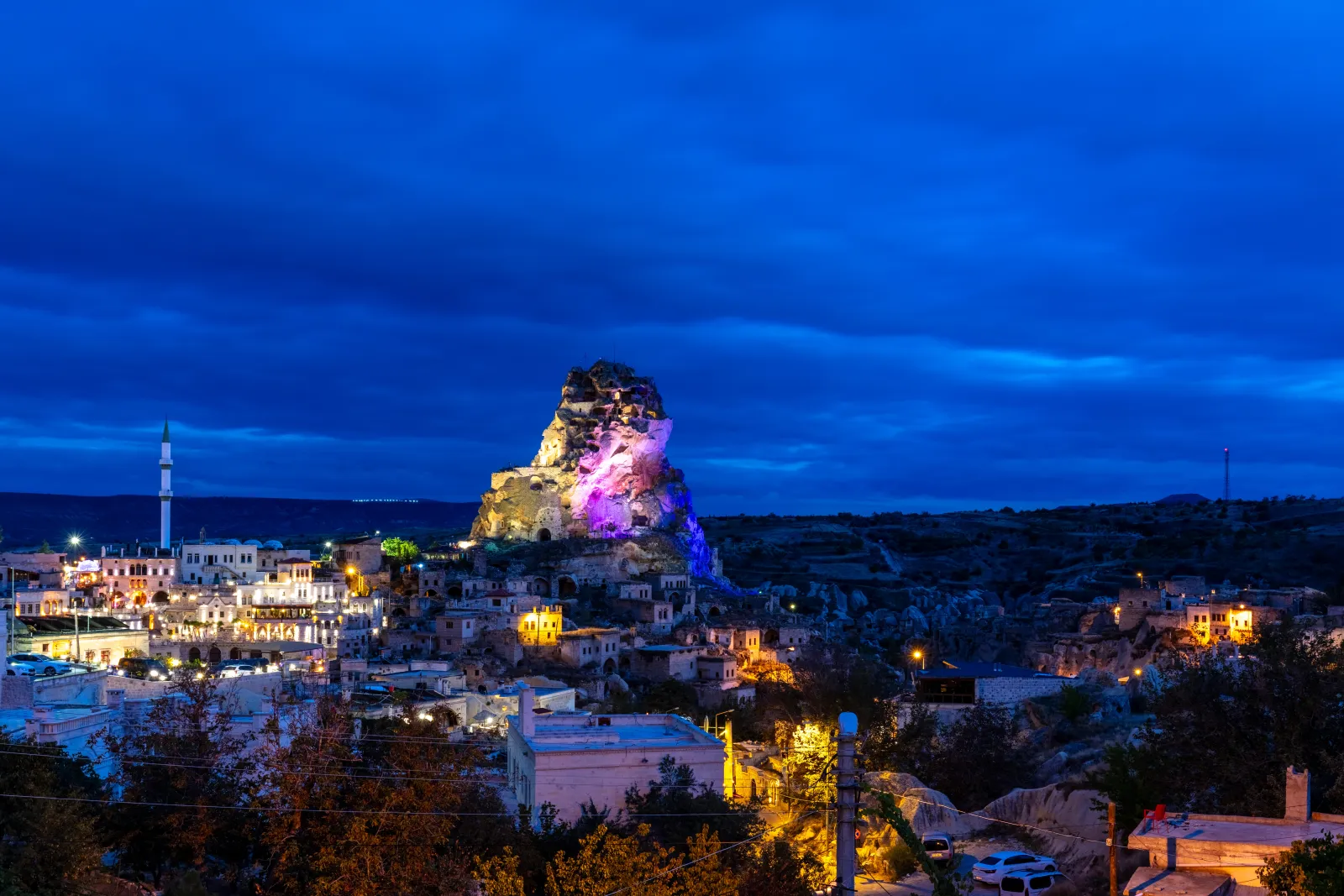
The rock has been used as a fortification and habitation since at least the Byzantine period, and likely earlier. The tuff was carved into a multi-level complex: the lower levels served as storage — grain, wine, and provisions kept cool by the rock’s natural insulation. The middle levels were residential, with room clusters connected by narrow passages and carved staircases. The upper levels were defensive — lookout positions with views across the plateau that provided early warning of approaching threats.
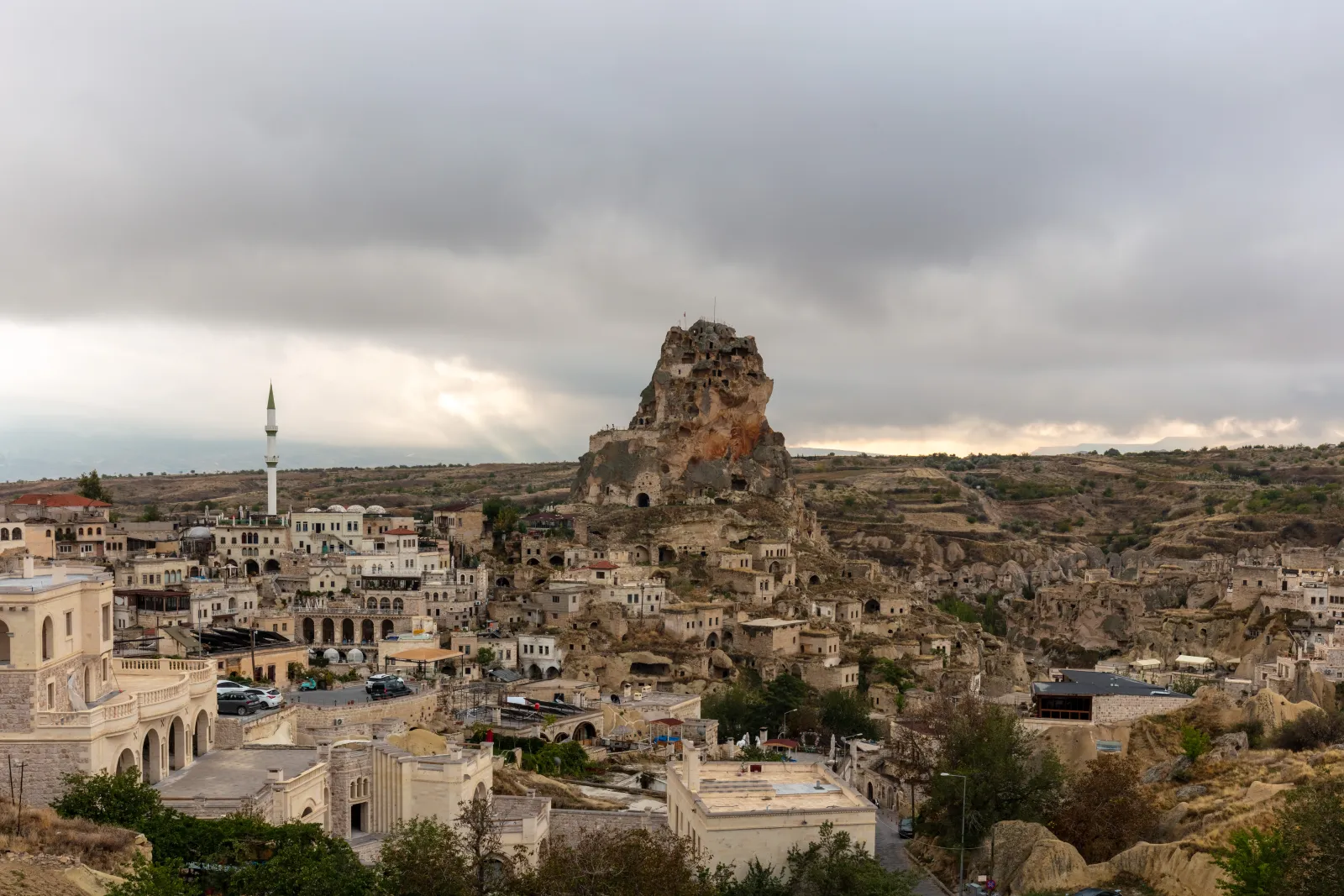
The castle suffered significant erosion and rockfall in the twentieth century, and sections of the exterior face have collapsed, exposing the interior chambers like a cross-section drawing. A restoration project reinforced the structure and opened a climbing route to the summit. The path is steeper and more rugged than the one at Uchisar — the stairs are carved into the rock, the passages are narrow, and some sections require ducking through low openings. The effort is real, but the summit rewards it.
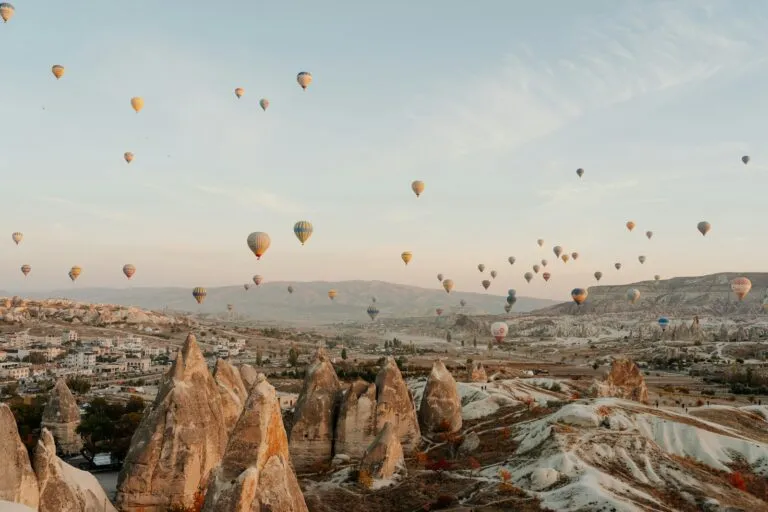
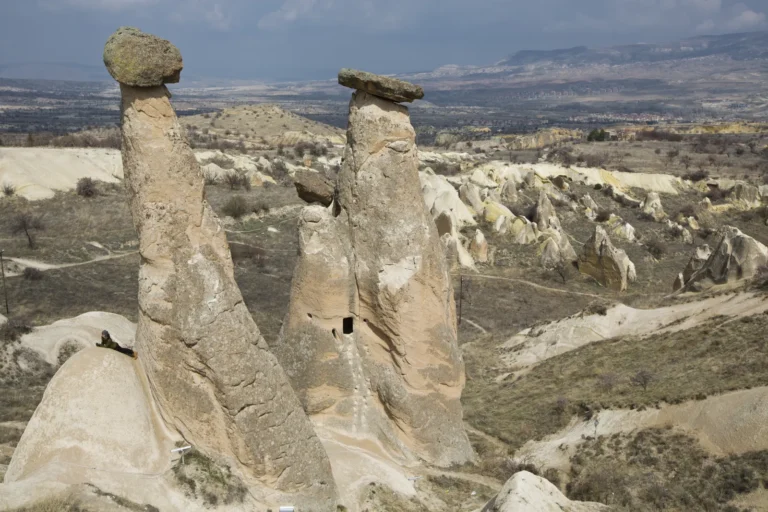
From the top, the view extends across the entire Cappadocian landscape: the Göreme valley to the northwest, the vineyard-covered slopes toward Ürgüp to the east, the Erciyes volcano on the southeastern horizon, and the fairy chimney formations that fill the valleys in every direction. On a clear day, the panorama matches Uchisar’s — and you share it with far fewer people. When I bring travelers here, I tell them this is the view the tour buses skip — the same panorama, without the crowd.
The Village
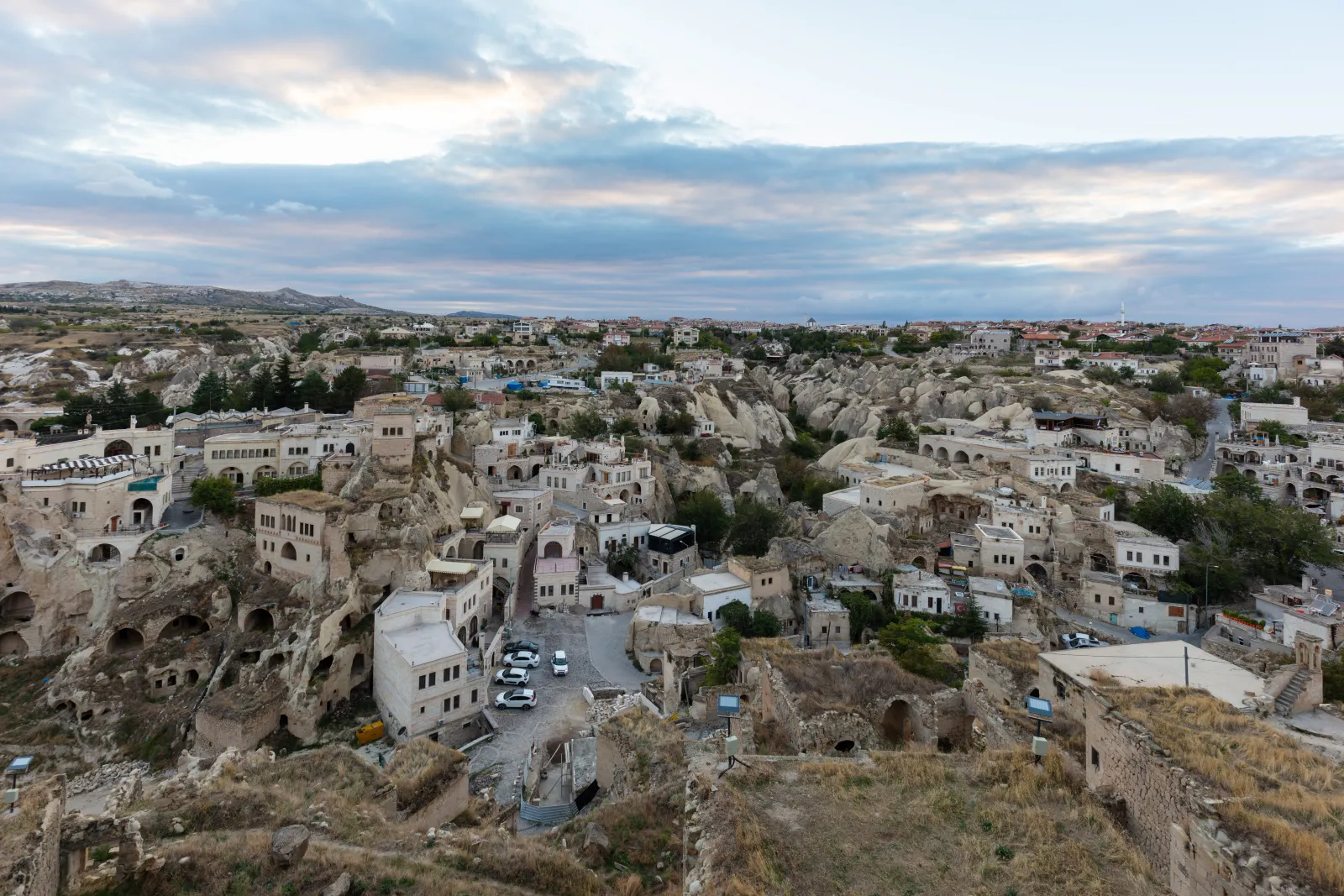
Ortahisar’s village character is its distinguishing feature. Where Göreme has developed into a backpacker and tourism hub, and Uchisar has attracted boutique hotels and upscale restaurants, Ortahisar remains primarily residential. The streets around the castle are lined with traditional Cappadocian stone houses — many built partly from cut tuff blocks, some incorporating cave rooms into the natural rock. The gardens grow vegetables and grapes. The tea houses serve the men of the village, not the tour groups.
The village is known locally for its citrus and lemon storage caves — large cave chambers carved into the tuff, where lemons from the Mediterranean coast were stored in the naturally cool, constant-temperature environment before distribution to markets across central Anatolia. Some of these storage caves are still in use. The practice exploits the same geological property that made cave dwellings comfortable — tuff maintains a steady temperature of approximately 10-15°C year-round, making it a natural refrigerator.
A small ethnographic museum in the village center exhibits household objects, textiles, and agricultural tools from traditional Cappadocian life.
Practical Information
Getting there: Ortahisar is approximately six kilometers from Göreme and five kilometers from Ürgüp, accessible by dolmuş or car. The castle is a five-minute walk uphill from the village center.
The climb: The ascent to the summit takes fifteen to twenty minutes. The path includes carved rock stairs, narrow tunnels, and some sections with low ceilings. Sturdy shoes are essential — the rock surface is uneven and can be slippery. Not recommended for those with claustrophobia or significant mobility limitations.
How much time: Forty-five minutes to an hour for the castle climb and village walk. Add time for tea at a village café if the pace allows. When I visit with travelers, I always suggest stopping at one of the tea houses below the castle — sitting with the village regulars, looking up at the rock, is as much part of the experience as the summit.
Entry fee: A small entrance fee at the base of the castle.
Official resource: Göreme Historical National Park — UNESCO
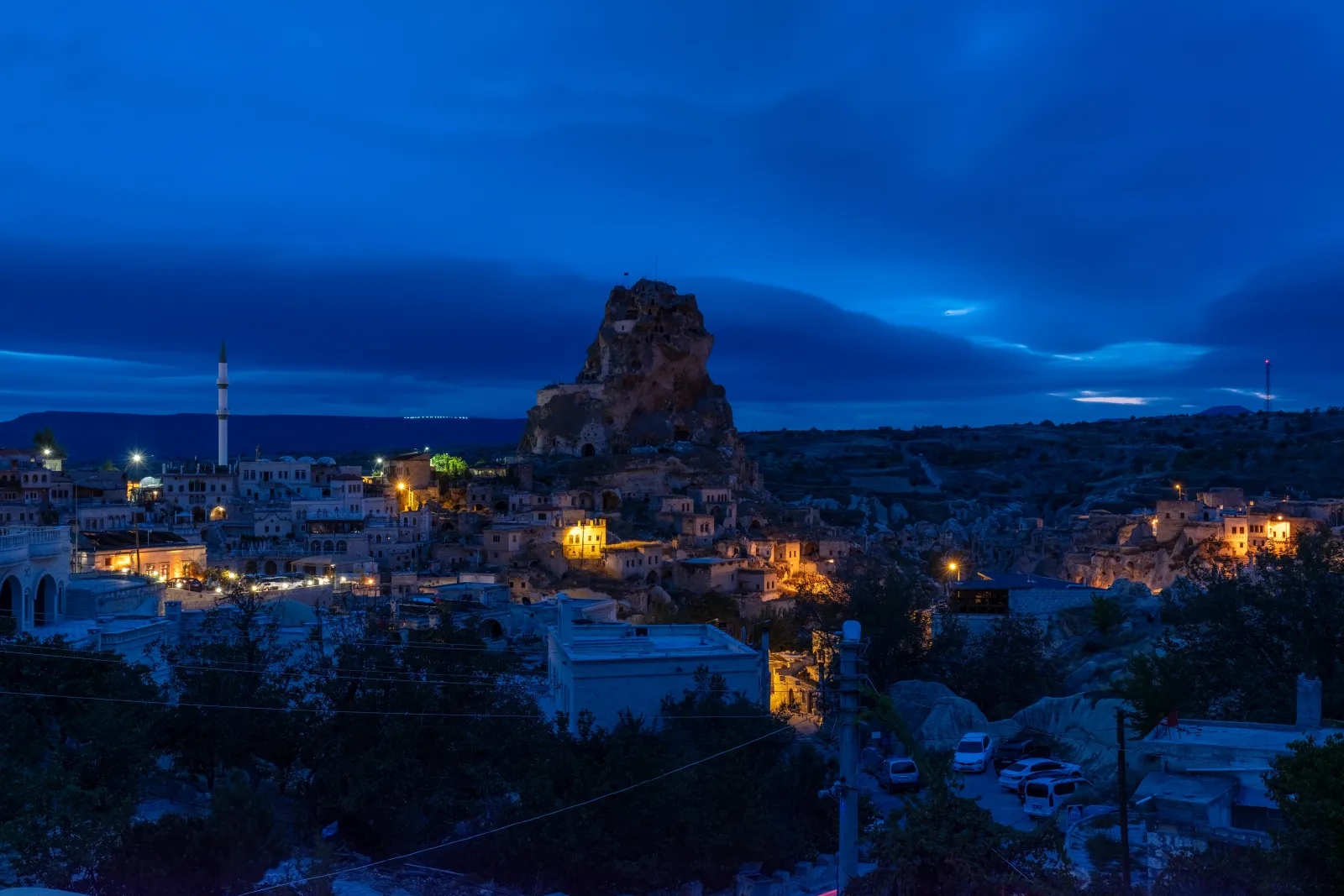
When to go: Morning light is excellent for the east-facing village. Late afternoon gives warm light on the castle rock. Because visitor numbers are lower than at Uchisar, timing is less critical — you are unlikely to encounter crowds at any hour.
Combining with other visits: Ortahisar fits between Göreme sites (Open Air Museum, valley hikes) and the Ürgüp area. It pairs well with a Red Valley or Rose Valley hike — the castle is visible from the valley ridgelines, and seeing it from above before visiting from below gives the landscape depth. It also works well as part of a two-day Cappadocia itinerary.
Plan Your Cappadocia Visit
Ortahisar is the Cappadocian fortress that still lives inside its village — the castle rises from the same streets where people buy bread and hang laundry. If you would like to include the quieter side of Cappadocia in your itinerary, with a private guide who knows the village as well as the viewpoints, tell us what interests you and we will build the route around it.