Somewhere around the 2nd century AD, an earthquake lowered part of the northern coastline of Kekova Island into the Mediterranean. The Lycian settlement that had occupied the shore did not disappear — it sank. Today, the remains of that settlement sit partially submerged in water so clear that you can see stone walls, stairways, mosaic fragments, and the outlines of rooms from the surface. The ruins begin at the waterline and descend into blue-green depths, the architecture of daily life preserved by the same sea that destroyed it.
Kekova is located on Turkey’s central Mediterranean coast, east of the town of Kas and roughly 190 kilometers southeast of Fethiye. The “sunken city” runs along the northern shore of Kekova Island, facing the mainland village of Ucagiz and the hilltop settlement of Simena (also known as Kalekoy). Together, these three elements — the submerged ruins, the castle village, and the quiet waterways between them — form one of the most atmospheric stretches of the Turkish coast. There are no resort hotels, no waterfront clubs, no boardwalks. There are boats, clear water, Lycian rock tombs, and the sound of silence interrupted only by other boats doing the same thing you are doing: moving slowly and looking down.
The Sunken City
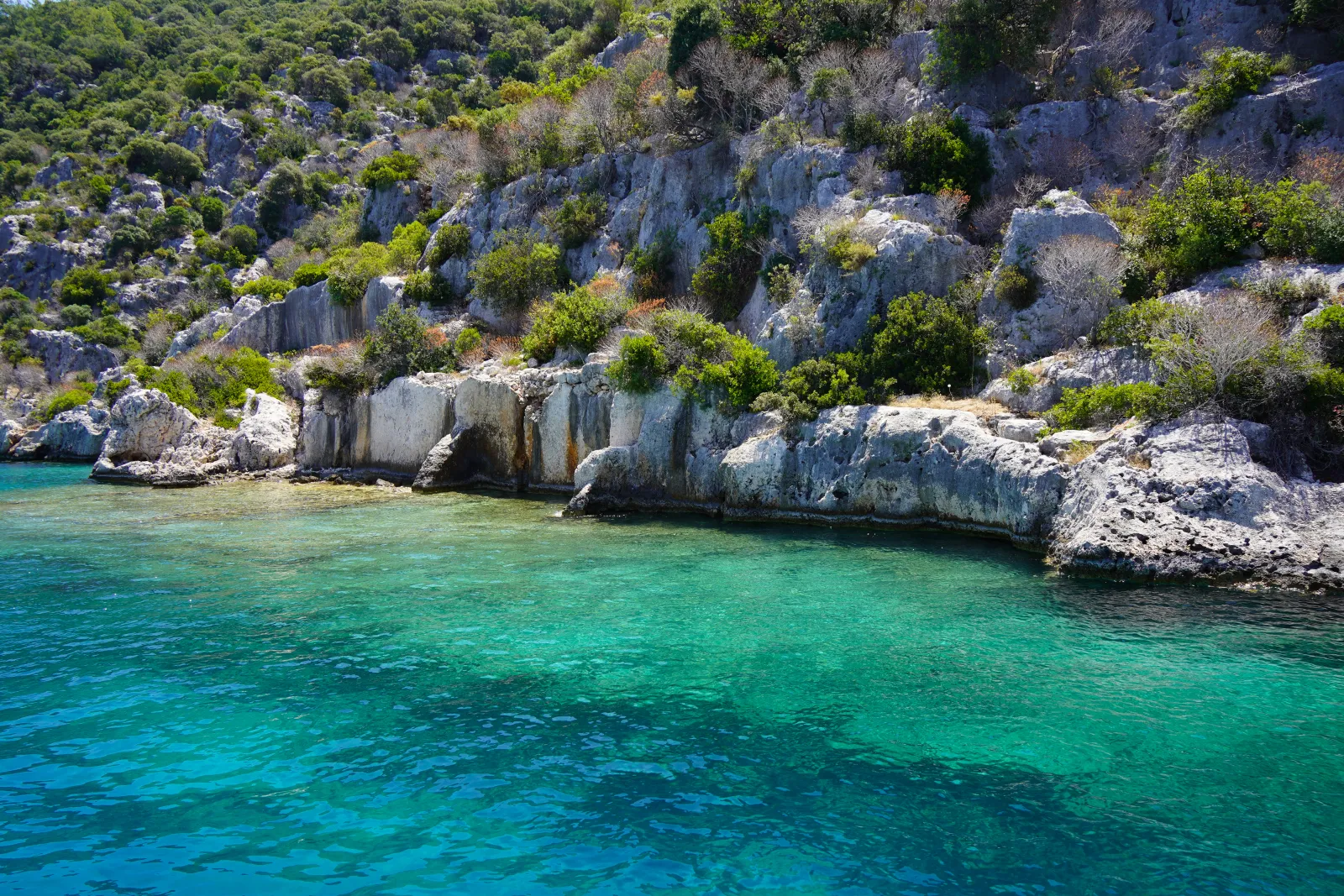
The submerged ruins extend along approximately 500 meters of Kekova Island’s northern shore. The settlement — believed to have been called Dolichiste in antiquity — was a modest Lycian-Roman coastal community before the earthquake that partially submerged it. What remains is visible from the surface on calm days: the outlines of buildings, stone walls standing to half their original height, steps leading down into the water, and fragments of what may have been a harbor.
Boat tours pass slowly along this stretch of coastline. Swimming and diving in the sunken city area are prohibited — the site is protected — but the clarity of the water makes surface viewing remarkably effective. On a calm day with good light, you can see details several meters below the surface: the regularity of dressed stone blocks, the geometry of rooms, the occasional mosaic or carved element half-buried in sand and sea growth.
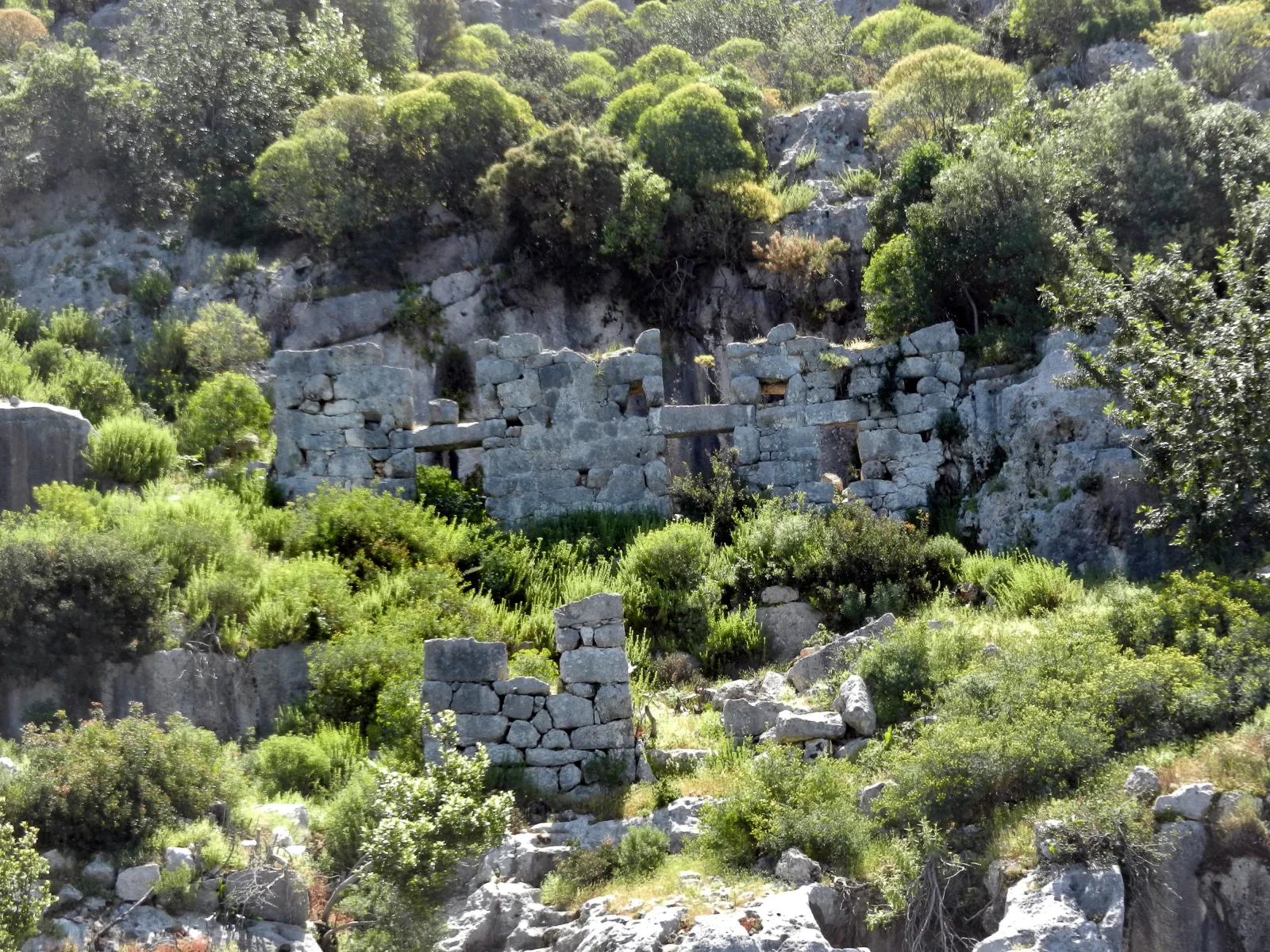
The experience is unlike visiting ruins on land. There is no signage, no roped-off areas, no audio guide. You are in a boat, looking down through water at a place where people lived, and the Mediterranean has been both the destroyer and the preserver. The lack of interpretation is part of the effect — you see what you see, and your mind fills in the rest. When I bring travelers here, I always ask the skipper to kill the engine for a minute above the clearest section — no engine noise, no wake, just the ruins under water. It is the moment the place becomes real.
Above the waterline, on the island itself, further ruins continue up the hillside: walls, cisterns, and the remains of a Byzantine church. The island is not generally open to visitors on foot — it is a protected archaeological zone — but the ruins visible from the boat extend both below and above the water’s surface, giving a sense of the settlement’s original scale.
Simena (Kalekoy)
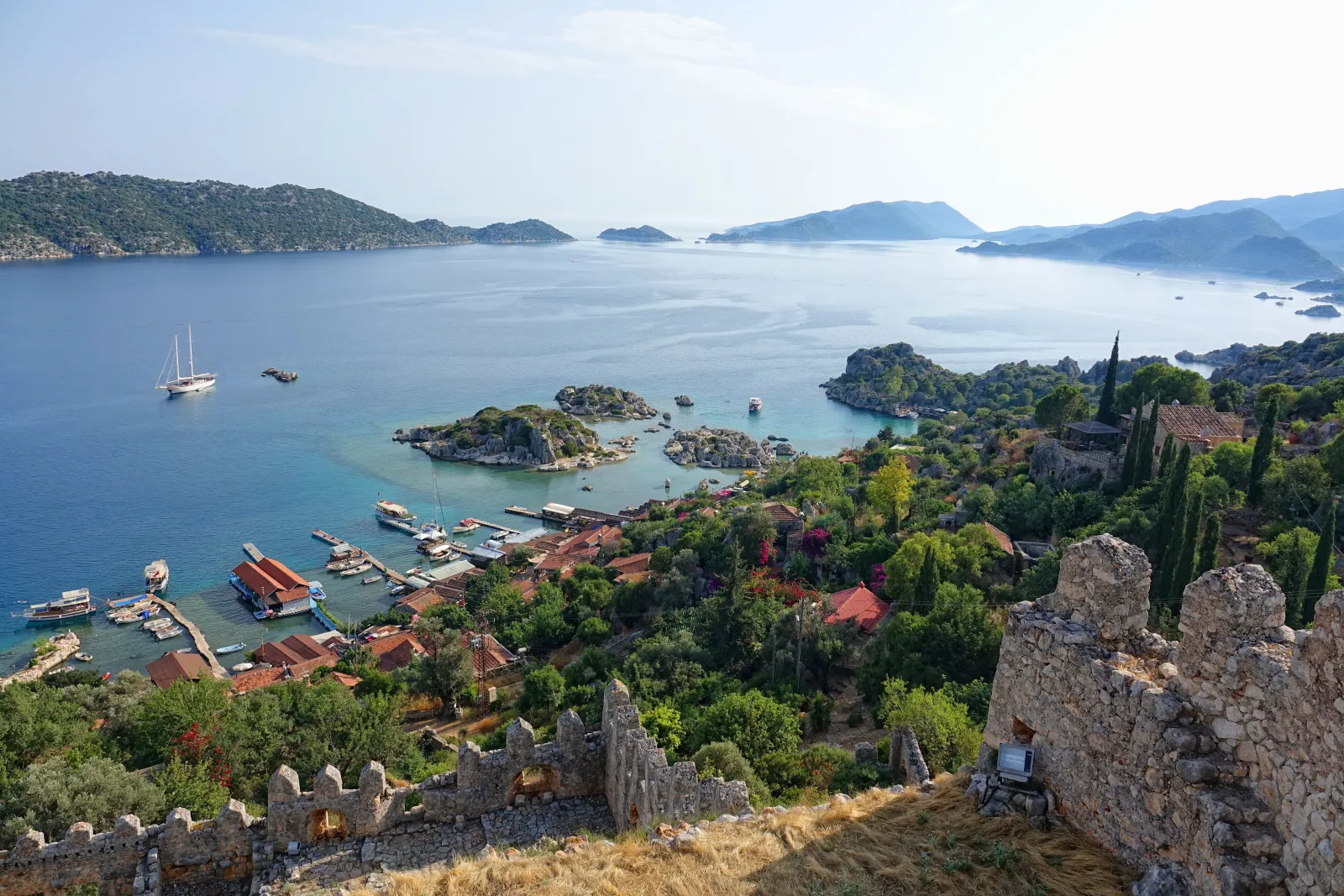
Directly across the water from Kekova Island, perched on a steep hillside on the mainland, sits Simena — known today as Kalekoy, which translates simply as “castle village.” This is a village with no roads. No cars. No motorcycles. Access is by boat from Ucagiz (about 15 minutes) or by a walking trail from the same direction. Everything that arrives or leaves — food, supplies, visitors — comes by water.
The village climbs from a small harbor up the hillside to a medieval castle at the summit. The walk from waterline to castle takes 15 to 20 minutes on stepped stone paths that wind between traditional stone houses, many of which operate as simple guesthouses or serve tea and lunch to day visitors. The scale is tiny — perhaps 100 permanent residents — and the pace matches.
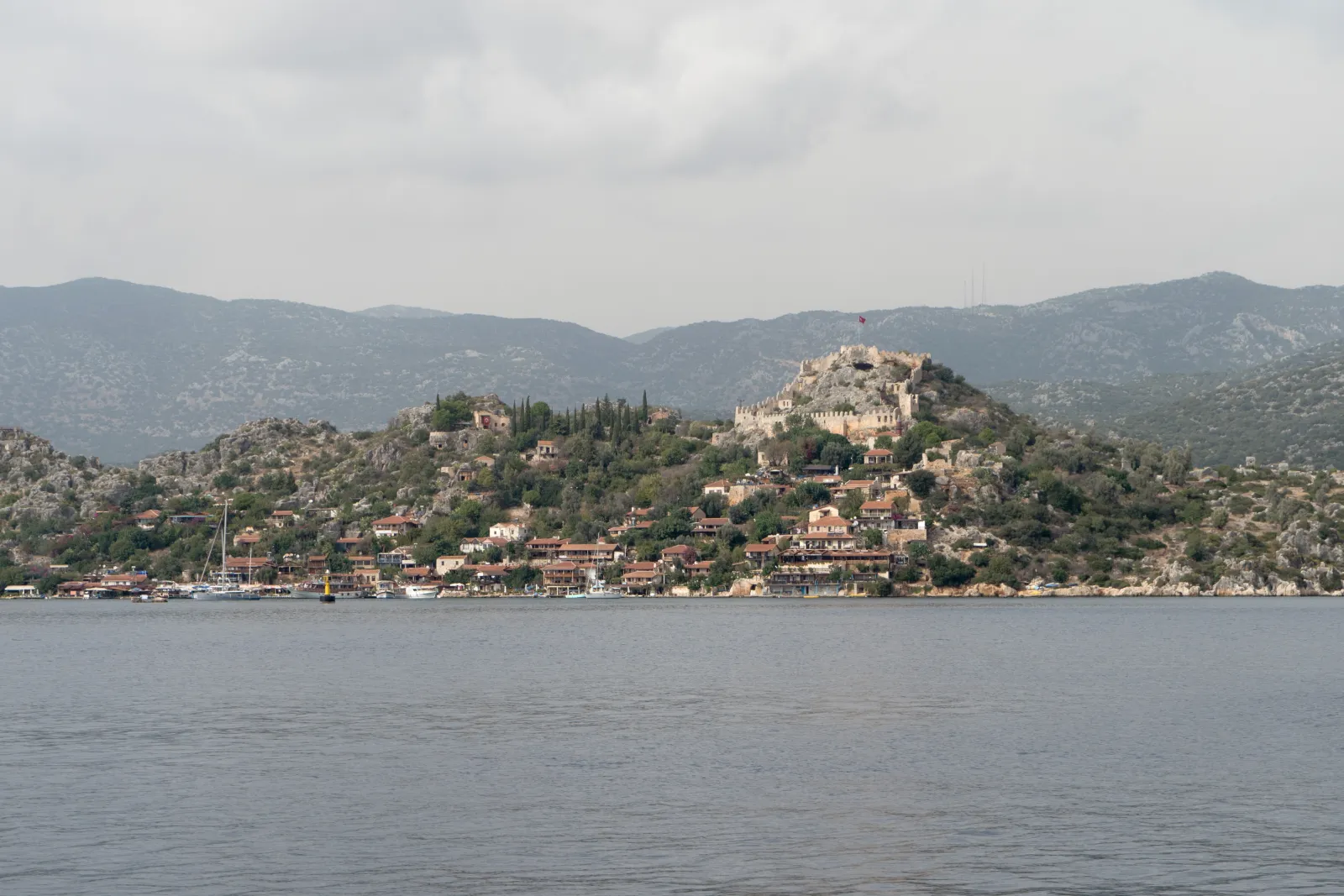
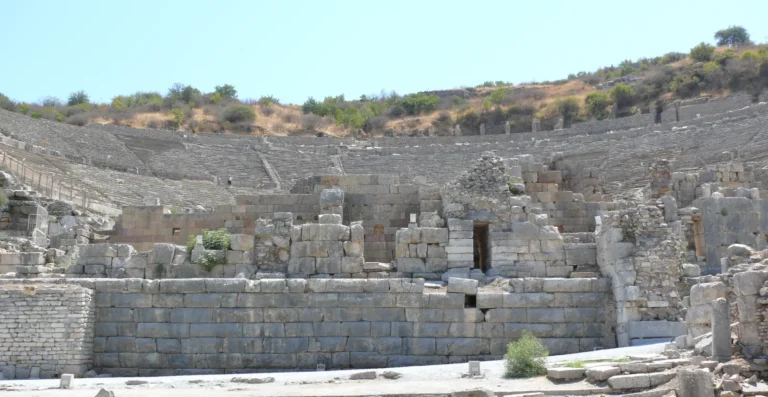
The Castle: Simena’s hilltop castle is a medieval fortification built on much older foundations. Inside the castle walls, you will find one of the smallest ancient theaters in Lycia — a rock-cut theater with seven rows of seats, carved directly from the bedrock, with capacity for roughly 300 people. The theater looks out over the sea, the islands, and the scattered Lycian tombs below. The view from the castle walls encompasses Kekova Island, Ucagiz, and the surrounding coastline — a panorama of water, rock, and scattered ruins that justifies every step of the climb.
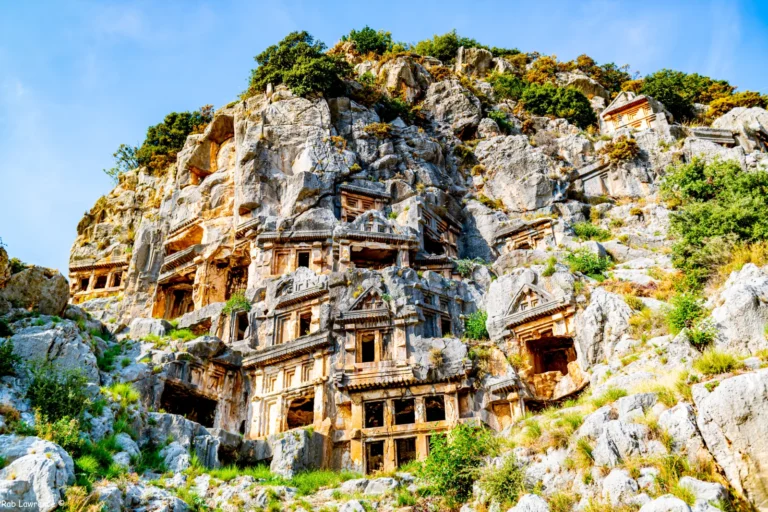
Lycian Rock Tombs: Between the waterline and the castle, Lycian rock tombs are scattered across the hillside and along the shore. The most photographed is a sarcophagus that sits partially in the water at the harbor’s edge — a Lycian house-type tomb with its gothic arch visible above the waterline, the base submerged. It has appeared on countless postcards and guidebook covers, and it is genuinely striking: a 2,400-year-old stone tomb standing in the sea.
Ucagiz: The Starting Point
Most Kekova boat tours depart from Ucagiz, a small fishing village on the mainland connected by road to the main highway. Ucagiz has a handful of waterfront restaurants, a few small pensions, and a quiet harbor where fishing boats share dock space with tour boats. The village is functional rather than picturesque — its purpose is as a departure point for the water.
From Ucagiz, the standard boat tour route crosses to Kekova Island’s sunken city, follows the northern shore slowly to allow viewing of the submerged ruins, crosses to Simena for a stop (typically 1 to 2 hours for exploring the village and castle), and returns to Ucagiz. The full circuit takes 3 to 4 hours at a comfortable pace. Longer tours may include additional swimming stops in the coves around Kekova Island.
You can also reach the area from Demre (ancient Myra), roughly 35 kilometers to the northwest. Some organized tours depart from Demre or Kas, combining Kekova with other Lycian coast visits.
What Makes Kekova Different
Turkey has no shortage of ancient ruins. What distinguishes Kekova is the medium: water. You experience these ruins not by walking through them but by floating above them. The perspective changes everything. On land, ruins can feel static — walls, columns, paving. Underwater, the same elements acquire a different quality. Light shifts through the water, the colors change with depth, fish swim through doorways. The ruins are both present and unreachable, visible and untouchable. It creates an atmosphere that no land-based archaeological site replicates.
The surrounding landscape reinforces this. The coastline here is deeply indented, with small islands, hidden coves, and rocky promontories creating a maze of waterways that feels enclosed and intimate despite being open sea. The absence of large-scale development — no coastal highway, no hotel strips — preserves a quality of remoteness that is increasingly rare on the Mediterranean.
Practical Information
Getting there: Ucagiz is reached by road from the D400 highway — about 35km from Demre, 40km from Kas, and approximately 190km (3 to 3.5 hours) from Fethiye. Boat tours depart from Ucagiz harbor. Organized tours from Fethiye or Kas include transportation.
How much time: The standard boat tour from Ucagiz takes 3 to 4 hours, including the sunken city viewing and a stop at Simena. A full day allows for a more relaxed pace, longer stops, and swimming in the coves. If driving from Fethiye, plan for a full day including travel time.
When to go: April through November for boat tours, with May through October being the most reliable weather. Summer months (June-September) have the calmest water and best underwater visibility for viewing the sunken city. Early morning departures offer the flattest water and best light for seeing the submerged ruins.
Entrance fees: Simena Castle has a small entrance fee (approximately 40-60 TL). The boat tour itself is a separate cost, either shared (joining a group boat from Ucagiz) or private (chartering your own boat for more flexibility).
Official resource: Turkish Ministry of Culture — Archaeological Sites
Combining with other visits: Kekova combines naturally with Demre/Myra (Lycian rock tombs, Roman theater, Church of St. Nicholas) — about 35km away. A day trip from Fethiye can include Myra in the morning and Kekova in the afternoon. For travelers staying along the Lycian coast, pair with Olympos or the Butterfly Valley boat trips for a full coastal itinerary.
Plan Your Fethiye Visit
Kekova is the kind of place that changes how you think about ancient ruins — seeing them through water rather than walking among them creates a different relationship with the past. If you would like to include Kekova in a Lycian coast itinerary from Fethiye, tell us how you want to travel.