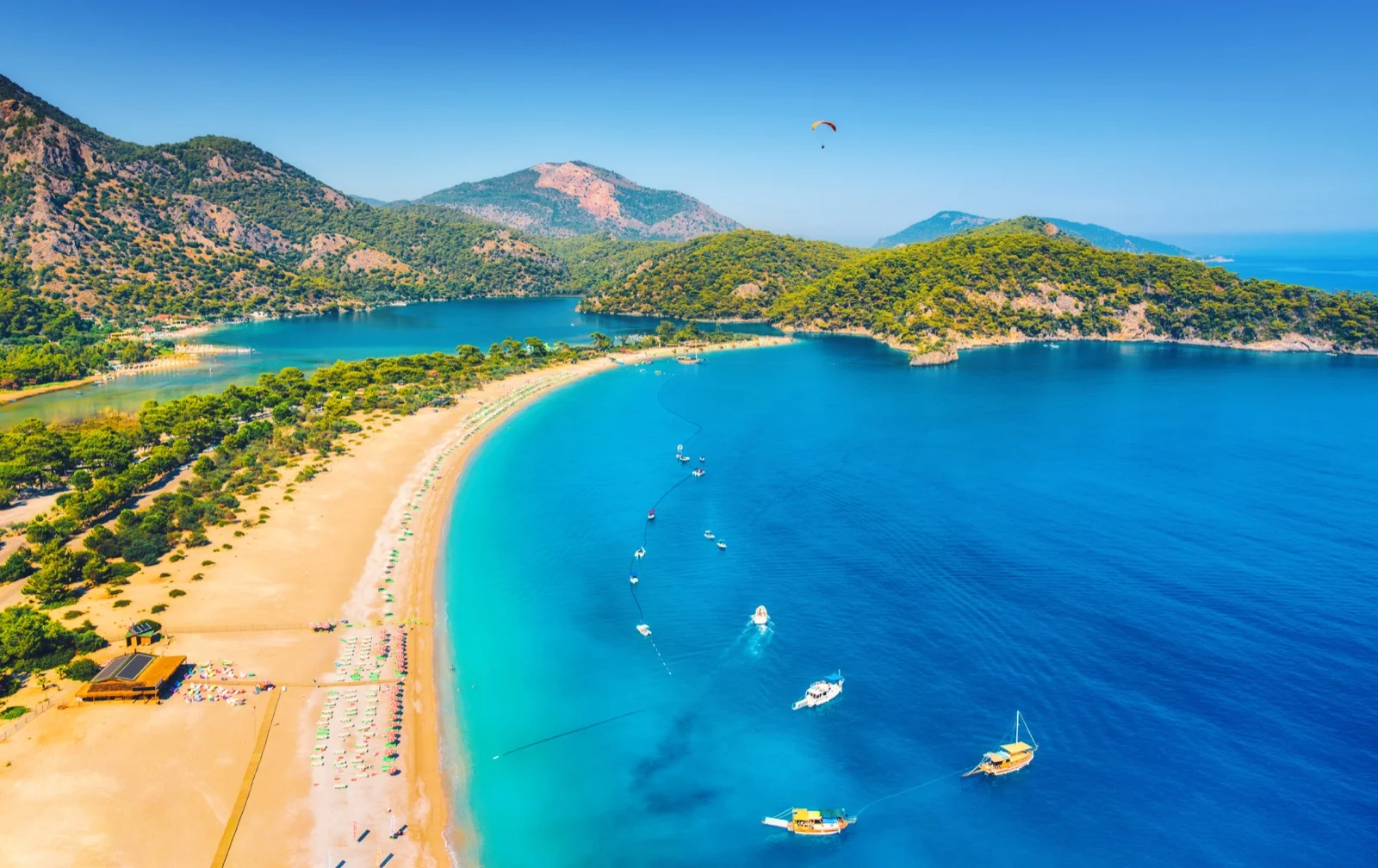
Some places earn their names through marketing. Butterfly Valley earned its through entomology. The narrow gorge that opens to a crescent beach on the Lycian coast south of Fethiye is home to the Jersey Tiger butterfly — Euplagia quadripunctaria — which breeds in the valley during summer months. The butterflies are not always visible in large numbers — their presence depends on the season, the heat, and the moisture levels — but the valley that bears their name is worth visiting whether you see one butterfly or a thousand.
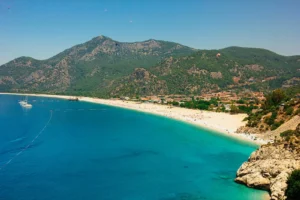
Butterfly Valley sits roughly 12 kilometers south of Oludeniz, tucked between cliffs that rise nearly 350 meters on either side. When I send travelers here, I tell them to leave their expectations open — some days the gorge is alive with butterflies, other days it is simply a place of extraordinary quiet. The gorge is perhaps 300 meters wide at the beach and narrows dramatically as it cuts inland, eventually reaching a waterfall that marks the end of the accessible valley floor. There is no road in. No road out. The only way to arrive is by boat from Oludeniz or Fethiye.
This inaccessibility is not an inconvenience. It is the point.
Getting There by Boat
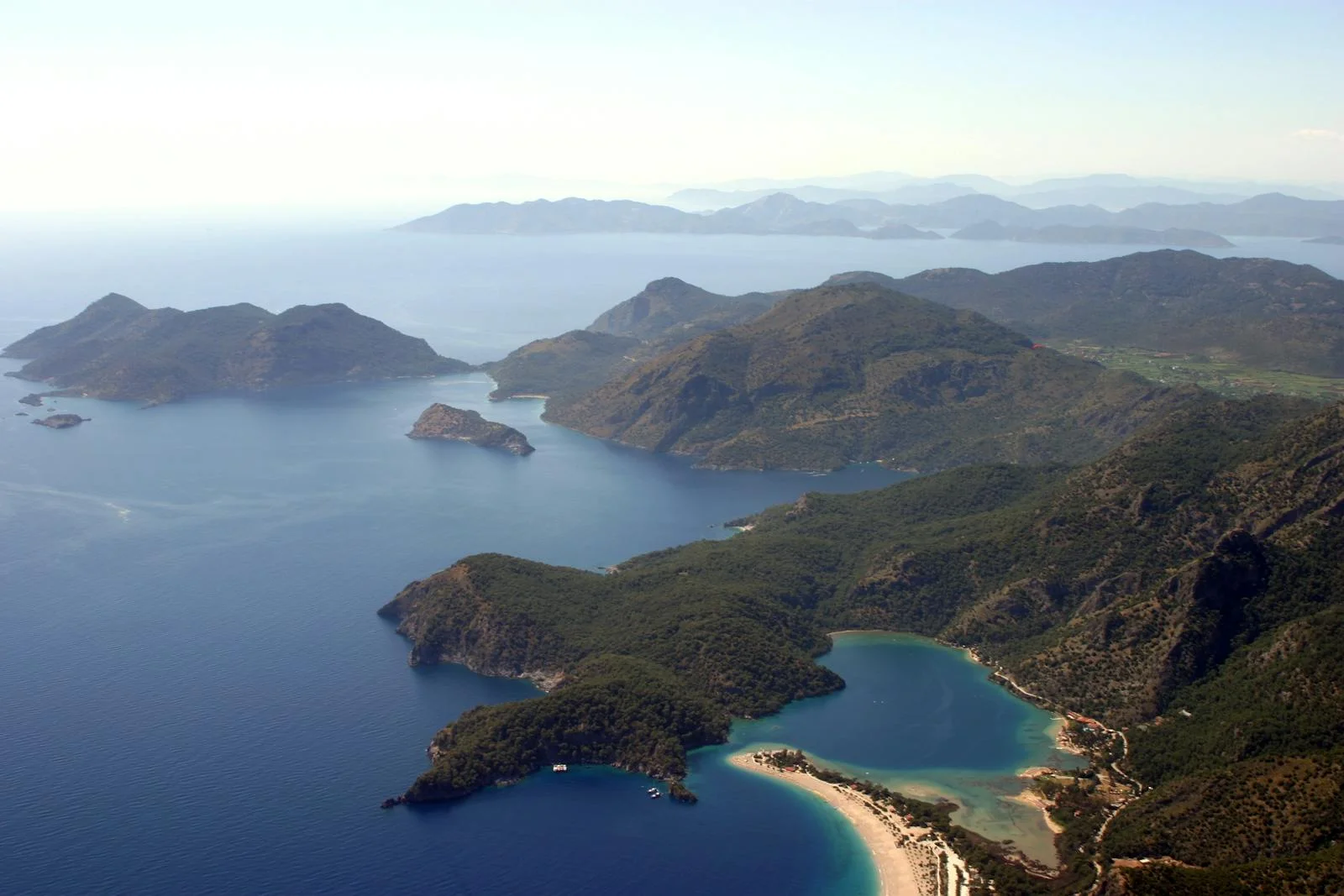
Water taxis to Butterfly Valley depart from Oludeniz beach throughout the day during summer months (typically June through September), with the first boats leaving around 10:00-11:00 AM and the last return boats departing the valley around 5:00-6:00 PM. The crossing takes approximately 20 minutes and follows the coastline south, passing cliff faces and small coves that have no land access.
You can also reach Butterfly Valley on day-trip boats from Fethiye harbor that combine the valley with other stops along the coast — these full-day tours typically include swimming stops, lunch on board, and time at the valley. The advantage of the water taxi from Oludeniz is flexibility: you choose when to go and when to come back, rather than following a group schedule.
The boats anchor offshore and passengers wade to the beach or are ferried in by smaller dinghies, depending on the operator and sea conditions. The arrival is part of the experience — watching the gorge open up as the boat approaches, the steep walls framing a narrow strip of pebble beach with dense green vegetation behind it.
The Beach
The beach at Butterfly Valley is a crescent of pebbles and coarse sand at the mouth of the gorge. It is not a large beach — perhaps 200 meters across — but its setting makes size irrelevant. Cliffs rise on both sides, the gorge stretches behind, and the Mediterranean opens in front. The water is clear and deep close to shore, transitioning quickly from turquoise shallows to deep blue.
There is a small seasonal bar that serves basic food and drinks — tea, simple meals, snacks. This is not a beach with sunbed rows and cocktail service. It is a beach where you put your towel on the pebbles, swim in the sea, and listen to the sound of the stream that runs out of the gorge behind you. The simplicity is deliberate and, for many visitors, exactly what they came for.
The swimming is excellent. The water is clean, deep enough for diving from rocks on either side of the beach, and generally calm in the sheltered cove. Snorkeling along the rocky edges reveals the marine life typical of the Lycian coast — small colorful fish, sea urchins, and the clear visibility that comes from deep water meeting clean rock.
The Valley and the Waterfall
Behind the beach, the valley narrows and a path follows the stream inland through dense vegetation — oleander, plane trees, and the specific flora that creates the habitat for the Jersey Tiger butterflies. The walk is not long — roughly 30 to 40 minutes to reach the waterfall — but the terrain is uneven, rocky in places, and can be slippery when wet. Proper shoes (not flip-flops) are necessary.
The valley floor is dramatically different from the beach. The gorge walls tower overhead, filtering the light into shifting patterns on the stream below. The vegetation is lush — almost tropical in density, fed by the stream and the humidity trapped by the narrow walls. If you have visited the dry, sun-baked landscape of the Turkish coast, the green density of Butterfly Valley’s interior comes as a genuine surprise.
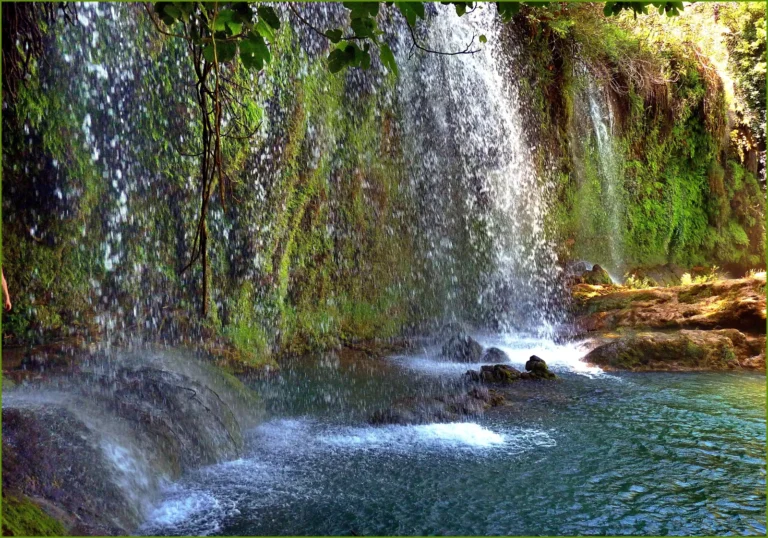
The waterfall at the valley’s end is a modest but beautiful cascade — perhaps 10 to 15 meters high, falling into a pool surrounded by rock and greenery. In early summer, when snowmelt from the mountains above feeds the stream, the waterfall runs strongly. By late summer, the flow diminishes. The pool at the base is swimmable in the right conditions, though the water is significantly colder than the sea.
The Butterflies
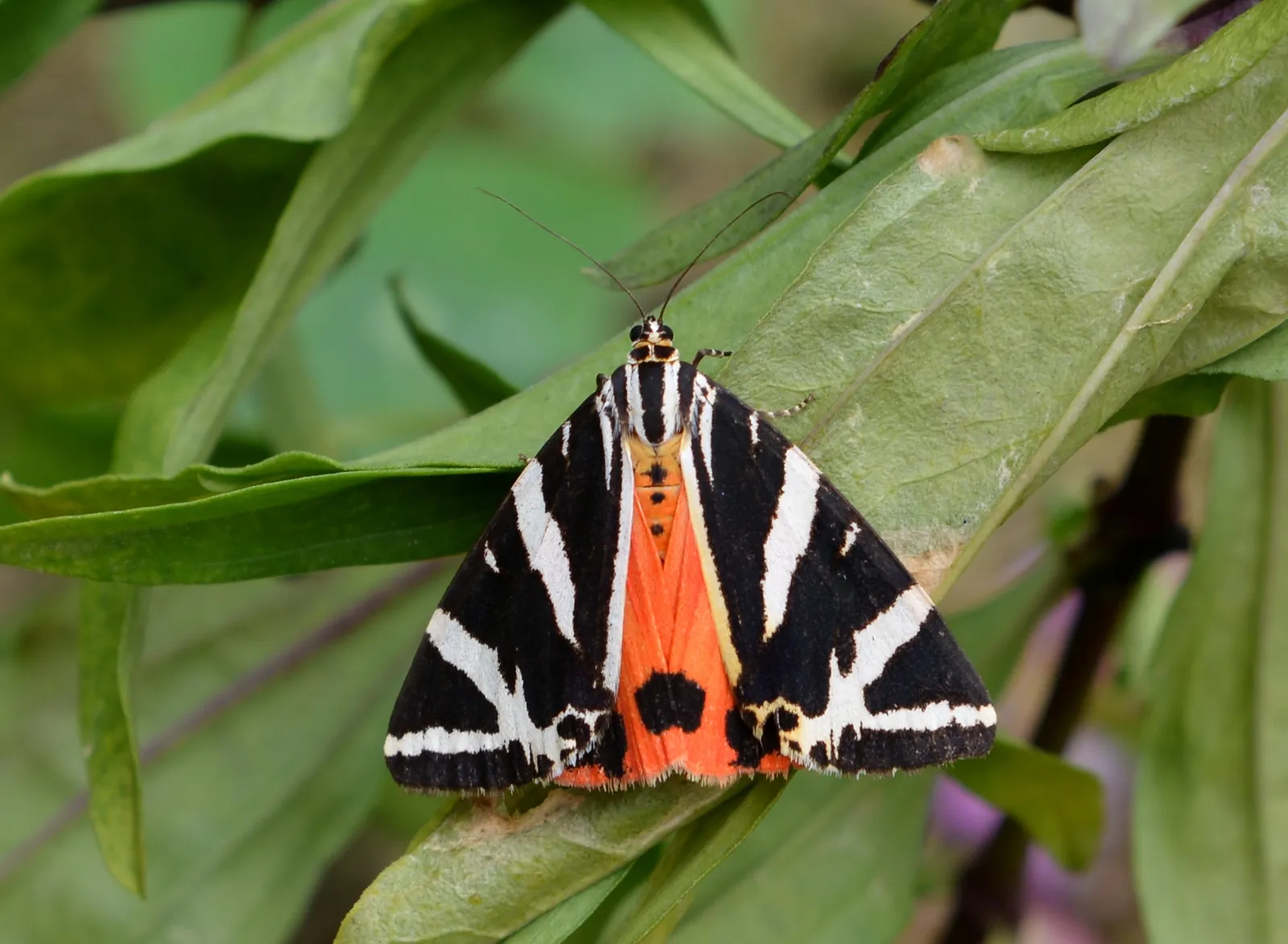
The Jersey Tiger butterflies that give the valley its name are most visible from June through September, with peak activity typically in July and August. They are not large, showy tropical butterflies — they are medium-sized moths (technically) with cream-and-brown-striped forewings and orange-red hindwings that flash when they fly. In the right conditions, dozens or hundreds can be seen resting on damp rock faces or along the stream, their wings folded to show the striped pattern.
The butterflies concentrate in the shadier, damper parts of the valley — the middle sections where the walls are closest and the vegetation densest. If you walk past the beach toward the waterfall during summer months, you are walking through their territory. A quiet approach and patience reveal them — they are there, but they do not perform on command.
The valley is designated as a nature reserve partly because of the butterflies, and visitors are asked not to disturb them, touch them, or use flash photography near the roosting areas.
Off-Grid Camping Culture
Butterfly Valley has a long history as an off-grid destination. For decades, travelers — many of them backpackers following the Lycian coast — have camped on the beach and in basic bungalows operated by the small settlement in the valley. The accommodation is intentionally rustic: wooden platforms with mattresses, basic toilet and shower facilities, meals served at communal tables. There is limited electricity, limited phone signal, and no Wi-Fi in most of the valley.
This is not for everyone, and that is precisely the filter that keeps the valley’s character intact. For those who stay overnight, the experience is distinctive: dinner under the stars, the sound of the stream, and a morning swim before the first day-trip boats arrive. The valley at 7:00 AM, with no boats at anchor and the beach empty, is a different place from the valley at noon when the water taxis have delivered their passengers.
Practical Information
Getting there: Water taxis from Oludeniz beach (20 minutes, operating June-September). Full-day boat tours from Fethiye also stop at the valley. There is a cliff-top trail from the village of Faralya, but it is steep, exposed, and not suitable for casual walkers.
How much time: A minimum of 2 to 3 hours allows you to swim at the beach and walk partway into the valley. A full day (arriving on the first water taxi, leaving on the last) allows the beach, the full hike to the waterfall, and a relaxed pace. Overnight stays offer the most complete experience.
When to go: June through September for boat access. July and August for the best chance of seeing butterflies in numbers. Early morning (if staying overnight) and late afternoon (after day-trip crowds thin) are the quietest times at the beach. The waterfall runs strongest in June.
What to bring: Water shoes or sturdy sandals for the pebble beach and valley trail, swimsuit, drinking water, sunscreen, a hat, and a light layer for the shaded valley interior. If hiking to the waterfall, closed shoes with grip are recommended. Pack out all rubbish — the valley has minimal waste facilities.
Combining with other visits: Butterfly Valley pairs naturally with Oludeniz (same boat departure point). A day could include a morning at Oludeniz’s Blue Lagoon and an afternoon at Butterfly Valley. If your Fethiye itinerary includes the 12 Islands boat tour, the two experiences complement each other — one is open-sea island hopping, the other is a single place to slow down. The gulet on our 9-Day Istanbul, Fethiye Blue Cruise & Antalya Tour visits Butterfly Valley on its first day of sailing.
Official resource: Butterfly Valley is within the Fethiye-Göcek Special Environmental Protection Area — Turkey’s Ministry of Agriculture and Forestry manages the conservation zone.
Plan Your Fethiye Visit
Butterfly Valley is one of those places where the journey — by boat, with no road alternative — shapes the experience as much as the destination. If you want us to weave it into a Fethiye coastal day that suits your pace and interests, we are here to help plan it.
Frequently Asked Questions
Can you see butterflies in Butterfly Valley?
Yes, though numbers depend on the season. The Jersey Tiger butterflies are most visible from June through September, with July and August being peak months. They gather on damp rocks and vegetation in the shaded middle sections of the gorge. They are not guaranteed in large numbers on every visit — some days you may see dozens, other days only a few. The valley is worth visiting regardless for its landscape and beach.
Is the hike to the waterfall difficult?
The hike is moderate — about 30 to 40 minutes each way over uneven, sometimes rocky terrain. It is not a marked, maintained trail, and sections can be slippery. You need proper footwear (not flip-flops). Most reasonably fit visitors manage it comfortably, but it is not suitable for those with serious mobility limitations.
How do you get to Butterfly Valley without a boat?
There is a trail from the village of Faralya on the cliff top, but it is very steep — a 350-meter descent on a narrow, exposed path that requires some scrambling. It is used by experienced hikers and Lycian Way walkers, not by casual visitors. For most travelers, the boat from Oludeniz is the only practical and safe access.
Can you camp at Butterfly Valley?
Yes. Basic bungalow accommodation and camping are available at the small settlement on the beach, typically operating from May through October. Accommodation is rustic — simple wooden structures, shared facilities, communal meals. Booking in advance is recommended in July and August. This is off-grid living: limited electricity, minimal phone signal, no Wi-Fi.
Is Butterfly Valley safe for solo travelers?
Yes. The boat service from Oludeniz is regular and reliable during summer months, the beach is a public space with other visitors present throughout the day, and the valley’s small community creates a welcoming atmosphere. Solo female travelers are a common sight here. The main safety consideration is the valley trail — uneven terrain and slippery sections require proper footwear and attention.
What is the best month to visit Butterfly Valley?
July is the best single month — the water is warm enough for extended swimming (around 26°C), the waterfall still has reasonable flow from spring melt, and the Jersey Tiger butterflies are at their most active. June offers fewer crowds with good butterfly numbers. August has the warmest water but the driest waterfall. September is quieter and still swimmable, though butterfly numbers decline.