Antalya is a coastal city, but it is also a city shaped by water falling from cliffs. The Düden River, fed by karst springs north of the city, splits into two separate waterfalls before reaching the Mediterranean. The Upper Düden Waterfall drops into a gorge in a park setting surrounded by trees, with a path that takes you behind the curtain of water. The Lower Düden Waterfall drops 40 meters directly off a cliff into the sea — one of the few places in the world where a river meets the ocean by falling off a rock face. Same river, same name, two completely different experiences.
The two waterfalls are about 10 to 12 kilometers apart, with the city of Antalya between them. You can visit both in a single half-day, though they feel like different destinations: the Upper is a park — green, shaded, family-friendly — while the Lower is a coastal spectacle best seen from a boat on the water below.
Upper Düden Waterfall (Düdenbaşı Şelalesi)
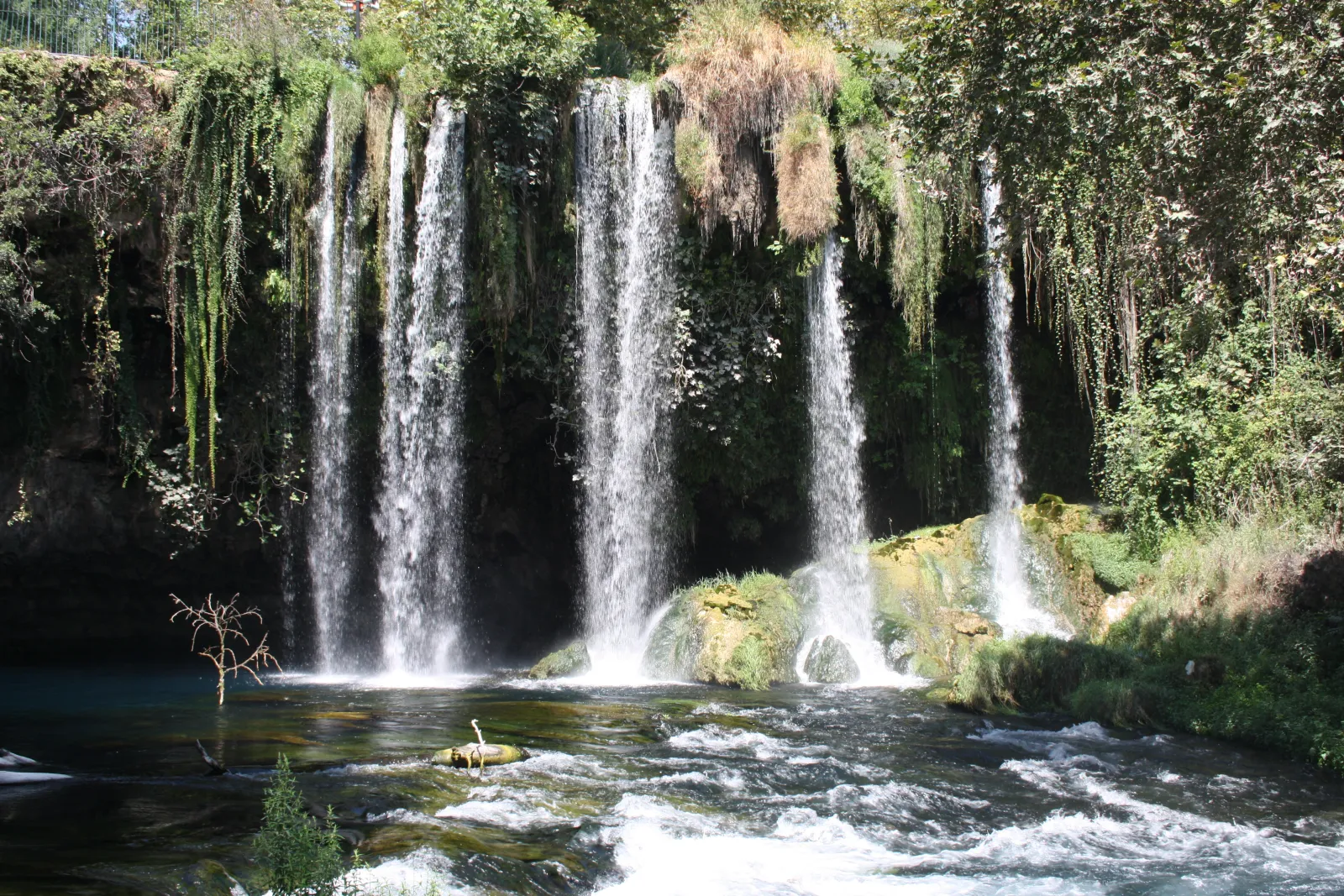
The Upper Düden Waterfall is in Düden Park, a well-maintained green space about 10 kilometers northeast of Antalya city center. The waterfall drops approximately 15 meters into a natural gorge carved out of the travertine rock. The park surrounds the gorge with walking paths, shaded benches, tea gardens, and picnic areas — it is a popular gathering spot for local families, especially on weekends.
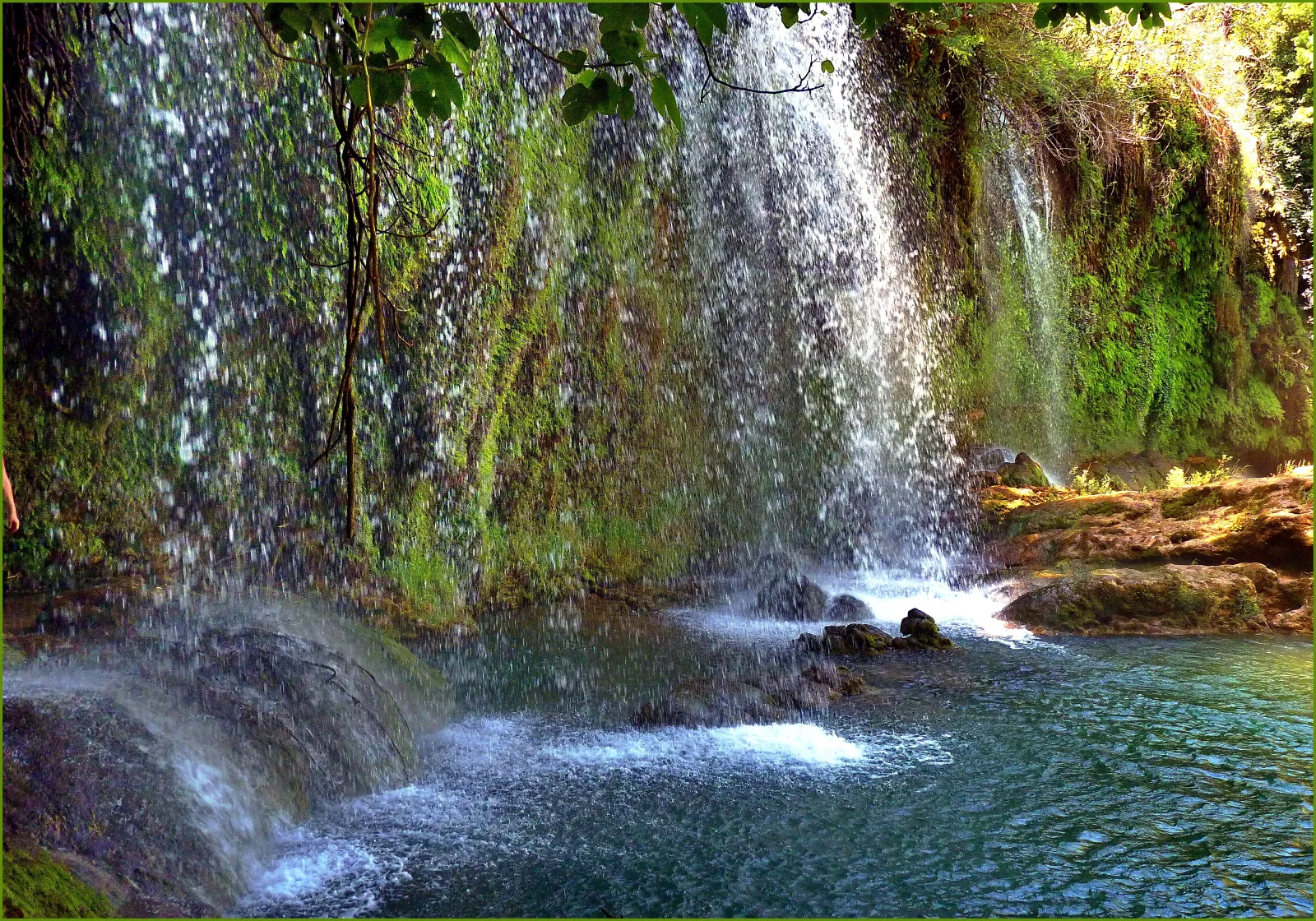
The defining feature of the Upper Düden is the path behind the waterfall. A walkway cut into the rock leads into a cave behind the curtain of water. You can stand there, the spray on your face, looking out through the falling water at the gorge and the park beyond. When I bring travelers here, they almost always stay behind the waterfall longer than they expected — it is a short walk, a few minutes, but the kind of thing you remember.
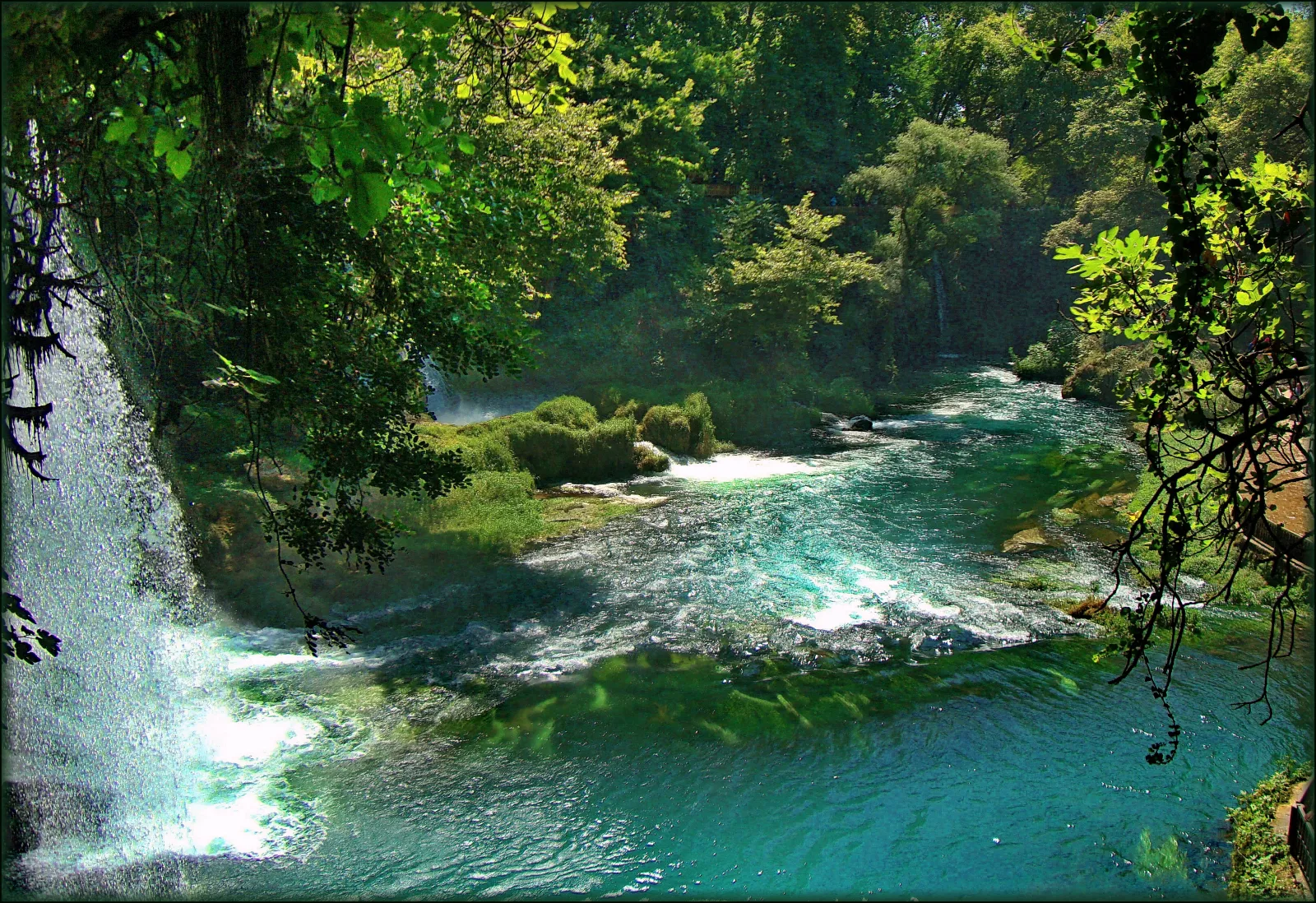
The volume of water varies with the season. In late winter and spring (February through May), the flow is strongest, sometimes powerful enough that the spray in the cave soaks visitors thoroughly. In late summer and early autumn, the flow diminishes — still present, but thinner. The seasonal difference is significant enough to affect the experience: spring is dramatic, late summer is gentle.
The park itself is pleasant for a stroll even apart from the waterfall. Mature trees provide shade, and the tea gardens along the rim of the gorge serve tea, fresh-squeezed orange juice, and simple food. The atmosphere is local and relaxed — this is where Antalya residents come for a weekend walk, not a tourist-oriented attraction.
Lower Düden Waterfall (Aşağı Düden Şelalesi)
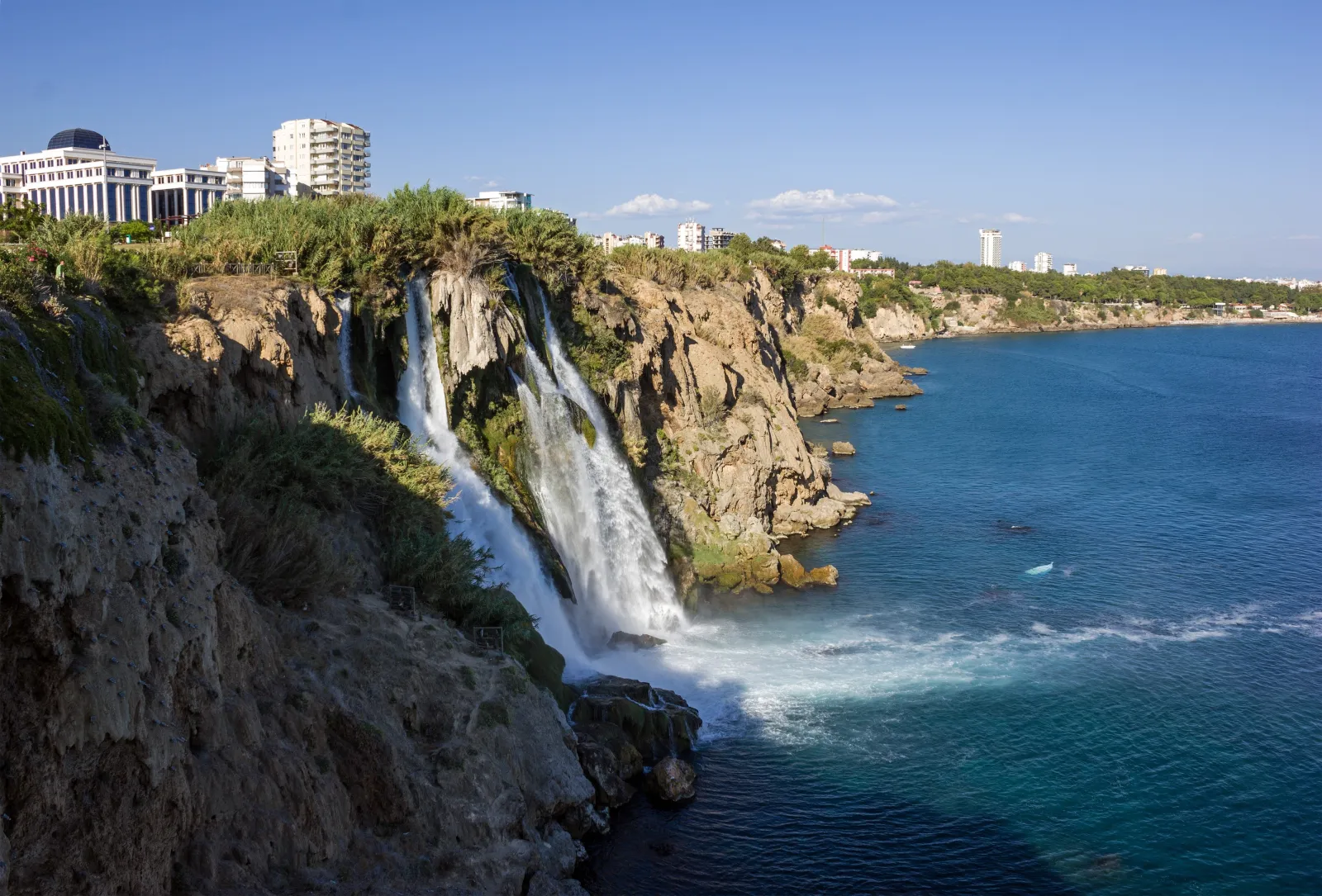
The Lower Düden Waterfall is the one that appears on postcards. Here, the Düden River reaches the Mediterranean coast and falls approximately 40 meters off a cliff directly into the sea. The waterfall is wide — especially after rain — and the sight of a river simply stepping off the edge of a continent into blue water is striking, however many times you see it.
You can view the Lower Düden from two vantage points:
From the cliff-top park: A public park (Düden Park / Lara area) on the cliff top provides direct views of the waterfall from above and from the side. Viewing platforms extend along the cliff edge. The perspective from here is dramatic — you look down at the water falling away beneath you and out at the Mediterranean horizon. The park has walkways, benches, and a few cafés. It is free to enter and easily accessible.
From the sea by boat: Tour boats departing from Antalya’s old harbor (Kaleiçi) run along the coast to the waterfall. Approaching the falls from the sea gives you a perspective that the cliff-top view cannot — you see the full height of the drop, the mist rising from the impact zone, and the scale of the cliff face. On calm days, boats come close enough that the spray reaches the deck.
The Water Itself
The Düden River‘s water comes from a karst spring system — rainwater filters through limestone, emerges as springs at Düdenbaşı (the source, near the Upper falls), and flows through a series of underground and above-ground channels before reaching the coast. The water is rich in calcium carbonate, which is why it deposits travertine — the same mineral process that built the terraces at Pamukkale, on a smaller scale.
The karst geology also means the river occasionally disappears underground and re-emerges. Between the Upper and Lower waterfalls, sections of the Düden flow through underground channels beneath the city. This underground journey is part of why the two waterfalls feel disconnected — the river that falls in the park and the river that falls into the sea do not appear to be connected by a surface stream.
Practical Information
Getting there — Upper Düden: Düden Park is about 10km northeast of Kaleiçi, reachable by city bus (KL08 line from the city center) or by car/taxi (20-30 minutes depending on traffic). The park has a parking area. Admission to the park is free; a small fee may apply for the waterfall area.
Getting there — Lower Düden: The cliff-top park is in the Lara district, about 12km east of Kaleiçi. City buses serve the area (KL08 continues to Lara). By car, follow the coastal road east from the city center. For the boat approach, tours depart from Kaleiçi old harbor — multiple operators offer daily trips that include the waterfall as a highlight.
How much time: Allow 1 to 1.5 hours at the Upper falls (including walking behind the waterfall and tea in the park). The Lower falls cliff-top viewpoint takes 30 to 45 minutes. A boat tour that includes the Lower falls typically runs 2 to 4 hours round-trip from Kaleiçi.
When to go: Spring (March–May) for the strongest water flow at both falls. The Upper falls are shaded and pleasant year-round. The Lower falls cliff-top park is exposed — avoid midday in summer. For the boat tour, calm sea conditions are best; check in advance during winter months when seas can be rough.
Combining with other visits: The Upper Düden can be combined with a visit to Perge (both are northeast of the city). The Lower Düden cliff-top park is near Lara Beach. When I plan an Antalya day, a boat tour to the Lower falls pairs well with a morning walk through Kaleiçi, since the boats depart from the old harbor.
Plan Your Antalya Visit
The Düden Waterfalls show two sides of Antalya’s natural landscape — a forested gorge where you walk behind the water, and a coastal cliff where a river drops into the sea. If you would like to include both waterfalls in a day that also covers the city’s history, tell us what interests you and we will design the route.
Frequently Asked Questions
What is the difference between Upper and Lower Düden Waterfalls?
The Upper Düden Waterfall is in a green park setting northeast of the city — it drops into a gorge, and you can walk behind the cascade through a cave path. The Lower Düden is on the coast, where the same river falls 40 meters off a cliff directly into the Mediterranean Sea. Both are worth visiting, but they are different experiences.
Can you walk behind Düden Waterfall?
Yes — at the Upper Düden Waterfall. A path cut into the rock behind the falls lets you stand inside a cave looking out through the curtain of water. Expect to get sprayed, especially in spring when the water flow is strongest. The Lower Düden does not have a walk-behind path.
Is the Lower Düden Waterfall better by boat or from the cliff?
Both perspectives are worthwhile, but the boat approach is generally the more memorable experience. From the sea, you see the full 40-meter drop, the mist, and the cliff face in a way the top-down view cannot show. Boat tours depart from Kaleiçi old harbor and typically include the waterfall as part of a coastal cruise.
When is the best time to visit Düden Waterfalls?
Spring (March through May) offers the strongest water flow and the most dramatic cascades. The falls are active year-round, but late summer and early autumn have noticeably reduced flow. For comfort, morning visits avoid the worst of summer heat, especially at the Lower falls cliff-top park which has limited shade.
Are Düden Waterfalls free to visit?
The Lower Düden cliff-top park is free. The Upper Düden Park charges a small entrance fee (typically around 15-20 TL). Boat tours to the Lower falls from Kaleiçi are separately priced and vary by operator and tour length.
Can you visit both Düden Waterfalls in one day?
Yes. The two waterfalls are about 10 to 12 kilometers apart, with the city between them. A comfortable half-day covers both: start at the Upper Düden in the morning (1 to 1.5 hours including the walk behind the falls and tea in the park), then drive to the Lower Düden cliff-top viewpoint (30 to 45 minutes). Adding a boat tour to the Lower falls from Kaleiçi makes it a full day.