Short answer: Kaleiçi, meaning "inside the castle," is Antalya's walled old town on a steep hillside above the old harbor. It has cobblestone lanes, Ottoman wooden houses, and Roman, Byzantine, and Seljuk layers. You can walk its full length in twenty minutes, but plan one to two hours to see it properly.
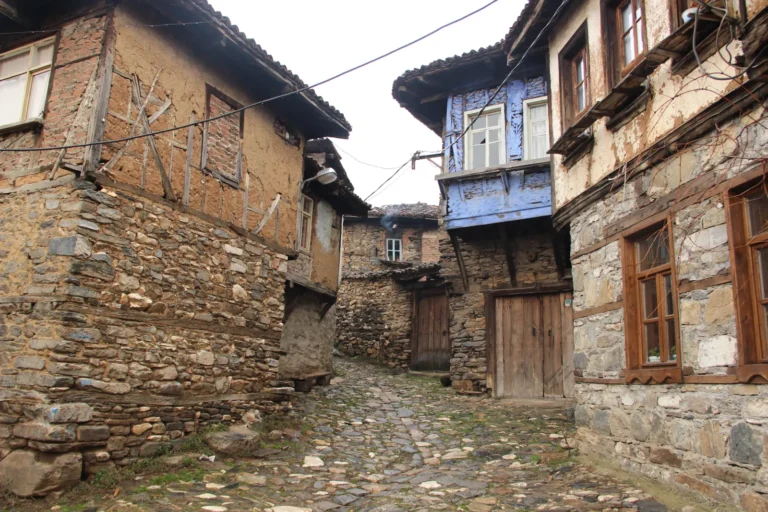
Kaleiçi means “inside the castle” — the walled old town of Antalya, compressed into a steep hillside between the Roman-era harbor at the bottom and the modern city at the top. The walls that give the district its name date to the Roman and Byzantine periods, repaired and extended by the Seljuks and Ottomans, and they still define the boundary: step through Hadrian’s Gate or descend from the Clock Tower square, and you leave the broad avenues and apartment blocks of modern Antalya for narrow cobblestone lanes, two-story Ottoman wooden houses with projecting bay windows, minaret-punctuated skylines, and a harbor that has been in continuous use since at least the second century BC.
The district is small — you can walk its full length in twenty minutes — but the historical density per step is high. Roman, Byzantine, Seljuk, and Ottoman layers sit on top of each other, sometimes visible in a single building: a Roman stone foundation supporting an Ottoman timber upper story, beside a Seljuk mosque, across from a converted Greek church. The compression is Antalya’s character. This is not a city that spreads its history across a wide landscape like Ephesus or Cappadocia. It stacks it vertically, and Kaleiçi is where the stack is tallest.
The Streets
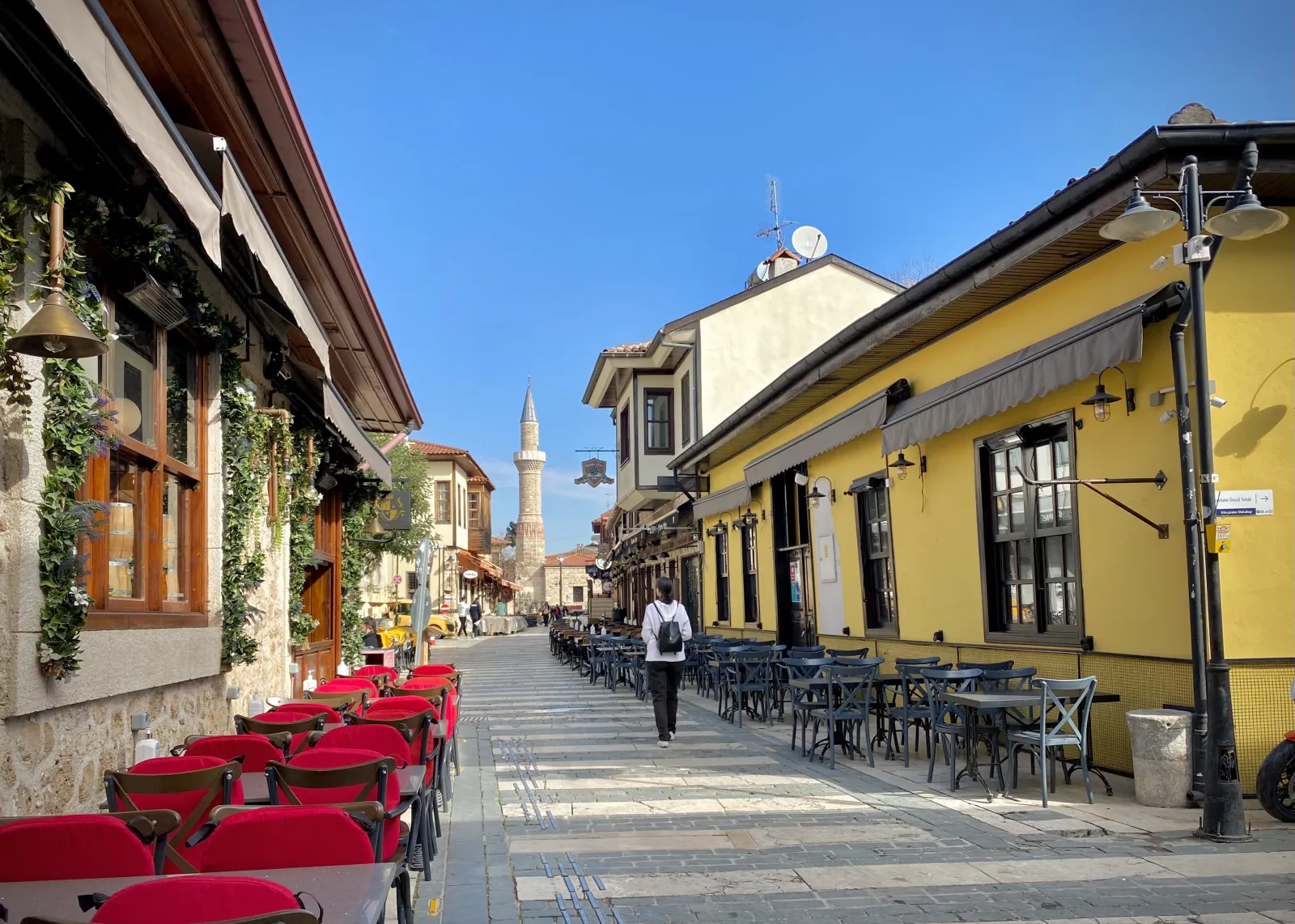
The streets of Kaleiçi descend from the cliff-top modern city to the harbor in a series of steep, winding lanes. The paving is cobblestone — original in places, restored in others. The houses are predominantly Ottoman-era timber-frame construction: whitewashed or painted walls, wooden upper stories with bay windows cantilevered over the street, tiled roofs, and courtyard gardens hidden behind high stone walls. Many have been restored as boutique hotels, pensions, restaurants, and shops. Others remain residential.
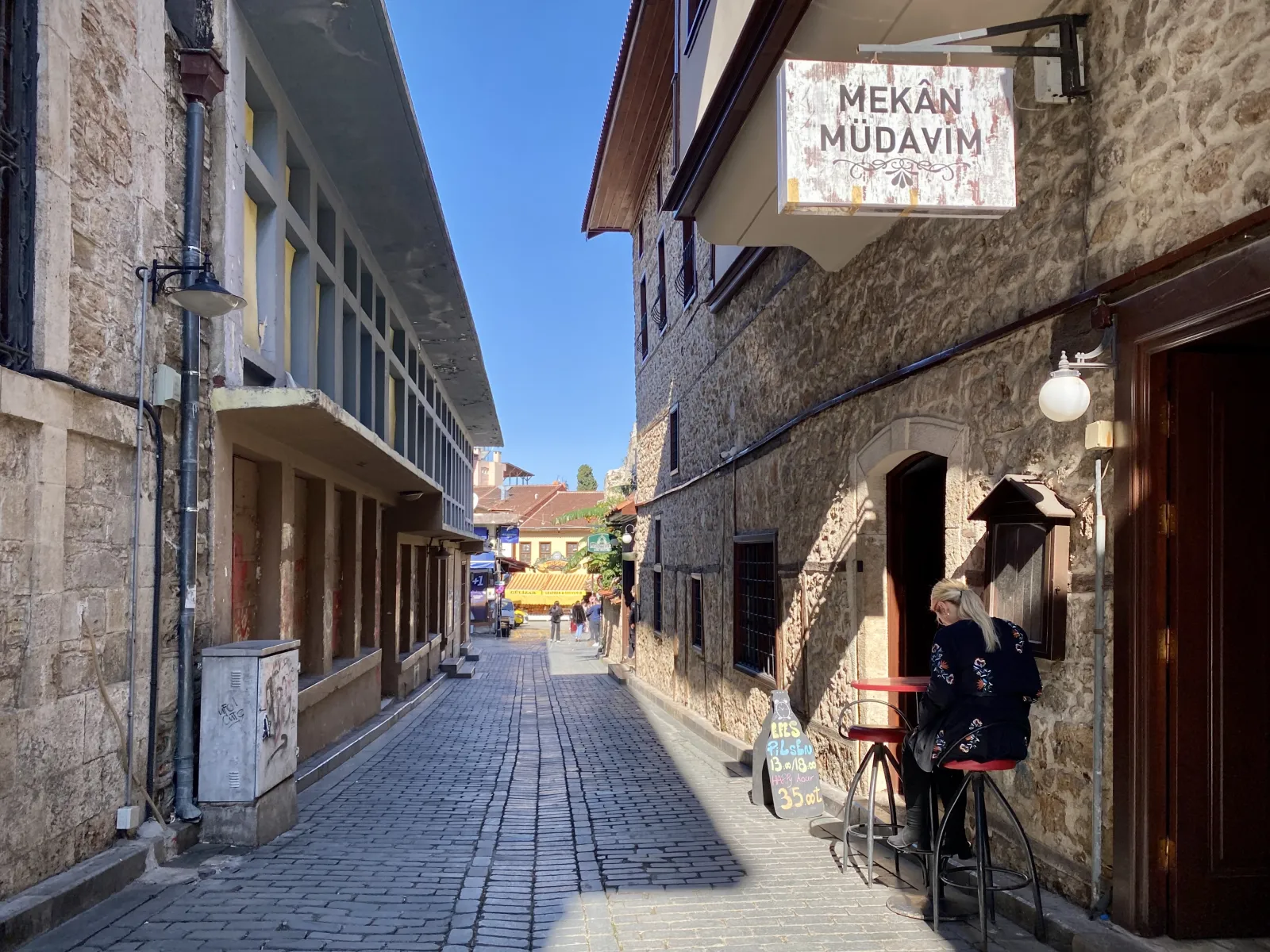
The vegetation is Mediterranean — bougainvillea cascading over walls in purple and pink, orange and lemon trees in the courtyards, jasmine in the evenings. The climate difference from Istanbul and Cappadocia is immediately noticeable: Antalya is subtropical, warm eight months of the year, and the old town absorbs and radiates the heat from its stone walls and cobblestones.
Key landmarks within the streets:
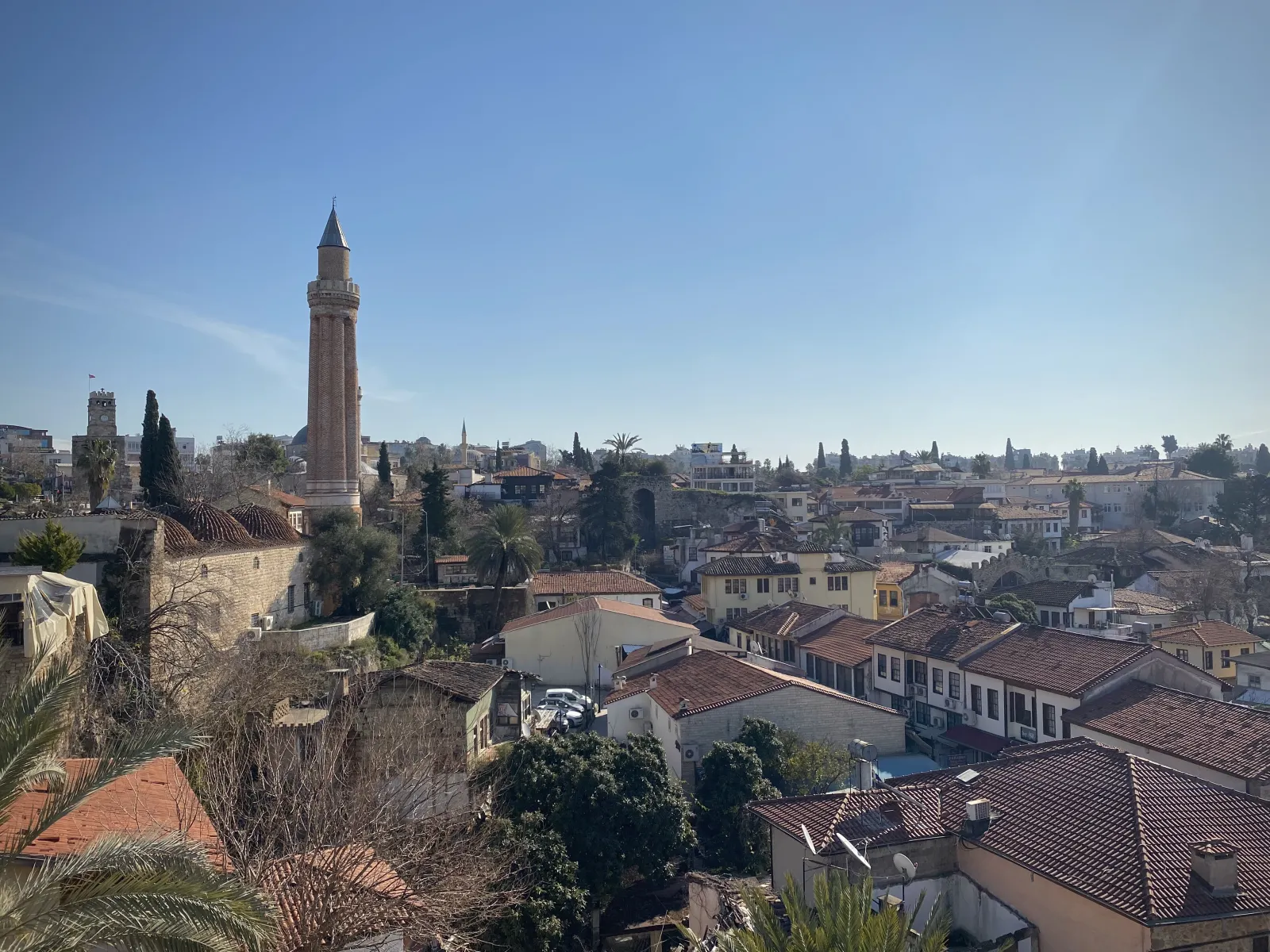
Yivli Minare (Fluted Minaret): The landmark that identifies Antalya’s skyline. Built by the Seljuk Sultan Alaaddin Keykubad I in the thirteenth century, the minaret rises 38 meters with a distinctive fluted (grooved) brick shaft. The attached mosque has been rebuilt several times. The minaret is visible from across the city and from the harbor below.
Kesik Minare (Broken Minaret): A structure that encapsulates Kaleiçi’s layered history — originally a second-century Roman temple, converted to a Byzantine church, then to a mosque after the Ottoman conquest, then damaged by fire in the nineteenth century. The “broken” minaret — truncated by the fire — still stands above a building that has served three religions.
The Clock Tower (Saat Kulesi): At the upper entrance to Kaleiçi, marking the transition from the modern city to the old town. The square around the tower is a meeting point and the start of most walking routes through the district.
The Harbor
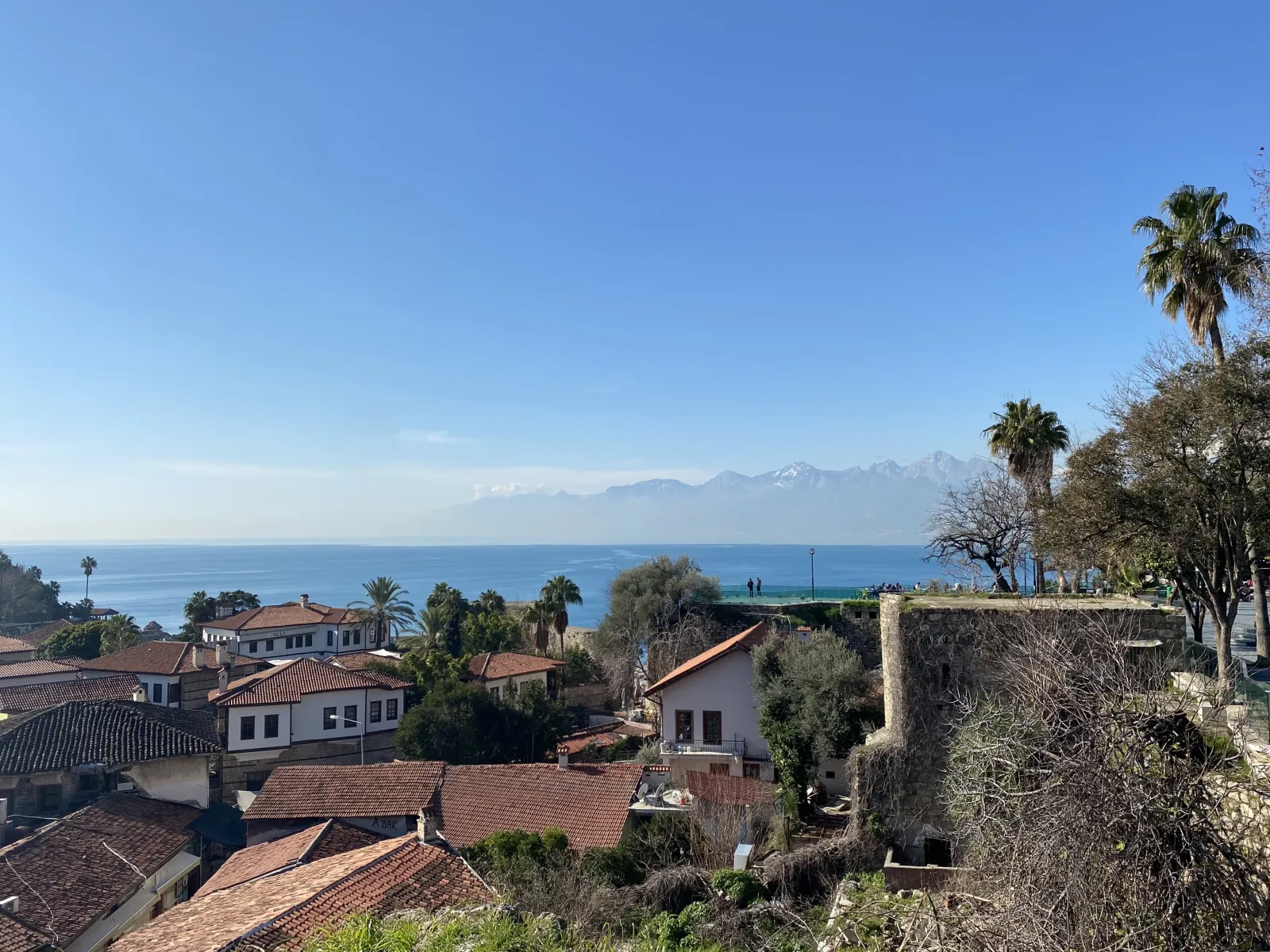
The old harbor (Yat Limanı) sits at the bottom of Kaleiçi, enclosed by stone walls and the cliff face. The harbor has been in use since at least the Roman period — Antalya was founded as Attaleia by Attalos II of Pergamon in the second century BC, and the harbor was the city’s reason for existing. Today it shelters tour boats, small yachts, and fishing vessels. The waterfront has restaurants, cafés, and the departure points for boat tours along the coast.
The harbor’s setting is photogenic — stone walls, turquoise water, boats, and the old town rising above. The descent from the upper city to the harbor, through the lanes of Kaleiçi, is one of Antalya’s best short walks. When I bring travelers here, I usually plan the route from the Clock Tower down to the harbor at late afternoon — you end at a waterside table just as the light turns on the stone walls.
Practical Information
Getting there: Kaleiçi is in the center of Antalya, walkable from the Konyaaltı tram line (Ismetpaşa stop). The Clock Tower square at the upper entrance is the most common starting point. Hadrian’s Gate, on the eastern side, is another entry point.
How much time: One to two hours for a thorough walk through the lanes, the harbor, and the main landmarks. Add time for a meal at a harbor-side restaurant or tea in a courtyard café.
When to go: Morning is cooler and quieter. Late afternoon brings golden light on the stone and the harbor. Evening is when the restaurants and bars come alive. Summer midday is hot — the stone streets retain heat.
Official resource: Antalya Museum — Ministry of Culture
Combining with other visits: Kaleiçi is adjacent to Hadrian’s Gate, a short walk from the Antalya Archaeological Museum, and the starting point for boat tours along the coast. A half-day combining Kaleiçi, Hadrian’s Gate, and the museum covers Antalya’s core attractions. Pair with Perge or Phaselis for a full ancient-Antalya itinerary.
Plan Your Antalya Visit
Kaleiçi is where Antalya compresses 2,000 years into twenty minutes of walking — Roman walls, Seljuk minarets, Ottoman houses, and a harbor that connects them all. If you would like to explore the old town with a licensed local guide who can read the layers, tell us what interests you and we will shape the day around it.
Frequently Asked Questions
Where do most walking routes through Kaleiçi start?
The Clock Tower square at the upper entrance is the most common starting point. Hadrian’s Gate on the eastern side is another entry. Kaleiçi is walkable from the Konyaaltı tram line, at the Ismetpaşa stop.
What are the main landmarks in Kaleiçi?
The Yivli Minare is a 38-meter Seljuk fluted minaret that defines Antalya’s skyline. The Kesik Minare is a former Roman temple that became a Byzantine church and then a mosque. The Clock Tower marks the entrance to the old town.
When is the best time of day to visit Kaleiçi?
Morning is cooler and quieter. Late afternoon brings golden light on the stone and the harbor, and evening is when restaurants and bars come alive. Summer midday is hot because the stone streets retain heat.
What can you combine with a visit to Kaleiçi?
Kaleiçi sits next to Hadrian’s Gate, a short walk from the Antalya Archaeological Museum, and is the departure point for coastal boat tours. A half-day combining Kaleiçi, Hadrian’s Gate, and the museum covers Antalya’s core attractions.