Çavuşin sits on the road between Göreme and Avanos, and the first thing you see is the cliff. A massive rock face, perhaps forty meters high, pocked with dark openings — doorways, windows, ventilation shafts — that mark the homes of people who lived inside the stone until the rock began to collapse and the Turkish government relocated the village in the 1960s.
The abandoned cliff dwellings are still there, stacked vertically up the rock face like an apartment building with no facade, open to the weather and to anyone willing to climb. When I walk travelers through these rooms, the reaction is always the same — they stop talking. The scale of what people carved by hand into this rock silences you in a way that a museum explanation never does.
The inhabited village sits below, a small, quiet Cappadocian settlement of stone and tuff houses, a few pensions, a tea garden, and the kind of unhurried atmosphere that the tourist centers of Göreme and Ürgüp have largely lost. Çavuşin is a common stop on guided tours — usually brief, usually focused on the cliff and the church — but the village rewards a slower visit if you have the time. It is the endpoint of the Red Valley / Rose Valley hiking trail, and arriving on foot through the painted gorges gives the village context that a drive-by stop does not.
The Old Village
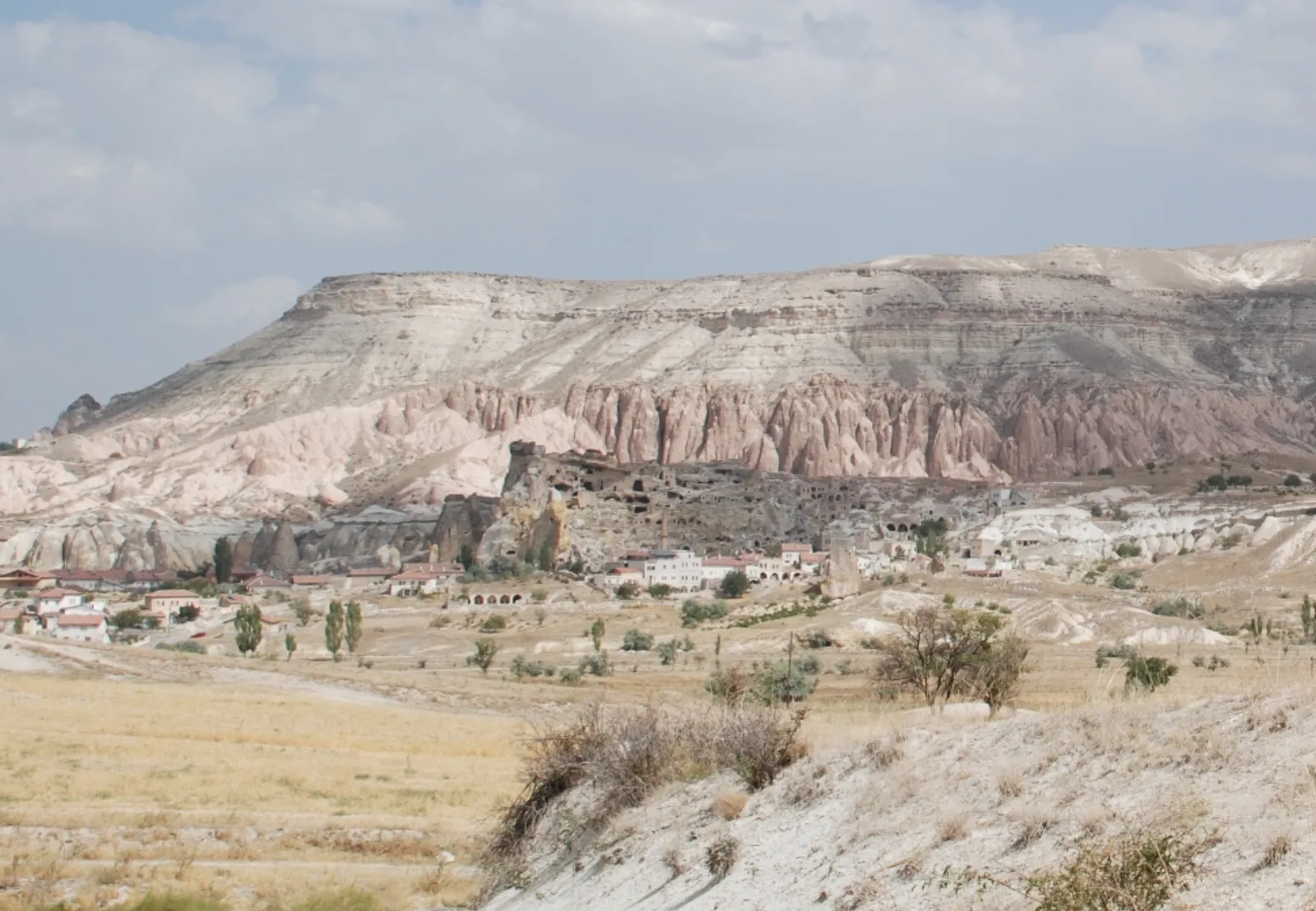
The abandoned cliff settlement is visible from the road — a wall of tuff with rectangular openings at every level. The dwellings were carved into the rock over centuries, beginning in the Byzantine period and continuing through the Ottoman era. Families lived in multi-room cave homes connected by internal passages and external carved stairways.
The rock, however, is not stable. Tuff is soft — easy to carve, but also easy to erode. Over centuries, the cliff face has been retreating, and sections of the old village have collapsed. The relocation in the 1960s was a response to accelerating erosion and the risk of catastrophic rockfall. Today, the lower levels of the cliff are accessible (carefully) and some of the cave rooms can be entered, but the upper levels are too eroded for safe access.
Walking through the accessible sections gives you a direct sense of what cave living in Cappadocia meant: the coolness of the interior, the smoothness of walls carved by hand, the dim light from small window openings, and the surprising spaciousness of rooms that are invisible from outside. A guide can point out which rooms were kitchens (look for soot-blackened ceilings), which were storage (carved grain bins), and which were living spaces (sleeping platforms and lamp niches).
The Church of St. John the Baptist
At the top of the cliff — reached by a steep path through the old village — is the Church of St. John the Baptist (Vaftizci Yahya Kilisesi), one of the oldest and largest rock-cut churches in Cappadocia. The church dates to the fifth century, making it older than the famous painted churches of the Göreme Open Air Museum by several hundred years.
The interior is a large, three-aisled basilica carved entirely from the rock. The ceiling is high — unusually so for a cave church — and the apse retains fragments of frescoes depicting scenes from the life of Christ and the saints. The paintings are faded and damaged by centuries of exposure, but their age and scale make them historically significant. This church was not a hermit’s chapel; it was a community church, large enough to serve a substantial congregation.
The Nicephorus Phocas Church, further into the cliff, contains scenes believed to depict the visit of the Byzantine Emperor Nicephorus Phocas to Cappadocia in the tenth century — making it one of the rare examples of dated historical depiction in Cappadocian church art.
Practical Information
Getting there: Çavuşin is on the Göreme-Avanos road, approximately five kilometers from Göreme. Dolmuş buses between Göreme and Avanos stop in the village. It is also the endpoint of the Red Valley / Rose Valley hiking trail.
How much time: A quick stop for the cliff face and the church takes thirty to forty-five minutes. A more thorough exploration of the old village, the church, and the inhabited village takes an hour to an hour and a half.
The climb: The path to the Church of St. John the Baptist involves a steep climb through the old village ruins. Sturdy shoes are essential — the surface is loose rock and eroded tuff. The climb takes ten to fifteen minutes.
Entry: There is a small entrance fee for the church area.
When to go: Morning or late afternoon light is best for the cliff face, which faces generally south. The old village provides some shade, but the climb is exposed.
Combining with other visits: Çavuşin pairs naturally with the Red Valley / Rose Valley hike (arrive on foot from the valleys), the Göreme Open Air Museum (ten minutes by car), or the North Cappadocia route that includes Avanos pottery workshops and the valleys. A 3-Day Cappadocia Tour typically covers Çavuşin alongside the valleys and Kaymakli Underground City.
Official resource: Cappadocia’s rock-cut heritage is a UNESCO World Heritage Site — Çavuşin falls within the Göreme National Park protection zone.
Plan Your Cappadocia Visit
Çavuşin is where you see what cave life in Cappadocia actually looked like — not restored, not museumified, but abandoned and open, the rooms still carved, the cliff still crumbling, the oldest church in the region still standing at the top. If you would like to explore Cappadocia with a private guide who can read the ruins and connect them to the landscape, tell us what interests you and we will build the itinerary around it.
Frequently Asked Questions
What is Çavuşin in Cappadocia?
Çavuşin is a village between Göreme and Avanos in Cappadocia, known for its abandoned cliff-face settlement — centuries-old cave dwellings carved into a massive rock wall — and the Church of St. John the Baptist, one of the oldest rock-cut churches in the region (fifth century). The old village was evacuated in the 1960s due to rockfall risk, and the cave dwellings remain partially accessible.
Is Çavuşin worth visiting?
Yes, particularly if you are interested in seeing what cave life in Cappadocia looked like before restoration and tourism. The cliff face with its exposed cave rooms offers a raw, unpolished view of the troglodyte settlements that define the region. The Church of St. John the Baptist, with its early frescoes, is historically significant and less crowded than the Göreme Open Air Museum churches.
How do you get to the church at Çavuşin?
The Church of St. John the Baptist is at the top of the old cliff village. A steep path climbs through the abandoned cave dwellings to the church entrance — allow ten to fifteen minutes for the climb. Sturdy shoes are essential. The path is uneven and some sections are narrow with unprotected edges.
Can you enter the cave houses at Çavuşin?
Some of the lower-level cave dwellings are accessible and can be entered carefully. The upper levels are too eroded for safe access. The interiors show the features of Cappadocian cave life — carved niches, sleeping platforms, soot-blackened kitchen ceilings, and grain storage bins.
How does Çavuşin connect to the Red Valley hike?
Çavuşin is the eastern endpoint of the Red Valley / Rose Valley hiking trail. Hikers who start at the Panoramic Viewpoint near Göreme and walk through the valleys emerge at Çavuşin after three to four kilometers. This makes it natural to combine the valley hike with a visit to the cliff village and the church.
Is Çavuşin suitable for children?
The lower cliff village is accessible for older children who are steady on their feet. The climb to the church is steep and has unprotected edges — not recommended for young children or anyone uncomfortable with exposed heights. The village itself, with its tea garden and quiet streets, is family-friendly. Most families visit the cliff base and skip the upper church climb.