Every first-time visitor to Istanbul is told, at some point, that the city spans two continents. The fact registers as geography — interesting, noted, moving on. It takes the ferry to Kadıköy to make it physical. You board at Eminönü or Karaköy, and for twenty minutes the city opens up from the water: the minarets of Sultanahmet behind you, the Maiden’s Tower to the south, container ships cutting through the strait. When you step off at Kadıköy, the pavement feels different. The crowd moves differently. The pitch of the city drops by half a tone. You are on the Asian side, and Istanbul is not quite the same city it was twenty minutes ago.
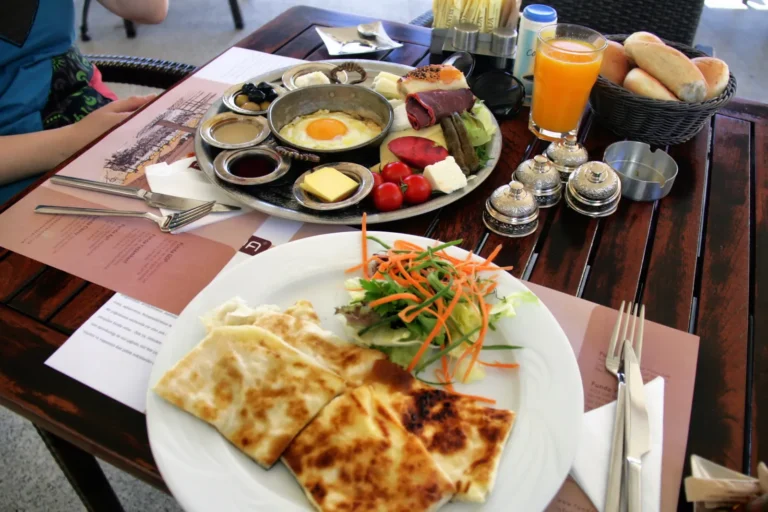
Kadıköy is not a tourist attraction in the conventional sense. There is no monument, no ancient ruin, no museum that appears on a must-see list. What there is — and what makes the crossing worth the twenty minutes — is a neighborhood where Istanbullus live their daily lives at a pace the tourist districts do not allow. The streets around the central market are dense with fishmongers, cheese shops, olive oil sellers, bakeries turning out simit and börek, and small restaurants where the lunch crowd is made up entirely of locals. Kadıköy is where Istanbul eats, and the food is better for it.
The neighborhood also has something the historic peninsula largely lacks: trees, wide sidewalks, and the particular calm that comes from being on the side of the city that tourists pass over. For solo travelers, for anyone who wants to understand what Istanbul feels like to the people who live here, Kadıköy is essential.
Getting There: The Ferry
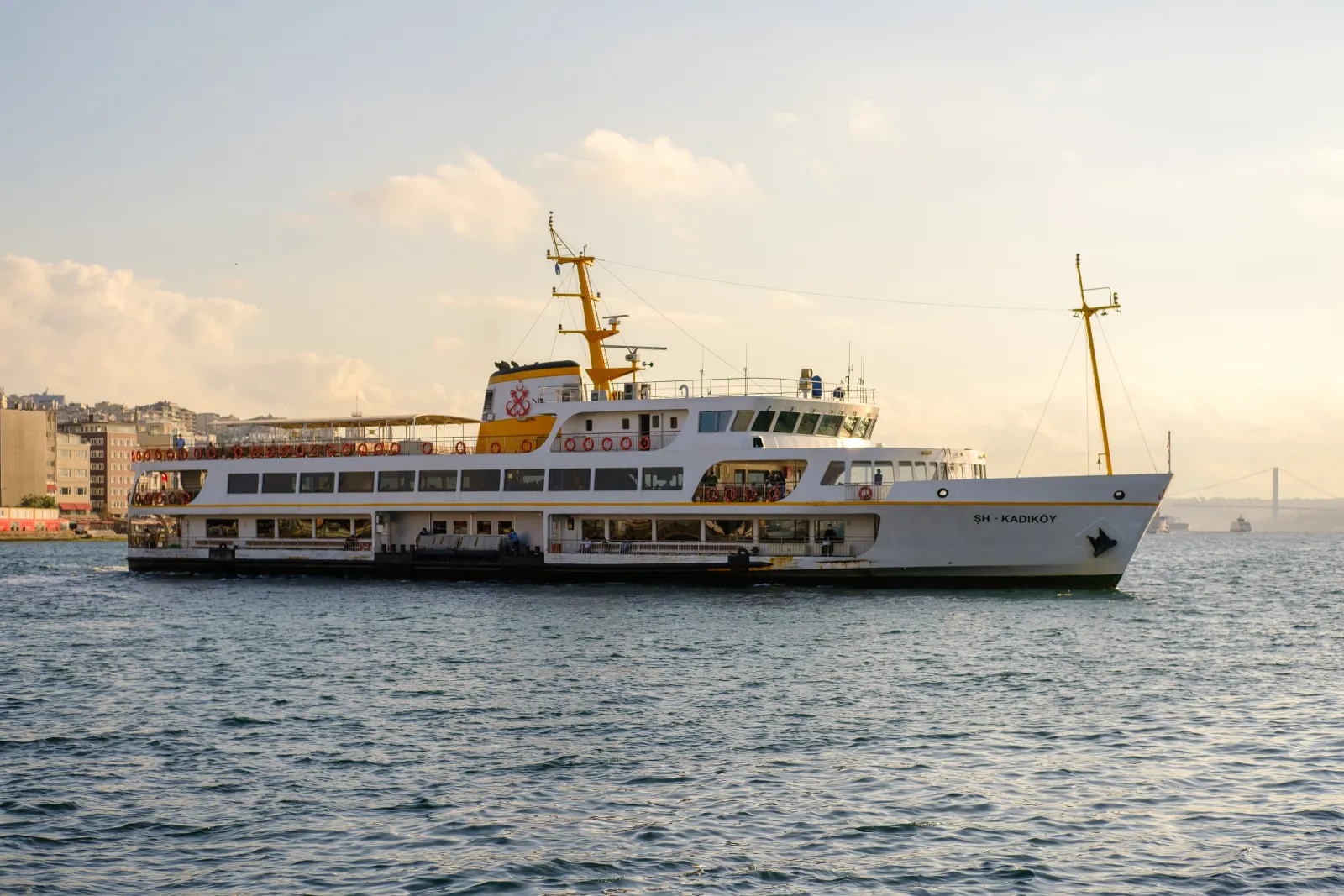
The ferry is not merely transport — it is the experience. The commuter boats that run from Eminönü and Karaköy to Kadıköy are operated by Şehir Hatları and İDO, and they depart every fifteen to twenty minutes throughout the day. The crossing takes approximately twenty minutes and costs a few Turkish lira — tap your Istanbulkart at the turnstile and walk on.
The upper deck, if the weather allows, is where you want to be. The Bosphorus opens in front of you: the Galata Tower on the hill to the right, the Topkapı Palace walls along the shoreline, the Maiden’s Tower standing alone on its small island. Ferries, tankers, fishing boats, and the occasional cruise ship share the water. The seagulls follow the boat. Tea sellers work the aisles with trays of tulip-shaped glasses balanced on one hand. It is one of the best twenty minutes in Istanbul, and it costs almost nothing. When I take travelers on this ferry for the first time, I tell them to watch the European skyline recede — it is the moment when Istanbul stops being a postcard and starts being a place.
If you are coming from Sultanahmet, walk down to the Eminönü ferry terminal — you pass the Spice Bazaar on the way. From the Galata or Karaköy area, the Karaköy pier is closer. Both routes deliver you to the same place: the Kadıköy iskele, the ferry landing on the Asian shore.
The Market Quarter
You step off the ferry and walk straight into it. The Kadıköy Çarşı — the market — is not a single building but a network of streets and alleys radiating inland from the waterfront. It has been a market district since the Ottoman period, and while individual shops change, the function has not: this is where the Asian side of Istanbul buys its food.
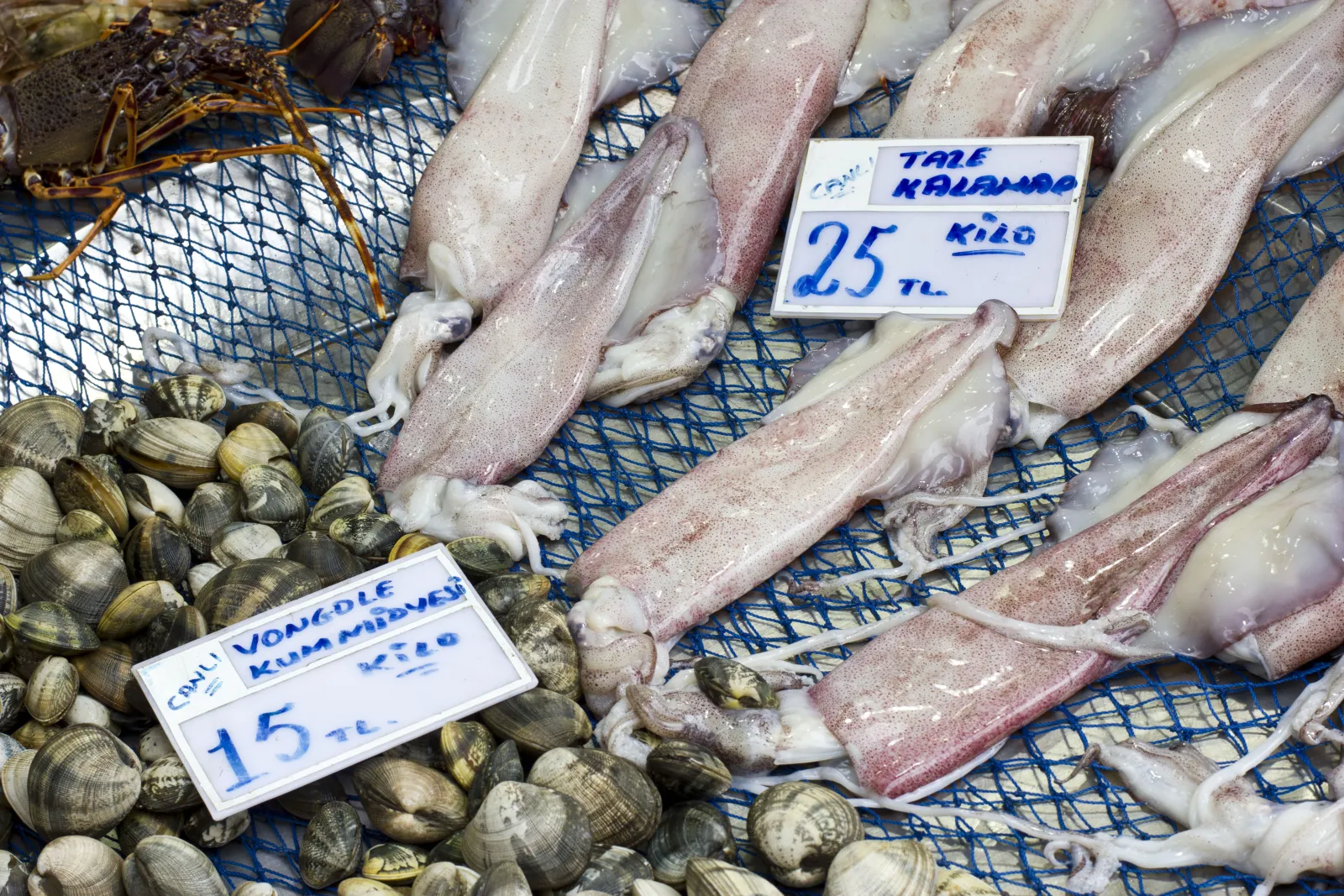
The fish market, Kadıköy Balık Pazarı, occupies several covered lanes near the center. The displays are theatrical — whole sea bass and turbot laid on crushed ice, prawns arranged in spirals, mussels stacked in pyramids. The fishmongers call out prices and species names. Behind the displays, small restaurants grill or fry whatever is freshest that morning. You pick your fish, they cook it, and you eat it at a table wedged between the stalls. The prices are a fraction of what the Bosphorus-view restaurants charge, and the fish is the same — or better, because it was sold minutes ago.
Beyond the fish market, the streets fan out into specialty shops. Cheese sellers with wheels of aged kaşar, crumbled tulum, and fresh lor arranged in glass cases. Olive merchants with fifty varieties in open barrels — Gemlik black, Ayvalık green, chili-flecked, herb-cured. Spice shops with less theater than the Spice Bazaar but the same depth of inventory. Bakeries pulling fresh simit from the oven — the sesame-crusted bread ring that is Istanbul’s default breakfast — alongside börek, açma, and poğaça.
The market is not curated for visitors. The signage is in Turkish. The vendors assume you know what you want. This is part of the appeal: you are shopping where the city shops, and the quality control is enforced by repeat customers, not by TripAdvisor reviews.
Moda: The Waterfront Neighborhood
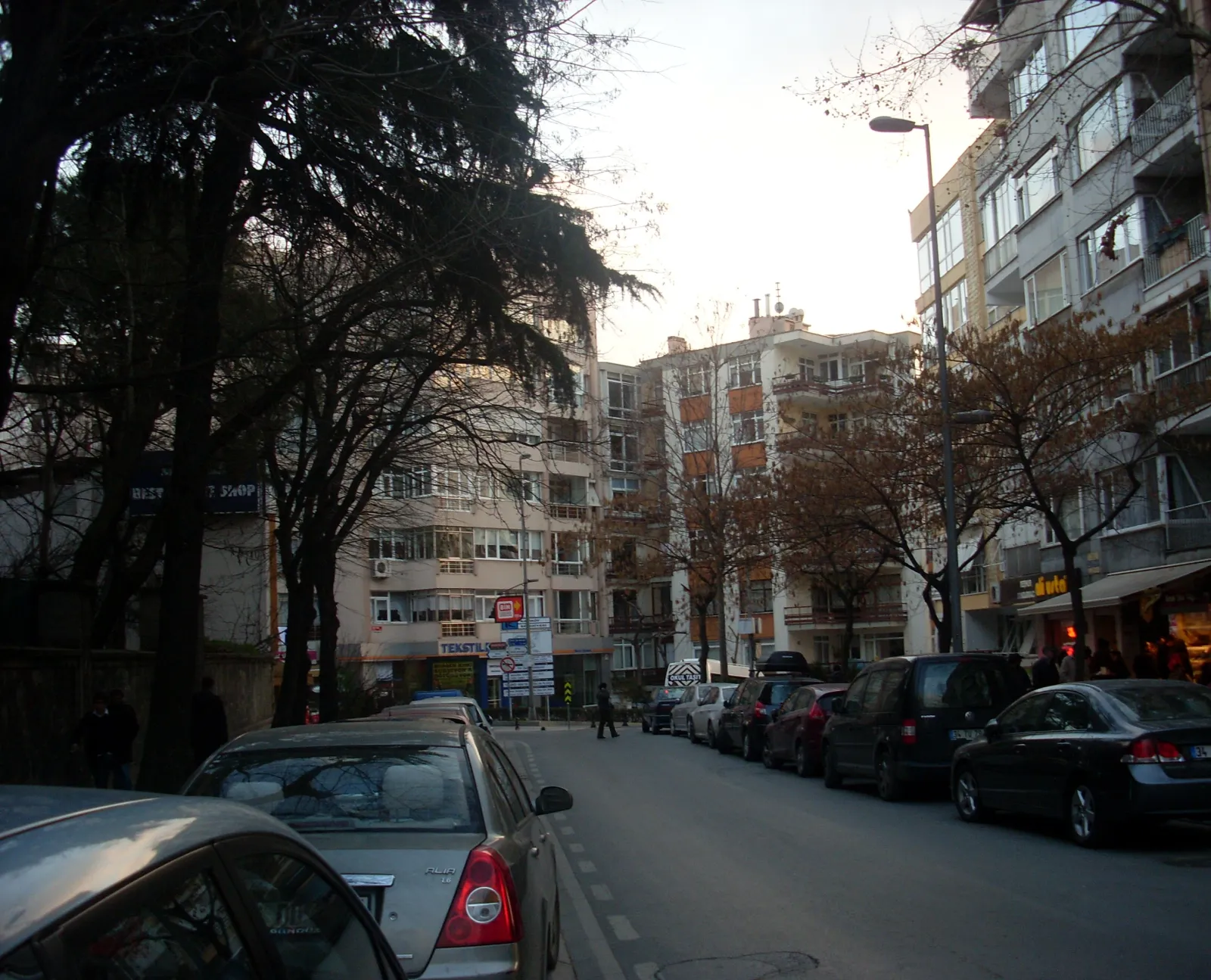
Walk south from the market for about ten minutes and the character changes. Moda is Kadıköy’s residential waterfront — tree-lined streets, early twentieth-century apartment buildings, independent bookshops, and cafés with a distinctly un-touristy confidence. If the market quarter is where Kadıköy works, Moda is where it relaxes.
The Moda waterfront promenade runs along the Sea of Marmara shore, curving past parks, benches, and a small lighthouse. The view from here is different from the Bosphorus views on the European side — you look west across the water toward the domes and minarets of the old city, and the perspective flips everything you thought you knew about Istanbul’s geography. The city’s most famous silhouette, which you have been walking through for days, is suddenly across the water, distant and complete.
The Moda neighborhood also has the Kadıköy Nostalji Tramvayı — a heritage streetcar that runs a short loop through the streets on vintage cars. It is not essential transport, but it is charming, and it connects the market area to the Moda waterfront.
Bahariye Caddesi and the Street Life
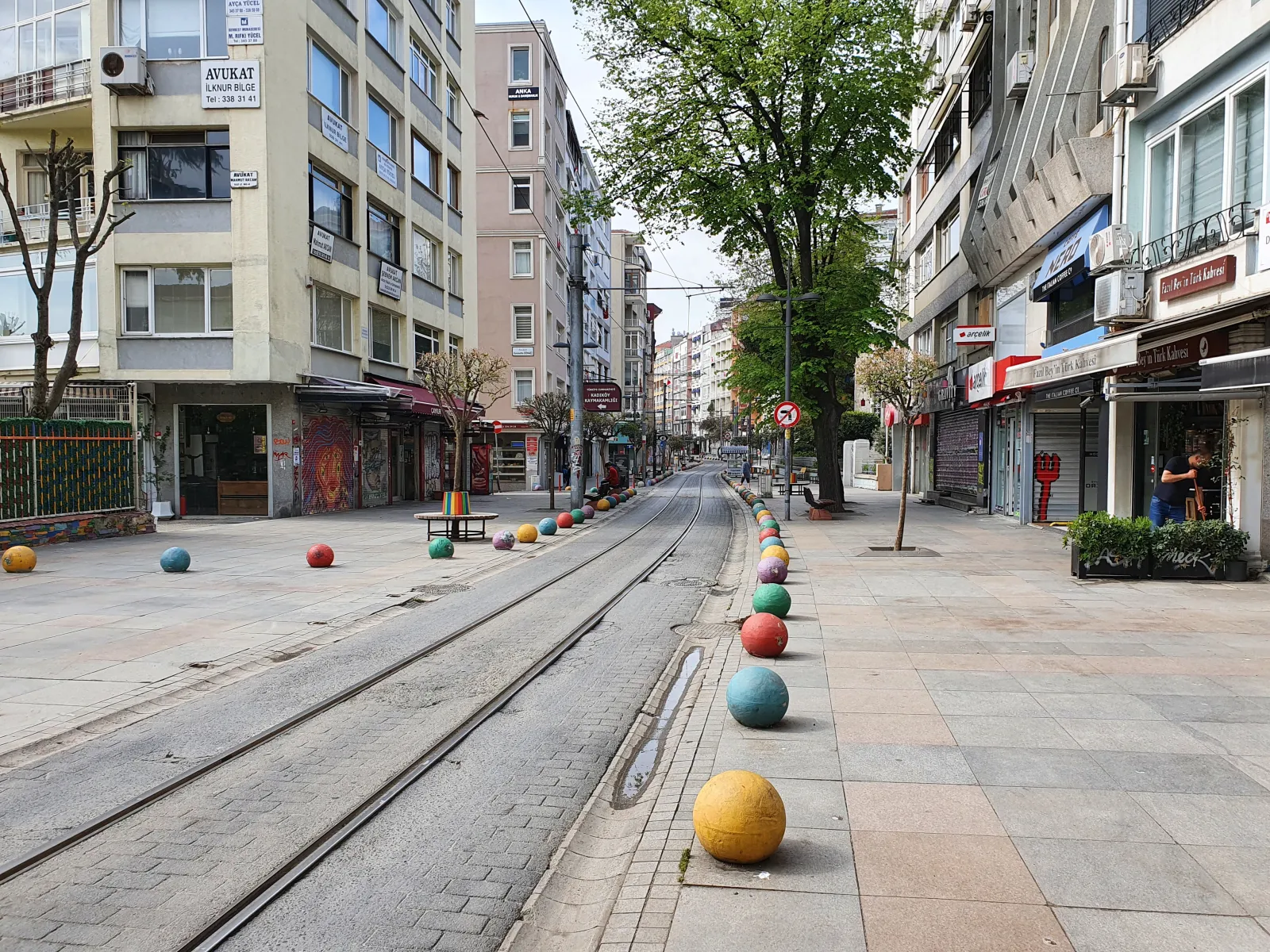
Bahariye Caddesi is Kadıköy’s main pedestrian street — the Asian side’s answer to Istiklal Avenue, but shorter, calmer, and without the tourist density. It runs inland from the ferry terminal, lined with shops, bookstores, cafés, cinemas, and the small businesses that serve a residential neighborhood rather than a tourist district. The pace is walking pace. The crowd is local. The bookshops, in particular, are worth noting — Kadıköy has one of Istanbul’s densest concentrations of independent booksellers, a legacy of the neighborhood’s long association with writers, artists, and the political left.
At the far end of Bahariye, the street opens into a broader commercial area, but the energy thins. The best of the street is the first five hundred meters from the ferry landing.
Çiya Sofrası
If Kadıköy has a single destination that draws food-focused travelers across the Bosphorus, it is Çiya Sofrası. The restaurant, opened by Musa Dağdeviren in 1998, serves regional Anatolian dishes that are difficult or impossible to find elsewhere in Istanbul — dishes from Gaziantep, Antakya, Mardin, and the Black Sea coast, prepared from recipes that Dağdeviren has spent decades collecting. The menu changes daily based on what is seasonal and available. A meal here is not a fixed experience but a rotating survey of Turkey’s culinary geography.
Çiya occupies three adjacent storefronts on Güneşlibahçe Sokak, a few minutes’ walk from the ferry. One serves kebabs, one serves home-style stews and vegetable dishes (the steam-table format Turks call ev yemekleri — “home food”), and one focuses on desserts from specific regions. The prices are moderate. The crowd is a mix of locals and informed visitors. No reservations — you walk in, look at what is available, point, and eat. When I bring travelers here, I always suggest starting with the ev yemekleri side — the rotating stews and vegetable dishes change daily, and you get to taste flavors from regions you may never visit.
The restaurant has been written about in the New York Times, profiled in Netflix’s Chef’s Table, and cited by food historians as one of the most important culinary preservation projects in Turkey. Despite this attention, the experience remains unpretentious: a neighborhood restaurant that happens to serve food from all of Anatolia’s neighborhoods.
What Kadıköy Is Not
It is worth being clear about what a visit to Kadıköy does not include. There are no Ottoman palaces. No Byzantine churches. No grand architectural set pieces. The neighborhood’s oldest buildings are nineteenth-century apartment blocks and market halls — dignified but not monumental. The Haydarpaşa train station, the grand Ottoman-era terminus on the waterfront just north of Kadıköy, is visible from the ferry but closed for renovation and has been for years.
Kadıköy’s value is not architectural. It is experiential. The ferry crossing, the market, the food, the residential calm, the perspective on the European side from across the water — these are the things that shift your understanding of Istanbul from a city of monuments to a city of people. You do not visit Kadıköy for what it has. You visit for how it feels.
Practical Information
Getting there: Ferries from Eminönü and Karaköy depart every fifteen to twenty minutes. The crossing takes approximately twenty minutes. Use your Istanbulkart. The Marmaray metro also connects the European side to the Aydıntepe station, a short walk from Kadıköy center, though the ferry is the recommended approach.
How much time: Two to three hours is enough to walk the market, eat lunch, and explore the Moda waterfront. A half-day allows for a more relaxed pace, café stops, and the waterfront promenade.
When to go: Weekday mornings are when the market is most active — the fishmongers and produce sellers are in full voice, and the crowds are local. Saturday mornings have a similar energy with more visitors. Evenings in the Moda area are lively, with restaurants and bars that serve the residential neighborhood.
Official resource: Şehir Hatları — Istanbul Ferry Timetables
Combining with other visits: The ferry itself is a form of Bosphorus experience — a complement to, or a substitute for, the longer Bosphorus cruise. The Kadıköy visit pairs well with a free day in an Istanbul itinerary, when the guided tours of the historic peninsula are done and you want to see the city on your own terms.
Plan Your Istanbul Visit
Kadıköy is the part of Istanbul that reminds you the city is not only its monuments — it is a living place where people buy fish, drink tea, and walk along the water. If you would like to include the Asian side in your Istanbul itinerary, with a private guide who knows which streets to walk and where to eat, tell us what interests you and we will shape the day around it.