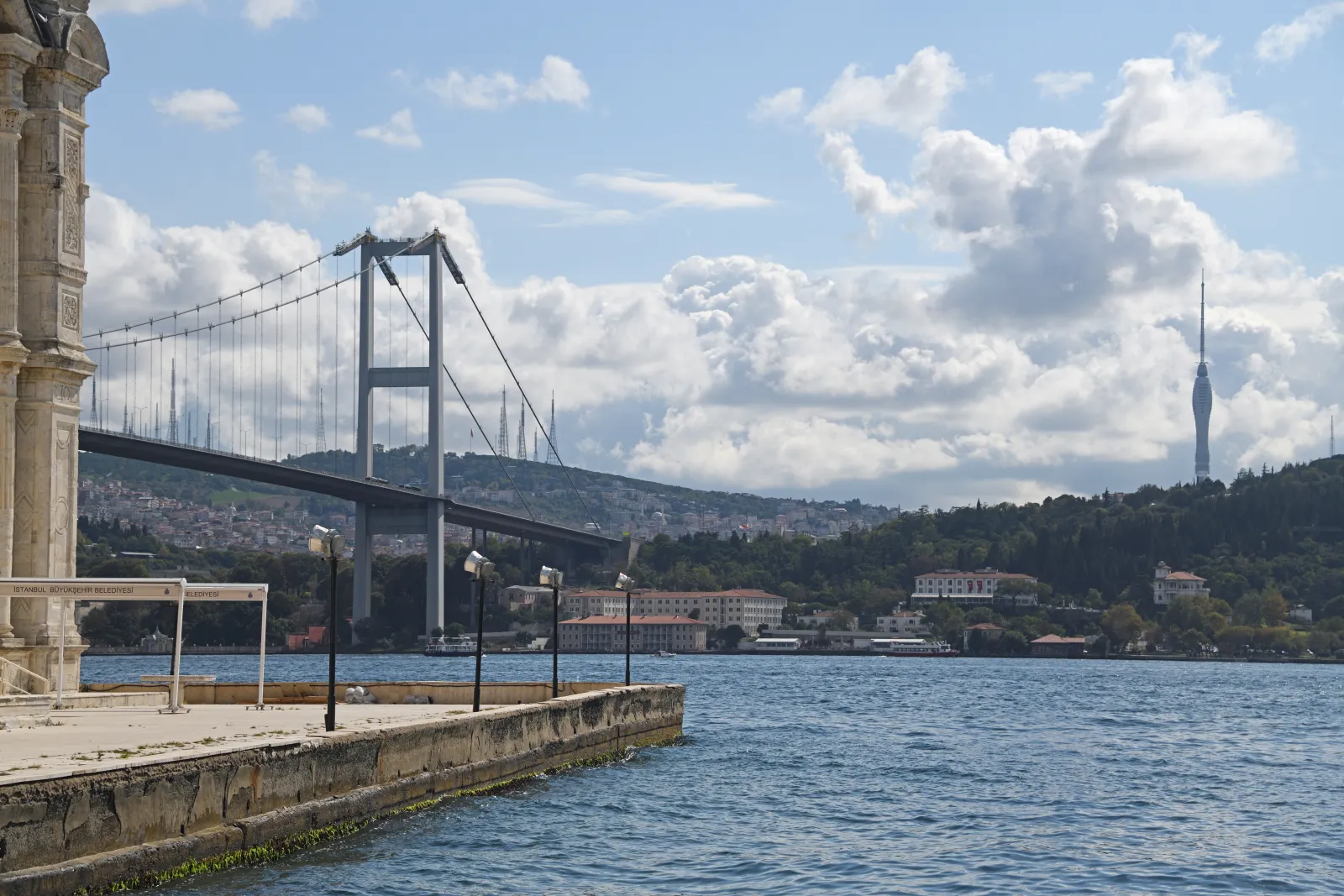
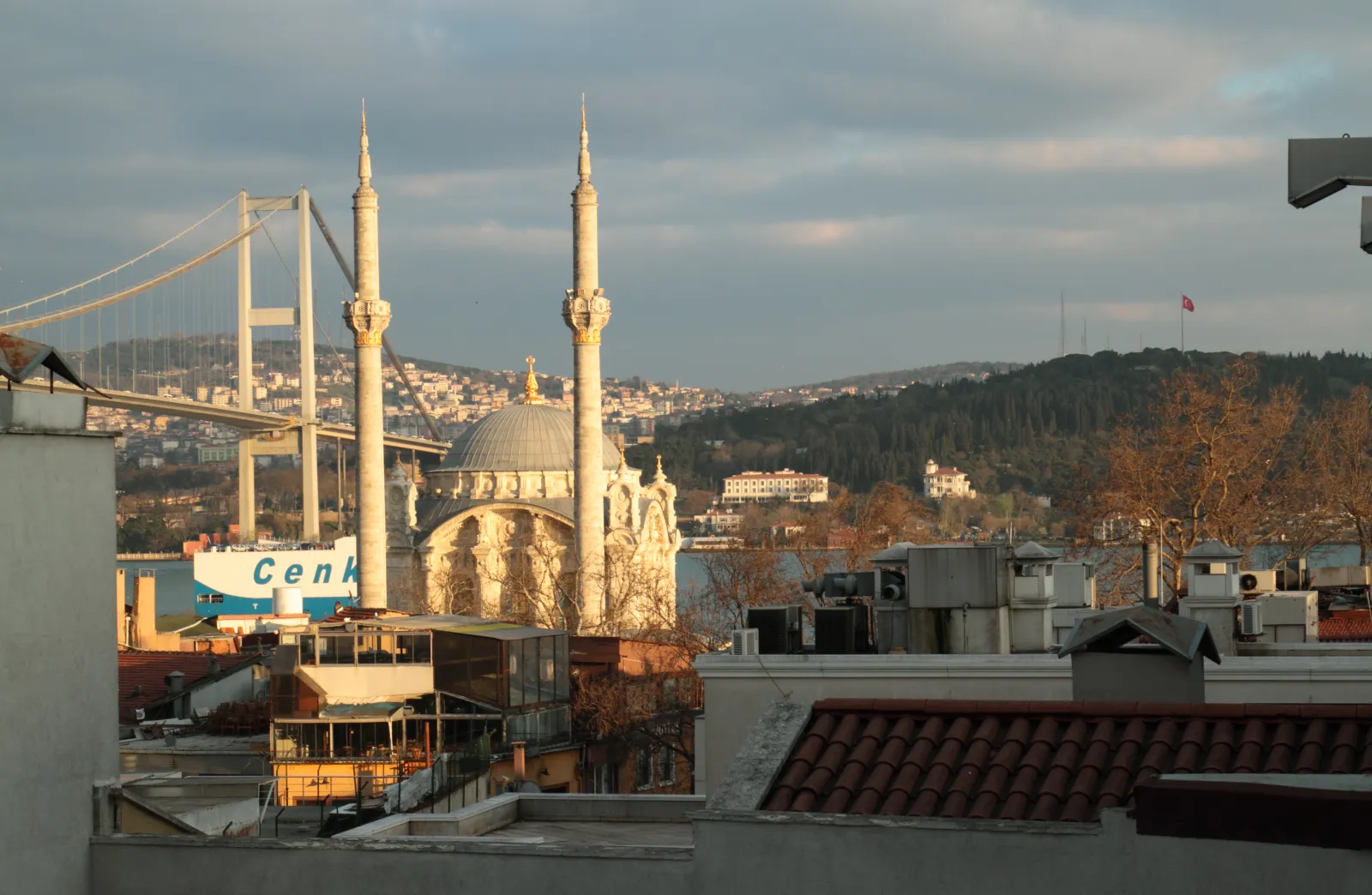
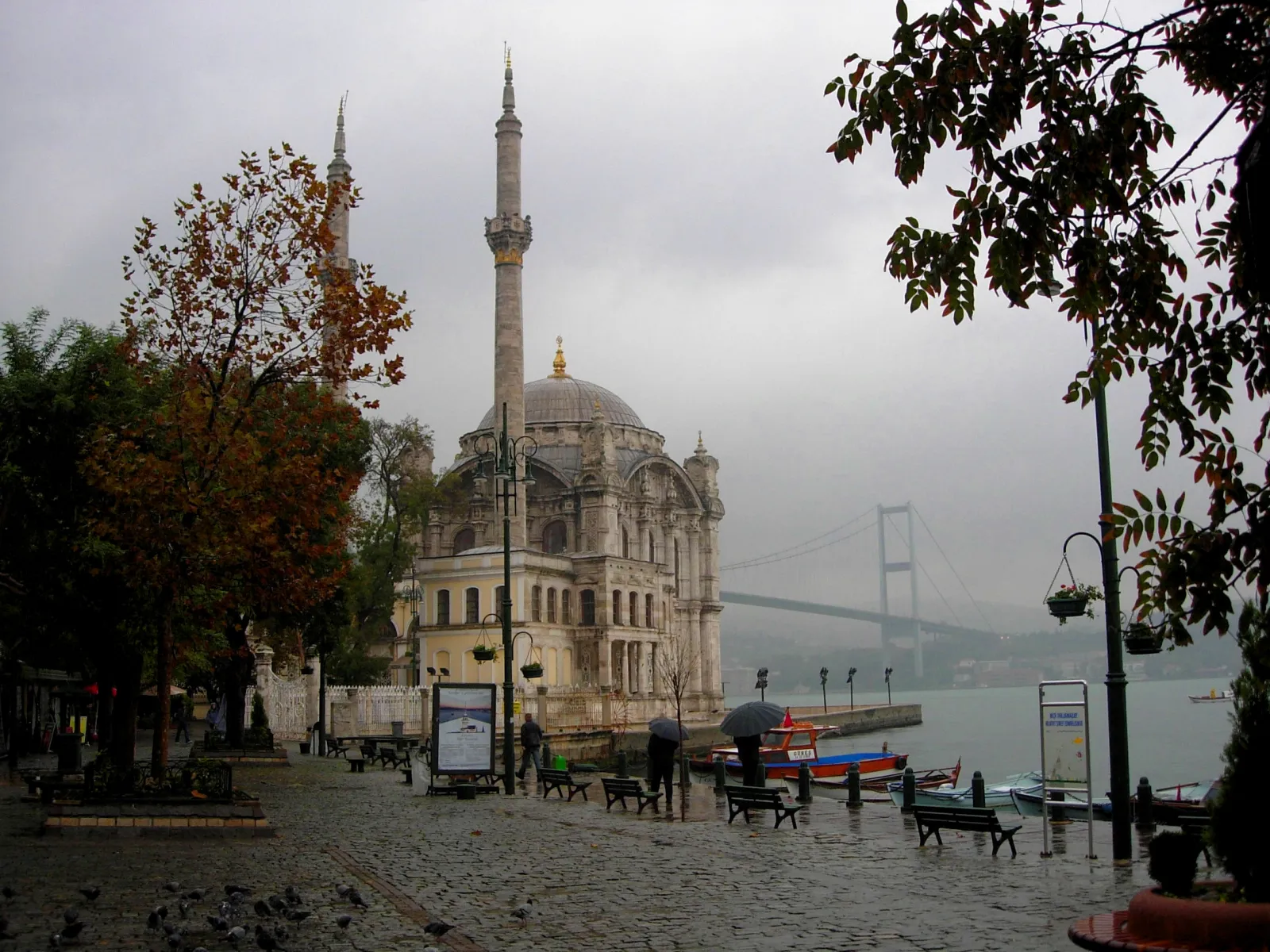
Ortaköy Mosque sits at the point where the European shore of the Bosphorus meets the first suspension bridge. It is a small building — smaller than most visitors expect — but its position is so precise and so photogenic that it has become one of Istanbul’s defining images: a pale stone mosque with two minarets, the water immediately behind it, the steel cables of the bridge rising overhead. The photograph works from almost any angle. The mosque works from every angle. It was designed to.
The formal name is Büyük Mecidiye Camii — the Great Mecidiye Mosque — commissioned by Sultan Abdülmecid I and designed by the Armenian-Ottoman architect Nigoğayos Balyan in 1856. Balyan was one of a dynasty of Armenian architects who shaped Istanbul’s nineteenth-century waterfront: Dolmabahçe Palace, Beylerbeyi Palace, the Çırağan Palace, and this mosque were all Balyan family commissions. The Ortaköy Mosque is the smallest of the set, but it is the one that earns the most photographs, because it is the one that sits alone at the water’s edge with nothing between it and the strait.
The Architecture
The style is Ottoman Baroque — a label that means the building borrows freely from European Baroque ornament while retaining the basic form of an Ottoman mosque. The dome is modest: 10 meters in diameter, supported on four arches. The two minarets are slender and ornate, with multiple balconies. The exterior is finished in pale Marmara Island stone, carved with floral and geometric relief work that would not look out of place on a Parisian apartment building.
Inside, the prayer hall is a single square room beneath the dome. The windows are large — unusually large for a mosque — and the light that enters from three sides gives the interior a brightness that older, thicker-walled Ottoman mosques do not have. The mihrab wall faces the Bosphorus, and the windows behind the minbar frame the water. When you stand inside during afternoon prayers, the light off the strait fills the room. When I bring travelers here, I always point out the windows behind the minbar — most mosques frame a garden or a courtyard, but here you are looking straight at the Bosphorus. This was intentional. The Balyans understood that this building’s relationship to the water was its reason for existing, and they let the water in through the glass.
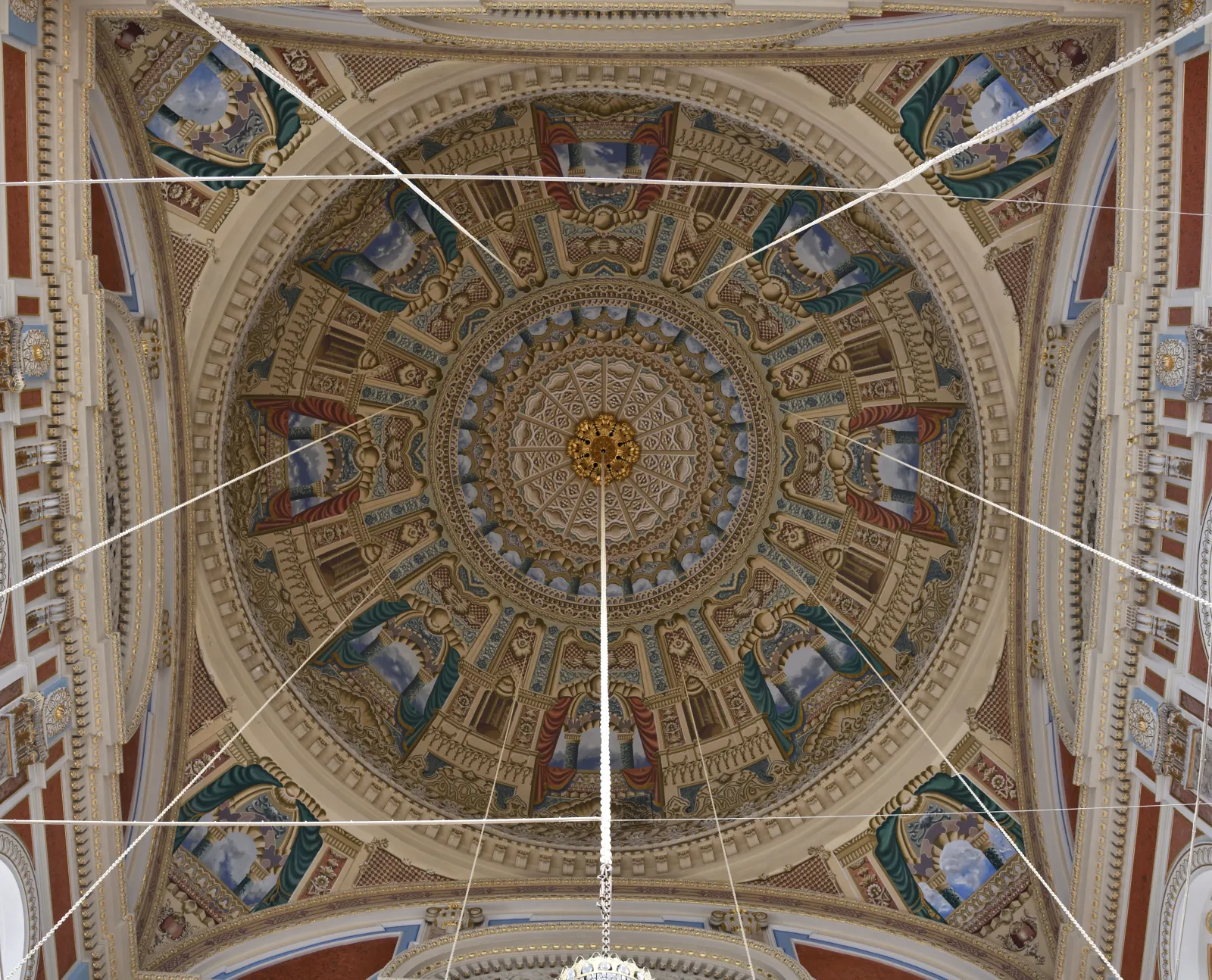
The decoration is restrained by Baroque standards but elaborate by Ottoman ones — painted floral motifs on the dome, carved stone arabesques on the window frames, and a decorative program that mixes Islamic geometry with European naturalism. The overall effect is lighter and more delicate than the imperial mosques of the classical period. This is not Süleymaniye or Sultan Ahmed. It is a court mosque built for a reforming sultan who looked west, and the architecture reflects that orientation.
The Balyan Architects
The Balyan story is one of the less-told narratives of Ottoman Istanbul. For five generations — from the late eighteenth century through the mid-nineteenth — the Balyan family served as the imperial architects of the Ottoman court. They were Armenian Christians designing mosques, palaces, and barracks for a Muslim empire. Nigoğayos Balyan, who designed the Ortaköy Mosque, also designed the Dolmabahçe Palace clock tower and contributed to the Beylerbeyi Palace across the strait.
The family’s work defines Istanbul’s nineteenth-century waterfront. If you take a Bosphorus cruise, the grand buildings you see along the European shore — Dolmabahçe, Çırağan, and this mosque — are largely Balyan commissions. They brought European architectural training (several family members studied in Paris) to Ottoman imperial ambitions, and the result is a hybrid style that belongs to neither tradition entirely. The Ortaköy Mosque is perhaps the most successful synthesis: a building that is recognizably a mosque in plan and function, but unmistakably European in its ornament and its relationship to the waterfront.
The Neighborhood
Ortaköy is the village-within-a-city that surrounds the mosque. Like many Bosphorus neighborhoods, it was once a separate settlement — a fishing village with a mixed population of Turks, Greeks, Armenians, and Jews. The waterfront square, which opens directly in front of the mosque, is the social center. On weekends, it fills with an artisan market — jewelry, textiles, handmade crafts — and the stalls selling kumpir, the oversized baked potatoes loaded with butter, cheese, corn, olives, sausage, and whatever else fits. Kumpir is Ortaköy’s street food signature, and the potato stalls have been here for decades.
The square also has cafés and small restaurants with tables set along the water. The view from these tables — the mosque to one side, the bridge overhead, the Asian shore across the strait — is one of the better casual dining settings in Istanbul. The neighborhood is busiest on weekend afternoons and evenings, when the market is running and the waterfront fills with locals.
Behind the square, the streets climb steeply uphill. The residential fabric is a mix of nineteenth-century wooden houses (increasingly rare and increasingly renovated), mid-twentieth-century apartment buildings, and new construction. A Greek Orthodox church, Hagios Phocas, and a synagogue, Etz Ahayim, sit within a few hundred meters of the mosque — another trace of the multiethnic Bosphorus villages that characterized this shore before the demographic shifts of the twentieth century.
The Bridge
The 15 July Martyrs Bridge — the first Bosphorus Bridge, completed in 1973 — lands directly above Ortaköy. Its towers rise 165 meters, and the main span stretches 1,074 meters across the strait. The bridge was a national landmark when it opened: the first physical connection between Europe and Asia. From Ortaköy, it is less a landmark than an overhead presence — the cables angle down toward the mosque like guy wires, and the traffic hum is a constant backdrop.
The juxtaposition is the point. The nineteenth-century mosque and the twentieth-century bridge, Ottoman ornament and modernist engineering, share the same waterfront in a way that reads as collision or conversation depending on your angle. Photographers have been working this composition for fifty years, and it does not get old.
At night, the bridge is lit in colored light — the colors change for national holidays, awareness campaigns, and special events — and the mosque is illuminated from below. The nighttime view from the Bosphorus, whether from a dinner cruise or the Asian shore, is one of Istanbul’s most recognizable silhouettes.
Visiting
Ortaköy Mosque is an active place of worship. It is open to visitors outside of prayer times, and entry is free. The interior can be seen in ten to fifteen minutes. The value is not the time inside — it is the setting, the waterfront, the bridge overhead, and the neighborhood around it.
Getting there: Ortaköy is on the European Bosphorus shore, about four kilometers north of Karaköy. Buses run along the coast road (Çırağan Caddesi), and the neighborhood is a common stop on Bosphorus cruise itineraries — you see the mosque from the water before you see it from the street. A taxi from Sultanahmet or Taksim takes fifteen to twenty-five minutes depending on traffic.
How much time: The mosque itself takes fifteen minutes. The waterfront square, a kumpir, and a walk through the neighborhood add an hour. Most visitors combine Ortaköy with other Bosphorus sights — Dolmabahçe Palace, the Çırağan Palace (now a hotel), or the continuation north toward Bebek and Rumelihisarı.
When to go: Late afternoon gives you the best light on the mosque and the bridge. Weekend afternoons bring the artisan market and the most lively atmosphere. Sunset from the waterfront, with the bridge overhead and the Asian shore turning gold, is the time photographers wait for. When I plan an Ortaköy visit, I time it for late afternoon — you get the golden light on the mosque, then kumpir at the square as the sun sets.
Official resource: Istanbul Municipality — Ortaköy
Combining with other visits: Ortaköy fits naturally into a Bosphorus-focused day — Dolmabahçe Palace, Ortaköy Mosque, then continuing north by car or boat to Bebek, Rumelihisarı, and Emirgan. It also appears on Bosphorus dinner cruise routes, illuminated at night.
Plan Your Istanbul Visit
Ortaköy is where nineteenth-century Ottoman ambition and twentieth-century engineering share a waterfront — and where the Bosphorus, the bridge, and the city come together in a single frame. If you would like to include the Bosphorus neighborhoods in your Istanbul itinerary, with a private guide who can connect the architecture to the history, tell us what interests you and we will build the route around it.