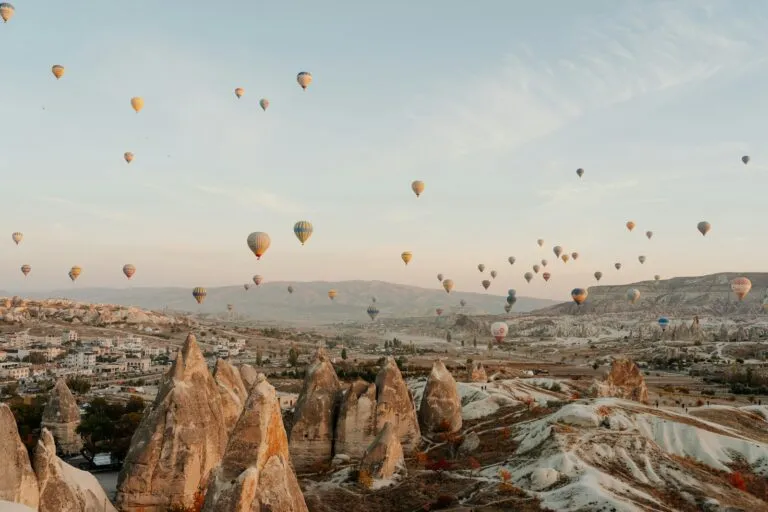
Pigeon Valley runs south from Uchisar Castle toward Göreme in a narrow, steep-sided gorge that drops away from the highest point in Cappadocia and descends through some of the region’s most weathered and sculptural rock formations. The valley’s name comes from its most distinctive feature: hundreds of dovecotes — small rectangular niches carved into the cliff faces, arranged in dense grids, painted with whitewash and red pigment to attract pigeons. The birds nested in the niches. The farmers collected the droppings. The droppings fertilized the vineyards and orchards that sustained the Cappadocian economy for centuries.
This is the detail that connects the landscape to the life lived in it. Cappadocia’s fairy chimneys and cave dwellings attract visitors for their visual drama, but the dovecotes show you the working logic of the place — a society that carved into rock not only for shelter and worship but for agriculture. The pigeons were not decorative. They were infrastructure.
Why Pigeons Mattered
Cappadocia sits on the Anatolian plateau at over 1,000 meters elevation. The soil is volcanic — rich in minerals from the tuff but structurally poor and not well-drained. The climate is continental: cold winters, hot summers, limited rainfall. Growing anything here required fertilizer, and in a landscape without large livestock herds, pigeon guano was the most available and most effective source of nitrogen and phosphorus.
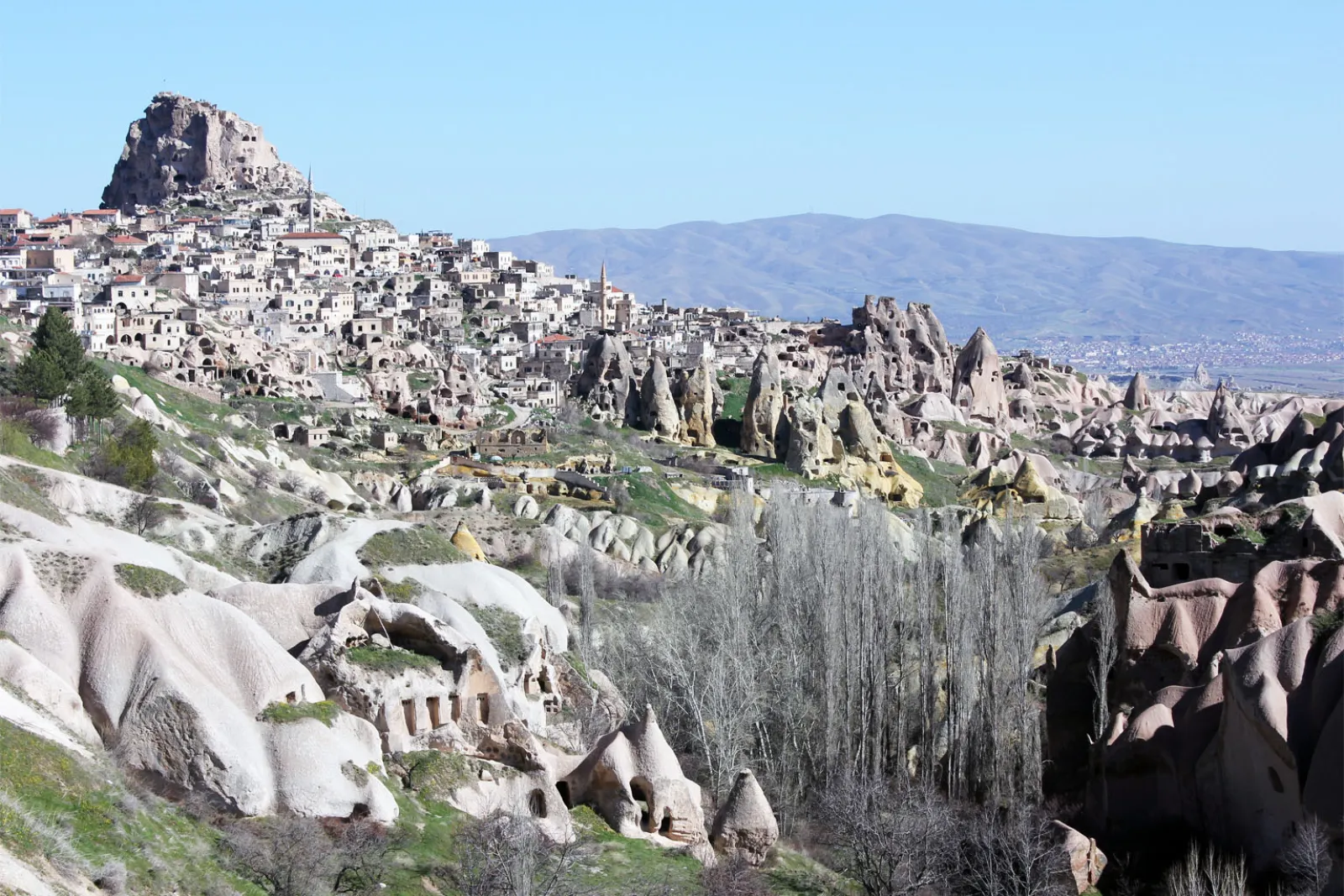
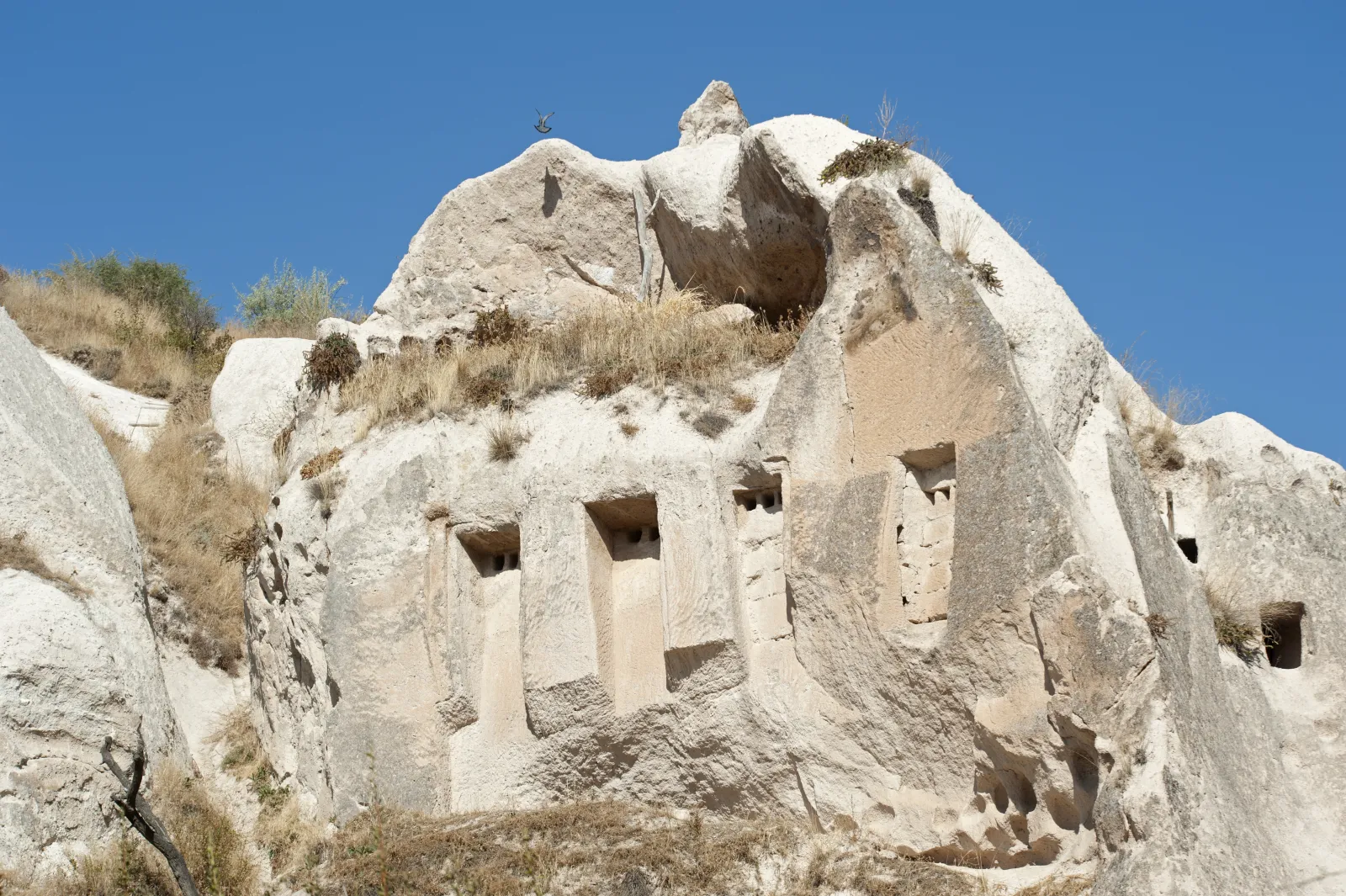
The practice dates to at least the Byzantine period and may be older. Farmers carved dovecotes into the soft tuff — hundreds of small niches in a single cliff face, each sized for a nesting pair — and painted the entrances with whitewash and geometric patterns in red and blue pigment. The colors attracted the birds. The niches provided shelter. The birds bred prolifically, and the guano accumulated on the valley floor below, where it was collected and spread on the fields and vineyards.
At Pigeon Valley’s peak, the cliff faces held thousands of dovecotes. The density is visible today: walk the valley and look up at the rock walls, and the niche patterns are everywhere — regular grids of dark openings, some still painted, most faded, all carved by hand into vertical stone surfaces that must have required ladders, ropes, or carved footholds to reach.
The practice declined in the twentieth century as chemical fertilizers became available and cheaper, but some dovecotes in the region are still maintained. The pigeons remain — wild populations continue to nest in the old niches, and the cooing echoes off the valley walls. When I walk travelers through here, I always stop at one of the painted dovecotes — the whitewash is weathered now, but the red pigment is still visible, and you can see the care that went into making a bird feel welcome.
Walking the Valley
The valley can be walked in either direction: from Uchisar down to Göreme (approximately four kilometers, mostly downhill, one and a half to two hours) or from Göreme up to Uchisar (the same distance but steeper). The Uchisar-to-Göreme direction is more comfortable and more dramatic — you start at the highest point, with the valley opening below you, and descend through progressively narrower terrain as the gorge deepens.
The trailhead at Uchisar is near the castle, on the south side of the village. The path drops quickly into the valley, passing through orchards and along cliff bases lined with dovecotes. The rock formations here are heavily eroded — organic, flowing shapes rather than the clean-capped fairy chimneys of Paşabağ or the vivid colors of Red Valley. The beauty is subtler: cream and ochre tuff, carved surfaces, the interplay of light and shadow in the narrow gorge.
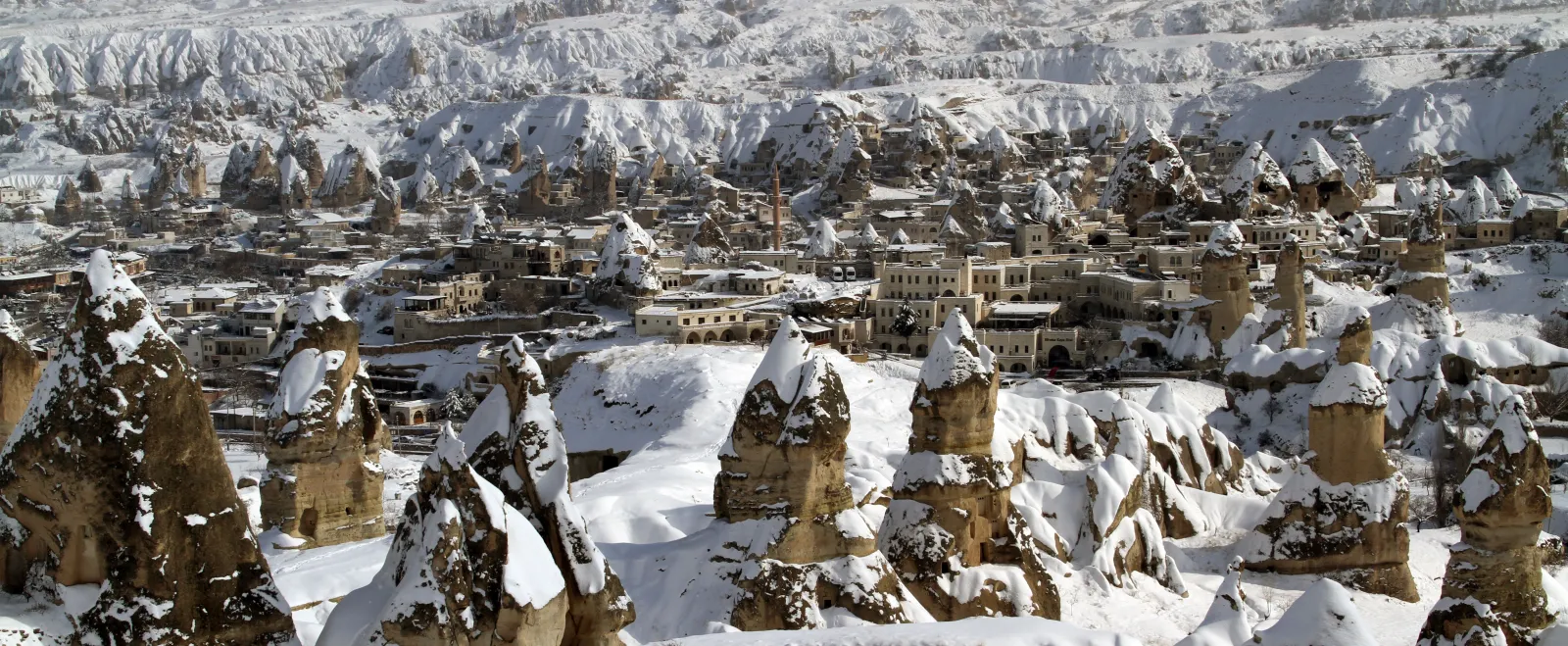
About halfway through, the valley widens briefly and a viewpoint offers a perspective back toward Uchisar Castle — the rock fortress visible from below, a different angle from the panorama at its summit. The path then narrows again and drops through the final section to emerge near the Göreme town center.
The terrain is uneven — rocky, with some loose gravel and occasional steep sections. Sturdy walking shoes are recommended. The path is generally well-marked, but a few junctions can be confusing without a guide or a good trail map.
The Viewpoint
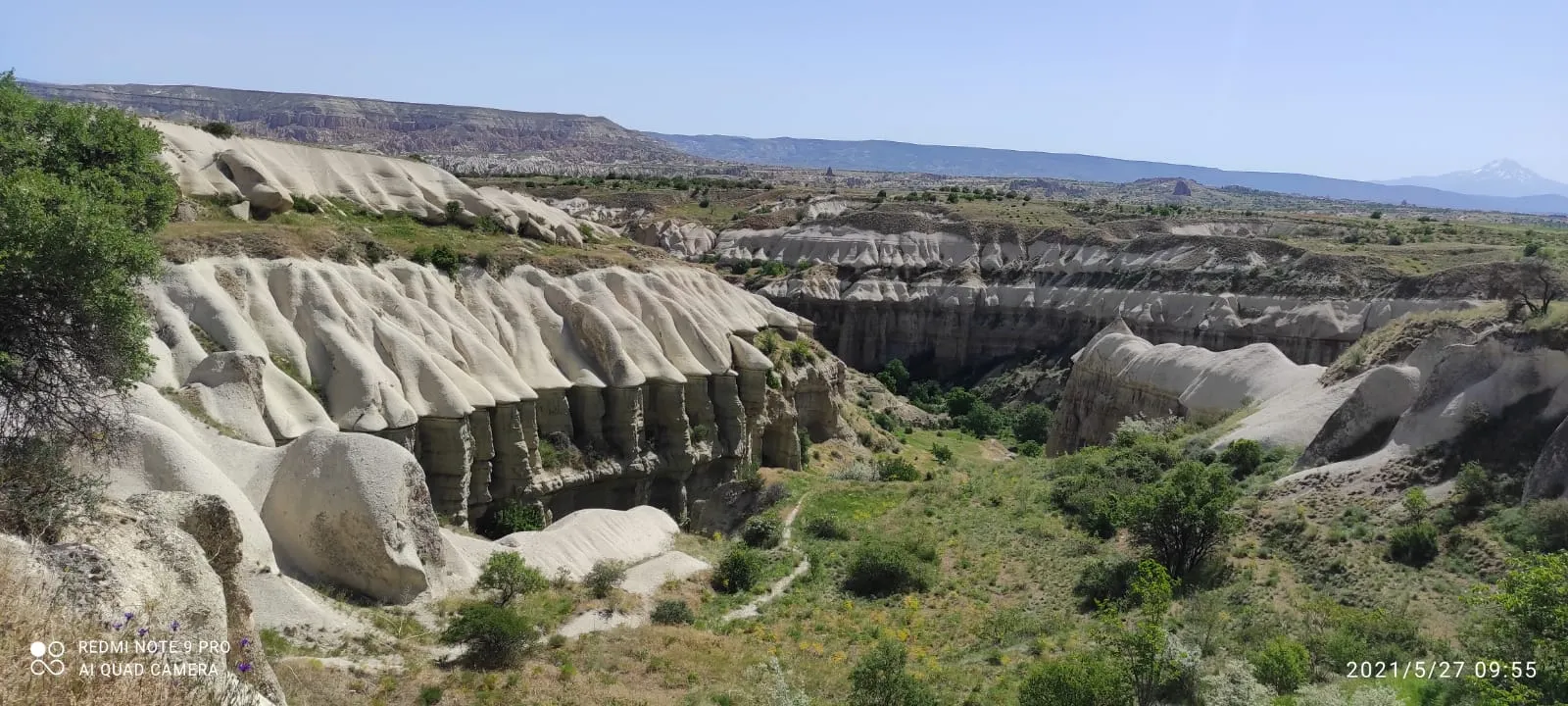
At the Uchisar end of the valley, a paved viewpoint and parking area overlook the gorge. This is the Pigeon Valley Panoramic Viewpoint — accessible by car and included on most South Cappadocia tour routes. The view looks down the length of the valley toward Göreme, with the dovecote-lined cliff faces visible on both sides and the fairy chimney formations of the Göreme area in the distance.
A small souvenir area at the viewpoint sells locally made ceramics, dried fruits, and the blue glass evil eye charms (nazar boncuğu) that are ubiquitous in Turkey. A “wishing tree” draped with evil eye beads and cloth strips stands near the overlook — a folk tradition that visitors have adopted with enthusiasm.
The viewpoint is a five-minute stop on a driving tour but a natural starting or ending point for the valley hike.
Practical Information
Trail length: Approximately four kilometers from Uchisar to Göreme. Allow one and a half to two hours at a comfortable pace.
Difficulty: Moderate. Mostly downhill (Uchisar to Göreme direction), with uneven terrain and some steep sections. Not technical, but sturdy shoes are recommended.
Getting there: The trailhead at Uchisar is a short walk from Uchisar Castle. The Göreme end emerges near the town center. Alternatively, the Pigeon Valley Viewpoint is accessible by car from the Göreme-Nevşehir road.
How much time: If walking the full valley: one and a half to two hours. If visiting the viewpoint by car: fifteen to twenty minutes.
When to go: Morning light illuminates the dovecotes on the east-facing cliffs. Late afternoon is atmospheric in the gorge, with long shadows. The valley is sheltered from wind, which makes it comfortable even when the plateau is breezy. When I plan a valley walk, I like to start at Uchisar around 9 or 10 am — early enough for good light, late enough that the gorge has warmed.
Official resource: Göreme Historical National Park — UNESCO
Combining with other visits: The walk from Uchisar to Göreme is a natural addition to a visit to Uchisar Castle. Start with the castle (morning light, balloon views), then descend through Pigeon Valley to Göreme for lunch. The viewpoint is a standard stop on the South Cappadocia tour route, typically combined with Red Valley and Kaymaklı Underground City. It also fits naturally into a two-day Cappadocia itinerary.
Plan Your Cappadocia Visit
Pigeon Valley is where Cappadocia’s landscape and its agriculture meet — the dovecotes carved into the cliff faces connect the fairy chimney scenery to the working life of the people who lived here. If you would like to walk this valley with a private guide who can explain the dovecote system and connect the geology to the human story, tell us what interests you and we will shape the day around it.