Uchisar Castle is not a castle in the European sense — no walls, no towers, no battlements. It is a 60-meter volcanic rock pinnacle, the tallest formation in Cappadocia, standing at approximately 1,400 meters above sea level. The rock has been hollowed out over centuries into a vertical maze of rooms, tunnels, staircases, and storage chambers, carved directly into the soft tuff stone by communities who lived inside it from the Roman period through the twentieth century. From the top, you see everything: the Göreme valley to the east, Pigeon Valley dropping away to the south, the snowy cone of Mount Erciyes (3,917 meters) on the eastern horizon, and the endless Anatolian plateau stretching in every direction.
The name means “three fortresses” in Turkish — üç hisar — though only this central rock remains prominent. The strategic logic is immediate: anyone standing on top of Uchisar can see approaching movement from any direction across the flat plateau. The communities who carved their homes into its flanks were not choosing atmosphere. They were choosing survival.
The Rock
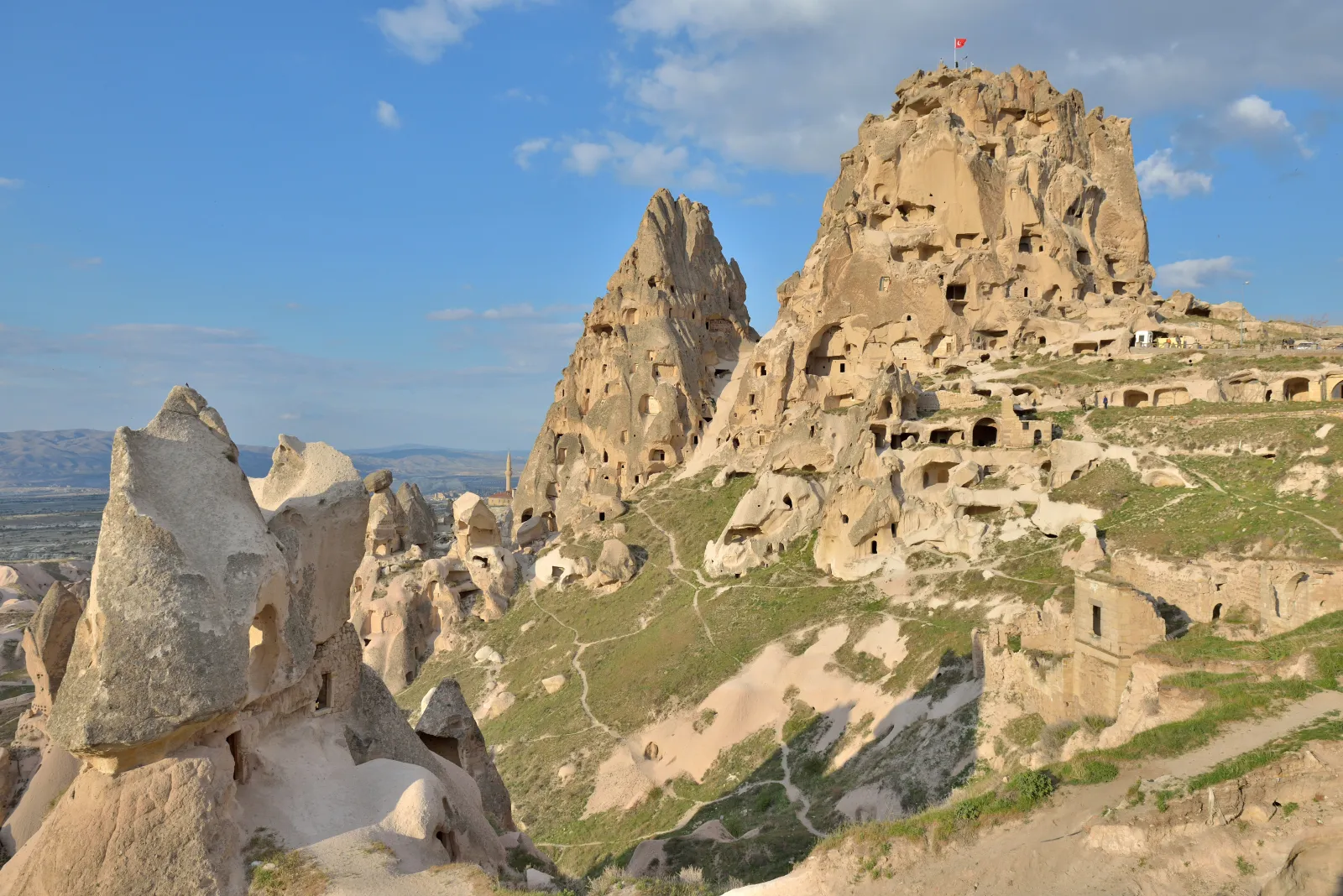
The geology is Cappadocia’s geology in concentrated form. The rock is tuff — compressed volcanic ash deposited by the eruptions of Mount Erciyes and other volcanoes millions of years ago. The tuff is soft enough to carve with hand tools but hardens on exposure to air, making it an ideal building material for people who wanted to live inside stone rather than on top of it. The darker capstone that protects some fairy chimneys is absent here — Uchisar is a single massive outcrop, and its surface is pocked with the openings of former rooms, windows, and ventilation shafts. From a distance, the rock looks like a honeycomb standing on end.
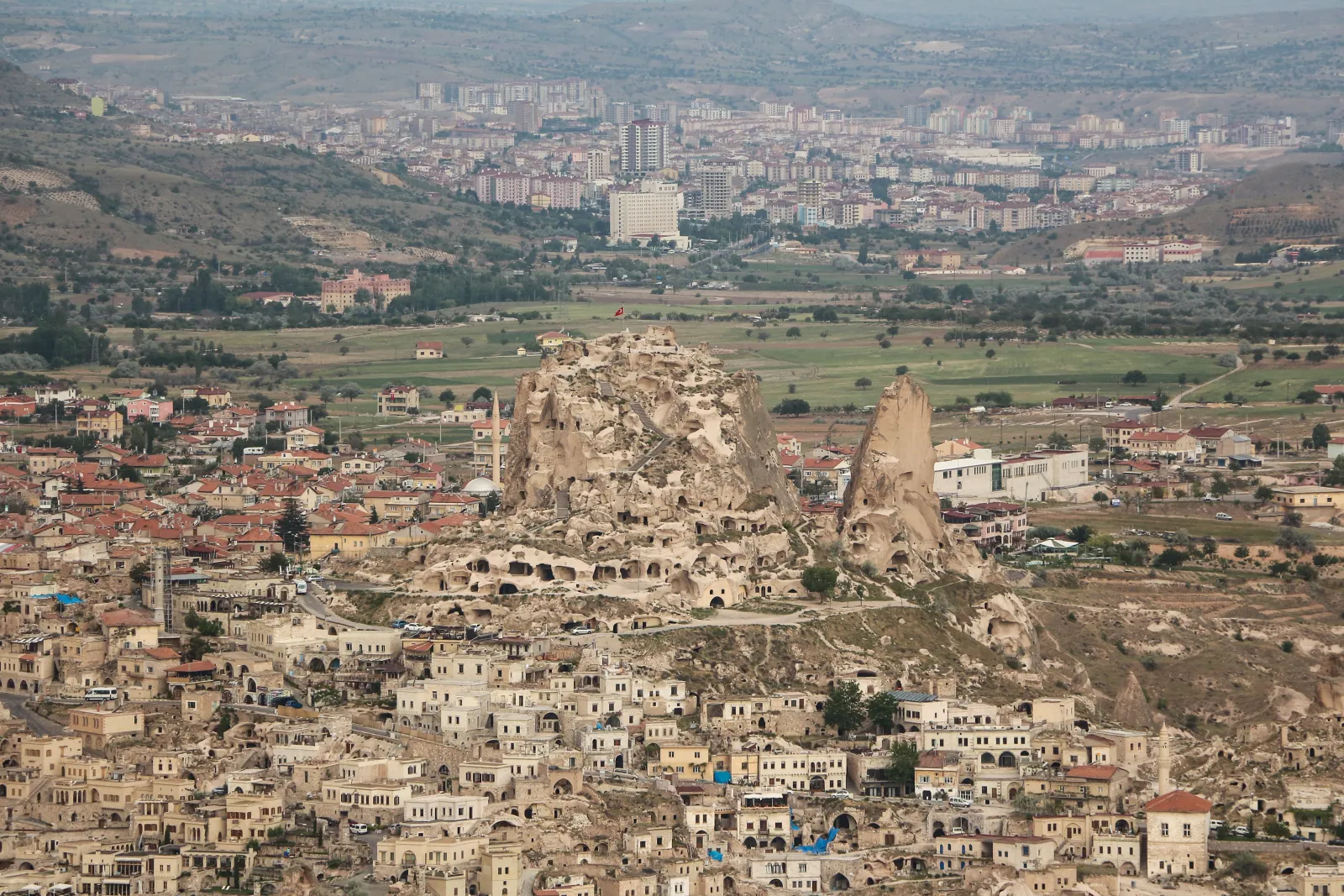
The cave rooms inside range from small storage niches to multi-room dwellings with carved-out niches for lamps, sleeping platforms, and grain storage. The lower levels were occupied most recently — some families lived in the rock until the 1960s, when the Turkish government relocated residents due to erosion risk and structural instability. The upper levels, accessible only by narrow internal passages, are older and more difficult to reach. Some passages have collapsed; others are closed for safety. The sections open to visitors follow a marked path that climbs through the interior to the summit platform.
The View from the Top
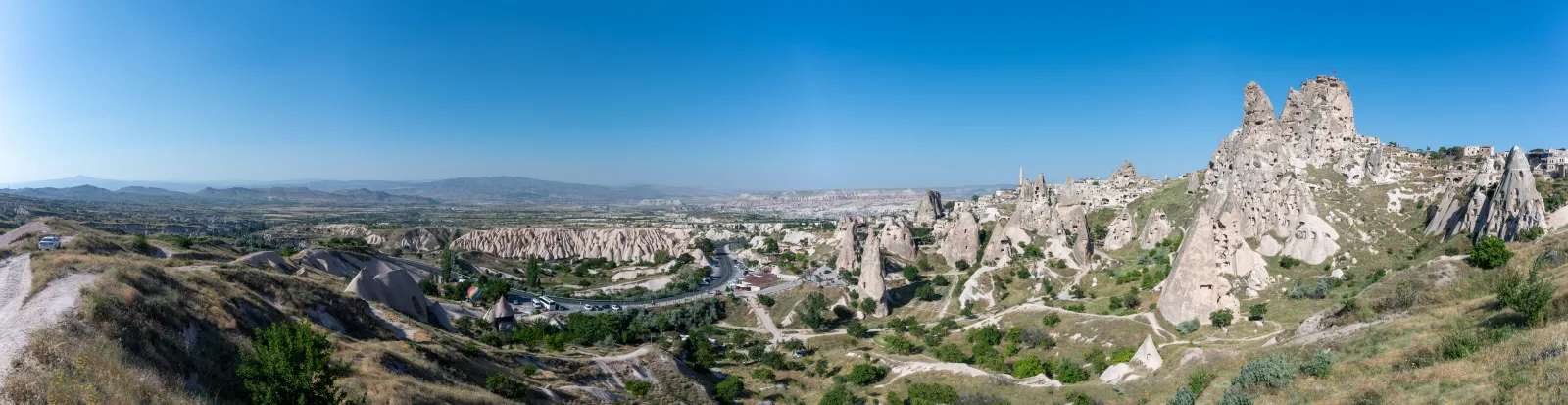
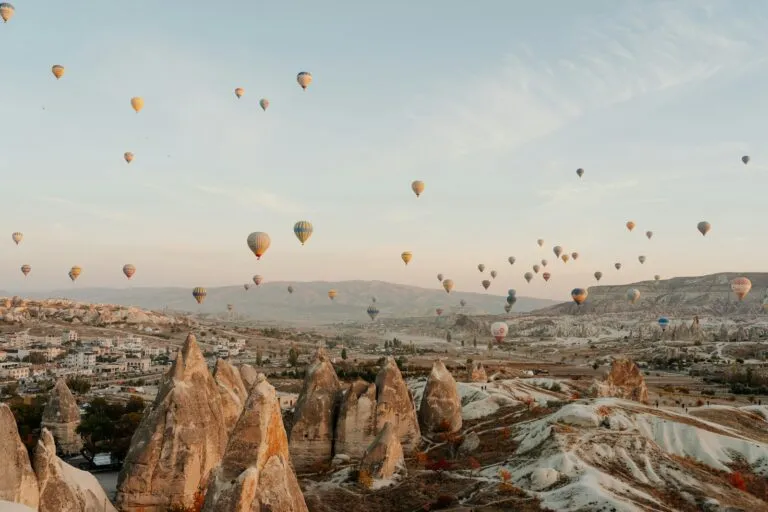
The summit is a flattened platform with a low railing and a 360-degree panorama that justifies the climb. To the east, the Göreme valley unfolds — the rock-cut churches of the Open Air Museum are visible as a cluster of formations about three kilometers away. To the south, Pigeon Valley drops steeply downward in a narrow gorge lined with dovecotes carved into the cliff faces — the pigeons whose droppings fertilized Cappadocian vineyards for centuries still nest here. To the north, the plateau extends toward Avanos and the Red River valley. To the southeast, on clear days, Mount Erciyes dominates the horizon — a volcano that last erupted approximately 6,000 years ago but still carries snow into summer.
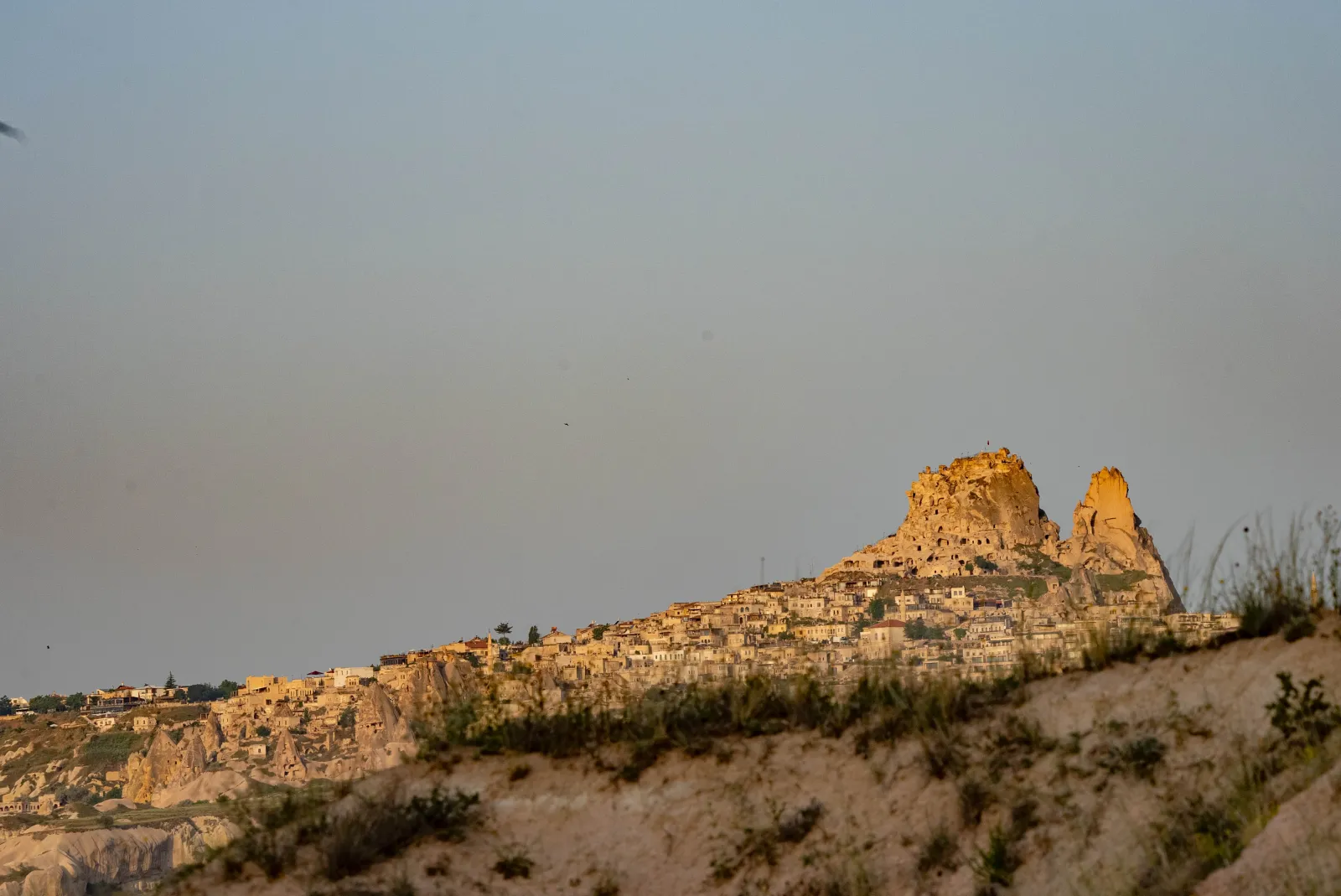
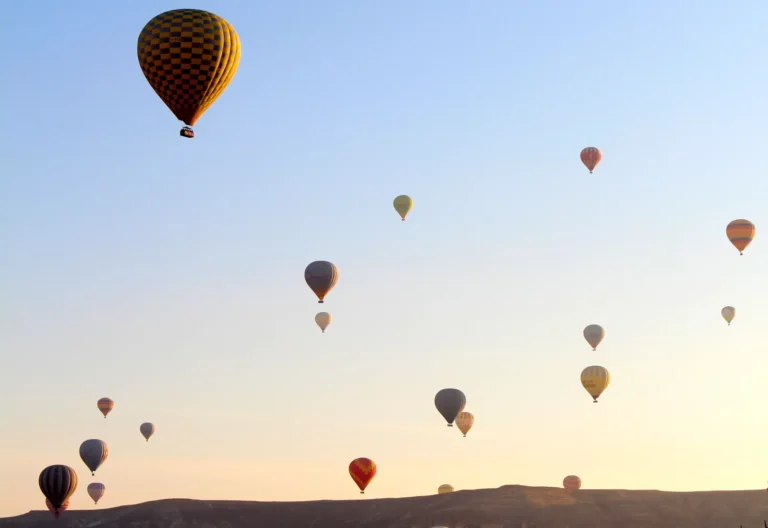
The view is best in the early morning and late afternoon, when the low-angle light brings out the texture of the tuff formations and the valleys fill with shadow. If you are in Cappadocia during balloon season (April through November, weather permitting), the early morning view from Uchisar includes dozens of hot air balloons rising from the Göreme valley — a scene that has become one of Turkey’s most photographed images. When I time a Uchisar visit with travelers, I aim for first light — you get the balloons, the soft tones, and an almost-empty summit before the day tours arrive.
The Village
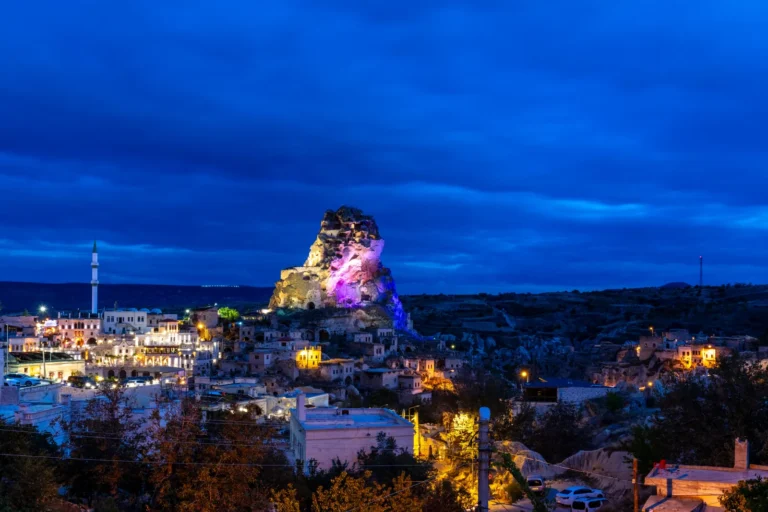
Uchisar village wraps around the base of the castle rock. It is smaller and quieter than Göreme — fewer backpacker hostels, fewer carpet shops, more of the unhurried pace that defines rural Cappadocia. The village has a handful of boutique cave hotels, several of which are carved into the same tuff stone as the castle and offer terrace views of the valleys. A few restaurants serve the standard Cappadocian menu — pottery kebab (testi kebabı), mantı (Turkish ravioli), and local wines from the Cappadocian vineyards.
The village’s position — elevated above the valleys, set back from the main Göreme tourist strip — gives it a different atmosphere. You are closer to the landscape here, and the evening quiet, after the day-trippers have left, is one of the better experiences in the region. When I bring travelers to stay overnight, I usually recommend Uchisar over Göreme — the valleys below are close enough for morning walks, and the evening silence is something Göreme can no longer offer.
Practical Information
Getting there: Uchisar is approximately four kilometers from Göreme, accessible by car, dolmuş (shared minibus), or on foot via the valley trails. Most guided Cappadocia tours include Uchisar as a stop on either the north or south route. The castle is a five-minute walk uphill from the village center.
The climb: The path from the ticket booth to the summit takes fifteen to twenty minutes at a moderate pace. The route passes through interior tunnels (some with low ceilings — watch your head) and external carved staircases. The final section is exposed and can be windy. Wear sturdy shoes with grip — the rock surface is uneven and can be slippery when wet.
How much time: Thirty to forty-five minutes for the climb, the view, and the descent. An hour if you explore the village and stop for tea at one of the terrace cafés afterward.
When to go: Early morning for balloon views and soft light. Late afternoon (one to two hours before sunset) for the best photographic light and the dramatic shadow play in the valleys. Midday in summer is hot and exposed — the summit has no shade.
Entry fee: There is a small entrance fee at the base. The ticket booth is at the start of the marked path.
Official resource: Göreme Historical National Park — UNESCO
Combining with other visits: Uchisar pairs naturally with the Göreme Open Air Museum, the Pigeon Valley walk down to Göreme, or Kaymaklı Underground City in the afternoon. It also fits into a two-day Cappadocia itinerary.
Plan Your Cappadocia Visit
Uchisar Castle is the point from which all of Cappadocia makes visual sense — the valleys, the formations, the villages, and the horizon laid out beneath you. If you would like to explore Cappadocia with a private guide who can connect the geology to the history and shape the route around the best light, tell us what interests you and we will build the itinerary around it.