The names are literal. Red Valley is red — a deep iron-oxide ochre that saturates the rock walls and turns the trail floor the color of rust. Rose Valley, which runs parallel and connects at several points, is softer — the tuff here carries a pale pink tone that shifts toward coral and amber as the day moves. The two valleys are often walked together as a single hike, and together they offer the best walking experience in Cappadocia: three to four kilometers of trail through narrow gorges, past rock-cut churches with faded frescoes, beneath overhanging cliff faces, and along ridgelines where the landscape opens in every direction.
This is not technical hiking. The trails are well-worn, mostly downhill or gently undulating, and navigable in ordinary walking shoes — though proper hiking shoes give you better grip on the loose gravel and rock surfaces. What makes the walk exceptional is not difficulty but density: the concentration of color, geological form, and human history per kilometer is higher here than anywhere else in the Cappadocian valleys.
The Geology
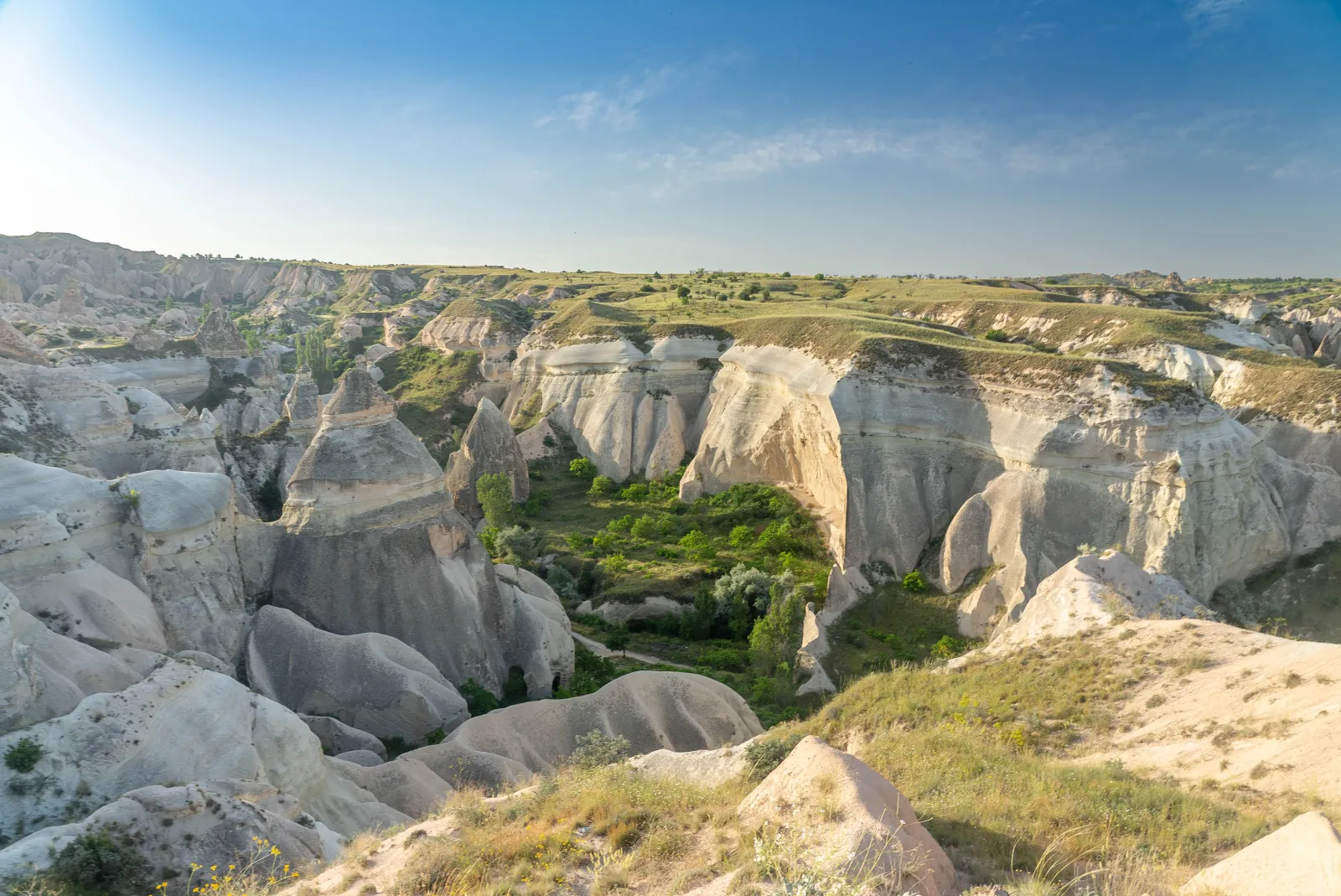
The color comes from the rock’s mineral composition. Cappadocia’s tuff — compressed volcanic ash from eruptions millions of years ago — contains varying concentrations of iron oxide, manganese, and other minerals. Where iron oxide dominates, the rock turns red and orange. Where the concentration is lower and the tuff is less weathered, the color shifts to pink, cream, and pale gold. Red Valley and Rose Valley happen to sit at the intersection of several ash layers with different mineral profiles, which is why the color changes as you walk — sometimes within a single rock face.
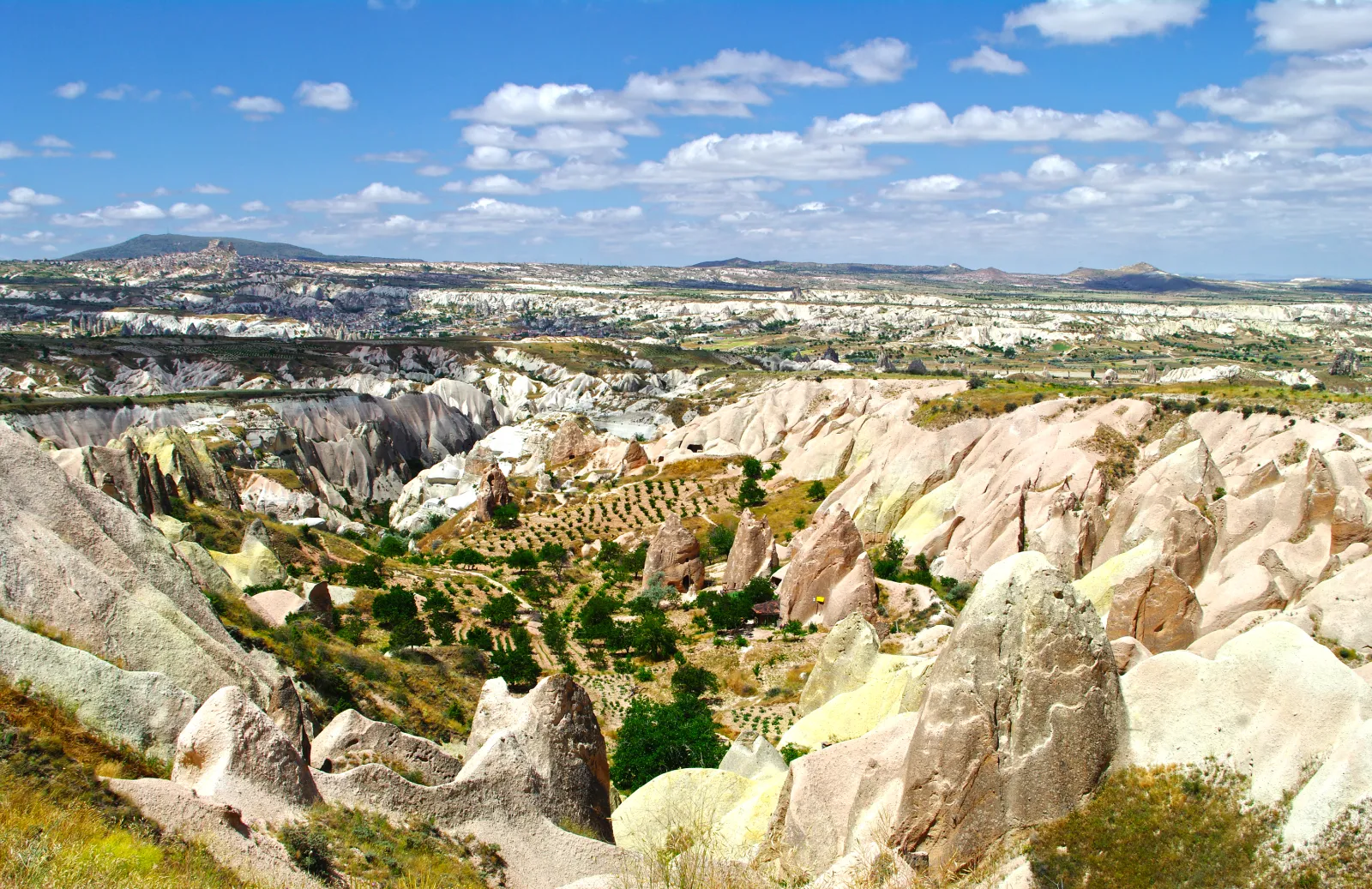
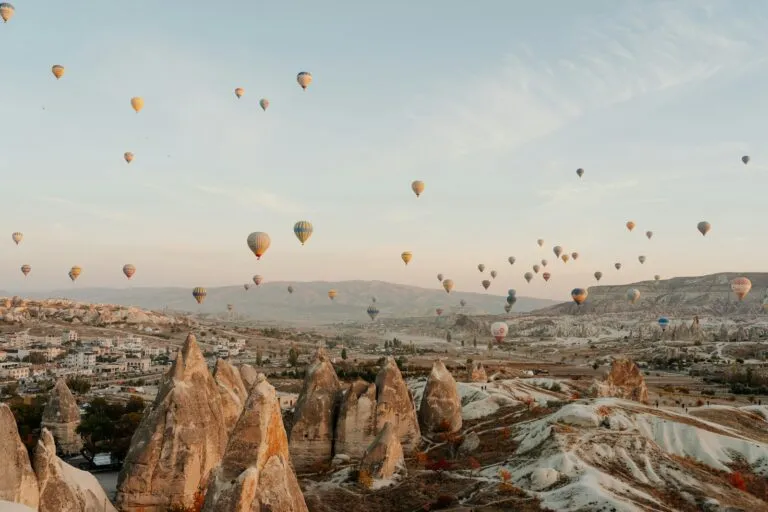
The formations here are less about individual fairy chimneys and more about the valley walls themselves: smooth, curved surfaces sculpted by water and wind into shapes that look organic — mushroom caps, wave crests, curtains of folded stone. The trail winds between these formations, sometimes dropping into narrow slots between rock walls, sometimes climbing to ridge points where the full valley unfolds below. The scale shifts constantly. One moment you are in an enclosed corridor of rock; the next, you are on an open ridge with the Göreme valley, Uchisar Castle, and the distant plateau visible in a single sweep.
The Rock-Cut Churches
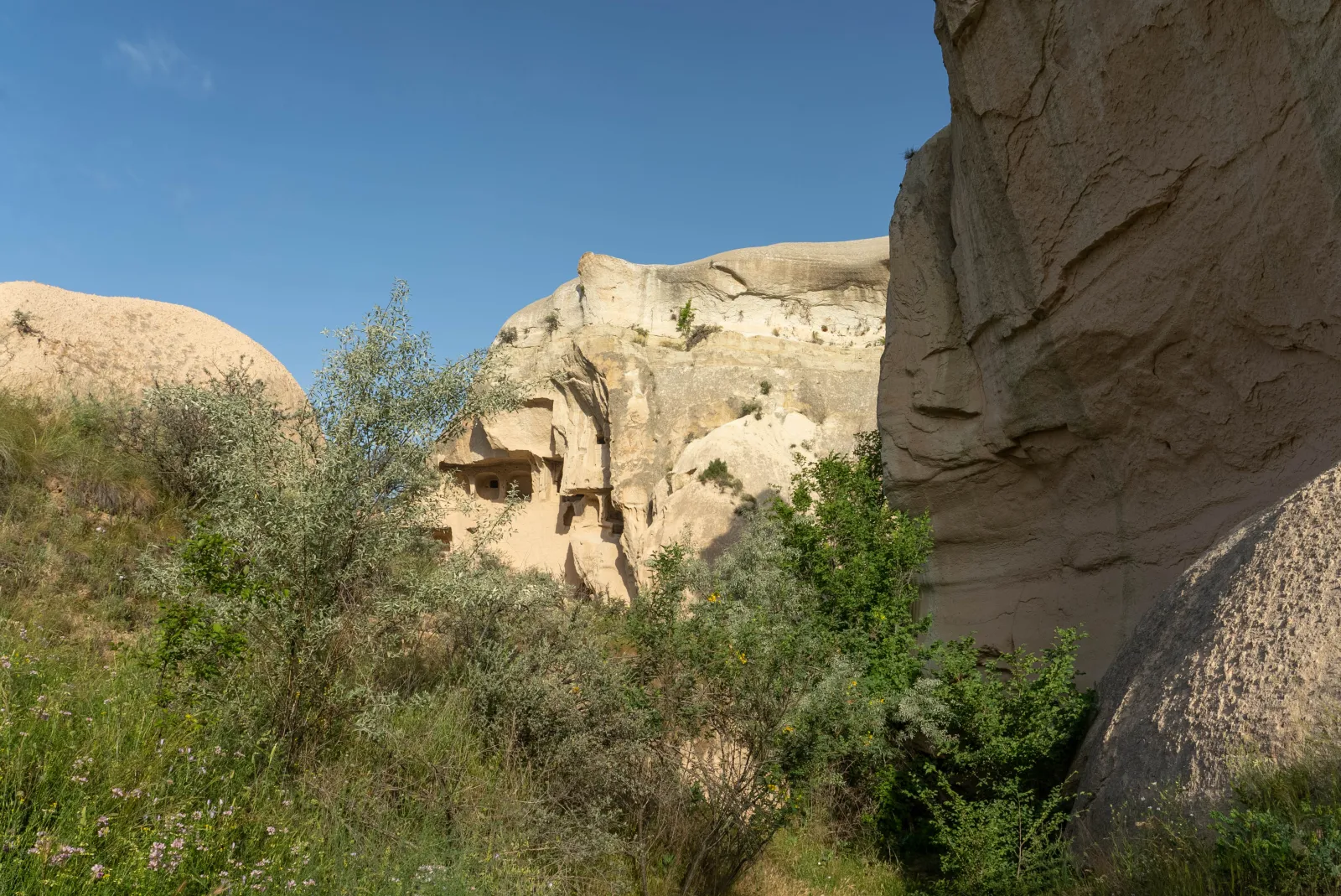
Scattered along the valley trails — sometimes marked, sometimes hidden behind a curve in the rock — are small churches carved into the cliff faces by Byzantine monks between the ninth and eleventh centuries. These are not the well-preserved museum churches of the Göreme Open Air Museum. They are rougher, smaller, and more atmospheric: single-room chapels with barrel-vaulted ceilings, carved-out apses, and fragments of frescoes that survive in varying states of decay.
The Church of the Cross (Haçlı Kilise) in Rose Valley is one of the better-preserved examples — a simple cruciform plan with painted crosses and geometric patterns visible on the ceiling. The Column Church (Kolonlu Kilise) has carved columns flanking its entrance. Several unnamed chapels are tucked into rock faces along the trail, their interiors cool and dim, their frescoes barely legible after a thousand years of exposure.
These churches are part of what makes the valleys more than a scenic hike. The monks who carved them chose these valleys not for the color but for the isolation — the narrow gorges and hidden alcoves provided retreat from the outside world. Walking the trail, you pass through the same landscape they chose, and the churches appear as they always did: cut into the rock, open to anyone who finds them. When I bring travelers to these valleys, I always try to reach the Church of the Cross at mid-afternoon — the light slants through the opening and lands on the painted ceiling just long enough to make the cross marks visible.
Walking the Trail
The most common route starts at the Panoramic Viewpoint near Göreme (sometimes called the Red Valley Viewpoint or Sunset Point) and descends into the valley heading generally southeast toward Çavuşin village, approximately three to four kilometers away. This direction — viewpoint to village — is mostly downhill and takes two to three hours at a comfortable pace with stops.
The first section drops into Red Valley proper — the color is immediately evident, and the trail narrows between high rock walls. After about a kilometer, a fork offers the choice of continuing through Red Valley or crossing a ridge into Rose Valley. Both routes eventually converge near Çavuşin. The Rose Valley fork is slightly longer and passes more of the rock-cut churches. A guide who knows the trails can link the two through side paths that cross the ridgeline, giving you both valleys in a single walk.
The terrain is moderate. There are no exposed scrambles or dangerous drops, but the path surface is uneven — loose gravel, rock steps, and occasional sandy stretches. Sturdy walking shoes are recommended. Trekking poles are helpful but not necessary. Water is essential — there is no shade for significant stretches, and summer temperatures in the valleys can reach 35°C or higher.
The Sunset Viewpoint
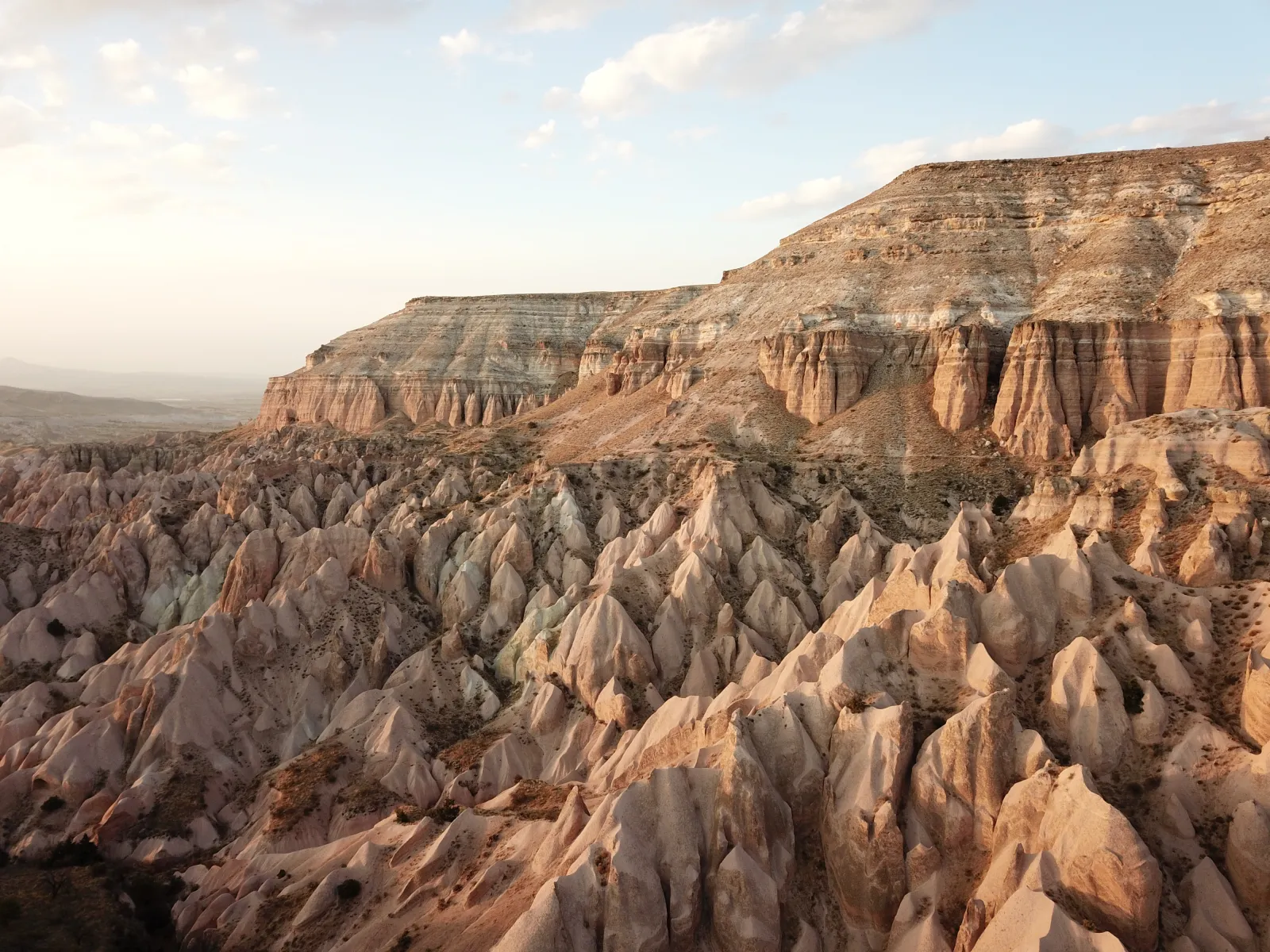
The Panoramic Viewpoint above Red Valley is Cappadocia’s most popular sunset spot. The ridge overlooks the valley with Uchisar Castle to the west and the Göreme formations to the east. As the sun drops, the red and pink tones in the rock intensify — the valley walls shift from ochre to copper to deep rust, and the shadows lengthen across the formations. The light show lasts about forty-five minutes before and twenty minutes after the sun passes the horizon.
A small café at the viewpoint serves tea, fresh orange juice, and snacks. The seating is informal — benches and low tables arranged along the ridge. The viewpoint is accessible by car (a short drive from Göreme), which means it gets crowded at sunset, particularly during peak season. Arriving thirty to forty minutes before sunset secures a good spot. When I plan a full valley day, I time the hike so travelers arrive at the viewpoint about forty minutes before sunset — early enough to settle in, late enough that the crowd is already filtering down from the buses.
If you are walking the valley trail in the late afternoon, timing your hike to finish at the viewpoint for sunset is the ideal combination — you get the valley walk and the sunset view in a single experience.
Practical Information
Getting there: The Red Valley Viewpoint / Sunset Point is accessible by car from Göreme (about a five-minute drive). The trail to Çavuşin starts here. If starting from Çavuşin, walk uphill toward the valley entrance — this direction is more strenuous but gives you the option of finishing at the sunset viewpoint.
Trail length: Approximately 3-4 kilometers one way, depending on the route through the valleys. Allow two to three hours with stops for churches and photographs.
Difficulty: Moderate. Mostly downhill (viewpoint to Çavuşin direction), uneven rock surface, no technical sections. Suitable for reasonably fit visitors of all ages.
What to bring: Water (minimum one liter per person), sun protection, sturdy walking shoes. A light jacket if walking in the late afternoon — the temperature drops quickly after sunset at 1,000+ meters elevation.
When to go: Late afternoon gives you the best color in the rock and the option of catching sunset at the viewpoint. Morning walks are quieter and cooler in summer. Midday is hot and flat-lit — the color is less dramatic.
Official resource: Göreme Historical National Park — UNESCO
Combining with other visits: The Red and Rose Valley walk pairs naturally with the Göreme Open Air Museum in the morning and the sunset viewpoint to close the day. It also fits into a two-day Cappadocia itinerary.
Guided vs. self-guided: The main trail is followable without a guide, but the side paths to hidden churches, the connections between Red and Rose valleys, and the geological and historical context benefit from a guide who knows the terrain.
Plan Your Cappadocia Visit
Red Valley and Rose Valley are Cappadocia at walking pace — the scale, the color, and the hidden churches reveal themselves only to people who step into the landscape rather than viewing it from a car window. If you would like to hike these valleys with a private guide who knows where the hidden chapels are and when the light is best, tell us what interests you and we will shape the day around it.