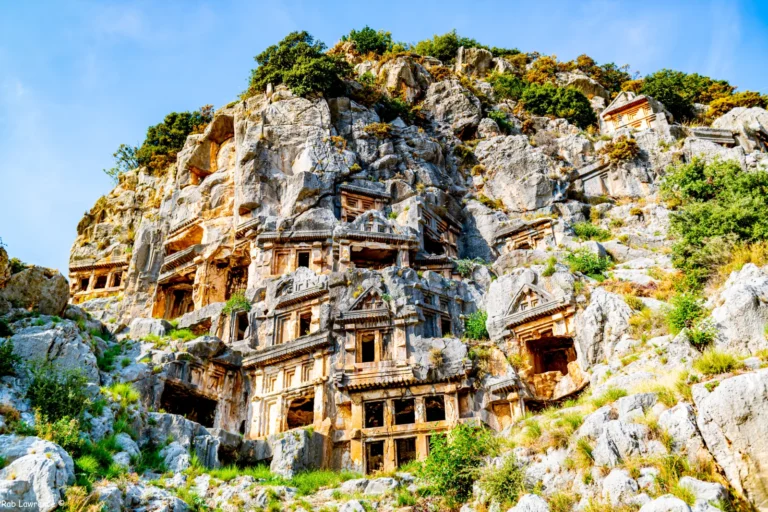
Off the southwestern coast of Fethiye, a narrow, rocky island rises from the Mediterranean with the remains of four Byzantine churches, a covered processional walkway, and a claim that may rearrange your understanding of Christmas history. Gemiler Island — also called St. Nicholas Island — was a significant Byzantine pilgrimage site between the 4th and 7th centuries AD, and some historians believe it may have been the original burial place of St. Nicholas of Myra, the 4th-century bishop whose life eventually evolved into the figure of Santa Claus.
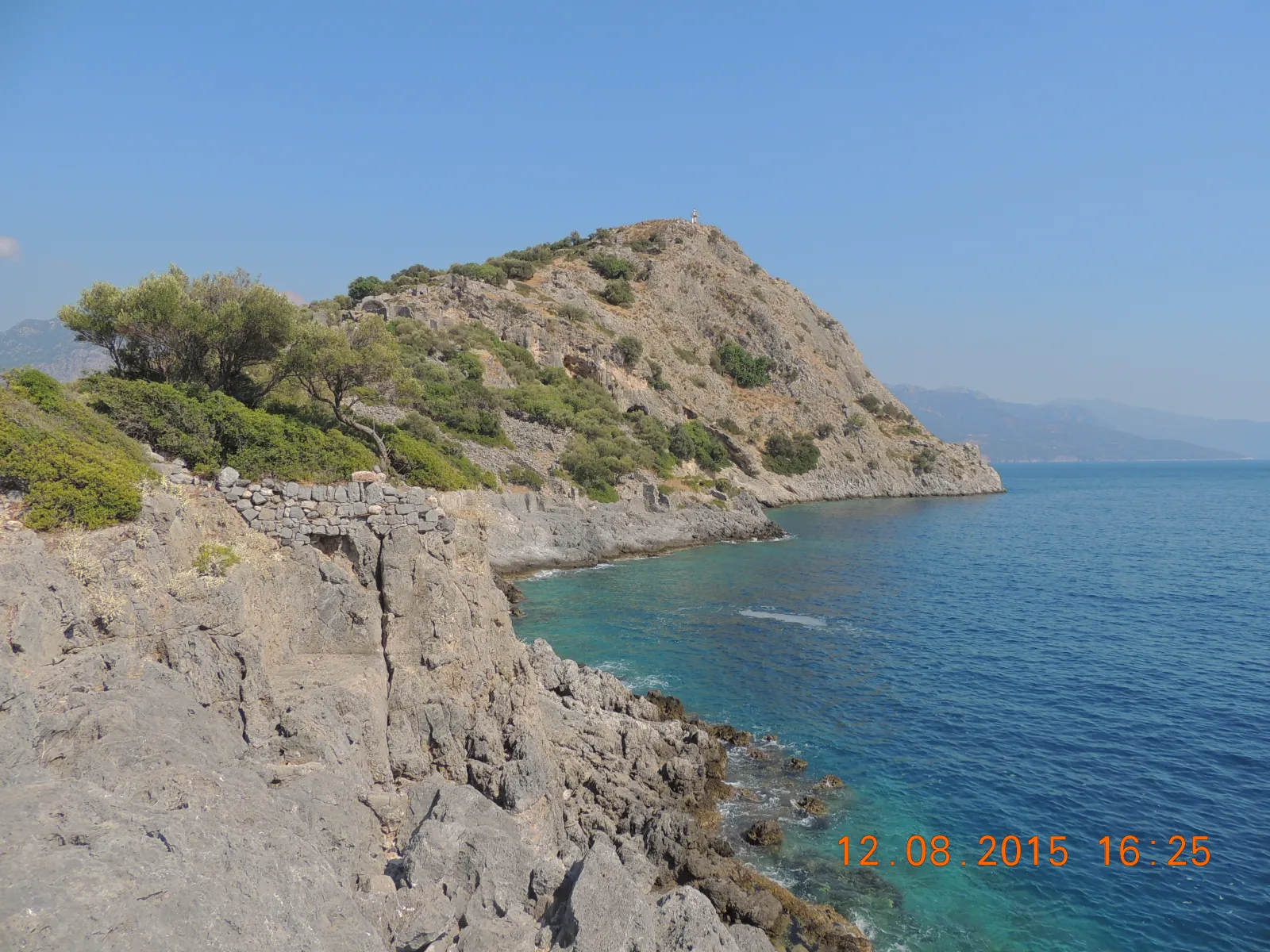
The island is small — roughly one kilometer long and 400 meters wide — but the density of Byzantine remains on it is remarkable. Churches, cisterns, burial chambers, and the remains of residential structures cover the island’s rocky terrain, connected by paths and, most notably, by a covered walkway that runs along the spine of the island from the harbor to the summit church. For a place this small and this close to shore, the archaeological significance is disproportionate.
The St. Nicholas Connection
The historical St. Nicholas was a Greek Christian bishop of Myra (modern Demre, about 150 kilometers east along the coast) who lived in the 4th century AD. He was known for his generosity, his defense of the poor, and various miracles attributed to him after his death. Over centuries, his story was merged with other traditions and eventually became the basis for Santa Claus, Saint Nicholas, Sinterklaas, and related gift-giving figures across Europe and the Americas.
The traditional account places St. Nicholas’s tomb in Demre, at the Church of St. Nicholas, where his remains were kept until Italian merchants from Bari took most of the bones in 1087 (a polite historical term for what was effectively a theft). However, archaeological work on Gemiler Island in the 1990s by a Japanese-Turkish research team uncovered evidence suggesting that St. Nicholas may have been originally buried here, at one of the island’s churches, before being moved to Myra at a later date.
The evidence is not conclusive — this is archaeology, not certainty — but it adds a layer of significance to the island that goes beyond its architectural interest. Whether St. Nicholas rested here or not, the island’s Byzantine builders clearly considered it a place of considerable religious importance.
The Churches and Covered Walkway
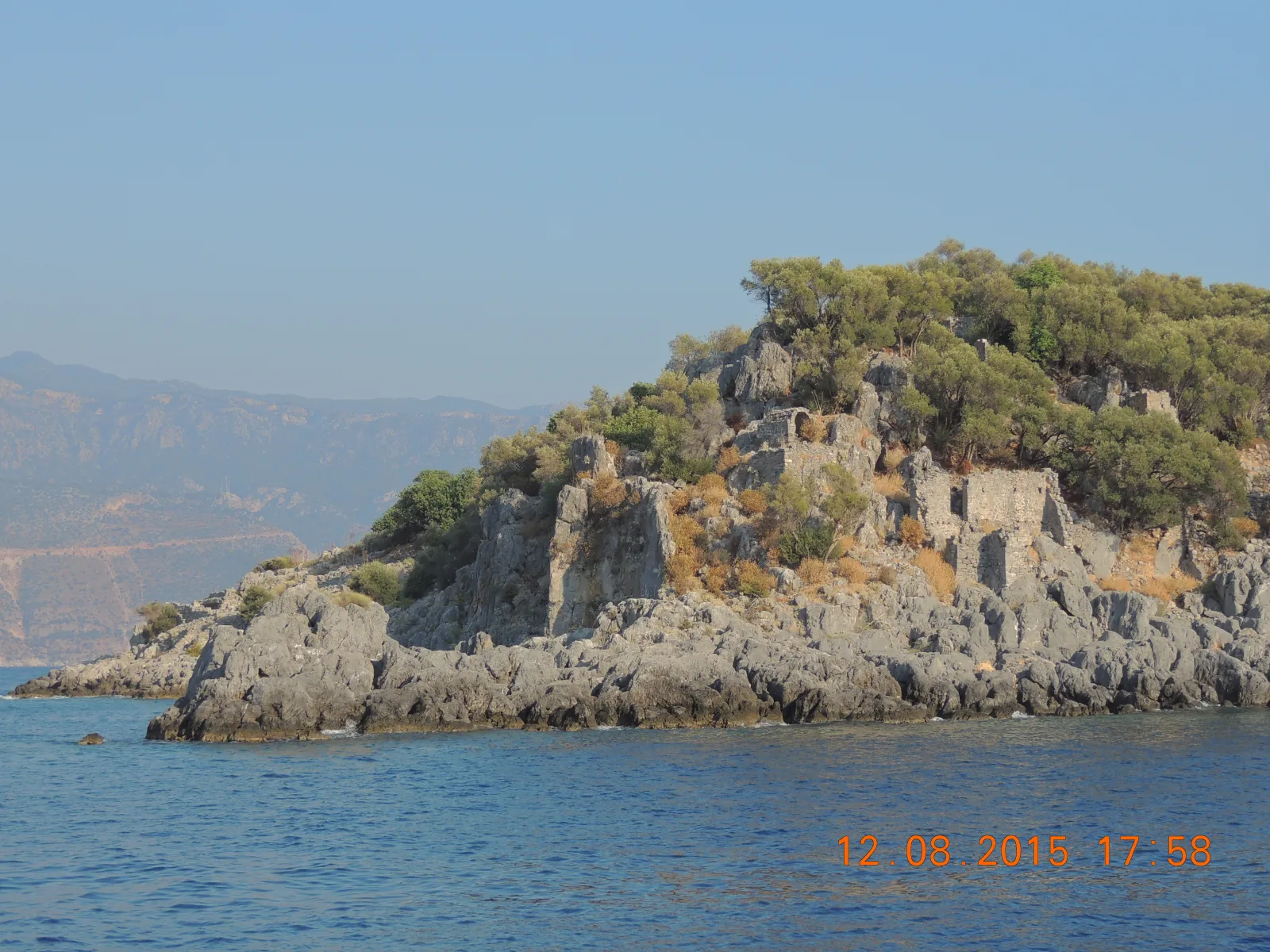
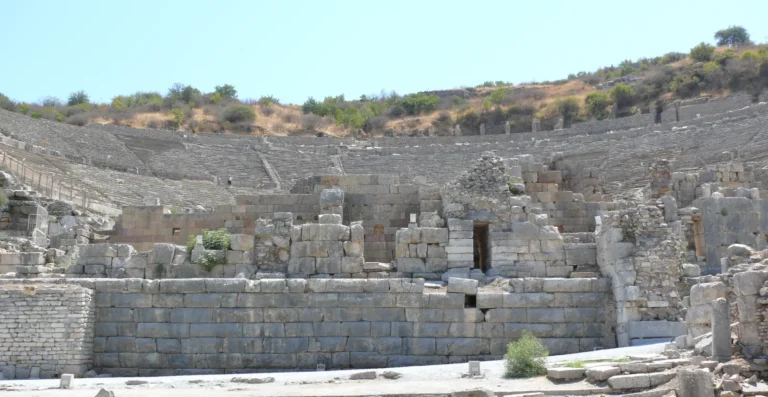
The island has four identified church structures, ranging from the harbor-level Church I near the boat landing area to Church IV at the island’s summit. The churches date primarily from the 5th and 6th centuries and show the characteristic features of Byzantine religious architecture: apse structures, narthex entrance halls, and fragments of floor mosaics (most now protected or removed for conservation).
The most distinctive architectural feature is the covered walkway — a roofed passage that runs along the island’s ridge from the harbor area to the summit church. This processional corridor, approximately 350 meters long, would have been used by pilgrims moving between the churches and the main religious complex at the top. Sections of the vaulted roof survive, and walking through the partially intact passage gives a tangible sense of the island’s function as a place of organized religious pilgrimage.
Church III, near the summit, is the largest and most significant structure. It has a central nave, side aisles, and the remains of floor mosaics. The apse faces east — standard Byzantine orientation — and the position at the island’s highest point would have made it visible from the mainland and from approaching ships. If this is indeed where St. Nicholas was originally interred, the positioning makes symbolic sense: a prominent church on a prominent hilltop, visible from the sea.
Walking among the ruins requires some clambering over rocky terrain — the paths are not maintained or marked in the way you might expect from a major historical site. This informality is part of the experience. You are exploring a 1,500-year-old pilgrimage complex at your own pace, without crowds, without barriers, and with the sea visible in every direction.
Getting There and the Boat Experience
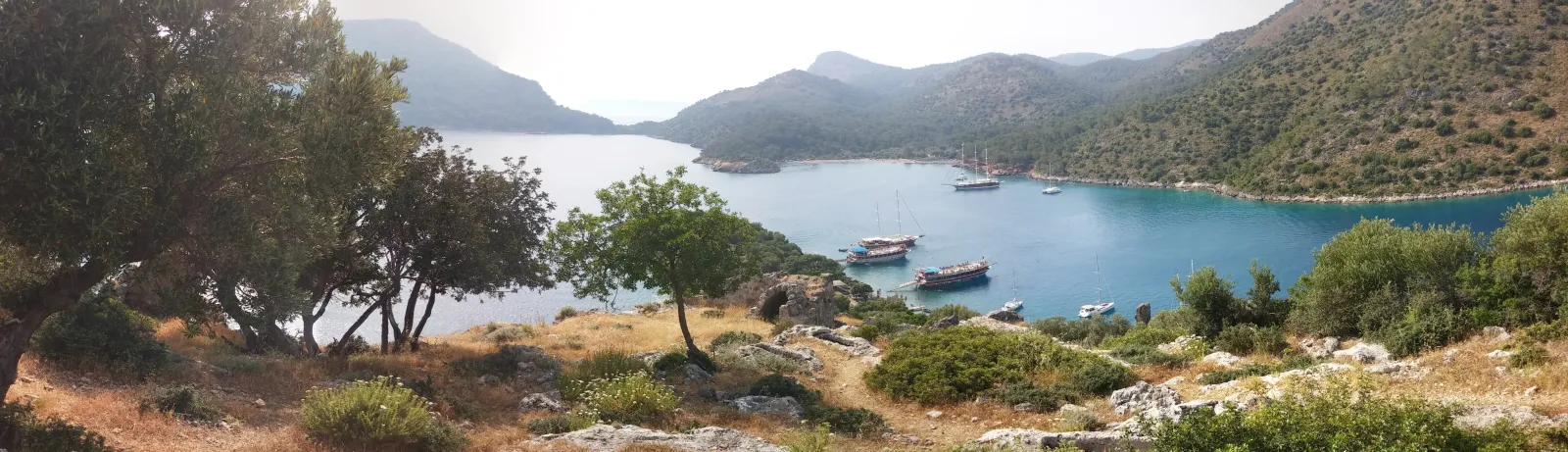
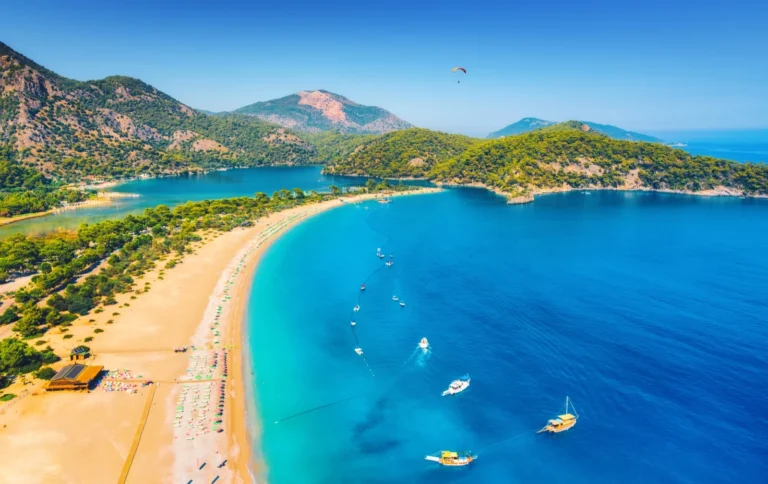
Gemiler Island is reached by boat from the mainland, typically from the small beach and harbor at Gemiler Beach (also known as Oludeniz Gemiler), about 8 kilometers south of Hisaronu and roughly 20 kilometers from Fethiye center. Boats cross from the beach to the island in about 10 minutes — the island is very close to shore.
There are several ways to visit:
Sunset boat trips are the most popular option. These typically depart in the late afternoon, allow time for exploring the island ruins, and then anchor off the coast for dinner on board as the sun sets behind the island. The sunset from this angle — the sun dropping behind the island’s silhouette with the churches outlined against the orange sky — is genuinely memorable. Multiple operators run these trips from the Fethiye and Oludeniz area during summer months.
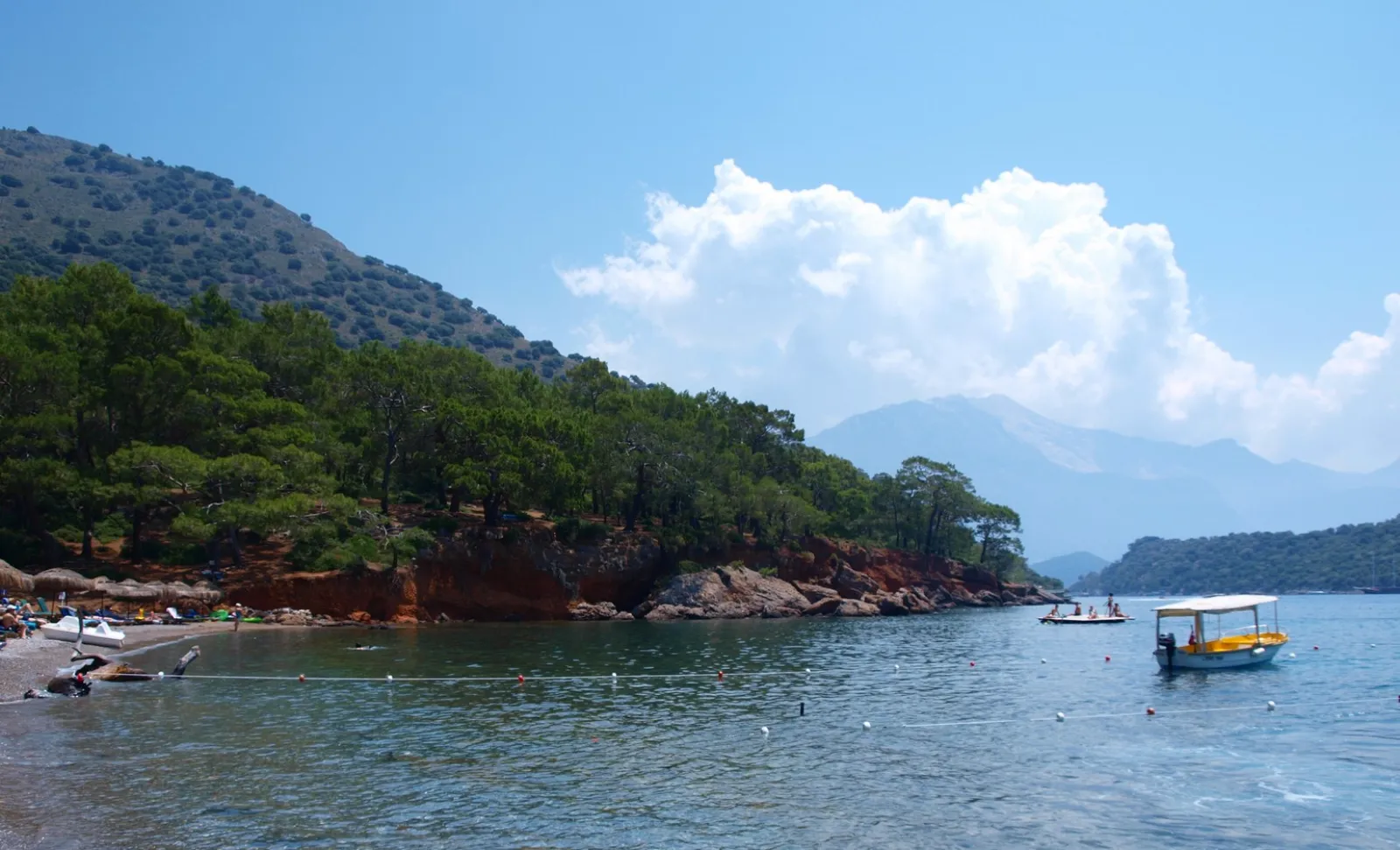
Day trips are less common as organized tours but easily arranged. A private boat or water taxi from the nearby mainland beach will drop you off and pick you up at an agreed time. This gives you flexibility to explore the island at your own pace without the schedule of a group tour.
Combined tours from Oludeniz or Fethiye may include Gemiler Island as part of a broader coastal trip that also visits Butterfly Valley, nearby coves, or other swimming spots.
Exploring the Island
Plan for 1 to 2 hours to explore the island thoroughly. The terrain is rocky and uneven — wear sturdy shoes rather than sandals. There is no shade on most of the island, so a hat and sunscreen are necessary, particularly in summer. Bring water — there are no facilities on the island.
The route from the landing point to the summit follows the ancient processional path, passing through sections of the covered walkway where the vaulted roof still partially stands. Along the way, you pass cisterns (the Byzantines collected rainwater in stone tanks), burial chambers cut into the rock, and the remains of domestic structures that suggest the island had a permanent population in addition to visiting pilgrims.
The summit offers views in every direction: the mainland coast with its pine-covered hills, the open Mediterranean to the west (where the sunset sits), and the neighboring islands and coves. On a clear day, you can see a long stretch of the Lycian coastline in both directions.
The island has no signage or interpretation panels — you benefit significantly from visiting with a guide who can explain what you are looking at and place the ruins in their historical and religious context. Without context, the ruins are atmospheric but opaque; with it, they tell the story of a pilgrimage site that may have shaped one of the world’s most recognized cultural traditions. When I guide travelers here, I always start at the harbor end of the covered walkway and climb slowly to Church III — the sequence the ancient pilgrims followed — so the summit arrival feels earned.
Practical Information
Getting there: Boats depart from the mainland shore opposite Gemiler Island (near Gemiler Beach), about 20km from Fethiye center. The crossing takes approximately 10 minutes. Sunset boat tours typically depart from Fethiye or Oludeniz. Private water taxis can also be arranged.
How much time: Allow 1.5 to 2 hours to explore the island ruins thoroughly. Sunset boat tours typically give 1 to 1.5 hours on the island before dinner on the boat. A half-day visit (including travel from Fethiye) is comfortable.
When to go: April through October for boat access. Late afternoon visits (4:00-6:00 PM) offer the best light for photography and avoid midday heat. Sunset boat trips combine island exploration with one of the best sunset positions on the coast. Spring (April-May) and autumn (September-October) have milder temperatures for walking the rocky terrain.
What to wear/bring: Sturdy shoes (not flip-flops — the terrain is rocky and uneven), hat, sunscreen, water, and a camera. There are no facilities, shops, or shade on the island.
Official resource: Turkish Ministry of Culture — Archaeological Sites
Combining with other visits: Gemiler Island pairs well with Kayakoy ghost village (15 minutes by car from the mainland launch point), Oludeniz Blue Lagoon (about 15km), and Butterfly Valley (accessible from Oludeniz). A full day could include Kayakoy in the morning and a sunset boat to Gemiler Island in the evening. For visitors adding a Lycian coast day, combine with Demre/Myra to follow the full St. Nicholas story.
Plan Your Fethiye Visit
Gemiler Island offers something different from the beaches and boat trips that define much of the Fethiye coast — it is a place where early Christian history sits on a rocky island in the Mediterranean, and where the Santa Claus story may have deeper roots than most people realize. If you want to include it in a Fethiye itinerary, we can help you plan it.