There is a reason Oludeniz appears on every list of Turkey’s best beaches and on most lists of the world’s best, too. It is not marketing. It is geography. A curved sand bar separates a shallow, warm lagoon from the open Mediterranean, creating a body of water that is simultaneously calm as a lake and the impossible shade of turquoise that you assume has been digitally enhanced until you see it in person. Behind the lagoon, pine-covered hills rise steeply toward Babadag mountain. In front, a wide pebble beach stretches along the open coast. The combination — sheltered lagoon, open sea, forested mountain — creates a setting that earns its reputation honestly.
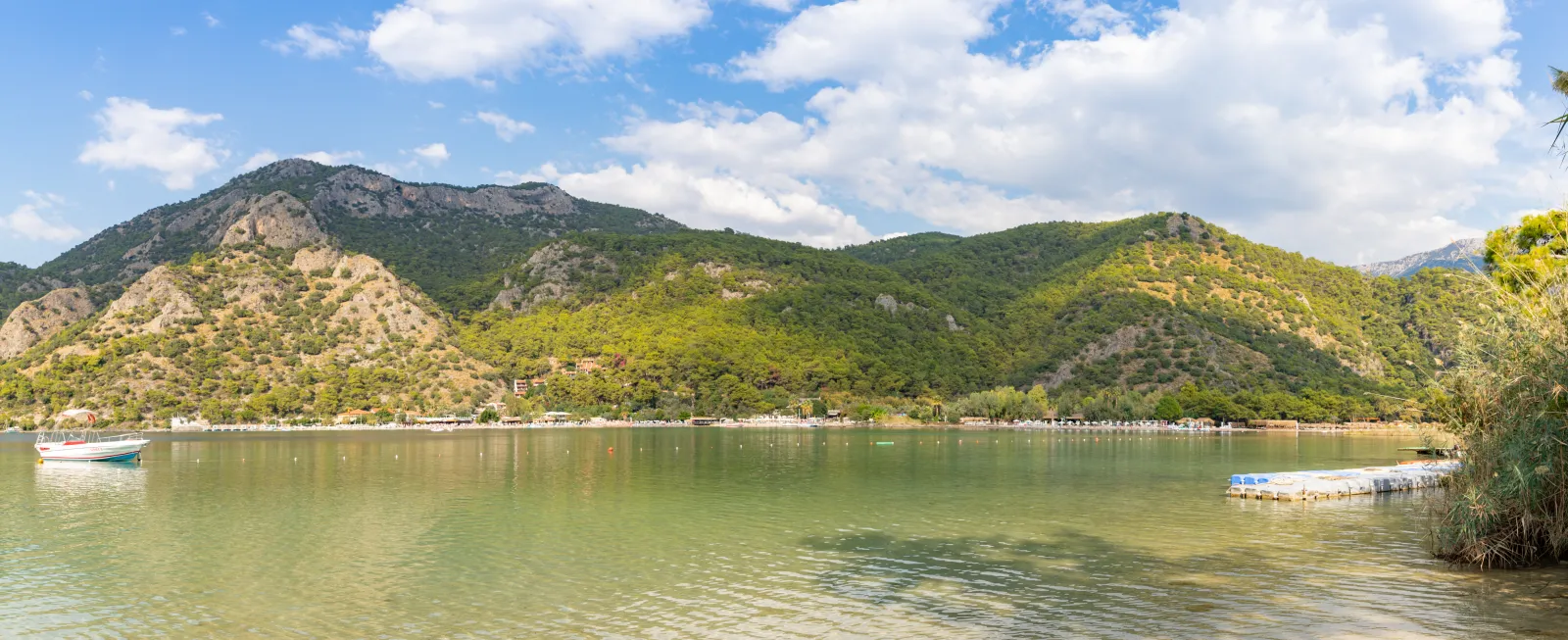
Oludeniz sits about 15 kilometers south of Fethiye on Turkey’s Lycian coast. The name translates literally as “dead sea” — not a reference to lifelessness, but to the lagoon’s calm, almost still water, sheltered from open sea currents by the natural sand bar. The protected lagoon and surrounding area form a national park (Oludeniz Tabiat Parki), which has kept development at arm’s length from the waterline and preserved the pine forest that frames the beach.
The Blue Lagoon
The lagoon itself is the heart of Oludeniz. It is shallow — waist-deep in many places — with a sandy bottom and water so clear that you can see every detail of the sand beneath you. The color shifts through the day as the sun angle changes: pale aquamarine in the morning, deep turquoise by midday, and a softer blue-green in the late afternoon. The water is warmer than the open sea because of its shallow depth and sheltered position, which makes swimming comfortable from May through October.
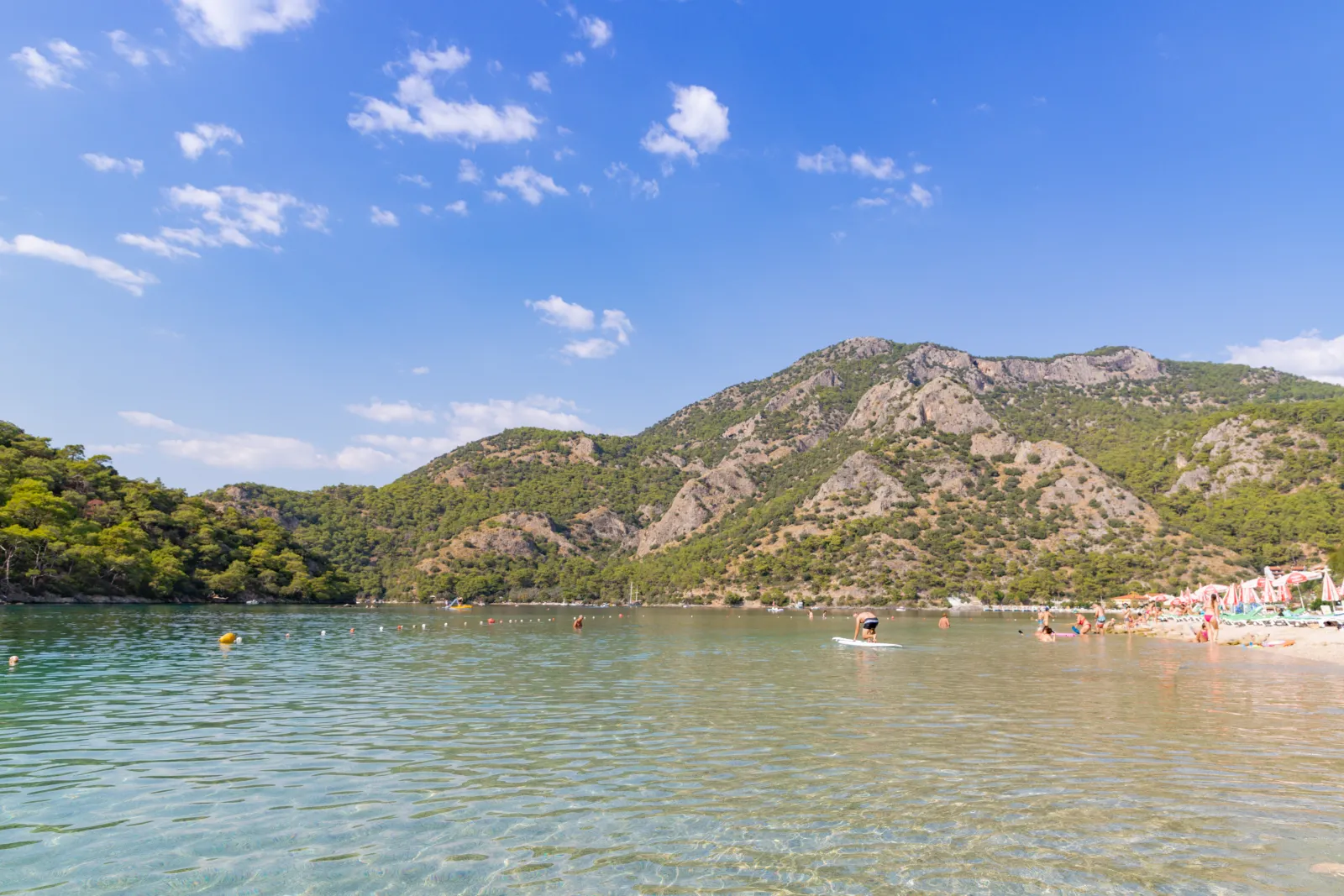
The lagoon is inside the national park, which means there is an entrance fee (approximately 200 TL as of 2025, payable at the gate). This fee serves a purpose — it limits the number of visitors at any one time and funds the maintenance that keeps the area clean and the forest intact. Once inside, you will find a pebble beach along the lagoon’s edge, changing facilities, and a few simple cafes. Sunbeds and umbrellas are available for rent. The atmosphere inside the park is noticeably quieter than the public beach outside — the entrance fee filters out casual foot traffic and keeps the density manageable.
Swimming in the lagoon is different from swimming in the open sea. The water is calm, there is no current to speak of, and the shallow depth makes it accessible for all swimming abilities. For those who want to explore, snorkeling around the edges of the lagoon where the sand meets rock reveals small fish and the underwater grasses that contribute to the water’s distinctive color.
The Open Beach
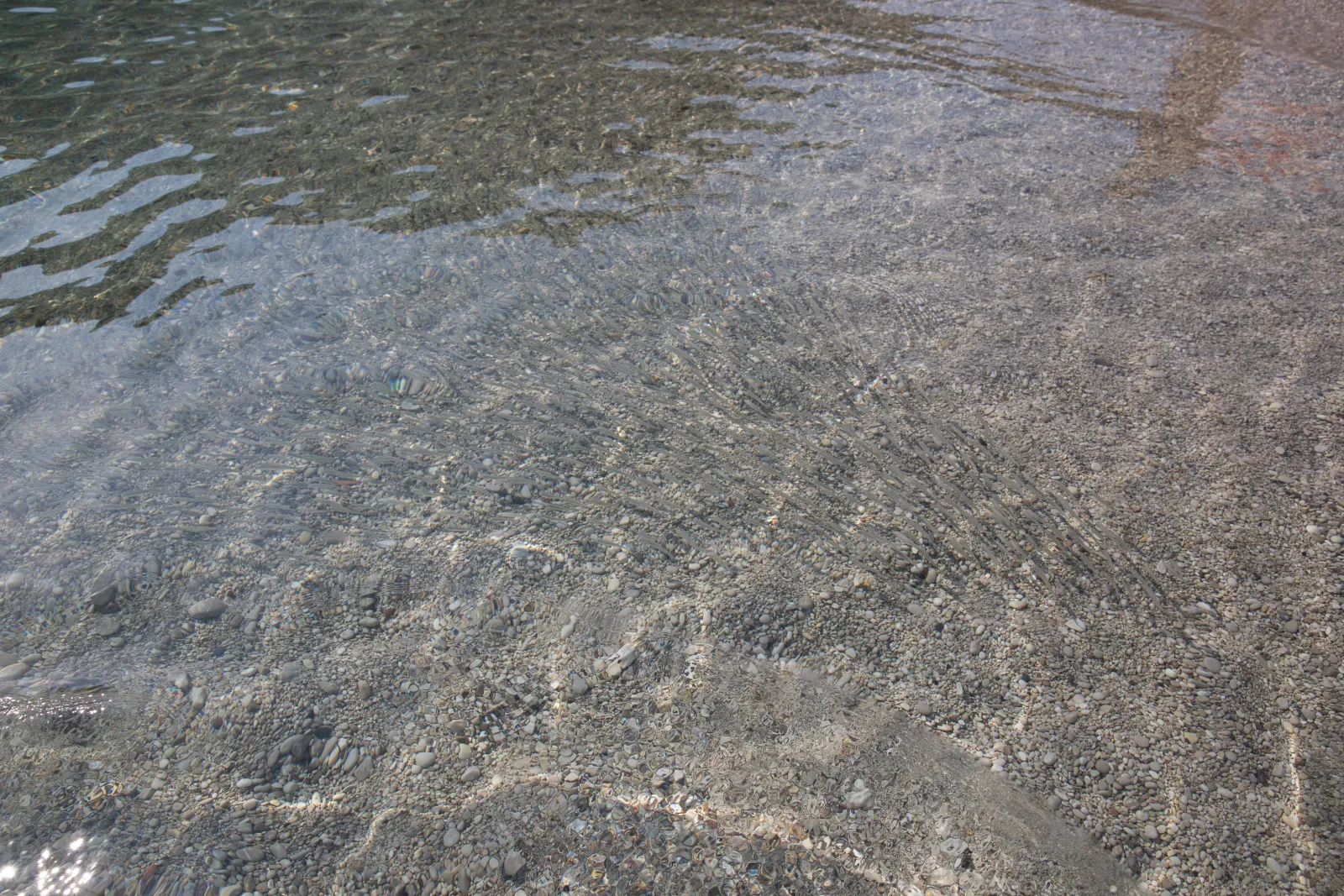
Outside the national park boundary, Oludeniz’s public beach runs along the open coast — a long stretch of pebble and coarse sand facing the Mediterranean. This beach has a different character: open water, gentle waves, and a row of restaurants and beach clubs along the shore. It is livelier and more social than the lagoon, and it is free to access.
The water along the open beach is deeper and cooler than the lagoon, with the deep blue of the open Mediterranean replacing the shallow turquoise. Swimming here feels more like ocean swimming — there is mild current and the occasional wave, though the bay’s orientation generally keeps conditions moderate.
For visitors who want both experiences, the lagoon and the open beach are a five-minute walk apart. You can spend the morning in the calm lagoon water, have lunch at one of the beachfront restaurants, and swim in the open sea in the afternoon — or the reverse, depending on your preference.
Paragliding from Babadag
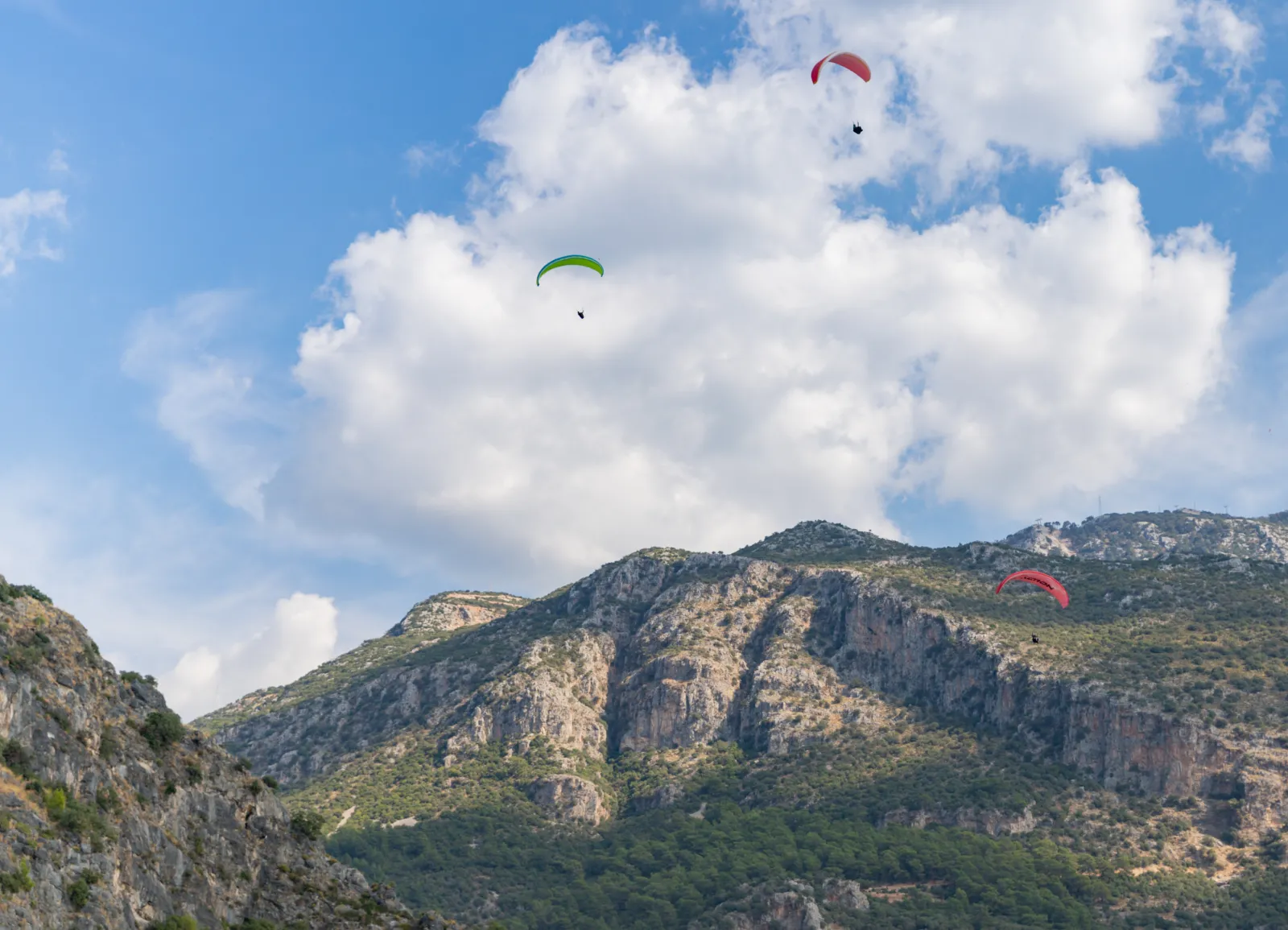
Oludeniz is one of the world’s most celebrated paragliding sites, and for straightforward reasons: Babadag mountain rises to 1,969 meters directly behind the beach, the prevailing thermals are reliable, and the landing zone is the beach itself. The combination of altitude, consistent conditions, and a visual descent route that takes you over turquoise water and pine forest has made this site a reference point for the global paragliding community.
Tandem paragliding flights — where you fly with an experienced pilot and no prior experience is needed — depart from one of three launch platforms on Babadag, depending on wind conditions. The standard flight from the mid-level launch (approximately 1,700 meters) lasts 25 to 35 minutes. The high launch extends the flight time. The ascent to the launch point is by minibus from Oludeniz, which takes about 30 to 40 minutes on a winding mountain road.
The flight itself follows a descending spiral over the lagoon and coastline. Pilots often catch thermals to extend the flight, and the views — the lagoon below, the Lycian coast stretching in both directions, the Taurus Mountains behind — are the kind that rewrite your sense of scale. You land on the pebble beach at Oludeniz, often to applause from the sunbathers who have been watching gliders descend all day. When I arrange paragliding for travelers, I always suggest the earliest morning launch — the air is calmer, the thermals are smoother, and the light on the lagoon below is softer than later in the day.
A few practical notes on paragliding: book with a licensed operator (your guide can arrange this), wear closed shoes and comfortable clothing, flights are weather-dependent and may be delayed or cancelled if conditions are not right, and the experience is suitable for most fitness levels — you run a few steps at launch and lift your legs for landing. The physical demand is minimal; the emotional impact is considerable.
The Pine Forest and Surroundings
The national park is not just beach — it includes the pine forest that backs the lagoon, with walking paths that climb through the trees and offer elevated views of the water below. A short walk (15 to 20 minutes uphill) brings you to viewpoints where the lagoon’s color gradient is visible in full — from pale sand at the edges through turquoise to deeper blue where the lagoon connects to the open sea. These viewpoints are where the famous aerial photographs of Oludeniz are taken, and the perspective is worth the climb, particularly in the softer light of late afternoon.
The Lycian Way — Turkey’s long-distance hiking trail that runs 540 kilometers along the coast from Fethiye to Antalya — passes through the hills above Oludeniz. Day walkers can join the trail from the village and hike sections that offer coastal views, forest shade, and the quiet that sits just above one of Turkey’s busiest beaches.
Practical Information
Getting there: Oludeniz is 15km south of Fethiye, about 20 minutes by car. Dalaman Airport is approximately 75km away (about 1 hour 15 minutes by transfer). Regular dolmus (shared minibus) service runs between Fethiye center and Oludeniz throughout the day.
How much time: Half a day is enough for swimming in the lagoon and the open beach. A full day allows you to add paragliding, forest walks, or a more leisurely pace. If you want both the lagoon and a paragliding flight, plan for a full day.
When to go: May through October for swimming. June and September offer warm water and fewer visitors than peak summer. July and August are the busiest months — the beach is crowded, particularly on weekends. Paragliding operates from April through November, weather permitting. Early morning and late afternoon have the best light for photography.
National park entrance: The Blue Lagoon area is inside the national park and requires a paid entrance. As of 2025, the fee is approximately 200 TL per person. The public beach outside the park is free.
Official resource: Turkish Ministry of Agriculture and Forestry — Nature Parks
Combining with other visits: Oludeniz is a natural starting point for Butterfly Valley (boat from Oludeniz beach), St. Nicholas Island / Gemiler Island (boat from nearby), and the Lycian Way hiking trail. Kayakoy ghost village is 8km from Oludeniz and makes a meaningful cultural side trip. For a longer Lycian coast day, pair with the 12 Islands boat tour from Fethiye harbor.
Plan Your Fethiye Visit
Oludeniz delivers on its reputation — the water really is that color, the paragliding really is that good, and the pine-backed lagoon really does look the way it does in photographs. If you would like us to include Oludeniz in a Fethiye-region itinerary that moves at your pace, tell us what matters to you.