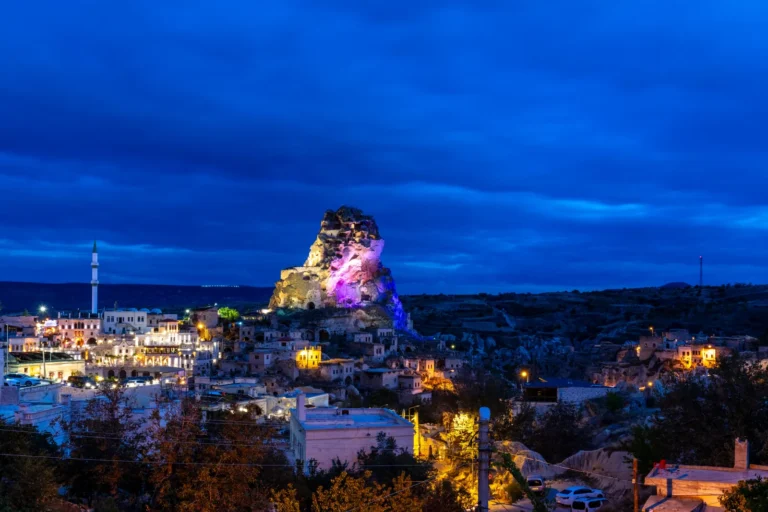
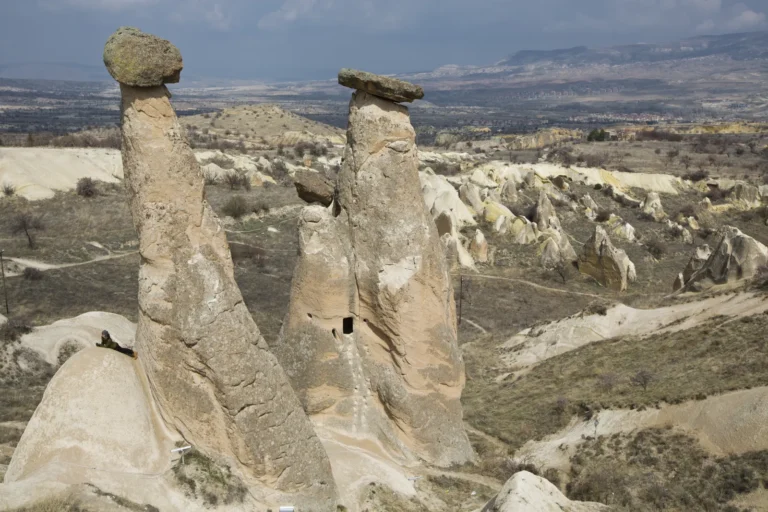
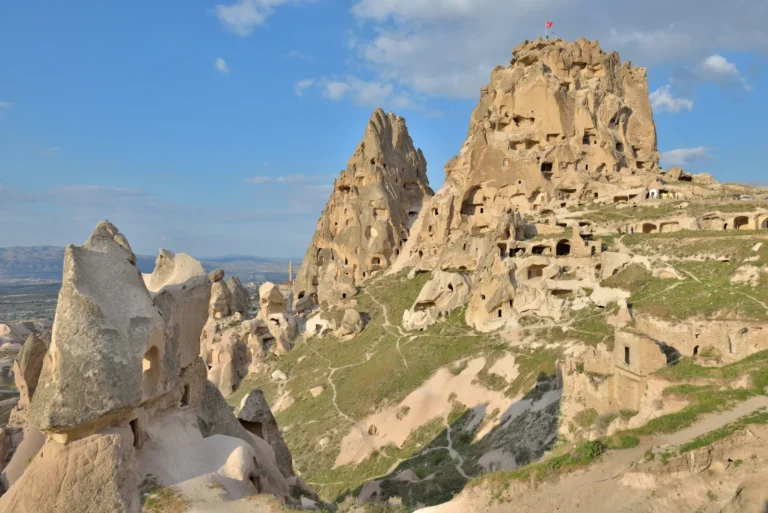
Paşabağ stands at the edge of a vineyard-lined road between Göreme and Avanos, and the first thing you notice is the scale. The fairy chimneys here are taller than elsewhere in Cappadocia — some reach fifteen meters or more — and their caps are proportionally larger, giving them the mushroom-like profile that has become the region’s visual signature. The formations are so clean in their geometry, so obviously the product of a specific geological process, that they look almost diagrammatic: a textbook illustration of differential erosion rendered at landscape scale.
The valley’s other name, Monks Valley, comes from the hermit cells carved into several of the chimneys by Byzantine monks — Saint Simeon’s chapel, approximately fifteen meters up one of the multi-headed formations, is the most prominent. The monks chose these formations for the same reason they were attractive to anyone seeking isolation in Cappadocia: the chimneys are natural towers, accessible only by climbing, and a cell carved into the upper section is effectively unreachable without the occupant’s cooperation. Solitude was the point, and the geology provided it.
The Formations
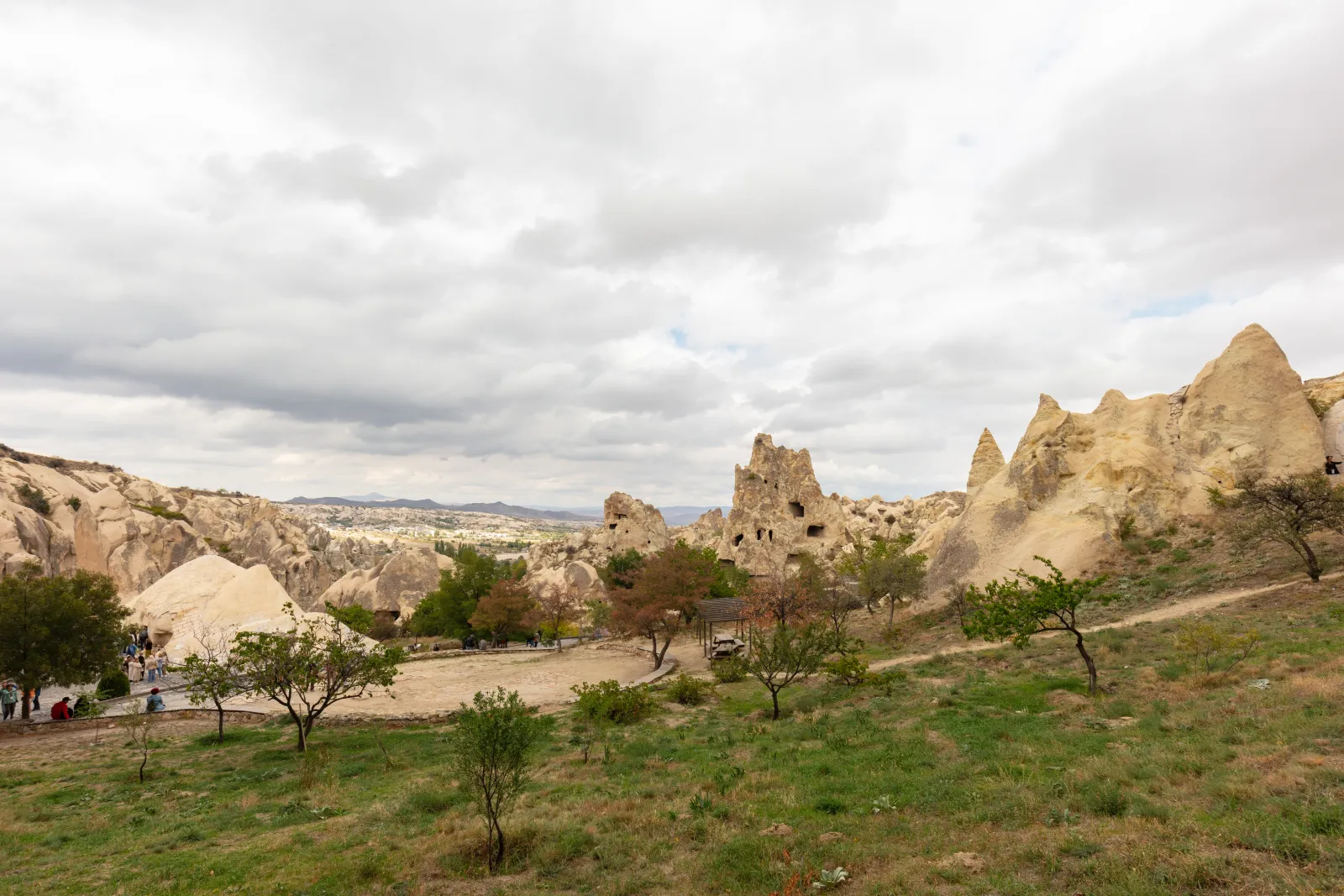
Paşabağ’s fairy chimneys are formed by the same process as those elsewhere in Cappadocia — hard basalt or andesite caps protecting columns of softer tuff from erosion — but the results here are unusually tall, unusually well-defined, and in several cases, multi-headed. A multi-headed chimney occurs when a single cap splits during erosion, leaving two or three separate caps on diverging columns that share a common base. The effect is surreal: a formation that looks like a candelabra, or a trident, or a cluster of mushrooms growing from the same root.
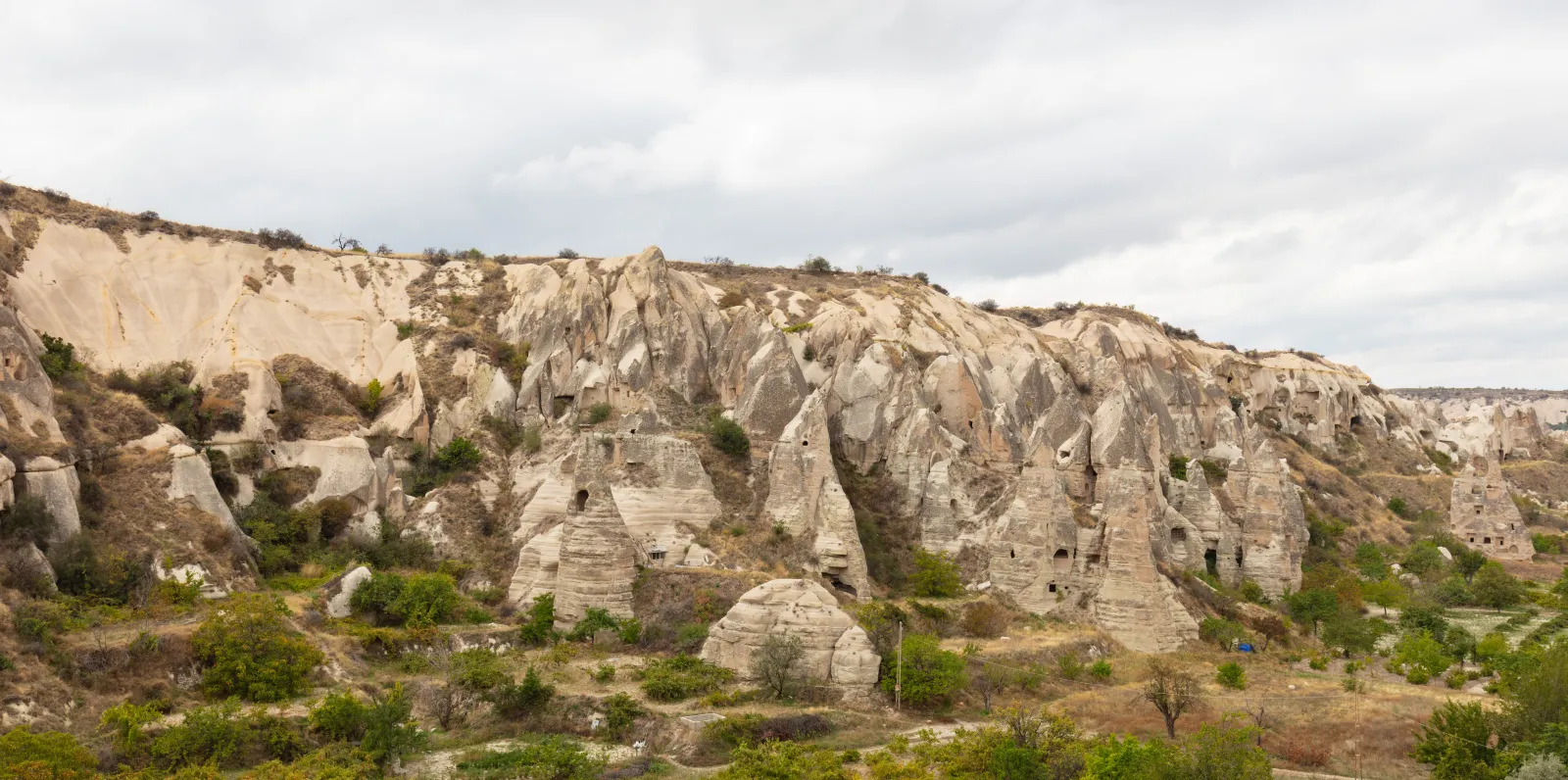
The tallest formations are concentrated along the main path through the valley. The rock color is cream and pale gold — lighter than the red and pink tones of the Red and Rose valleys — and the caps are distinctly darker, the contrast between cap and column sharper here than in most Cappadocian formations. The visual clarity is part of what makes Paşabağ effective as a first introduction to the landscape: the mechanism that created Cappadocia is visible here in its simplest, most legible form.
The vineyard that gives the valley its name — paşa’s vineyard — is still cultivated. The vines grow between the chimneys, and the grapes contribute to Cappadocia’s small but growing wine production. The juxtaposition of agriculture and geology is characteristic of the region: people have been farming between the formations for centuries, using the rock as windbreak, the caves as storage, and the tuff-enriched soil as planting ground.
The Hermit Cells
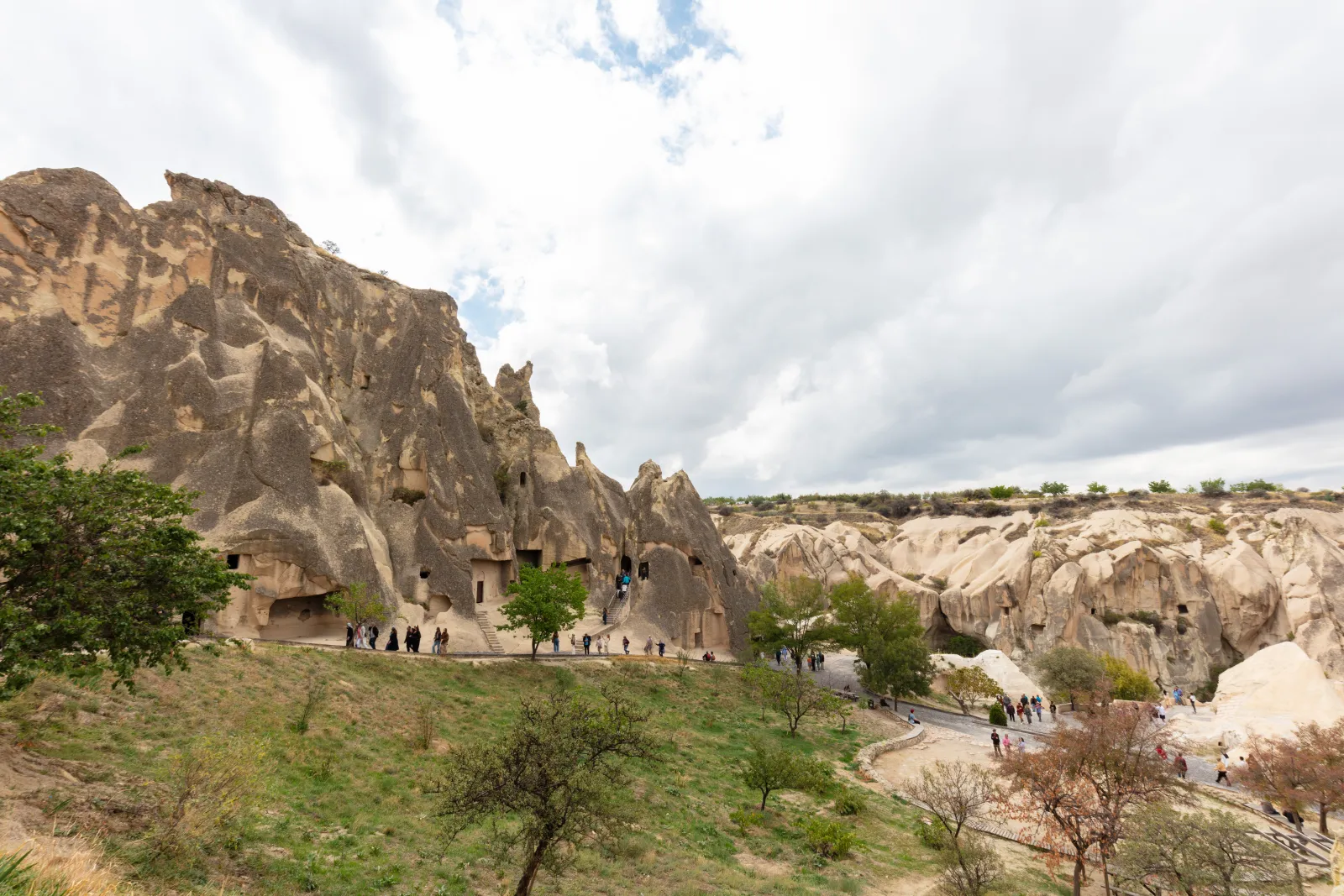
The monks who carved their cells into Paşabağ’s chimneys were part of the broader monastic community that populated Cappadocia from the fourth century onward. The region’s isolation, its defensible terrain, and the ease of carving tuff made it attractive to communities seeking withdrawal from the world — first individual hermits, then organized monasteries, eventually the complex of rock-cut churches preserved at the Göreme Open Air Museum.
At Paşabağ, the monastic presence is older and simpler. The most visible cell is attributed to Saint Simeon — not Simeon Stylites the Elder (the famous Syrian pillar-dweller), but a local follower who adopted a similar practice of elevated solitude. The cell is carved into the upper section of a multi-headed chimney, accessible originally by a combination of carved footholds and a retractable ladder. A small chapel space, with niches for a lamp and devotional objects, occupies the interior. The cell is not open to visitors — it is too high and the access is too eroded — but the opening is visible from the valley floor, and a guide can point out the details of its construction. When I bring travelers here, I always ask them to look up at the upper opening before reading anything — the surprise of finding a doorway fifteen meters above the ground is the best way to understand what the monks chose, and why.
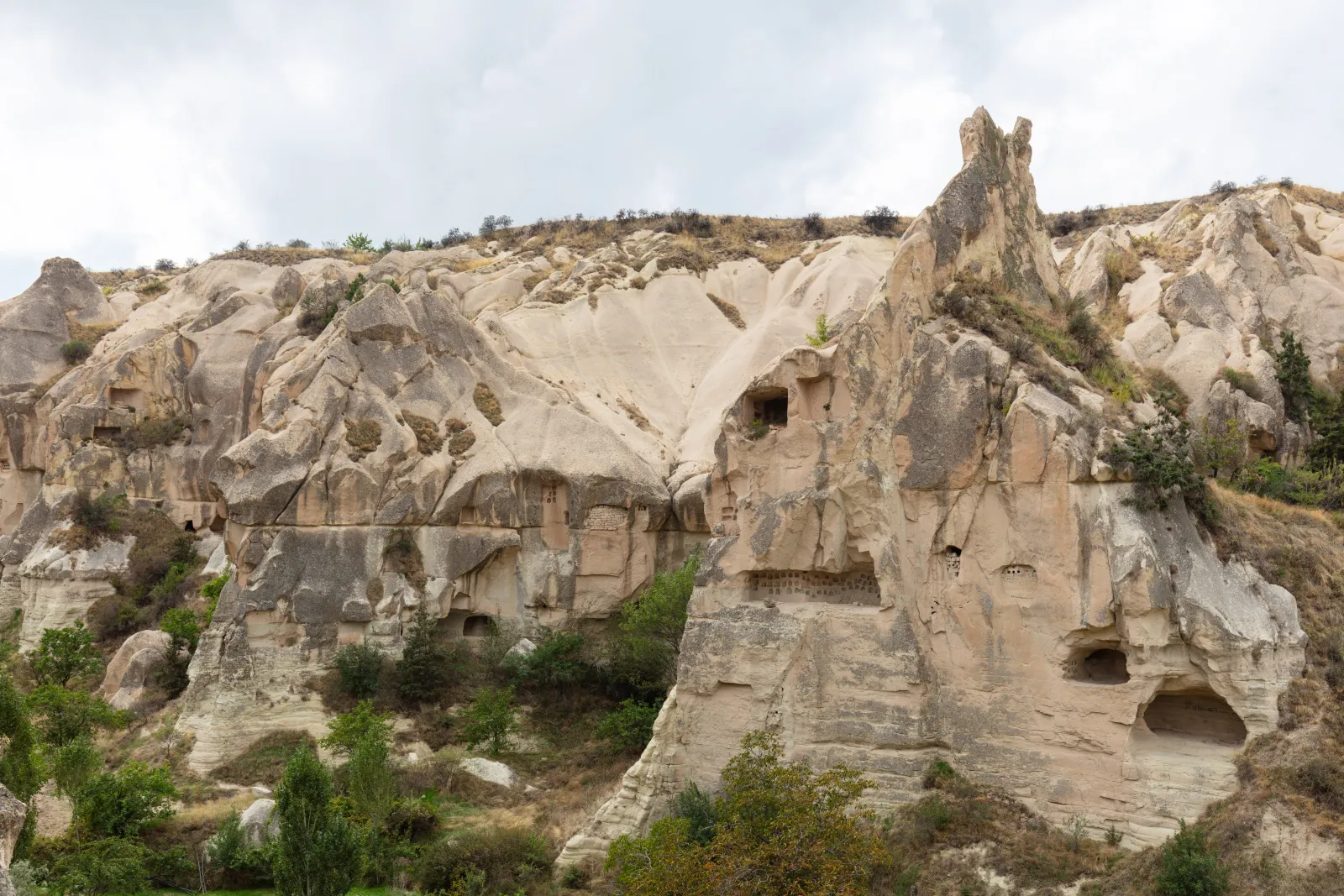
Other, smaller cells are scattered among the formations. Some are little more than niches — a single carved space large enough for one person to sit or sleep. Others show traces of more elaborate use: smoke blackening on ceilings, carved shelving, and the smoothed surfaces that come from repeated human contact over years. The monks lived simply, but they lived here for extended periods, and the rock records their presence.
Visiting
Paşabağ is on the North Cappadocia touring route, typically visited alongside Devrent Valley, Avanos, and the Göreme Open Air Museum. It is an open-air site — there is no enclosing structure, and the formations are distributed across a gentle slope beside the road.
Getting there: Paşabağ is on the Göreme-Avanos road, about five kilometers from Göreme. There is a large parking area and a cluster of souvenir shops and tea stalls at the entrance. Dolmuş buses between Göreme and Avanos pass the site.
How much time: Thirty minutes to an hour. The main path through the formation field is a loop of about 500 meters. If you explore the outer formations and take time with the hermit cells, an hour is comfortable.
Entry: There is a small entrance fee. The site is open during daylight hours.
When to go: Morning light (the site faces generally east) brings out the contrast between the dark caps and light columns. Late afternoon gives warm tones. Midday is flat but serviceable. The site is exposed — no shade — so summer visits benefit from earlier timing. When I plan a North Cappadocia route, I time Paşabağ for the first stop after breakfast — the light is at its best, and you still feel the cool before the day heats up.
Official resource: Göreme Historical National Park — UNESCO
Combining with other visits: Paşabağ is a natural pair with Devrent Valley (ten minutes by car) and Avanos (ten minutes further). The standard North Cappadocia route combines all three sites and works well as part of a two-day Cappadocia itinerary.
Plan Your Cappadocia Visit
Paşabağ is where Cappadocia’s geology is at its most legible — the fairy chimney process, the monks who exploited it, and the vineyard that grew between them, all in a single valley. If you would like to explore Cappadocia with a private guide who can read the formations and connect the geology to the human history, tell us what interests you and we will build the day around it.