If Istanbul has a center — not a geographic center but a gravitational one, a place where the most people, the most transit lines, the most history, and the most fish sandwiches converge — it is the stretch between Eminönü and Galata Bridge. This is where the Bosphorus ferries dock, where the Golden Horn begins, where the Spice Bazaar opens onto the waterfront, where fishermen stand shoulder to shoulder on a 490-meter bridge casting lines into the current below.
The fish they do not catch is grilled on bobbing boats and sold to the crowd in bread. It is loud. It is crowded. It smells of salt water and charcoal. It has been the functional center of Istanbul for longer than most European capitals have existed.
Eminönü is not a neighborhood in the residential sense — few people live here. It is a transit node and a market district, the place where the ferries, buses, trams, and foot traffic of a city of sixteen million people intersect with the waterfront. The name means “before the port,” and the area has served that function since Constantinople’s harbor was here. Today, ferry terminals line the shore: boats to Kadıköy, Üsküdar, the Princes’ Islands, up the Bosphorus, along the Golden Horn. The T1 tram runs along the shore road. Commuters, tourists, vendors, and seagulls share the pavement in roughly equal numbers.
The Galata Bridge connects this chaos to the Karaköy shore on the other side of the Golden Horn. It is not a long bridge — five minutes to walk across — but the crossing is dense with sensory information. Below you, fish restaurants with white tablecloths occupy the bridge’s lower deck. Above you, fishermen lean over the railing, their rods forming a fence of lines and hooks. The Sultanahmet skyline is to your right — the domes of Hagia Sophia, the minarets of the Blue Mosque, the mass of Süleymaniye on the ridge. The Galata Tower is ahead, on the hill. The water below is the Golden Horn, and it moves.
The Bridge
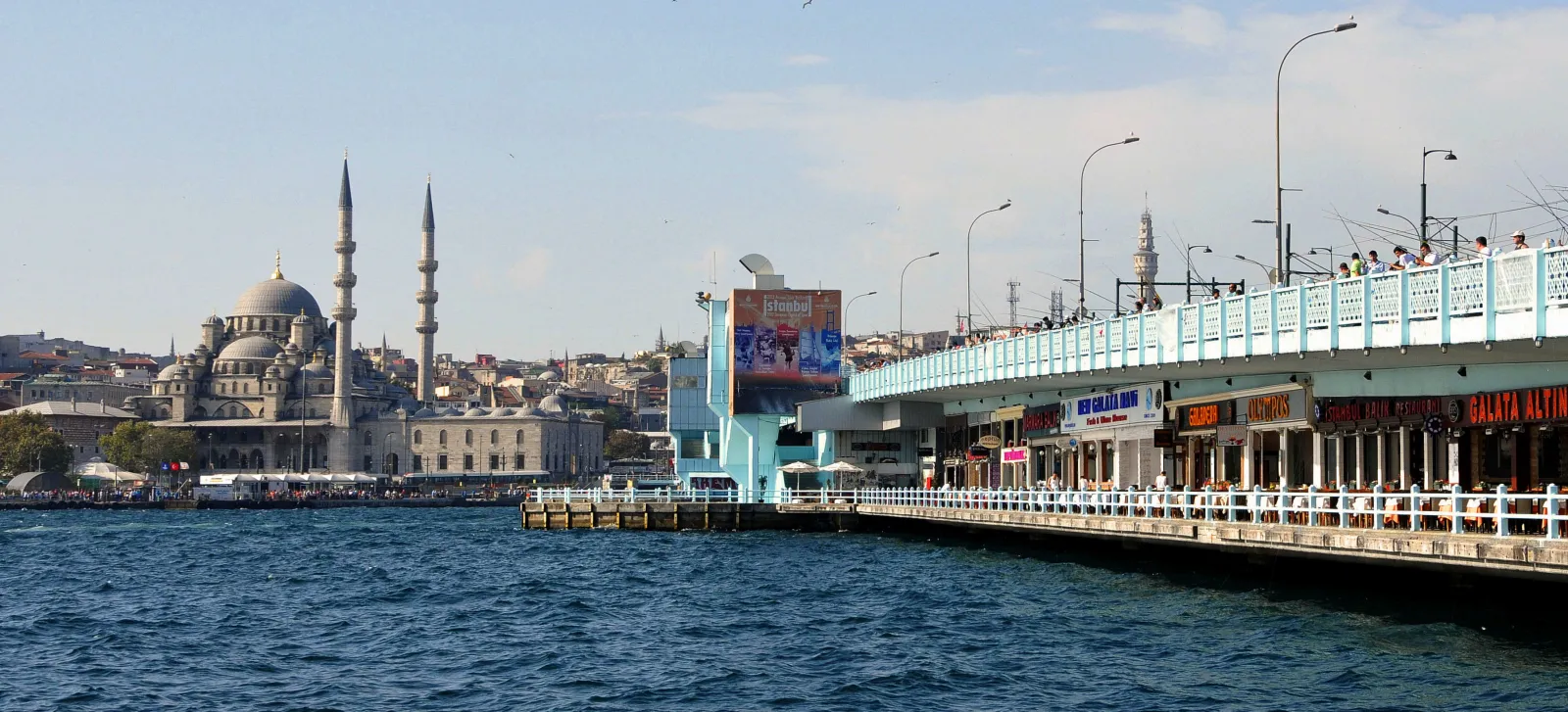
The current Galata Bridge is the fifth at this location. The first was a wooden pontoon bridge built in 1845. The most famous predecessor — the fourth bridge, a steel pontoon structure from 1912 — caught fire in 1992 during its relocation and was replaced by the current fixed bridge, completed in 1994. The present structure is 490 meters long, 42 meters wide, and carries vehicular traffic, the T1 tram, pedestrians, and fishermen simultaneously.
The fishermen are the bridge’s signature. They are there at dawn, at noon, at midnight — amateurs and regulars, retirees and workers, tourists who bought a rod from a vendor and locals who have been fishing from this spot for thirty years. The catch is modest: istavrit (horse mackerel), uskumru (mackerel), palamut (bonito) in season, and the occasional lüfer (bluefish) that draws a small crowd when landed. The fishing is social as much as practical. The men — they are overwhelmingly men — stand close together, swap bait, share opinions on the current, and watch the ferries pass below.
When I walk travelers across the bridge for the first time, I always stop halfway — the view in every direction tells a different chapter of Istanbul’s story. The lower deck of the bridge is lined with restaurants, their tables set beneath the roadway above, open to the water on both sides. The menus are similar — grilled fish, fried calamari, salads, beer — and the quality varies. The setting is the draw: you eat at water level, with the Golden Horn flowing past, boats docking at the piers nearby, and the sound of the tram overhead. It is not Istanbul’s best food, but it may be Istanbul’s most atmospheric dining room.
Eminönü Waterfront
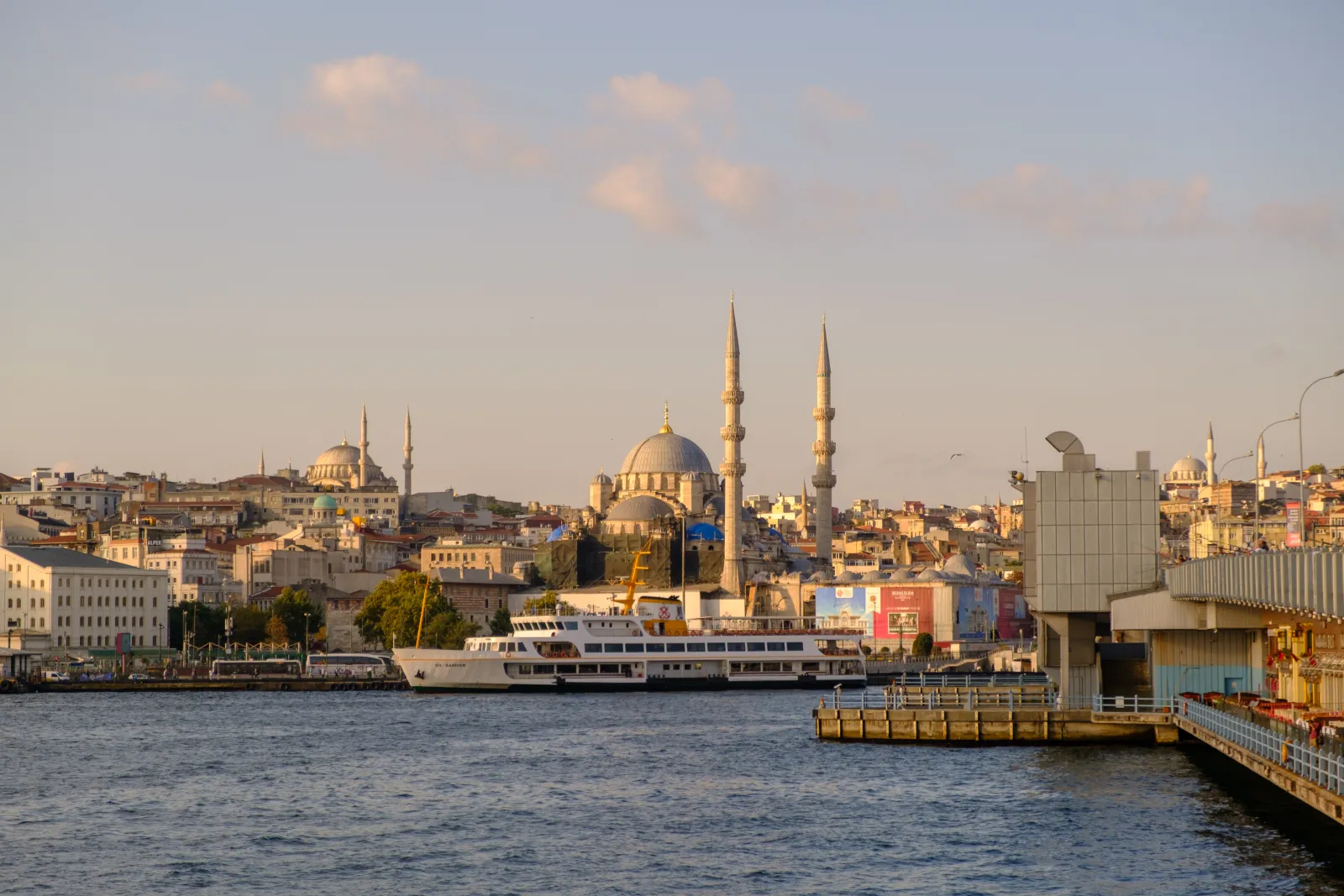
The southern end of the Galata Bridge deposits you into Eminönü, which is less a place than an event. The Yeni Cami — the New Mosque, completed in 1665, making it the youngest of the imperial mosques — sits directly at the bridge’s foot, its courtyard filled with pigeons and its forecourt filled with vendors selling birdseed, scarves, and corn on the cob. The mosque is worth entering: the interior is typical of late Ottoman imperial architecture, with Iznik-style tiles and a broad central dome, and the calm inside is a striking contrast to the volume outside.
Behind the mosque, the Spice Bazaar (Mısır Çarşısı, literally the Egyptian Bazaar) opens its L-shaped arcade of shops selling dried fruits, nuts, spices, Turkish delight, teas, and imported goods. The bazaar’s relationship to Eminönü is important: the bazaar is the market, and Eminönü is the waterfront where the goods arrived. The connection between port and market, which justified this location since the seventeenth century, is still physically legible.
The waterfront itself is a concrete promenade that runs along the Golden Horn and then curves east along the Bosphorus shore toward Sirkeci (the old Orient Express terminal) and Sultanahmet. The promenade is wide enough for the crowd but only just. Vendors sell roasted chestnuts in winter, fresh-squeezed orange and pomegranate juice year-round, and simit from glass-windowed carts at all times.
Balık Ekmek: The Fish Sandwich
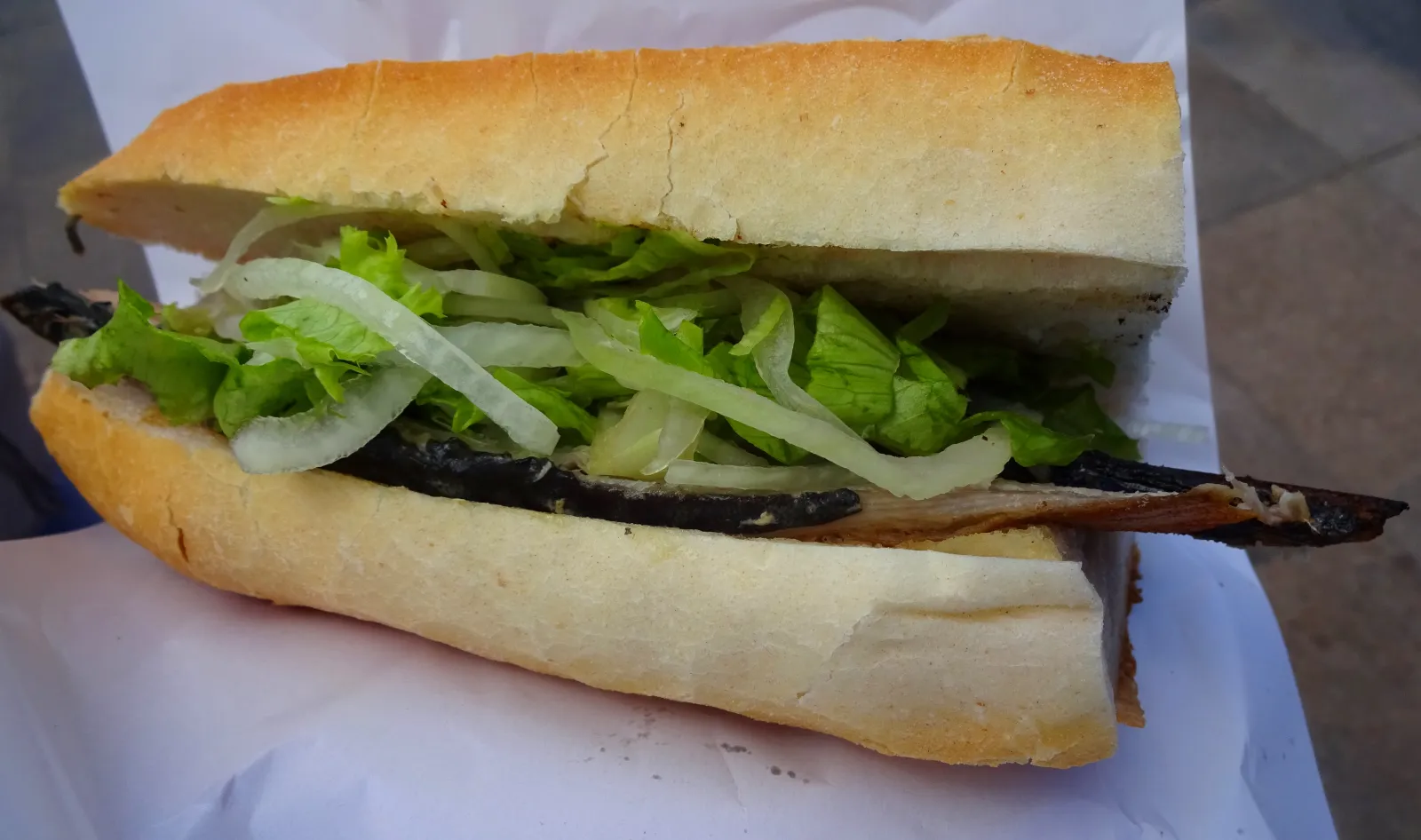
The balık ekmek boats at Eminönü are among Istanbul’s oldest and most persistent street food traditions. The setup is specific: painted wooden boats tied to the quay at the Galata Bridge end of the Eminönü waterfront, rocking in the wake of passing ferries, with cooks standing on deck over charcoal grills turning fillets of fish. The fish — typically grilled mackerel — is placed in half a loaf of bread with raw onion and lettuce. You take it to a nearby bench or lean against the railing and eat it looking at the water.
The boats have been here, in some form, for decades. The operation is informal — the boats rock, the cooks work in rhythm with the motion, the smoke drifts across the promenade. The sandwich costs a fraction of what the sit-down restaurants charge, and when I plan an Istanbul day with travelers, I always make sure we stop here — many locals consider it superior to the restaurants. The combination of charcoal-grilled fish, the bread that has absorbed a little of the smoke, the sharpness of the onion, and the setting — the water, the bridge, the seagulls circling — is more than the sum of its ingredients.
The fish sandwich boats are busiest at lunchtime but operate through the afternoon and into the evening. There is no seating: you eat standing, which is part of the experience.
Karaköy Side
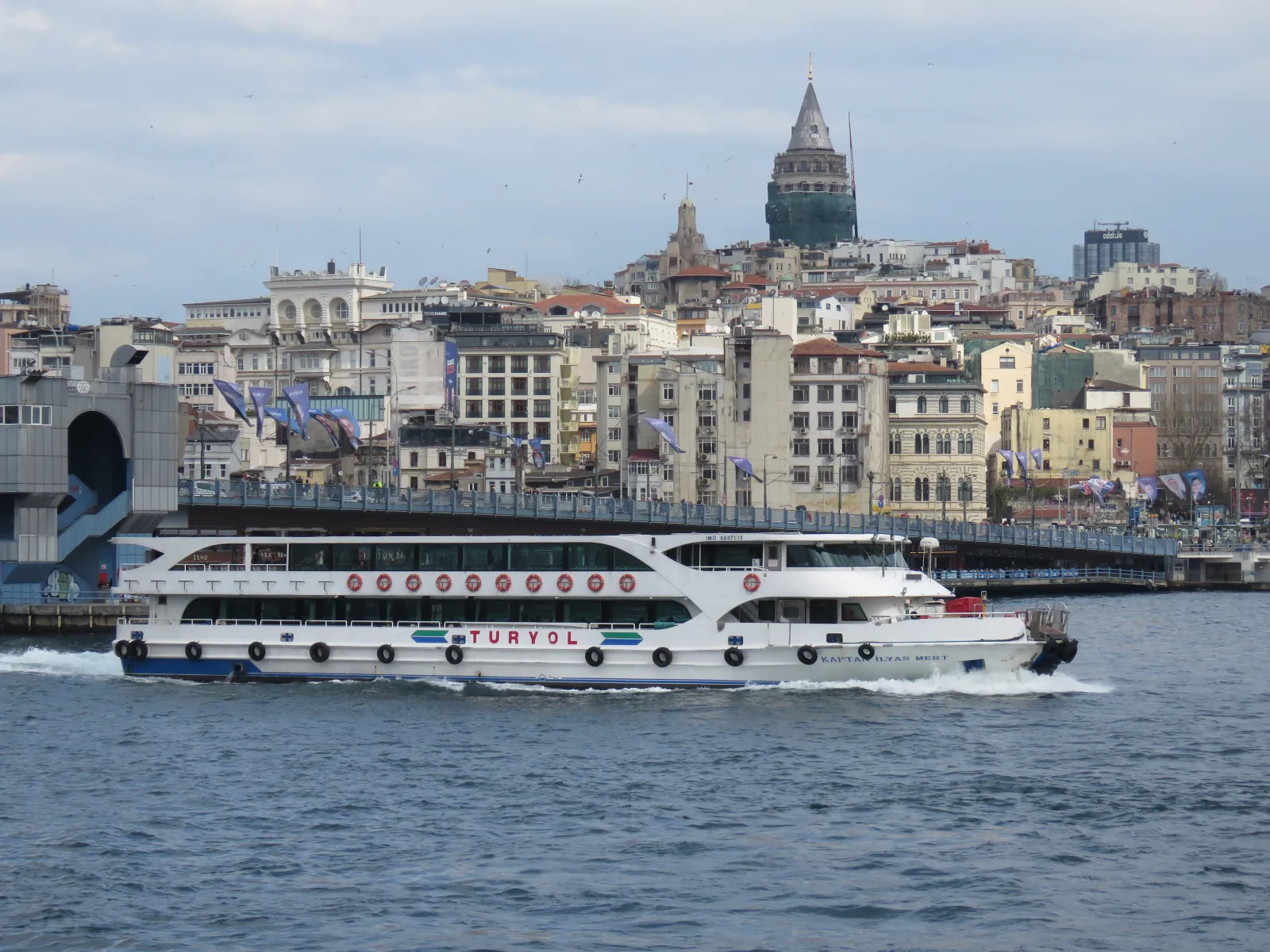
Cross the bridge and you are in Karaköy — the Galata waterfront. The character shifts immediately. Karaköy has been Istanbul’s port and trading district since the Genoese established their colony here in the thirteenth century. The Genoese watchtower on the hill above — the Galata Tower — is the most visible legacy of that period. The waterfront itself has been redeveloped in recent years: the old bonded warehouses and customs buildings have been converted into galleries, restaurants, and co-working spaces. The neighborhood mixes maritime history with a contemporary café culture that is younger and trendier than the tourist infrastructure on the other side of the bridge.
The Karaköy fish market — a small covered hall near the ferry terminal — is where the restaurants buy their stock. It is smaller and less theatrical than the Kadıköy fish market, but it is genuine, and the restaurants immediately adjacent serve whatever came off the boats that morning.
From Karaköy, you can walk uphill to the Galata Tower (a ten-minute climb through steep, narrow streets), continue along the waterfront to Tophane and Kabataş, or take the Tünel funicular — the world’s second-oldest subway, built in 1875 — up to the top of the hill and Istiklal Avenue.
Sirkeci: The Orient Express Terminal
Walk east from Eminönü along the shore road and you reach Sirkeci — the former terminus of the Orient Express. The station, built in 1890 in an eclectic Ottoman-European style with stained glass and arched windows, was the final stop of the Paris-Istanbul railway service that defined an era of grand travel. The trains no longer run (the last through service ended in 2009), but the building survives and has been converted into a railway museum and event space.
Sirkeci also has a concentration of small restaurants and lokanta-style eateries that serve the commuter and office crowd — lunch here is cheap, fast, and better than anything on the tourist-facing streets a few hundred meters uphill in Sultanahmet.
Practical Information
How to get there: The T1 tram stops at Eminönü (south side of the bridge) and Karaköy (north side). Ferries from Kadıköy, Üsküdar, and other Bosphorus stops dock at Eminönü. The Marmaray metro connects to Sirkeci station, a five-minute walk east.
How much time: The bridge crossing, the Eminönü waterfront, and a fish sandwich take about an hour. Adding the Spice Bazaar, the Yeni Cami interior, and a walk to Karaköy makes it two hours. Combining with the Galata Tower (uphill from Karaköy) or a Golden Horn ferry ride extends to a half-day.
When to go: The fishermen are present at all hours but most numerous in the late afternoon and evening. The Eminönü waterfront is most alive midday through sunset. Friday midday brings worshippers to the Yeni Cami, adding to the crowd. The lower-deck restaurants are most atmospheric in the evening, when the bridge is lit and the Sultanahmet skyline glows.
Combining with other visits: Eminönü is a natural pivot point. From here you can walk uphill to Sultanahmet (ten minutes), cross the bridge to Karaköy and climb to Galata Tower (twenty minutes), take a ferry to Kadıköy or Üsküdar (twenty minutes), ride the Golden Horn ferry to Eyüp (forty-five minutes), or enter the Spice Bazaar directly behind the Yeni Cami. Most Istanbul itineraries pass through Eminönü at least once — usually more.
Plan Your Istanbul Visit
Galata Bridge and Eminönü are not on the itinerary — they are the itinerary’s crossroads. Every path through Istanbul passes through this waterfront, and the density of experience per square meter is higher here than anywhere else in the city. If you would like to explore Istanbul with a private guide who knows when the light is right on the bridge, where the best fish sandwich is, and how to connect the waterfront to the history above it, tell us what interests you and we will build the day around it.
Frequently Asked Questions
What is the Galata Bridge in Istanbul?
The Galata Bridge spans the mouth of the Golden Horn inlet in Istanbul, connecting the Eminönü district on the historic peninsula to Karaköy and the Galata neighborhood. The current bridge, the fifth at this location, was completed in 1994. It is 490 meters long and is known for the fishermen who line its railings and the fish restaurants on its lower deck. Walking across the bridge offers one of Istanbul’s most panoramic experiences.
What are the fish sandwich boats at Eminönü?
The balık ekmek (fish sandwich) boats are painted wooden vessels moored at the Eminönü waterfront near the Galata Bridge. Cooks grill fish — typically mackerel — over charcoal on the rocking decks and serve it in bread with onion and lettuce. It is one of Istanbul’s oldest and most popular street food traditions.
Is Eminönü a good area to visit in Istanbul?
Eminönü is less a neighborhood than a transit and market hub — it is where the Bosphorus ferries dock, the Spice Bazaar opens to the waterfront, the Galata Bridge crosses the Golden Horn, and the tram connects to Sultanahmet. It is one of the busiest and most atmospheric areas in the city. Most visitors pass through Eminönü at least once, and it rewards time spent on foot along the waterfront.
What is the best time to walk across the Galata Bridge?
Late afternoon through sunset gives you the best light on the Sultanahmet skyline and the most fishermen on the railing. Midday is busiest with commuter and tourist traffic. Evening is atmospheric — the bridge is lit, the restaurants on the lower deck fill up, and the Sultanahmet mosques are illuminated across the water. Early morning is quiet and excellent for photography.
Where is the Spice Bazaar in Istanbul?
The Spice Bazaar (Mısır Çarşısı) is directly behind the Yeni Cami (New Mosque) at Eminönü, at the southern end of the Galata Bridge. The L-shaped covered market sells spices, Turkish delight, dried fruits, teas, and more. It is smaller and more manageable than the Grand Bazaar and dates to the 1660s.
What can you see from the Galata Bridge?
From the bridge, you see the Sultanahmet skyline to the east — Hagia Sophia, the Blue Mosque, and Süleymaniye Mosque on the ridge. The Galata Tower rises on the hill to the north. The Golden Horn stretches inland to the west. Ferries, fishing boats, and the occasional container ship pass below. The fishermen on the railing, the seagulls overhead, and the fish restaurants on the lower deck complete the scene.