Five columns and an architrave fragment. That is what remains standing of the Temple of Apollo in Side, on a stone platform at the very edge of the Mediterranean. It is not a large ruin. It is not a complete building. But those five white marble columns against the sea at sunset have become the single most recognized image of the Turkish Riviera — and when you stand in front of them, you understand why. The columns catch the last light while the sea behind them darkens, and for a few minutes the geometry of second-century Roman architecture and the Mediterranean horizon compose themselves into something that feels both ancient and immediate.
Side (pronounced “see-deh”) was one of the most important harbor cities of ancient Pamphylia. Founded, according to tradition, by Greek colonists from Cyme in the seventh century BC, it grew wealthy on trade and, at various points in its history, on piracy. The city reached its architectural peak under Roman rule in the second century AD, when most of the buildings you see today were constructed. The Temple of Apollo dates to this period — approximately 150 AD — and was dedicated to Apollo, the god of light, music, and prophecy, who was one of Side’s principal deities.
The Temple
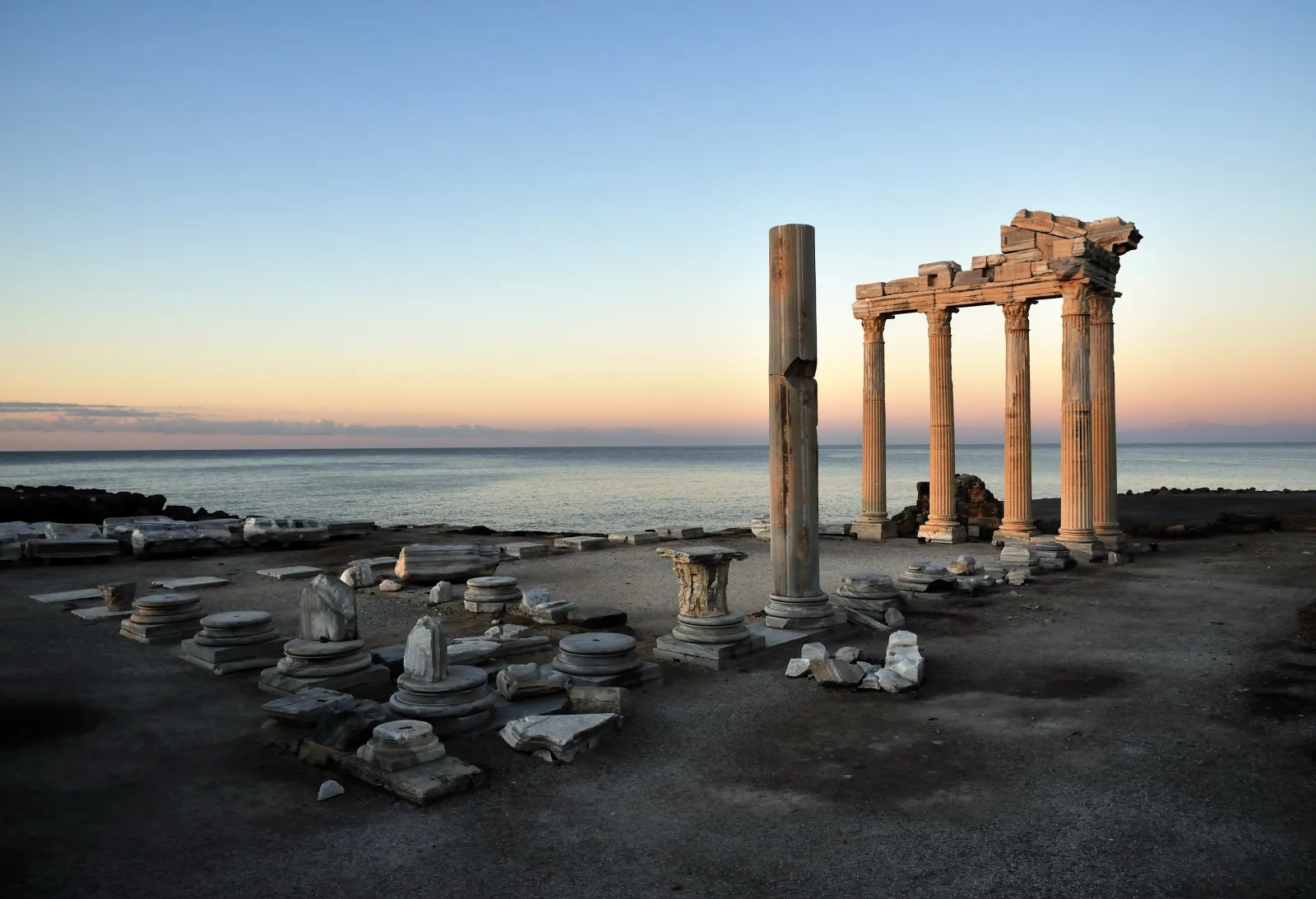
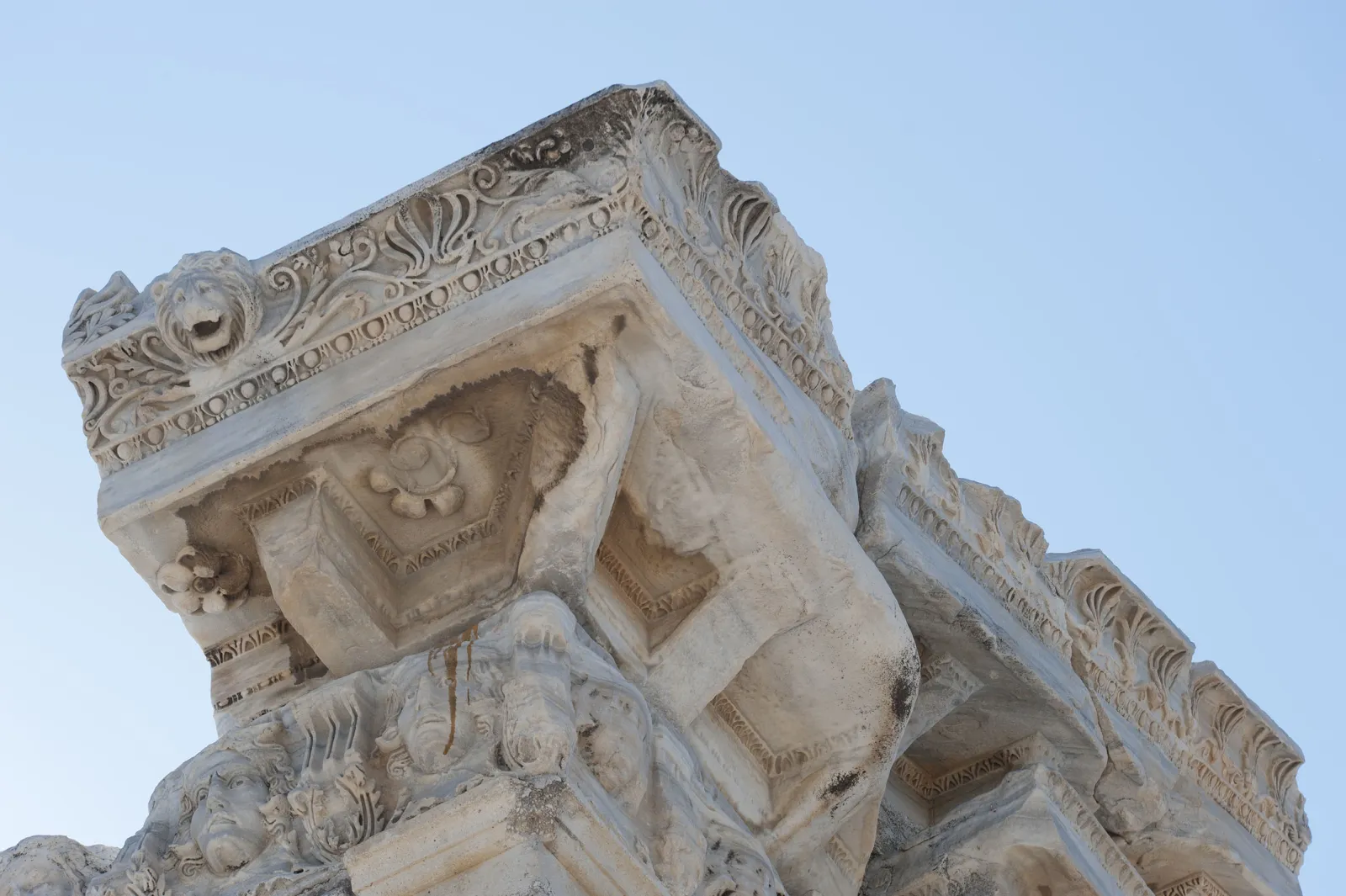
The Temple of Apollo was a peripteros — a building surrounded by a colonnade on all sides. It stood on a raised platform (podium) measuring roughly 17 by 30 meters. The columns were Corinthian order, with elaborately carved capitals featuring acanthus leaf decoration. Originally there were perhaps 30 to 34 columns supporting a complete roof and pediment. Today, five columns on the southeastern corner have been re-erected during restoration, along with a section of the architrave (the horizontal beam spanning the column tops).
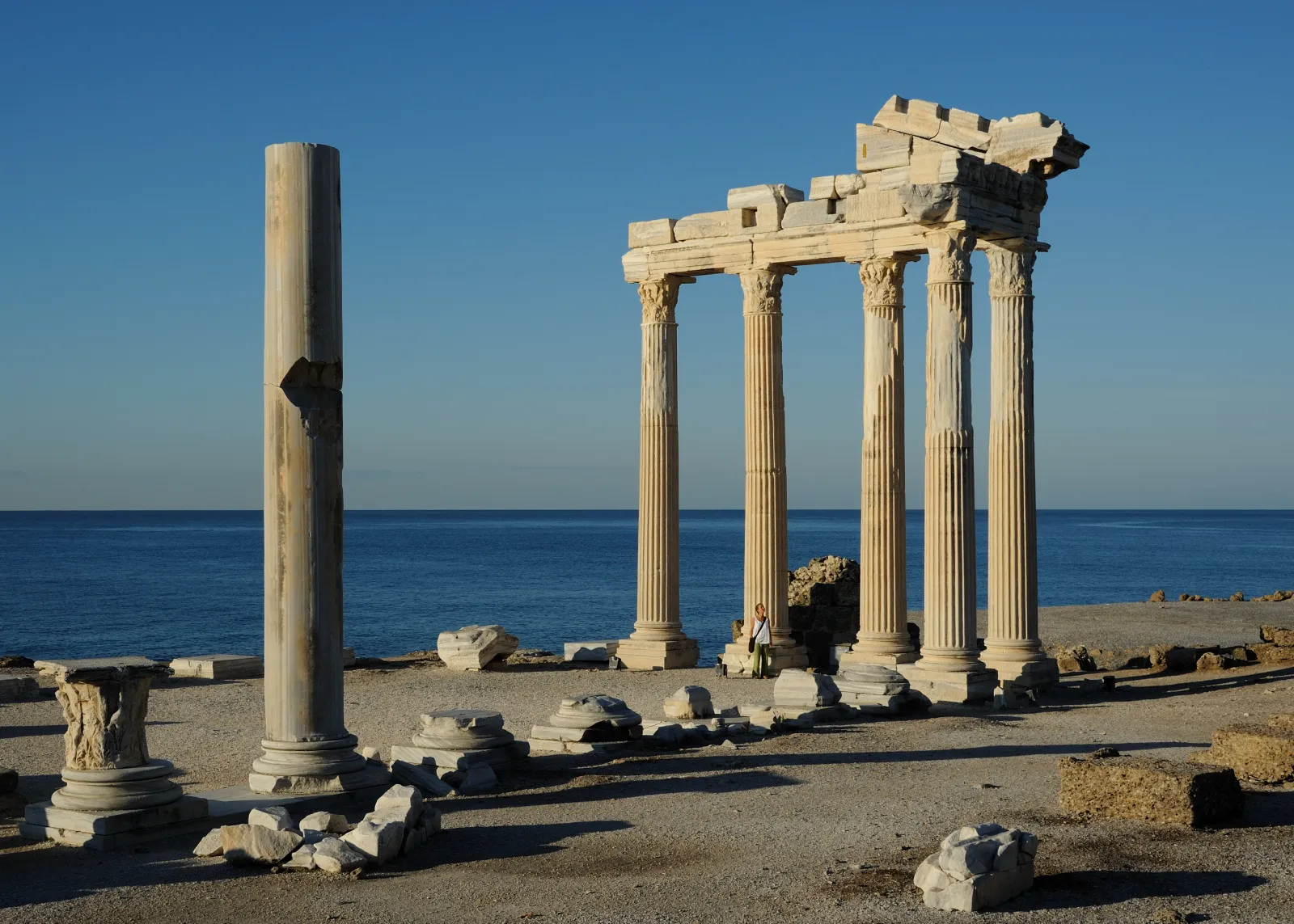
Beside the Temple of Apollo stood a companion temple dedicated to Athena, of similar date and design. The foundations of both are visible, and a few fragments of the Athena temple have been partially restored. The two temples sat side by side on the promontory, overlooking the harbor — a deliberate placement that made them visible to ships approaching the port.
The restoration of the five columns is relatively recent (the work was done in the 1980s using original fragments). Before the restoration, the site was a field of scattered column drums and carved blocks. The decision to re-erect even a small section has given visitors a sense of the temple’s original scale and proportion that a flat ruin field could not communicate.
The Ancient City
The Temple of Apollo is the most famous element of Side, but the ancient city extends well beyond it. Side occupies a peninsula — a narrow strip of land projecting into the sea — and the ruins are woven into the fabric of the modern village that grew up among them. Walking through Side, you pass Roman walls incorporated into restaurant terraces, column fragments in hotel gardens, and ancient stone repurposed in Ottoman-era houses.
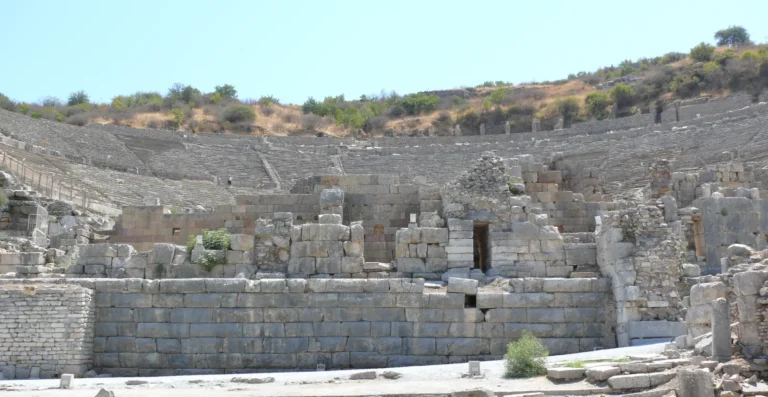
The Theater: Side’s theater is the largest in Pamphylia, with a capacity of approximately 15,000 spectators. Unlike the hillside theaters at Aspendos and Ephesus, Side’s theater was built on flat ground, supported by a massive substructure of arches and vaults. This engineering decision — necessary because the peninsula has no natural hillside to carve into — makes the theater architecturally distinctive. The seating rises on top of the vaulted structure, giving the building an imposing exterior wall that is visible from a distance. The theater has been partially restored and is used for occasional events.
The Agora: Adjacent to the theater, the agora (marketplace) was a large colonnaded square that served as Side’s commercial and social center. The ruins of the surrounding shops and a round structure (possibly a temple to Tyche, the goddess of fortune) are visible. The agora also functioned as a slave market in antiquity — Side was a major center of the Mediterranean slave trade during the Hellenistic period.
The Harbor: Side had two harbors, one on each side of the peninsula. The eastern harbor, near the Temple of Apollo, was the main commercial port. It has silted up over the centuries and is now much smaller than its ancient footprint, but it still shelters small boats and provides the waterfront setting for the temple.
The Monumental Gate and Colonnaded Street: The entrance to the ancient city from the landward side passes through a monumental gate, beyond which a colonnaded street leads toward the center. The street is lined with the remains of shops and public buildings, and sections of the column-lined walkway have been restored.
Sunset at the Temple
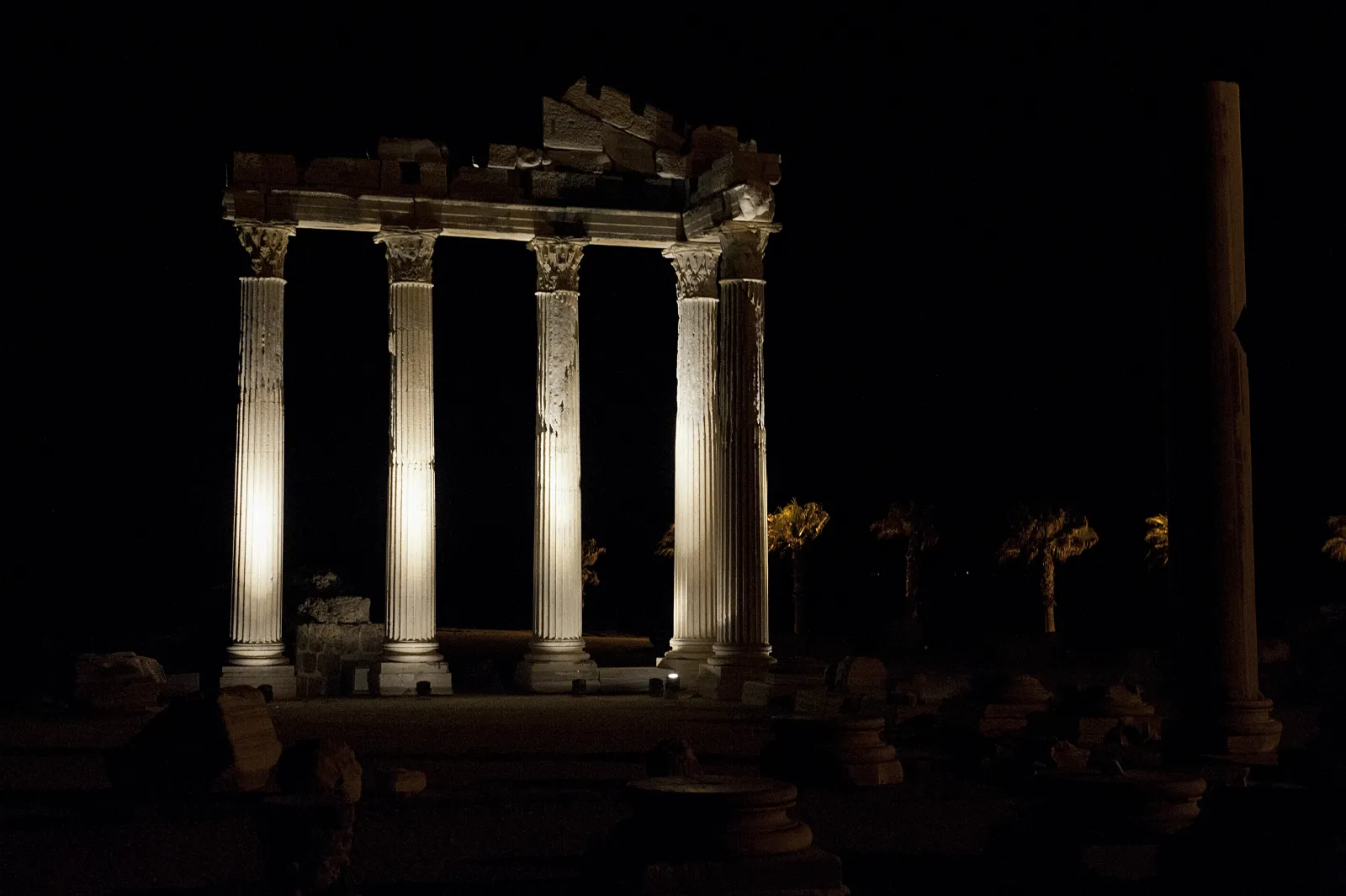
The Temple of Apollo at sunset has become one of Turkey’s most photographed scenes, and the crowd that gathers on the promontory in the hour before sunset reflects this. In high season (June through September), expect company — the area around the temple fills with visitors, photographers, and couples. The atmosphere is social rather than contemplative.
For a quieter experience, consider visiting early in the morning. The morning light from the east illuminates the columns differently — warmer, more direct — and you may have the site largely to yourself. The sunset is iconic, but the temple is worth seeing in any light. When I bring travelers who care about the photograph, I suggest arriving around an hour before sunset and walking the theater first — by the time you return to the temple, the crowd has settled into the best spots and the light has begun to turn.
The Side Museum
The small but well-curated Side Museum occupies a restored fifth-century Roman bathhouse near the agora. The collection includes sculpture, sarcophagi, reliefs, and inscriptions found at Side. The building itself — with its vaulted ceilings, brick walls, and the remains of the heating system visible — is as interesting as the collection it houses. If the Antalya Museum is the region’s major collection, the Side Museum is an intimate complement that keeps the artifacts in their home city.
Practical Information
Getting there: Side is approximately 75km east of Antalya — about 1 hour and 15 minutes by car. The ancient ruins are in the village of Side (Manavgat district). Cars are restricted from the village center; you park at the edge and walk in (about 10 minutes to the temple). Dolmuş (minibus) service runs from Manavgat, which is connected to Antalya by bus.
How much time: Allow 2 to 3 hours to see the Temple of Apollo, the theater, the agora, the museum, and to walk the colonnaded street. If you plan to stay for sunset, factor in the timing — summer sunsets are around 8:00-8:30 PM, winter sunsets around 5:00-5:30 PM.
When to go: Early morning for quiet and good light. Late afternoon through sunset for the iconic temple-and-sea photograph, though expect crowds in high season. Spring and autumn are the most comfortable seasons — summer midday temperatures in Side regularly exceed 35°C.
Official resource: Antalya Museum — Ministry of Culture
Combining with other visits: Side combines well with Aspendos (30 minutes west) and the Manavgat Waterfall (15 minutes north). A full day from Antalya might include Aspendos, Side, and a late lunch in the Side waterfront before the drive back. For travelers who want a day more centered in Antalya, pair Side with Perge or Kaleiçi instead.
Plan Your Antalya Visit
Side is a place where Roman architecture and the Mediterranean meet at the water’s edge. The temple, the theater, and the harbor tell a story of a city that lived by the sea for a thousand years. If you would like to visit with a private guide who knows the history behind the columns, tell us what interests you and we will plan the day accordingly.