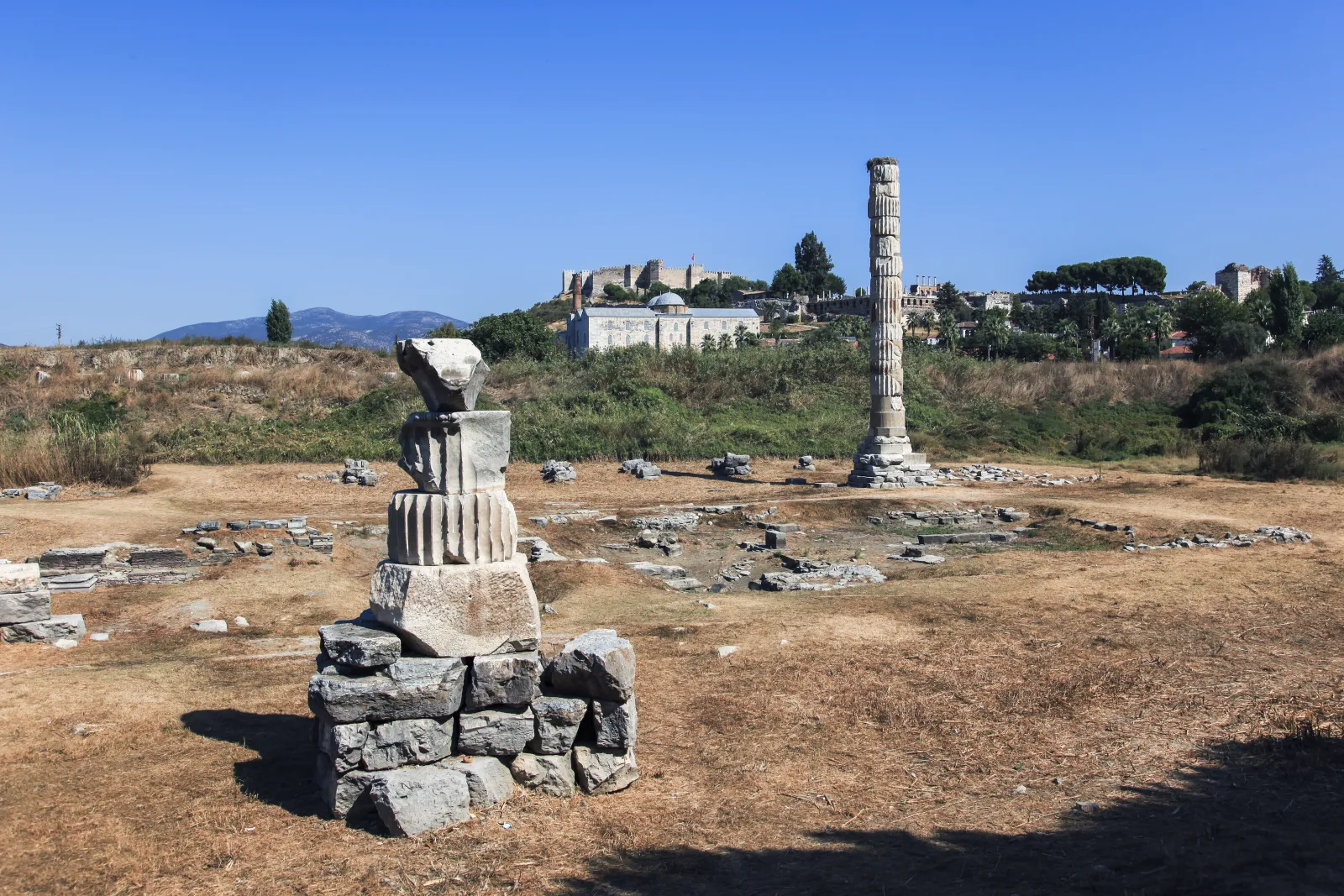
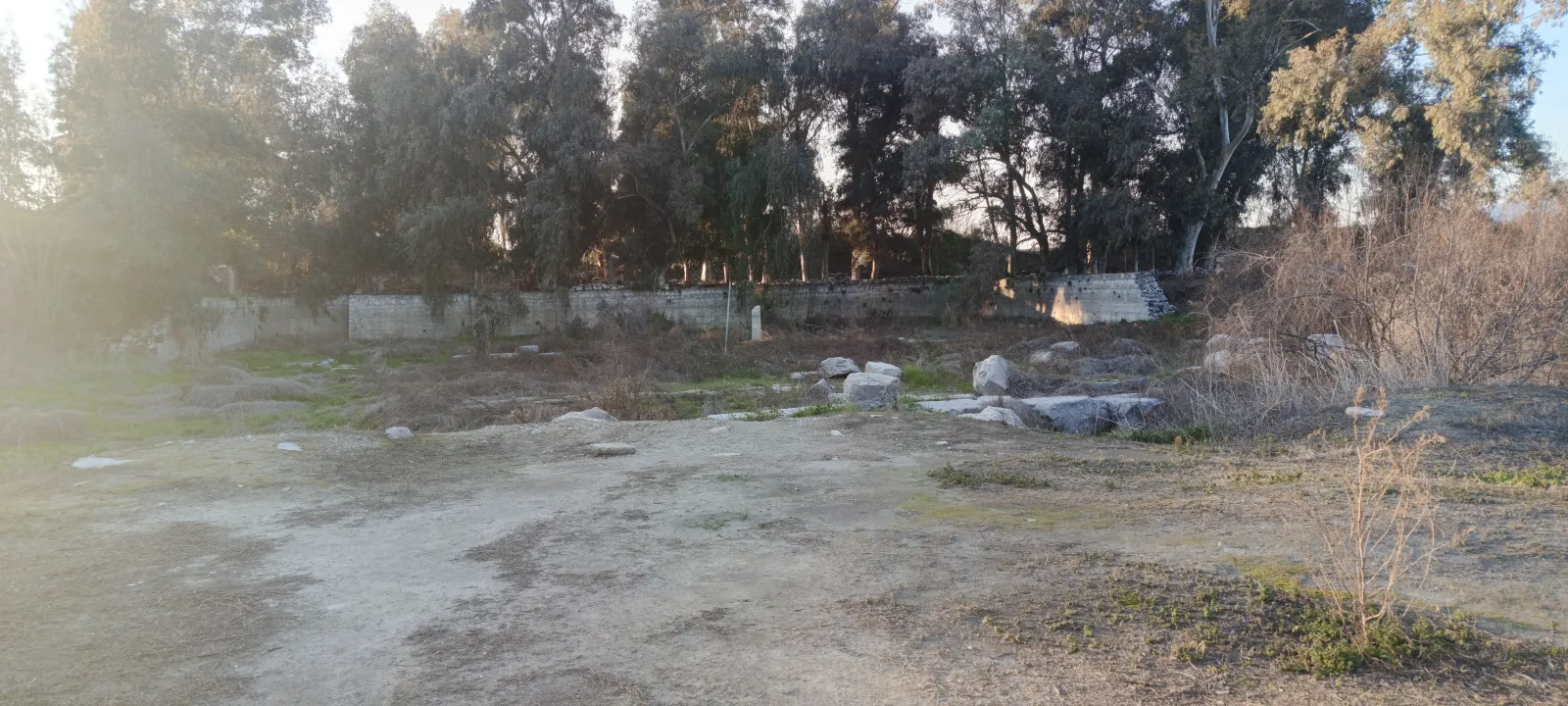
A single column stands in a marshy field on the outskirts of Selçuk, reassembled from fragments and topped with a stork’s nest. Behind it, the foundations of a structure are barely visible above the waterlogged ground. There is a sign. There is a fence. There is not much else. This is the Temple of Artemis — the Artemision — one of the Seven Wonders of the Ancient World, a building that ancient writers ranked alongside the Pyramids of Giza and the Hanging Gardens of Babylon. The temple that stood here was four times the size of the Parthenon in Athens: 137 meters long, 69 meters wide, supported by 127 columns each standing 18 meters tall. It took 120 years to build. It was the largest building in the ancient Greek world.
The contrast between what was here and what remains is the point. The Temple of Artemis is the most powerful lesson in archaeology: that scale and significance guarantee nothing against time, fire, and deliberate destruction. Standing in front of the single reconstructed column, with the Basilica of St. John visible on the hill behind and the ruins of Ephesus a few kilometers to the south, you understand something about impermanence that a more complete ruin would not convey. When I bring travelers here, I always try to stop first at the Library of Celsus or the Great Theater — so they have seen what Roman Ephesus looks like intact before they see what absolute loss looks like in a field of grass.
The History
Worship of Artemis at Ephesus predates the Greeks. The site was sacred to an Anatolian mother goddess before Greek colonists arrived in the tenth century BC and identified her with their goddess Artemis. The first monumental temple was built in the eighth century BC. It was destroyed and rebuilt several times.
The version that earned its place among the Seven Wonders was begun around 550 BC, funded partly by the Lydian king Croesus (whose wealth was proverbial — “rich as Croesus” — and whose offerings to the temple were documented by Herodotus). The architect was Chersiphron of Knossos. The marble came from quarries in the nearby mountains. The 127 columns were each carved from a single block and erected without mortar. The temple was both a religious sanctuary and a financial center — it functioned as a bank, with deposits held under the protection of the goddess.
In 356 BC, the temple was destroyed by arson. The arsonist, Herostratus, set the fire on the night Alexander the Great was born — a coincidence that ancient writers noted with the observation that Artemis was too busy attending Alexander’s birth to protect her own temple. Herostratus’s motive was pure fame: he wanted his name remembered. The Ephesians sentenced him to damnatio memoriae — the erasure of his name from all records — but the historian Theopompus recorded it anyway, and the name has survived for 2,400 years. The strategy worked.
The temple was rebuilt, even larger than before, and this version — the one the ancient lists counted among the Wonders — stood for six centuries until it was damaged by Gothic invaders in 262 AD and gradually dismantled thereafter. Columns and marble were repurposed for other buildings, including the Hagia Sophia in Constantinople. By the fifth century, the site was a quarry. By the medieval period, it was forgotten — the exact location was lost until British archaeologist John Turtle Wood rediscovered it in 1869, after six years of digging.
What You See Today
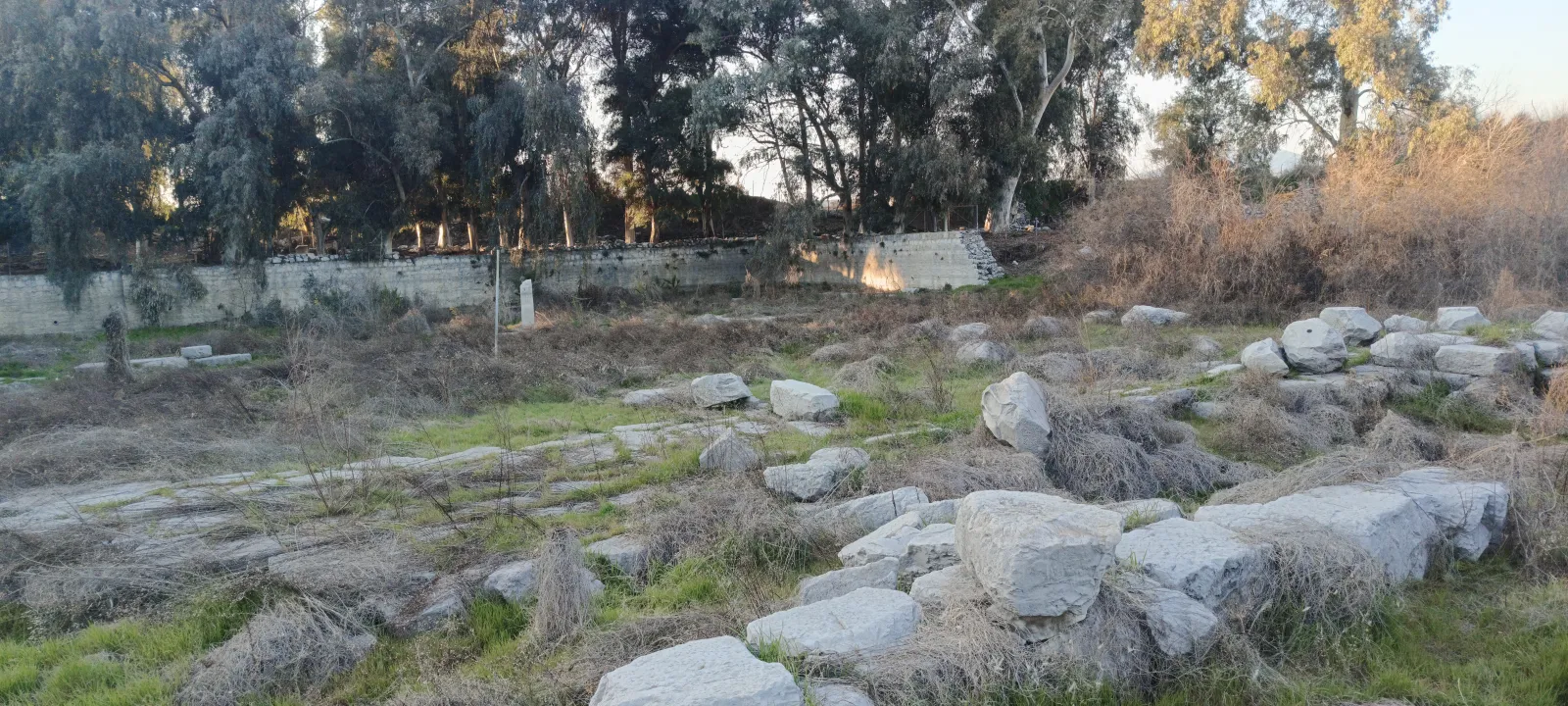
The honest answer: very little. The single reconstructed column (assembled in 1973 from fragments found on site) gives a sense of the original height — 18 meters — but a single column from a forest of 127 does not convey the scale. The foundation outline is partially visible when the water table is low, but the marshy ground often obscures it.
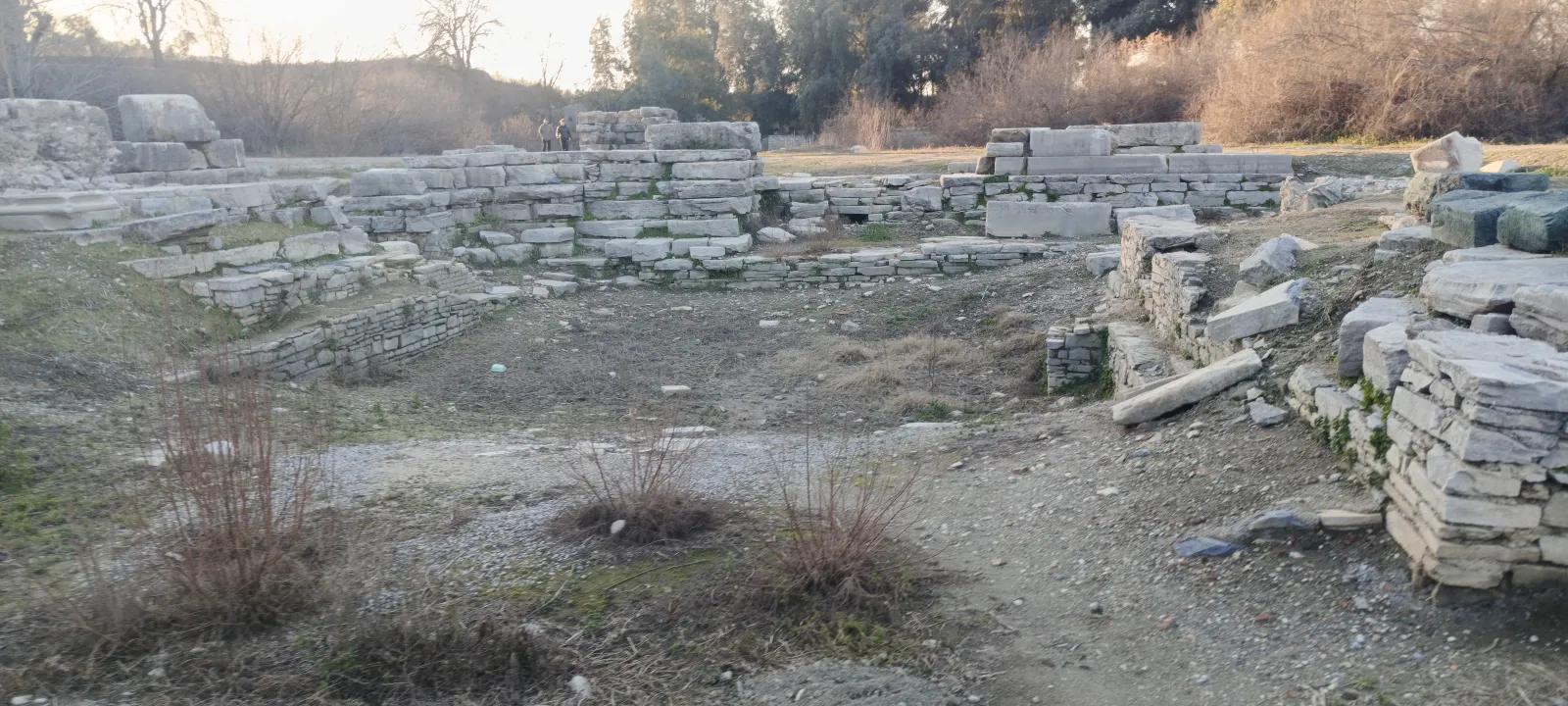
What the site does convey is context. The Isa Bey Mosque (1375) is immediately adjacent — built partly from stone recycled from the temple. The Basilica of St. John crowns the hill behind — built by the Emperor Justinian in the sixth century, partly from temple materials. The Selçuk Fortress tops the same hill. The physical relationship between these buildings tells a story of succession: the pagan temple gave way to the Christian basilica, which gave way to the Islamic mosque, each built partly from the stones of its predecessor. The Temple of Artemis is not just a ruin — it is the foundation, literally, of everything that came after.
The Ephesus Museum in Selçuk houses artifacts recovered from the temple site, including the famous statue of Artemis of Ephesus — the multi-breasted (or possibly bull-testicle-adorned — scholars disagree) figure that represented the local cult. The museum provides the visual richness that the site itself cannot.
Practical Information
Getting there: The temple site is on the western edge of Selçuk, about one kilometer from the town center and approximately three kilometers from the Ephesus archaeological site. It is accessible on foot from Selçuk or by car. Most Ephesus tours include a brief stop.
How much time: Fifteen to twenty minutes. The site is small and the visible remains are limited. The value is historical and contextual rather than visual.
Entry: Free. The site is an open field with a fence and interpretive signage.
When to go: Any time of day. The site is open and exposed — morning or late afternoon is more comfortable in summer.
Official resource: Ephesus Archaeological Museum — Ministry of Culture
Combining with other visits: The temple site is between Selçuk town center and Ephesus, making it a natural addition to an Ephesus day. The Isa Bey Mosque (immediately adjacent, free entry) and the Basilica of St. John (a short walk uphill) provide architectural and historical context. The Ephesus Museum in Selçuk houses the temple artifacts. See also the marble streets and the House of the Virgin Mary for a full day in the area, or the Istanbul–Cappadocia–Ephesus planning guide for multi-city trips.
Plan Your Ephesus Visit
The Temple of Artemis is what happens when a Wonder of the World becomes a single column in a field — and the absence is more powerful than most presences. If you would like to visit Ephesus and its surrounding sites with a private guide who can connect the column to the history it represents, tell us what interests you and we will build the day around it.