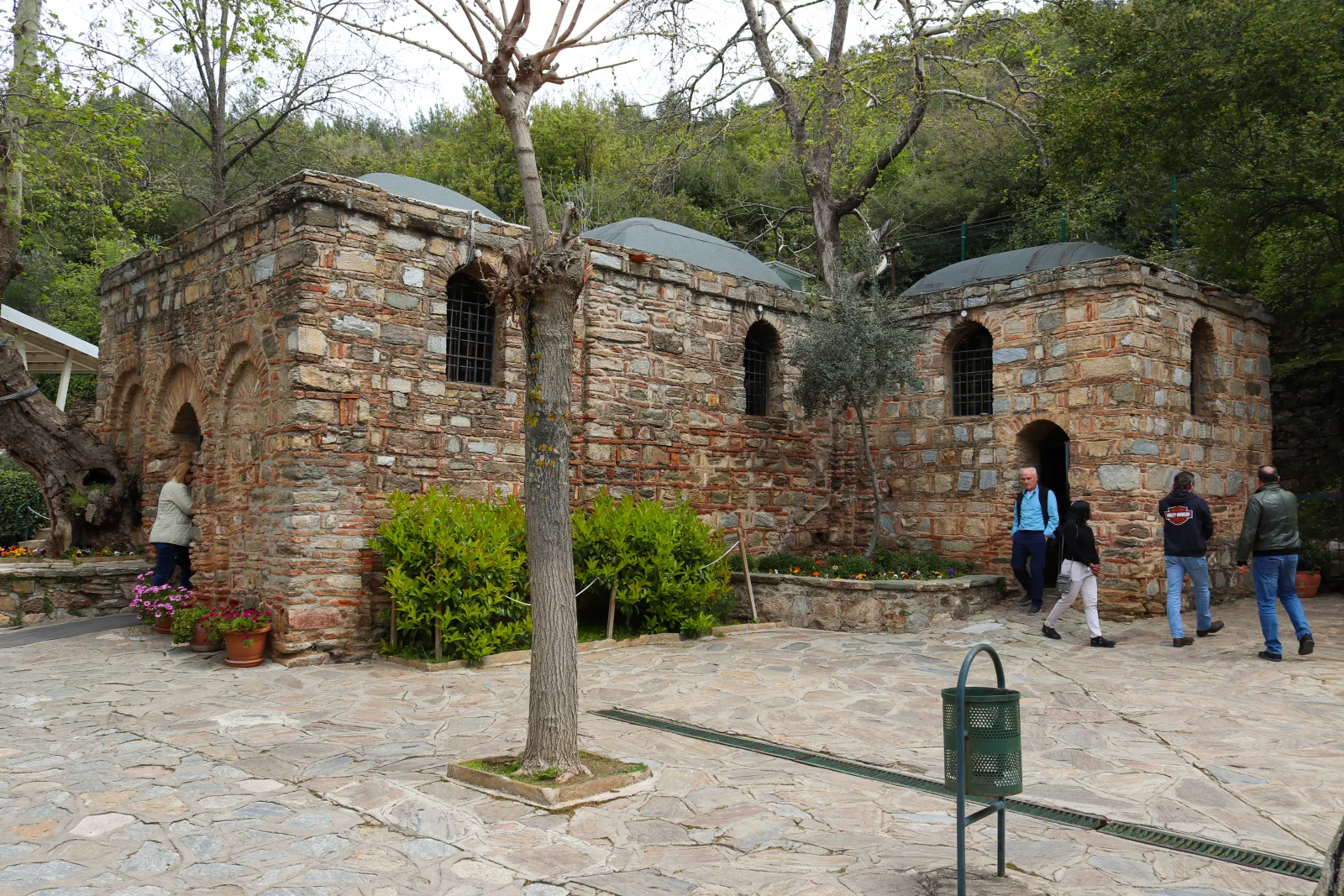
Seven kilometers above the ruins of Ephesus, on the wooded slopes of Mount Koressos (Bülbül Dağı — Nightingale Mountain), a small stone building sits in a clearing among the pines. It is modest — a single room, perhaps six by eight meters, with a stone altar, a niche for a statue, and an atmosphere of quiet that the forest and the altitude reinforce. This is Meryemana — the House of the Virgin Mary — the place where, according to Catholic and Orthodox tradition, Mary the mother of Jesus spent her final years and either died or was assumed into heaven.
The Vatican has recognized the site as a place of pilgrimage. Three popes have visited — Paul VI in 1967, John Paul II in 1979, and Benedict XVI in 2006. The site is also venerated by Muslims, who honor Mary (Meryem) as the mother of the prophet Isa (Jesus). The visitor register at the chapel includes names from every major faith tradition and from people who follow none. The place has a pull that exceeds its doctrinal credentials.
The History
The tradition that Mary came to Ephesus rests on a single New Testament verse — John 19:27, in which Jesus, from the cross, entrusts his mother to the apostle John: “From that hour the disciple took her into his own home.” John is associated with Ephesus (the Gospel of John may have been written here, and the Basilica of St. John in Selçuk marks his traditional burial site), and the inference is that Mary came with him.
The site itself was identified in the nineteenth century under unusual circumstances. A German nun named Anne Catherine Emmerich (1774-1824), who never traveled to Turkey, described in a series of visions the location of Mary’s house — a stone building on a mountain near Ephesus, with a specific orientation and certain architectural features. In 1891, a French priest named Julien Gouyet followed Emmerich’s descriptions and found ruins matching her account on Mount Koressos. Excavations revealed foundations dating to the first century AD, with later additions from the sixth and seventh centuries.
The match between the visions and the archaeology does not constitute historical proof — and the Catholic Church has never formally declared the site authentic. What the Church has done is recognize it as a legitimate pilgrimage destination, and the steady stream of visitors — religious and secular — suggests the recognition reflects a felt truth even if the historical evidence remains circumstantial.
What You See
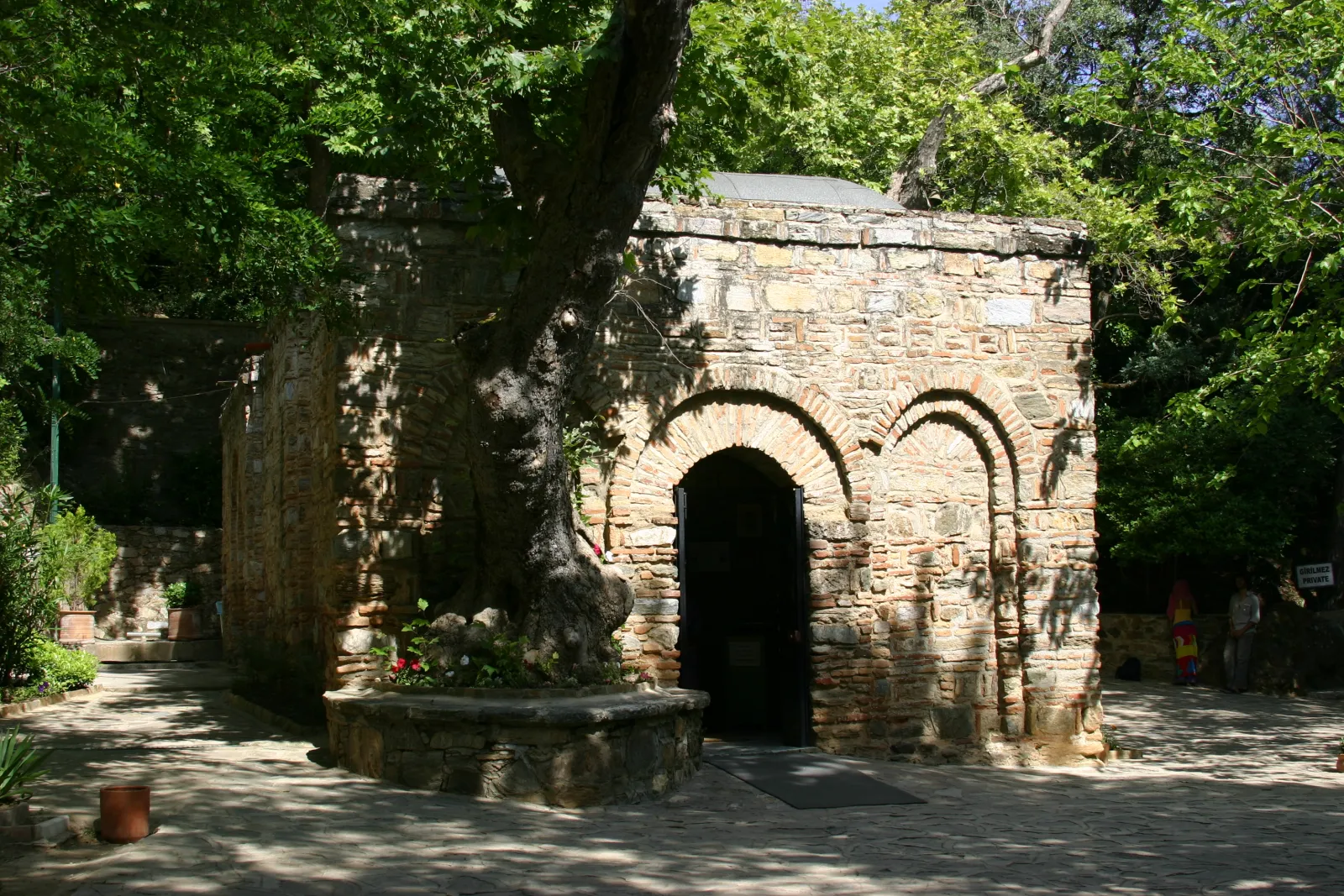
The chapel is a small, restored stone structure with a simple interior. The main room contains an altar and a niche where a statue of the Virgin Mary stands. The walls are bare stone. The light enters through small windows. The atmosphere is contemplative — visitors are asked to maintain silence inside the chapel, and most do. The space holds perhaps twenty people comfortably; in practice, a continuous flow moves through, pausing briefly at the altar before exiting.
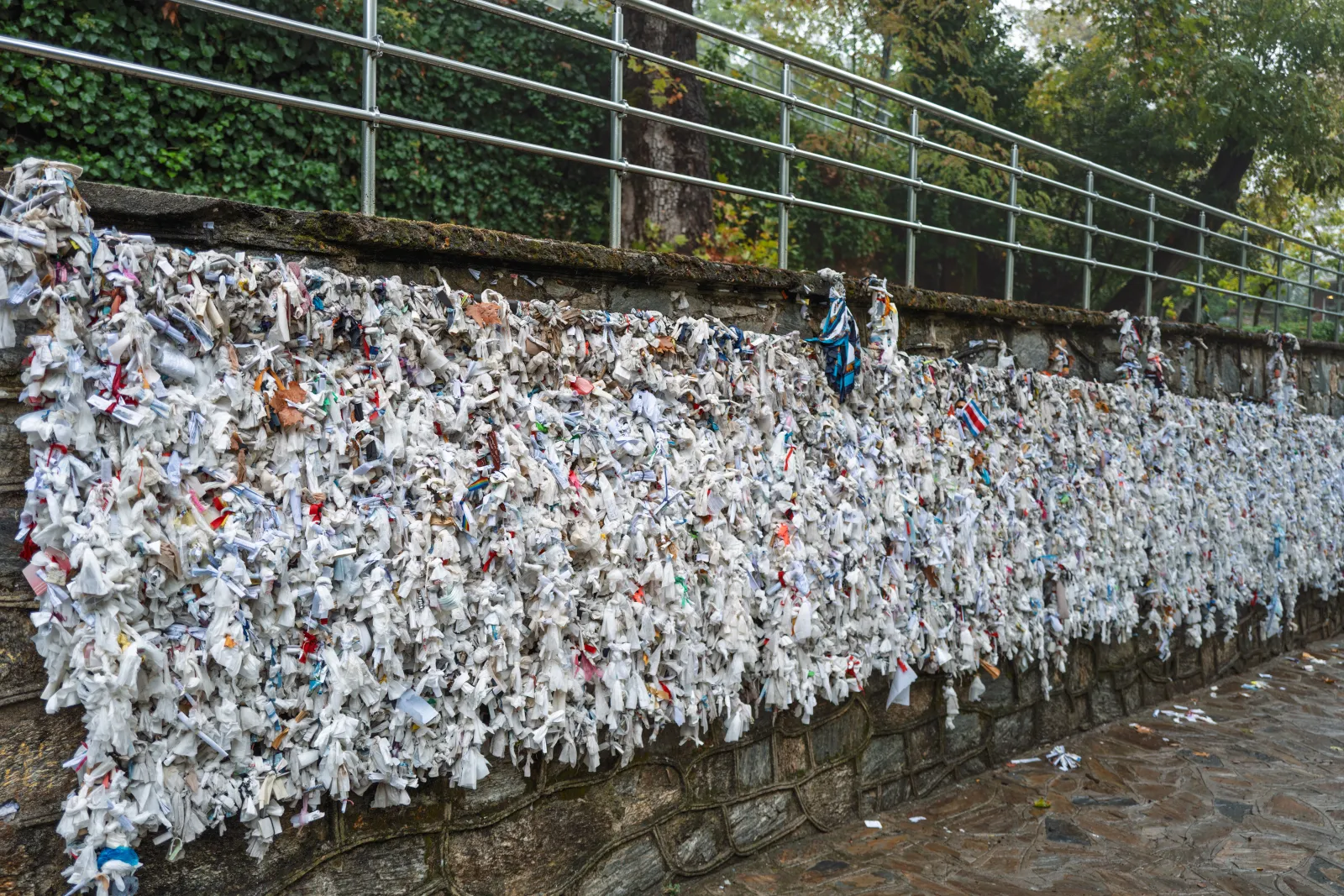
Outside, a wishing wall is covered with paper notes, cloths, and threads — petitions and prayers tied to a wire frame. The practice is syncretic (it resembles traditions from multiple faiths) and deeply personal. Reading the notes — in dozens of languages, some desperate, some grateful, some simply hopeful — is its own experience.
A natural spring near the chapel provides water from three taps, each traditionally associated with a different blessing: health, wealth, and love. The water is cool and drinkable. Whether the blessings attach is a matter of faith.
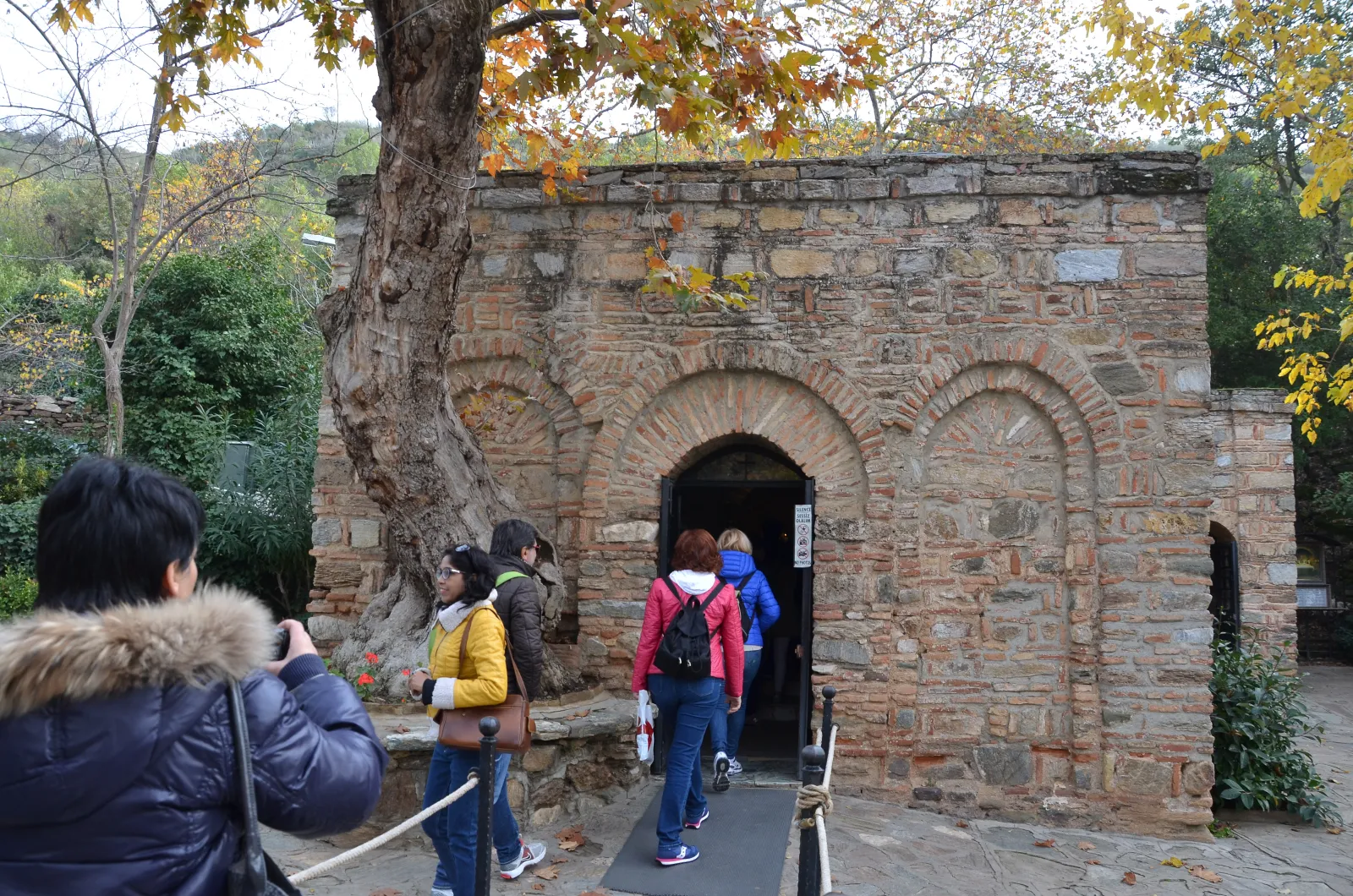
The forest setting contributes to the atmosphere. Mount Koressos is covered in pine and oak, and the clearing around the chapel is shaded and quiet — a marked contrast to the sun-exposed ruins of Ephesus in the valley below. The elevation (approximately 420 meters) brings cooler air and birdsong. When I bring travelers here after a morning at the Great Theater, the contrast is the point — from the hot, column-lined avenues of the ancient city to a quiet pine clearing in under fifteen minutes.
Religious Significance
The House of the Virgin Mary occupies a unique position in interfaith geography:
For Catholics, it is one of the recognized sites associated with the end of Mary’s life — the Dormition (her death, or falling asleep) or the Assumption (her bodily elevation to heaven). A Mass is celebrated daily in the chapel.
For Orthodox Christians, the site is venerated but the tradition that Mary came to Ephesus competes with the stronger tradition that she remained in Jerusalem. The debate is theological rather than historical, and pilgrims from both traditions visit.
For Muslims, Mary (Meryem) is one of the most honored figures in the Quran — an entire sura (Sura 19, Maryam) is named for her. Muslim visitors to the site treat it with the same reverence as Christian visitors, and the house is one of the rare places where the two traditions share a sacred space without friction.
The August 15 feast day (Assumption of Mary) draws the largest crowds — a special Mass is celebrated on the outdoor altar, and the site fills with pilgrims from across the religious spectrum.
Practical Information
Getting there: The House of the Virgin Mary is seven kilometers from the Ephesus archaeological site, up a winding mountain road. Most visitors arrive by car or tour bus. There is no pedestrian path from the ruins. The road is paved and well-maintained. Parking is available at the site.
How much time: Thirty to forty-five minutes — time for the chapel, the wishing wall, the spring, and the forest clearing. The visit is contemplative rather than extensive.
Entry fee: A small entrance fee applies. The site is open daily.
Dress code: As a place of worship, modest dress is expected — shoulders and knees covered. This applies to visitors of all faiths.
When to go: Mornings are quieter. Midday tour buses bring the largest crowds. Late afternoon is peaceful. August 15 (Assumption feast day) is the most significant date for pilgrims. When I plan a visit for travelers who want quiet, I schedule Meryemana for just after opening — you get a few minutes alone in the chapel before the first buses arrive, and the forest is at its freshest.
Combining with other visits: The house is almost always combined with Ephesus — most guided tours include both sites in a single day. The drive between them takes about fifteen minutes. The Basilica of St. John in Selçuk (marking John’s traditional tomb) provides additional religious and historical context. The site also fits well into a multi-city itinerary that includes Ephesus and the Library of Celsus — see our Istanbul–Cappadocia–Ephesus planning guide.
Official resource: Meryemana (House of the Virgin Mary) — Vatican News
Plan Your Ephesus Visit
The House of the Virgin Mary is a quiet room on a mountain where the history is uncertain and the devotion is not. If you would like to visit with a private guide who can place the chapel in its theological and historical context, tell us what interests you and we will build the day around it.