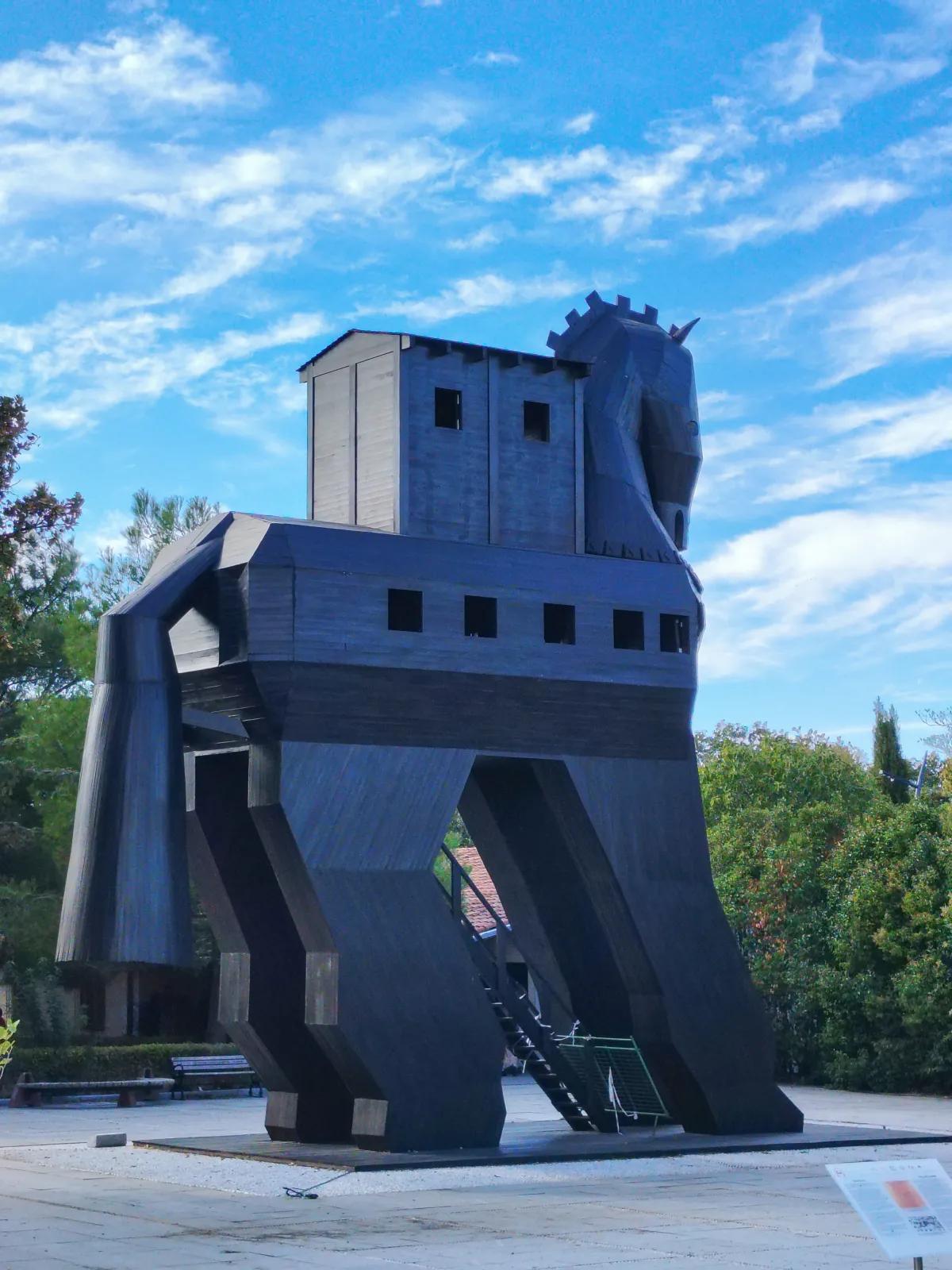
Troy is real, and it is smaller than you expect. The archaeological site at Hisarlık, in the flat agricultural plain of the Troad in northwestern Turkey, is a modest hill — roughly 200 meters across and perhaps 15 meters high — that contains the compressed remains of nine cities built one on top of another over approximately 4,000 years, from roughly 3000 BC to 500 AD. The hill is not dramatic. The ruins are fragmentary. The wooden horse at the entrance is a modern replica for photographs. And yet this is the place that launched the Iliad, the Odyssey, and the entire tradition of Western literature. The gap between what is here and what it means is the experience.
The question that every visitor asks — “Is this really Homer’s Troy?” — has an answer that is almost certainly yes, with qualifications. The German businessman-turned-archaeologist Heinrich Schliemann identified Hisarlık as Troy in 1868, began excavating in 1871, and dug through the layers with more enthusiasm than method, destroying significant archaeological material in the process. Modern excavations, led by Manfred Korfmann and his successors since 1988, have confirmed that the site matches the geographical description in the Iliad, that Troy VII (approximately 1300-1180 BC) shows evidence of violent destruction consistent with a siege, and that the city was a significant Bronze Age settlement controlling trade through the Dardanelles. Whether a ten-year Greek siege and a wooden horse were involved is a question archaeology cannot answer.
The Nine Layers
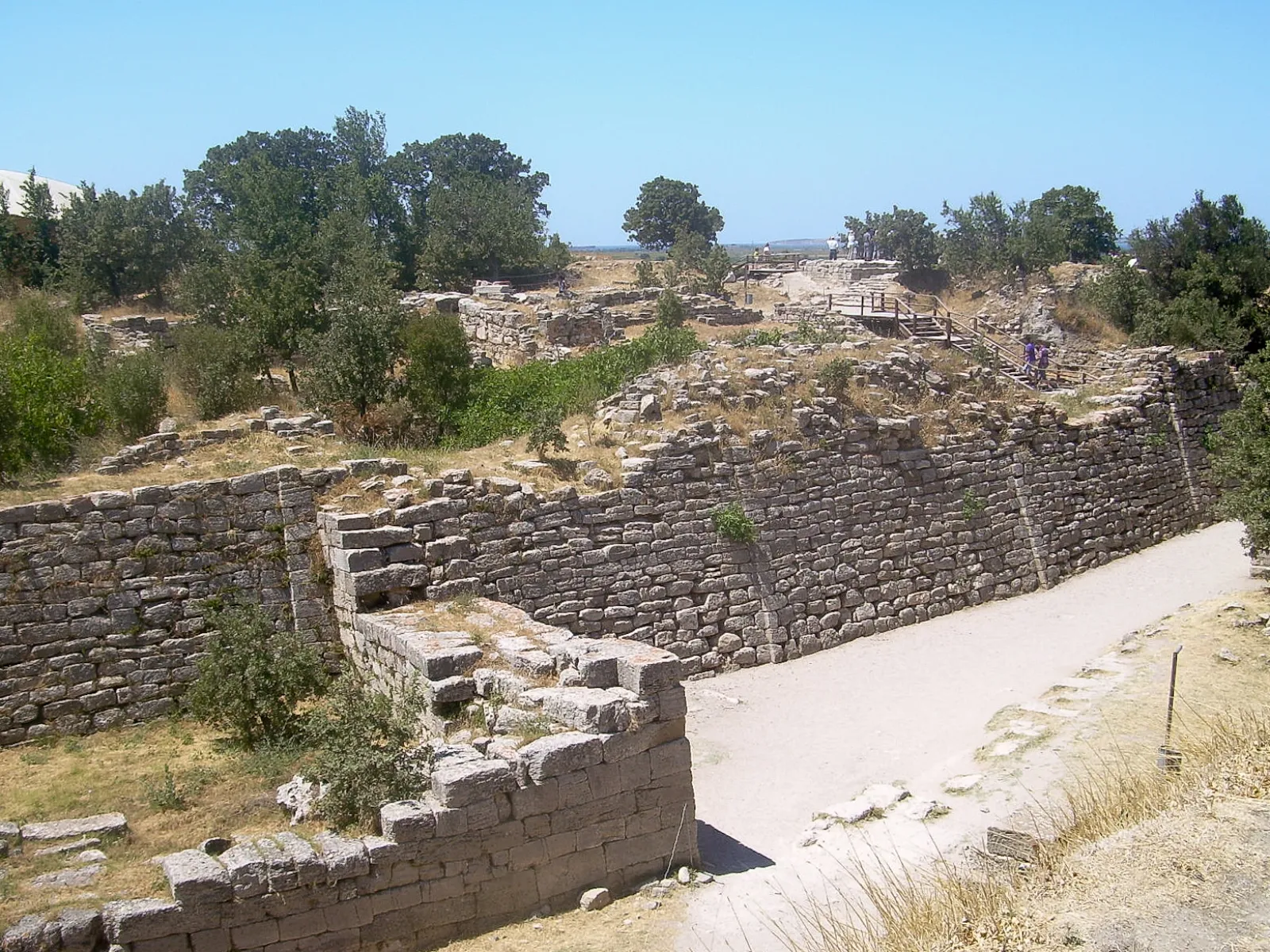
The site’s complexity comes from its stratigraphy: nine major settlement layers (Troy I through Troy IX), each built on the ruins of the previous one. Walking the site, you see walls from different periods intersecting, overlapping, and sometimes built directly into earlier structures. A guide is essential to make sense of what you are looking at.
Troy I-V (approximately 3000-1700 BC): The earliest settlements — Bronze Age fortifications and domestic structures. Troy II, which Schliemann mistakenly identified as “Priam’s Troy,” yielded a cache of gold jewelry and vessels that Schliemann called “Priam’s Treasure.” The treasure was actually a thousand years too early for the Trojan War — it dates to approximately 2500 BC — but it confirmed the site’s wealth and strategic importance.
Troy VI (approximately 1700-1250 BC): A prosperous, well-fortified city with massive limestone walls, some of which survive to a height of several meters. This was likely the city that Homer’s audience would have recognized — large, wealthy, and commanding the approaches to the Dardanelles. It was destroyed, probably by earthquake.
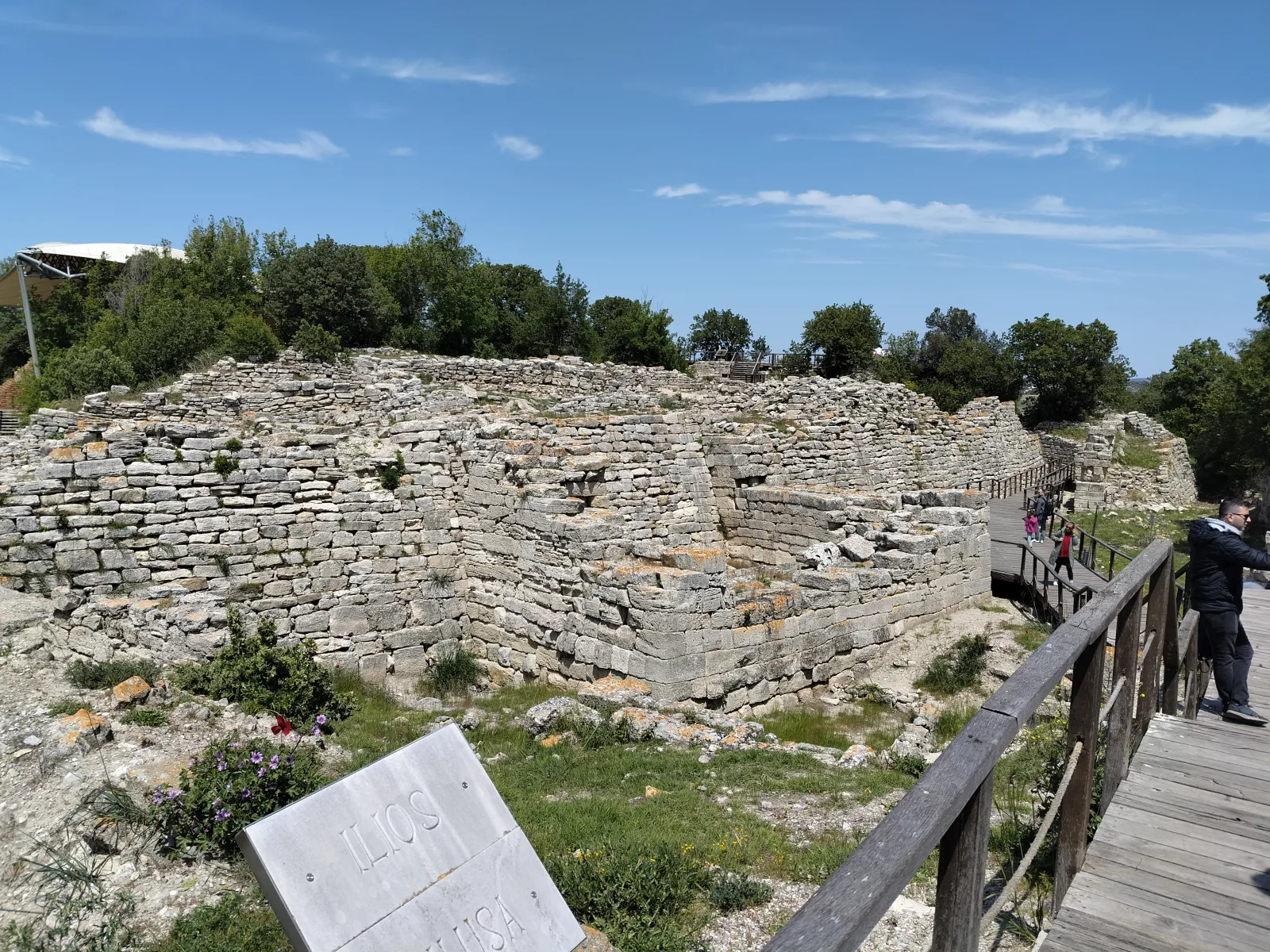
Troy VII (approximately 1250-1180 BC): The candidate for “Homer’s Troy.” The city was rebuilt quickly after Troy VI’s destruction, with storage jars sunk into house floors (suggesting preparation for siege) and evidence of violent destruction by fire. The dating matches the traditional Greek date for the Trojan War (approximately 1184 BC). This is the layer that makes the archaeological case.
Troy VIII-IX (approximately 700 BC – 500 AD): Greek and Roman settlements. The Romans, who traced their ancestry to the Trojan prince Aeneas (through Virgil’s Aeneid), maintained the site as a sacred precinct. The Temple of Athena from this period has been partially excavated.
Schliemann’s Trenches
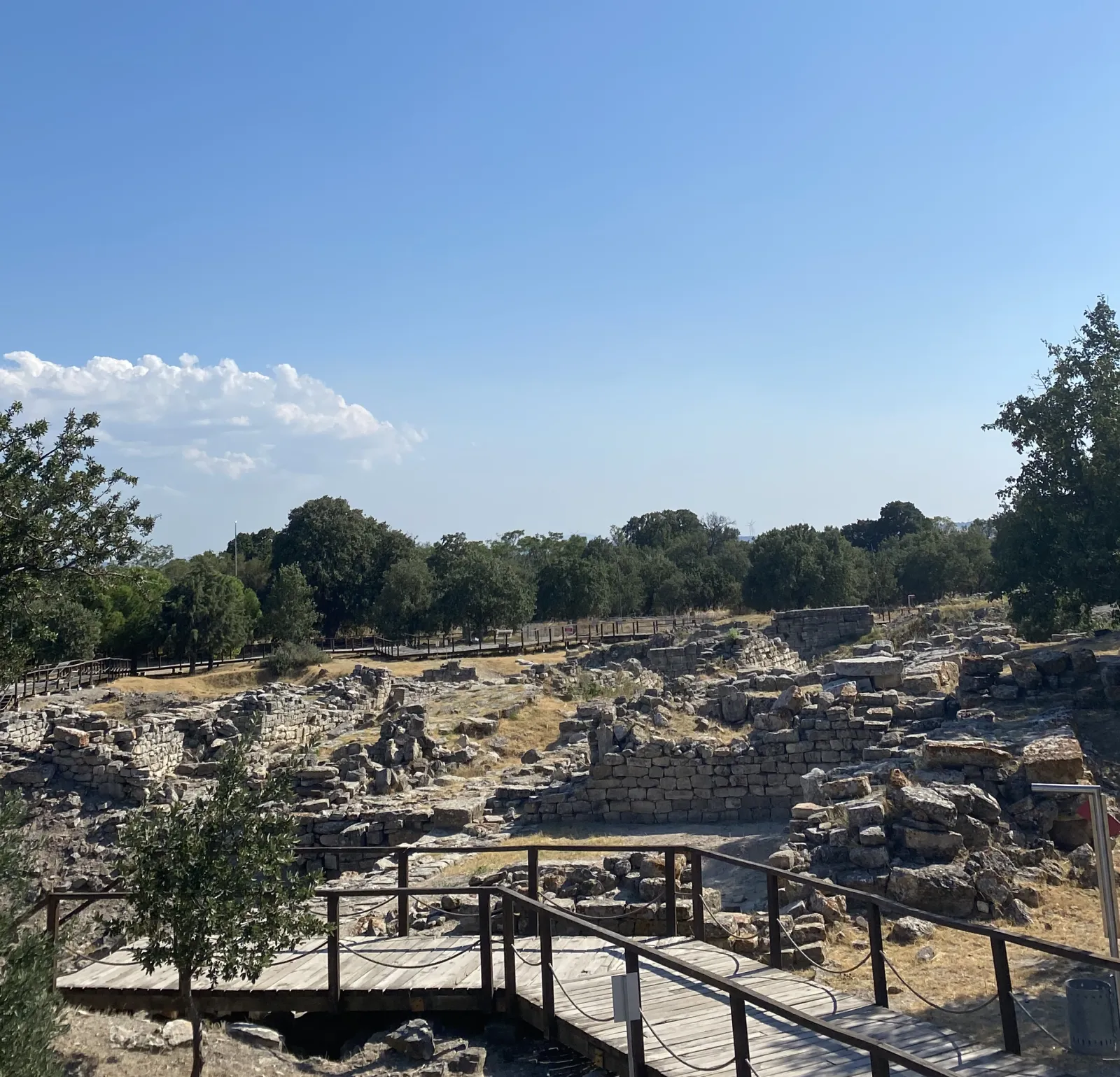
Schliemann’s excavation method was, by modern standards, destructive. He dug a massive trench through the center of the mound, cutting through the upper layers (including the Troy VII layer he was actually looking for) to reach the earlier levels, which he assumed were older and therefore “more Homeric.” In the process, he destroyed material from the very period he sought. The trench is still visible — a deep cut through the stratigraphy — and modern excavators have had to work around the damage.
The “Priam’s Treasure” that Schliemann found and smuggled out of the Ottoman Empire ended up in Berlin, then was seized by the Soviet Army in 1945 and is now in the Pushkin Museum in Moscow. The treasure — gold diadems, earrings, and vessels — has never been returned, and its fate is one of the more complex cultural heritage disputes in archaeology.
Despite the destructive methods, Schliemann’s identification of Hisarlık as Troy was correct, and his excavations opened the site to the scientific investigation that continues today. The relationship between amateur passion and professional rigor, between the story and the evidence, is part of Troy’s layered reality.
Visiting
The Troy archaeological site is a UNESCO World Heritage Site with a modern museum (opened 2018) at the entrance.
Getting there: Troy is approximately 30 kilometers south of Çanakkale, the city on the Dardanelles. Most visitors come on guided tours from Çanakkale, or on multi-day tours from Istanbul that combine Troy with Gallipoli and Pergamon. The drive from Istanbul is approximately five hours.
How much time: The archaeological site takes forty-five minutes to an hour to walk with a guide. The Troy Museum, at the entrance, takes an additional forty-five minutes to an hour and provides the context — artifacts, models, and interpretive displays — that the site itself cannot.
Guide value: Essential. The ruins are fragmentary and the nine layers are visually confusing without expert narration. A guide who can point to a wall and tell you which Troy it belongs to, and why that matters, transforms the visit from “some old stones” into a legible archaeological narrative. When I bring travelers here, I always suggest seeing the new Troy Museum first — the models, the timeline, the artifacts in context make the hill itself readable in a way it never is on its own.
The Trojan Horse: A large wooden replica stands at the site entrance. It is modern, it is for photographs, and it is popular. The historical horse — if it existed — is nowhere in the archaeological record.
When to go: Spring and autumn are most comfortable. Summer is hot and the site is exposed. Morning visits avoid the worst heat and the largest tour group arrivals.
Official resource: UNESCO — Archaeological Site of Troy
Combining with other visits: Troy is almost always combined with other sites in a multi-day itinerary: Gallipoli (a few hours to the north) and Pergamon (a few hours to the south). The standard three-day route — Gallipoli, Troy, Pergamon, then south to Ephesus — is one of the most historically rich driving itineraries in Turkey. See our Istanbul–Cappadocia–Ephesus planning guide for multi-city context.
Plan Your Visit
Troy is the place where archaeology and literature meet — where nine cities stacked on a hill may or may not include the one that Homer sang about. If you would like to visit with a private guide who can read the layers and tell both the historical and the legendary story, tell us what interests you and we will build the itinerary around it.