About three kilometers off the coast of Adrasan, south of Kemer on the Lycian coast, an uninhabited island sits in water that shifts between pale turquoise near the shore and deep blue a few meters out. Suluada is small — roughly 1.5 kilometers long — with a rocky, pine-dotted profile and a handful of coves where white sand meets water so clear that you can see the bottom at ten meters. The island has no buildings, no dock, no facilities. Boats anchor offshore, passengers swim in, and for a few hours you occupy a piece of Mediterranean coastline that has not been developed because there is no fresh water source on the island — which is, of course, exactly why it remains the way it is.
The Turkish press and social media have given Suluada the nickname “Turkey’s Maldives” for its white sand and turquoise water. The comparison is understandable — the color palette is similar — though the setting is different in every other way. The Maldives is flat coral atolls in the Indian Ocean. Suluada is a rocky Mediterranean island backed by the snow-capped peaks of the Taurus Mountains on the mainland behind it. The water clarity comes not from coral but from the lack of sediment, river outflow, or development — the same conditions that made this stretch of the Lycian coast the clearest water in the eastern Mediterranean.
Getting to Suluada
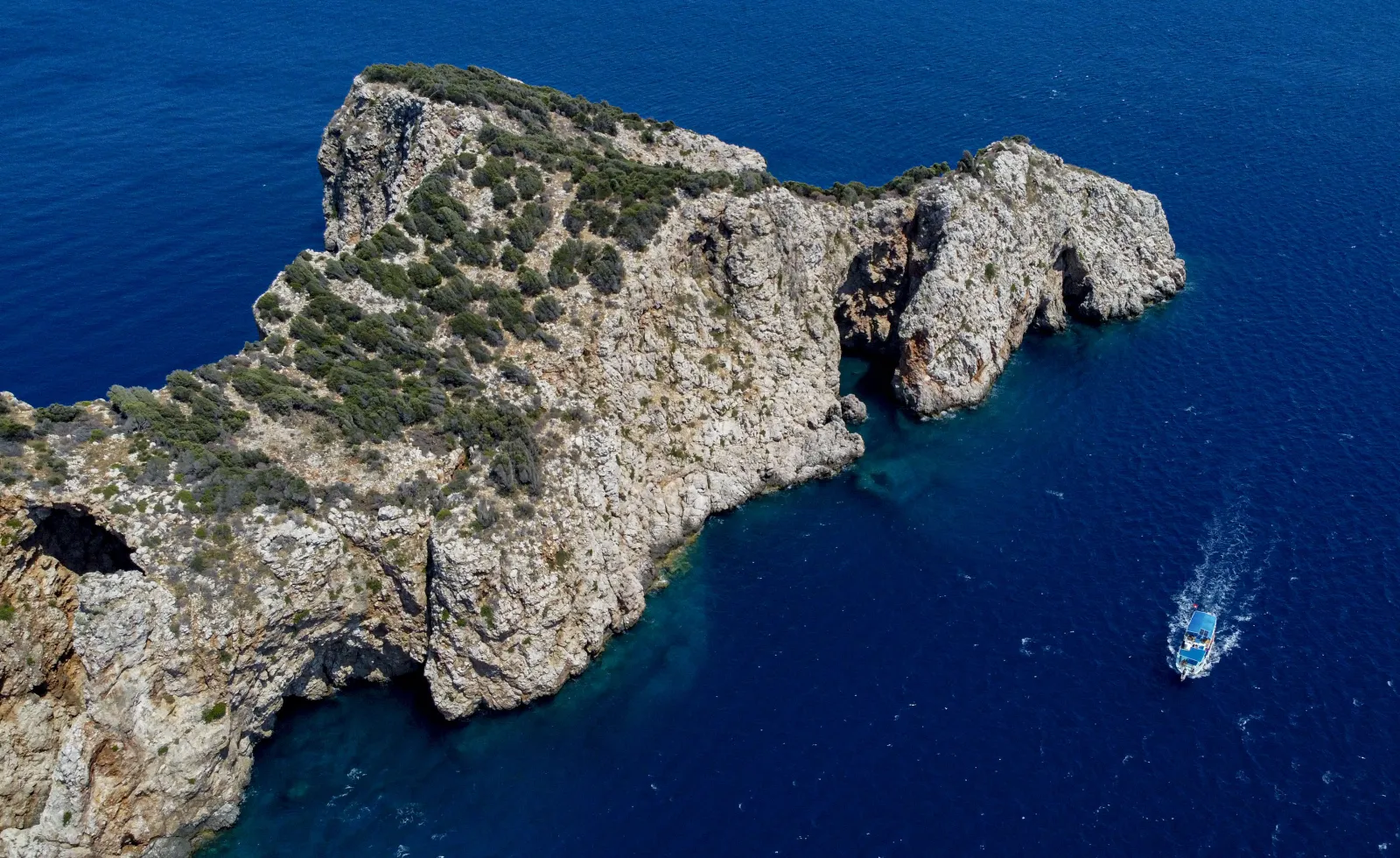
Suluada is reached exclusively by boat from Adrasan, a small coastal village approximately 90km southwest of Antalya city center. Adrasan is at the end of a winding road that drops down from the highway through pine forest and citrus orchards to a quiet bay — it is one of the less-developed stretches of the Antalya coast, which is part of its character.
Boat trips to Suluada depart from Adrasan beach, typically in the morning (around 10:00–10:30 AM) and return in the late afternoon (around 4:00–5:00 PM). The crossing takes approximately 30 to 40 minutes depending on sea conditions and the boat. Most operators run wooden gulet-style boats that carry 20 to 40 passengers, though private boats can also be arranged for smaller groups.
The boat ride itself is part of the experience. The coast between Adrasan and Suluada is undeveloped — forested hills dropping to rocky shoreline, small coves without roads or buildings, and water that deepens from green to blue as you leave the bay. If the sea is calm, the approach to Suluada reveals the island’s coves one by one as the boat rounds the headland: white crescents of sand set into dark rock, each one a different shade of turquoise.
The Island
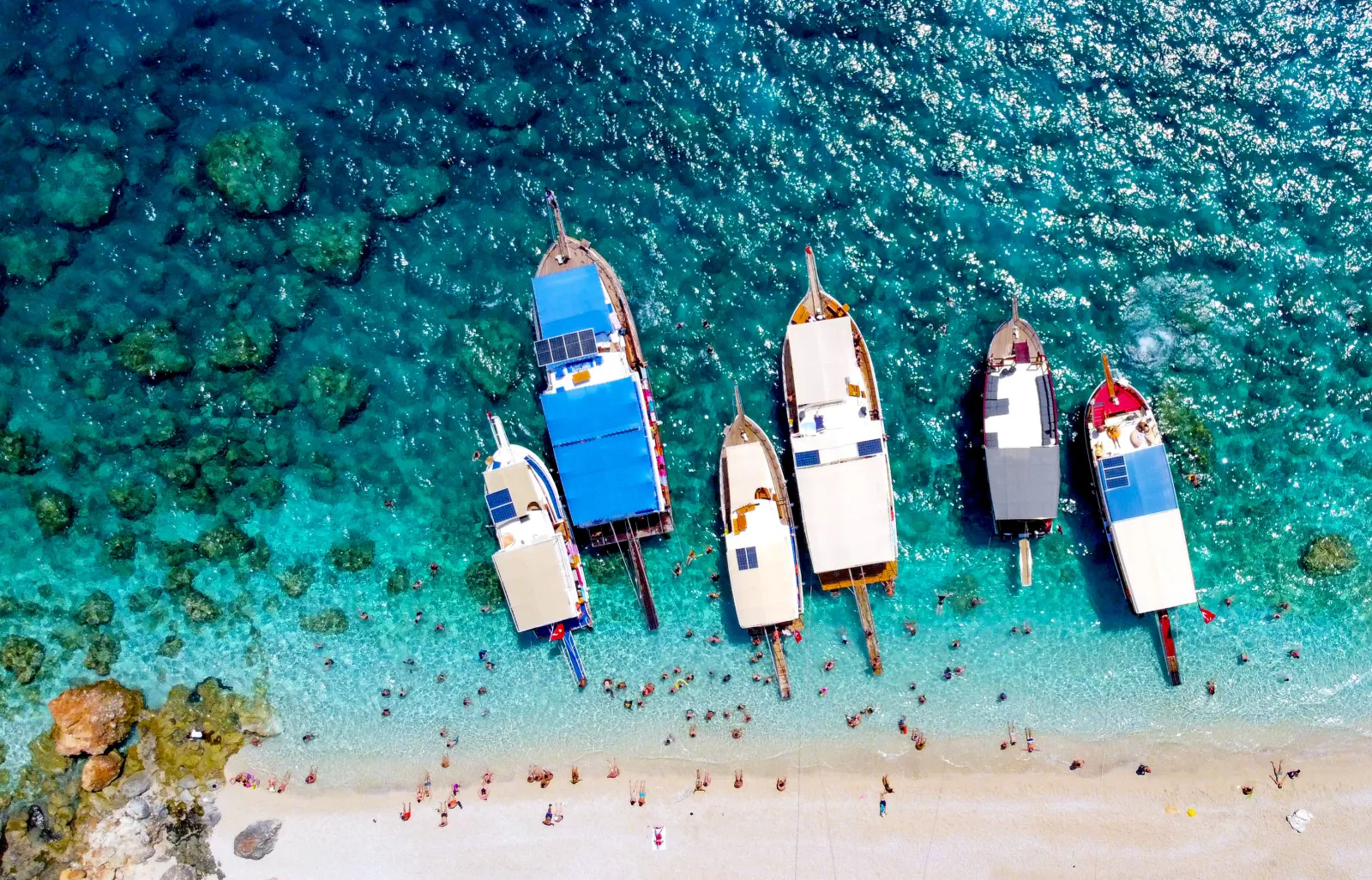
Suluada has several coves, and boat operators typically stop at two or three during the day, anchoring offshore and allowing passengers to swim to shore or snorkel in the surrounding water. The main coves are on the island’s northern and eastern sides, which are more sheltered from prevailing winds and have the best sand beaches.
The main beach is a crescent of white sand — unusual for the Turkish coast, where most beaches are pebble or dark sand. The sand is coarser than Caribbean or Maldivian sand, with a granular texture, but the color is genuinely white and the contrast with the turquoise water creates the visual effect that earns the Maldives comparison. The beach is narrow and backed by rocky, scrub-covered slopes — there is no palm-tree backdrop, but the clarity of the water and the isolation of the setting more than compensate.
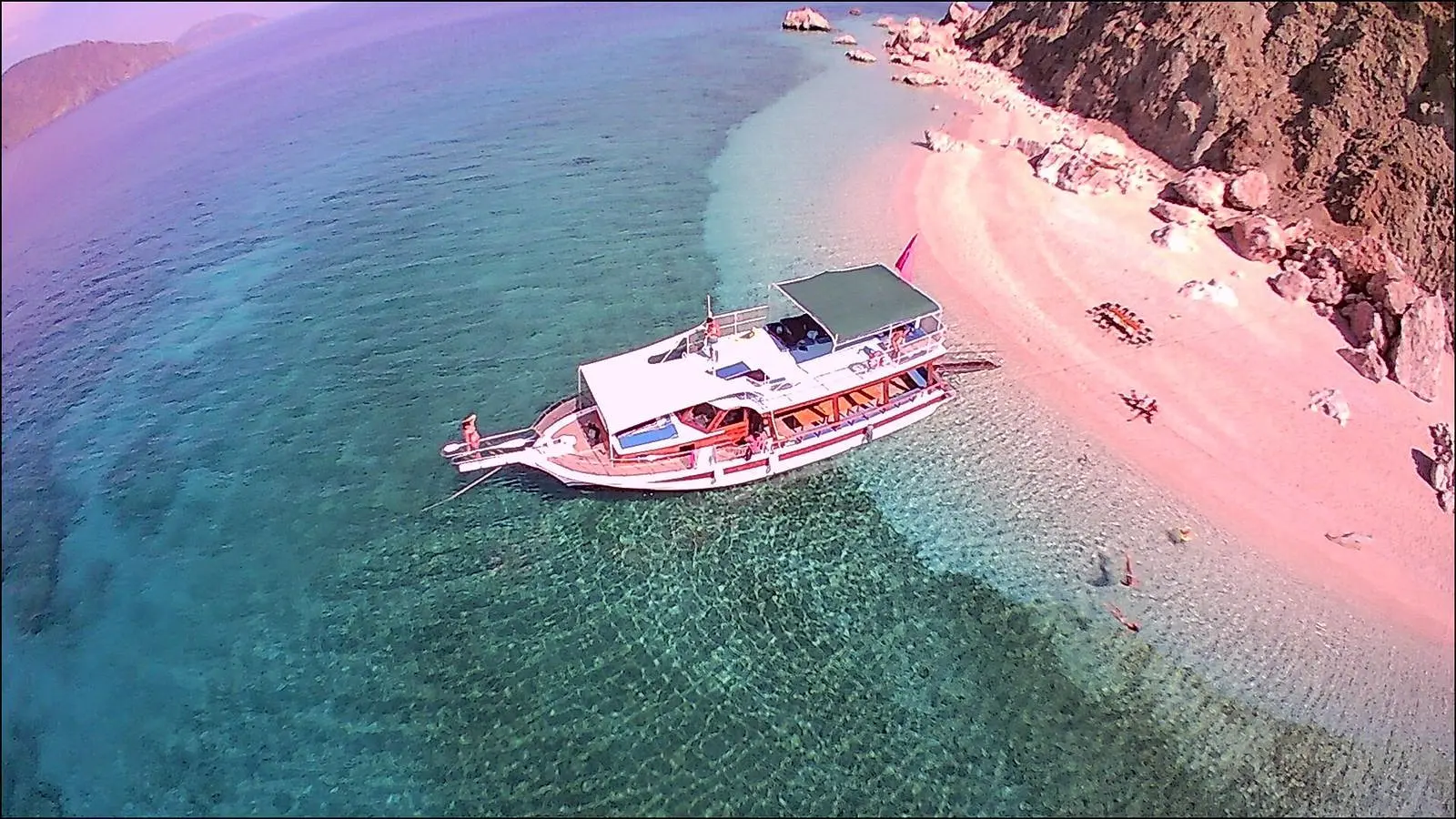
Snorkeling around the island is rewarding. The rocky underwater terrain supports marine life — sea urchins, small fish species, and occasionally octopus in the crevices. The visibility is excellent, sometimes exceeding 15 meters. The sea floor around the coves transitions from sand to rock relatively quickly, giving snorkelers both sandy shallows for easy swimming and rocky areas for marine life observation.
The island interior is accessible but not developed — rocky terrain with low scrub, pine trees, and no marked trails. Most visitors stay at the waterline, swimming and sunbathing. The island’s lack of fresh water means no permanent vegetation cover beyond drought-adapted species, which contributes to its sparse, wind-sculpted character.
What to Expect on a Boat Trip
A typical Suluada boat trip from Adrasan follows this pattern: morning departure, a stop at one or two coves along the mainland coast (sometimes including a sea cave), arrival at Suluada with stops at two or three coves for swimming and snorkeling, lunch served on the boat (usually grilled fish or chicken, salad, fruit), and a return to Adrasan in the late afternoon.
The boats are not high-end vessels — they are working tour boats with shaded areas, cushioned seating, and basic bathroom facilities. What they lack in polish they compensate for in character and in access to coastline that no road reaches.
A few things to know before you go:
Bring what you need. There are no shops, no fresh water taps, and no shade structures on the island. Bring sunscreen (reef-safe if possible), a hat, water shoes for rocky entries, a snorkel if you have one (some boats provide basic sets), and enough drinking water for the day — though boats typically provide water and soft drinks as well.
Sea conditions matter. The boat trip is dependent on weather. In calm conditions, the crossing is smooth and the coves are sheltered. If the wind picks up — particularly from the west or southwest — the crossing can be rough and operators may cancel. July and August have the calmest seas on average. June and September are good but with slightly more weather variability. May and October are possible but less reliable.
Arrive early in the season or on weekdays. Peak summer (mid-July through August) brings the most boats to Suluada, and the main coves can feel crowded when multiple boats anchor simultaneously. June, early July, and September offer the same water clarity with fewer visitors. Weekdays are quieter than weekends throughout the season.
Adrasan: The Starting Point
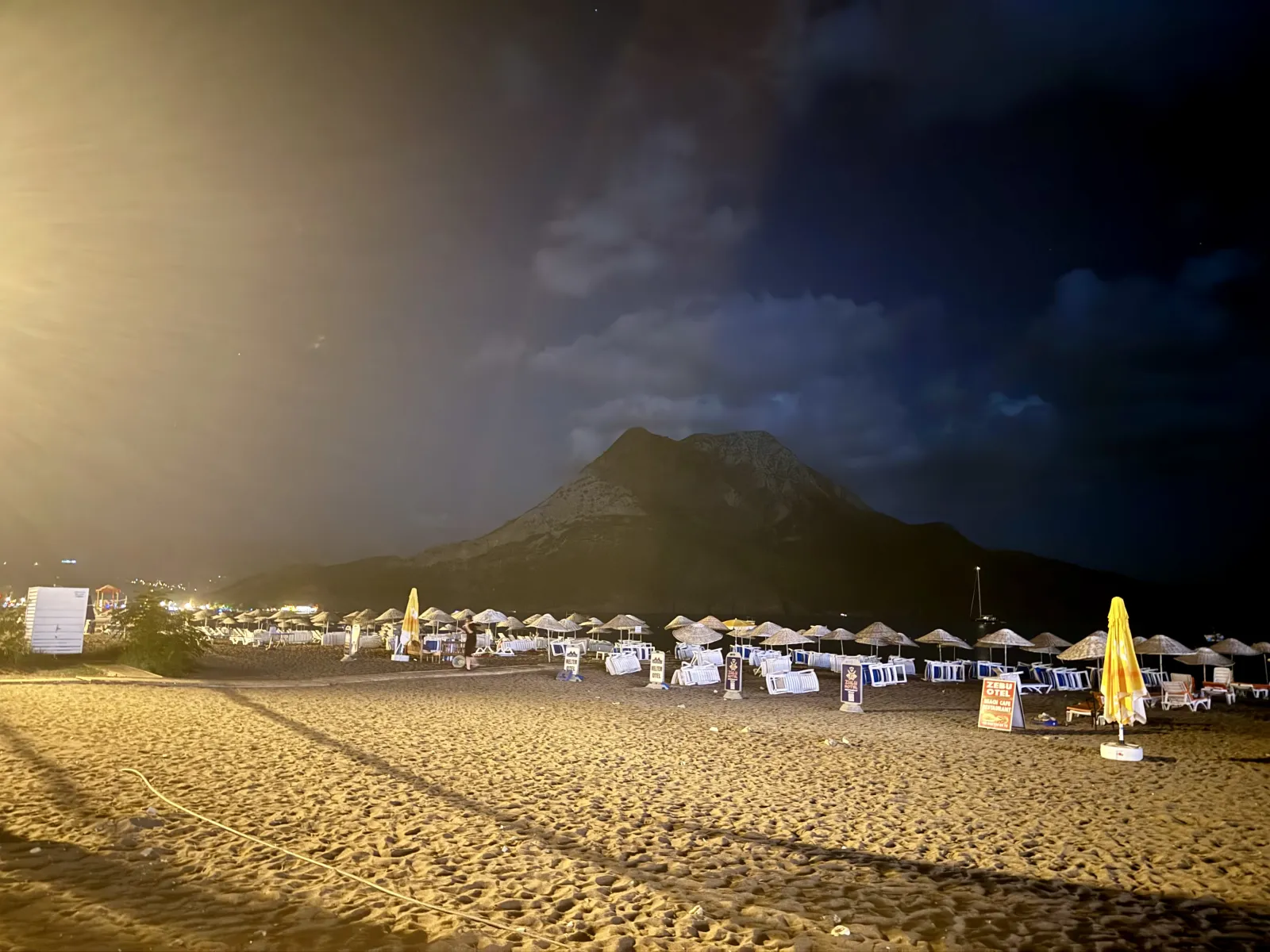
Adrasan itself is worth a mention. This small coastal village has a long pebble beach, a handful of family-run pensions and small hotels, and a quiet character that feels different from the more developed resorts further north. It is not a resort town — it is a village with a beach and some tourism, and the scale remains human. Arriving the evening before a Suluada boat trip, having dinner at a waterfront restaurant in Adrasan, and staying overnight can transform the trip from a rushed day excursion into a more relaxed two-day coastal escape. When I plan Suluada for travelers staying in central Antalya, I always suggest an overnight in Adrasan — the day trip is beautiful, but the short evening in the village is what people tend to remember.
The drive from Antalya to Adrasan takes about 1.5 to 2 hours, passing through Kemer and along the Lycian coast. The last section of road descends through a steep valley of orange and pomegranate orchards to the bay — the approach signals that you are leaving the main tourist corridor for somewhere quieter.
Practical Information
Getting there: Adrasan is approximately 90km southwest of Antalya city center — about 1.5 to 2 hours by car. From Adrasan, boat trips to Suluada depart daily in season (typically June through September). You can also arrange private boat charters for more flexibility.
How much time: A Suluada boat trip is a full-day activity — typically 10:00 AM to 4:00-5:00 PM from Adrasan. Including the drive from Antalya and back, plan for a full day. An overnight stay in Adrasan the night before makes the pace more comfortable.
When to go: June through September for reliable boat departures and warm water. July and August have the calmest seas and warmest water but also the most visitors. June and September offer a good balance of conditions and crowd levels. Water temperature ranges from about 22°C in June to 28°C in August.
What to bring: Swimsuit, sunscreen (apply generously — sun reflects off the water), hat, sunglasses, water shoes or sandals for rocky shore entries, snorkel gear if you have it, a light cover-up for the boat, and drinking water. Lunch is typically included in the boat trip price.
Official resource: Antalya Governorship — Tourism
Combining with other visits: A Suluada day trip from Adrasan can be extended into a two-day excursion by staying overnight in Adrasan. On the way to or from Adrasan, you can stop at Phaselis (about 45 minutes north of Adrasan) or the Chimera eternal flames at Yanartaş (about 20 minutes north). From central Antalya, pair with Kaleiçi for an easier pre-boat evening stroll.
Plan Your Antalya Visit
Suluada offers something the mainland cannot — water clarity, white sand, and the quietness of an uninhabited island. If you would like us to arrange a boat trip to Suluada as part of a broader Antalya itinerary, or combine it with Lycian coast visits like Phaselis and Olympos, tell us what you are looking for.