Twenty-four kilometers northeast of Antalya, the road turns off the highway and enters a pine forest. The temperature drops a few degrees. The sound changes — traffic fades, replaced by birdsong and, as you get closer, the low hum of falling water. Kurşunlu Waterfall is not on anyone’s list of Turkey’s most famous natural sites. It does not have the dramatic cliff-to-sea drop of the Lower Düden or the archaeological weight of a Roman ruin. What it has instead is something increasingly valuable: a genuinely peaceful natural setting within easy reach of a major city. Pine trees, a waterfall, natural pools, walking trails, and — most days — a fraction of the visitors you would find at Düden or the Antalya Museum.
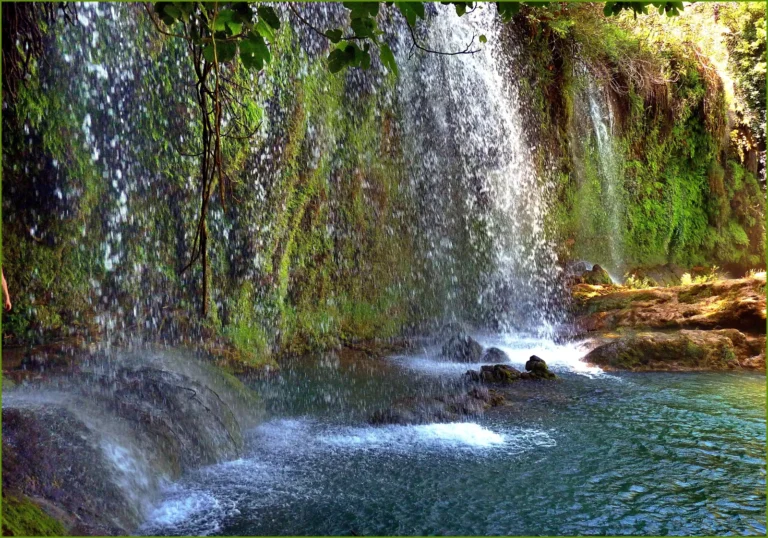
The waterfall itself drops approximately 18 meters into a gorge carved through the forest floor. The water — a tributary of the Aksu River, fed by karst springs in the Taurus foothills — falls over a travertine ledge into a deep pool, then flows through a series of smaller cascades and natural pools connected by a rocky streambed. The mineral content of the water deposits calcium carbonate on rocks, fallen branches, and vegetation, creating the characteristic pale, textured travertine formations that you see at Pamukkale on a grand scale. Here, the process is intimate — small-scale, close enough to touch, and happening visibly in the pools and along the stream edges.
The Nature Park
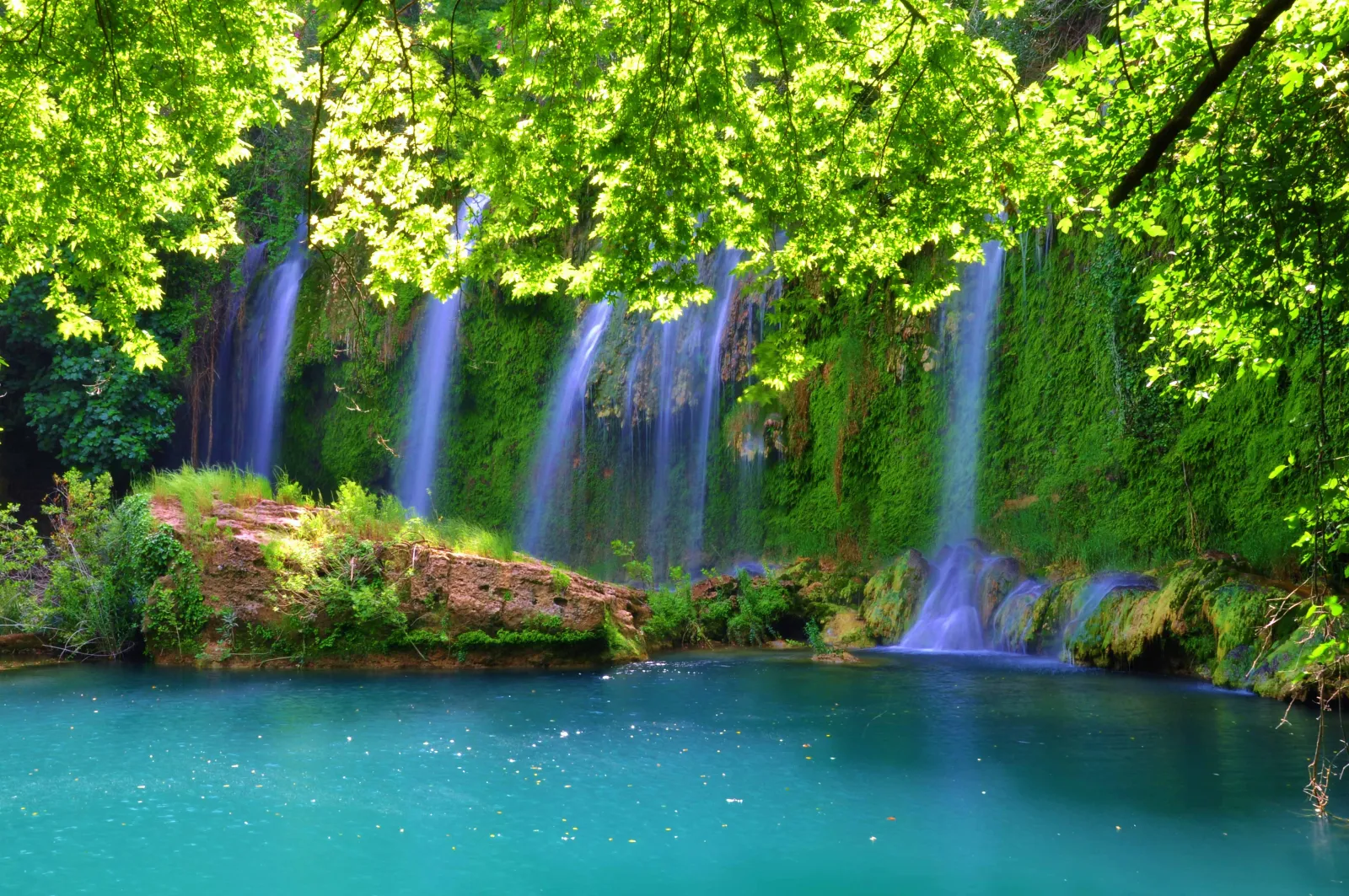
Kurşunlu Waterfall Nature Park (Kurşunlu Şelale Tabiat Parkı) is a managed nature park with maintained paths, benches, information signs, and a small entrance fee. The park covers roughly 33 hectares of pine and cedar forest along the gorge that the waterfall has carved. The paths are well-maintained and mostly flat or gently graded, with steps and railings at the steeper sections near the waterfall itself.
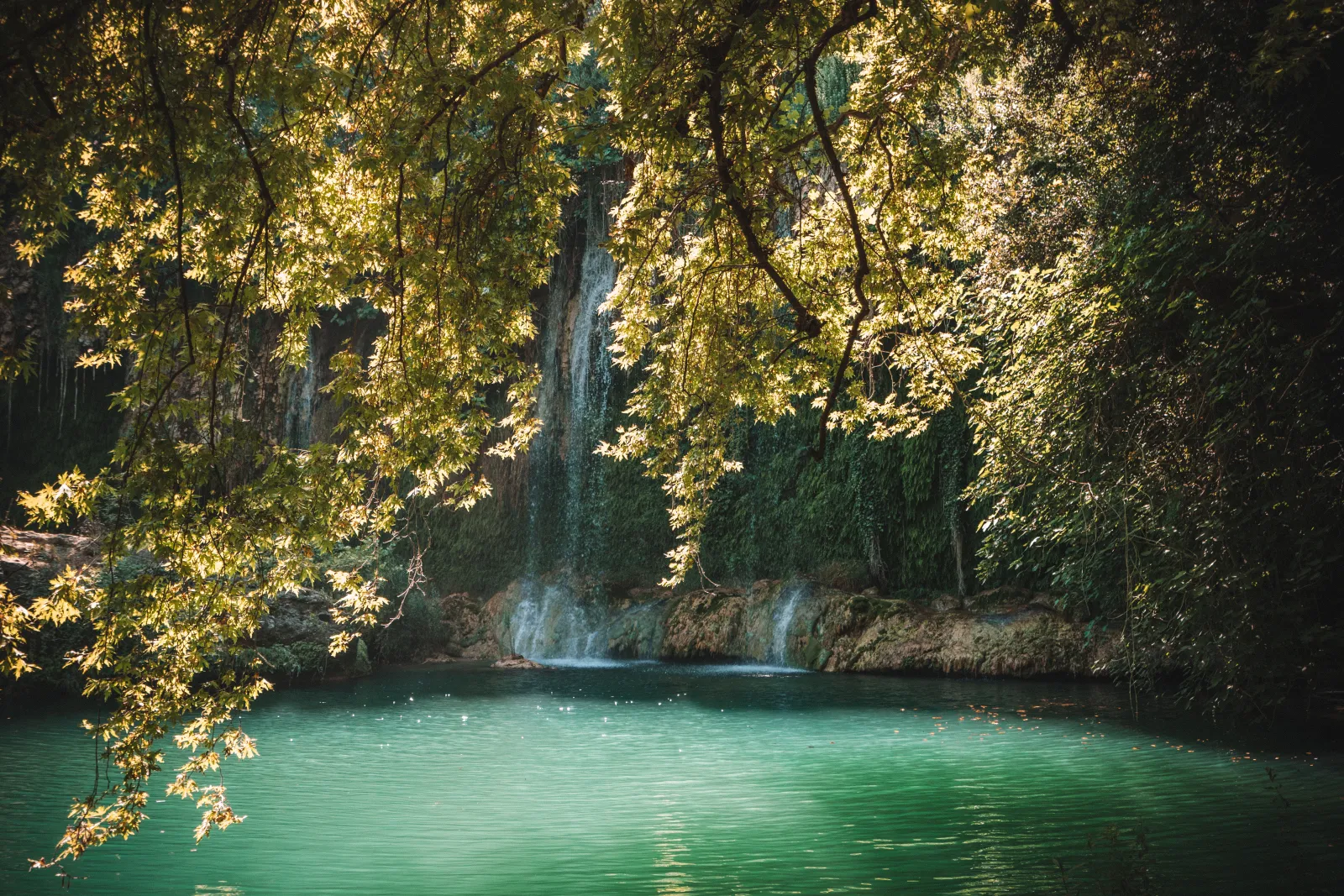
The main walking loop takes you from the entrance down through the forest to the top of the waterfall, then along the gorge to viewing platforms at various levels, and finally to the base of the falls where the main pool collects. The full circuit is about 2 kilometers and takes 30 to 45 minutes at a relaxed pace. It is not strenuous — the paths are suitable for most fitness levels, and the few steep sections have handrails.
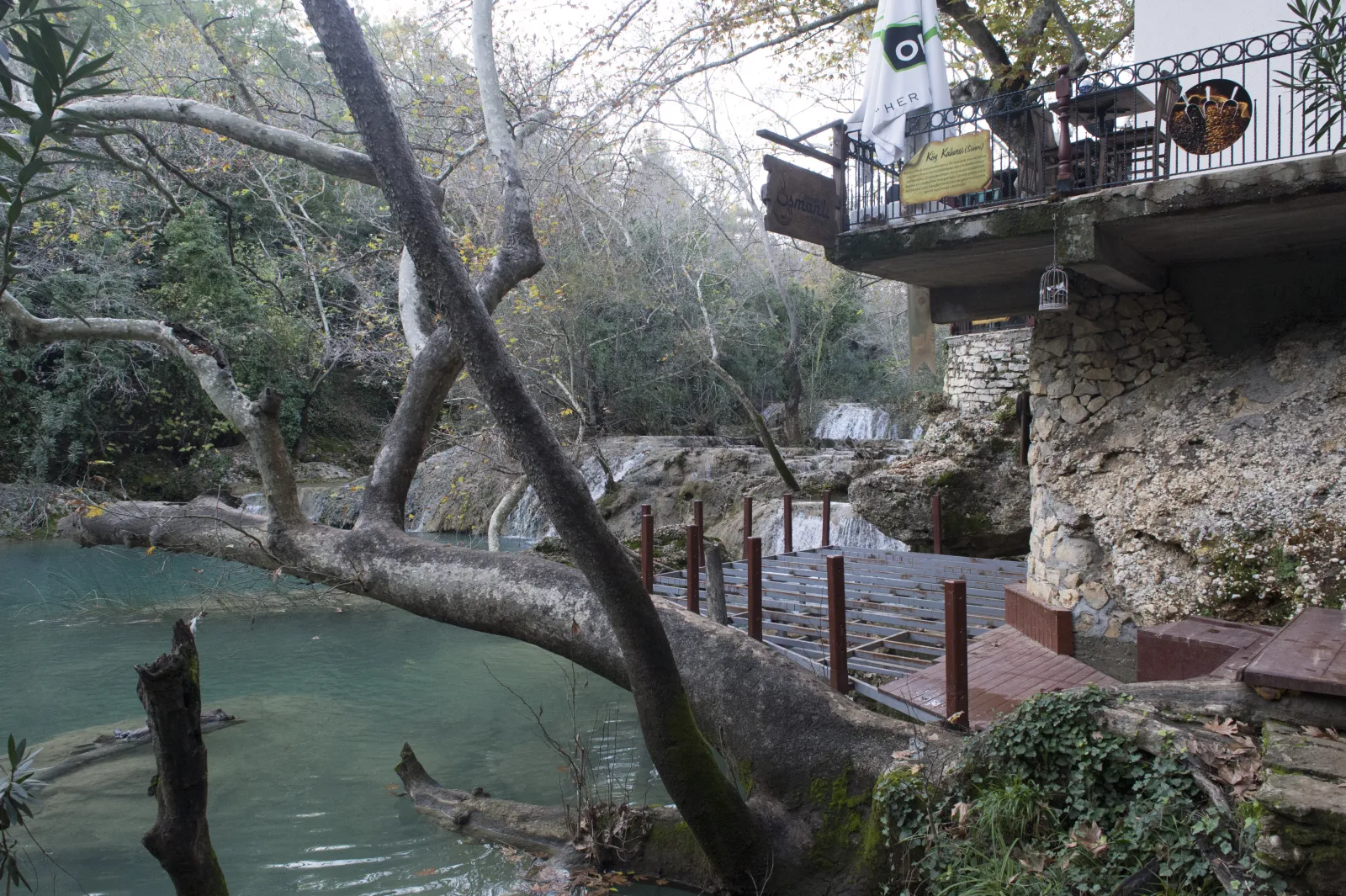
Along the way, you pass through forest that feels older and wilder than you might expect this close to a major city. Pine and cypress trees form a canopy overhead. The air is noticeably cooler in the gorge than on the road above — a welcome difference in Antalya’s hot summer months. Small bridges cross the stream at several points, and natural pools along the watercourse invite contemplation (swimming is not permitted in the main waterfall pool, but the cool air and the sound of water have their own restorative effect).
Wildlife and Vegetation
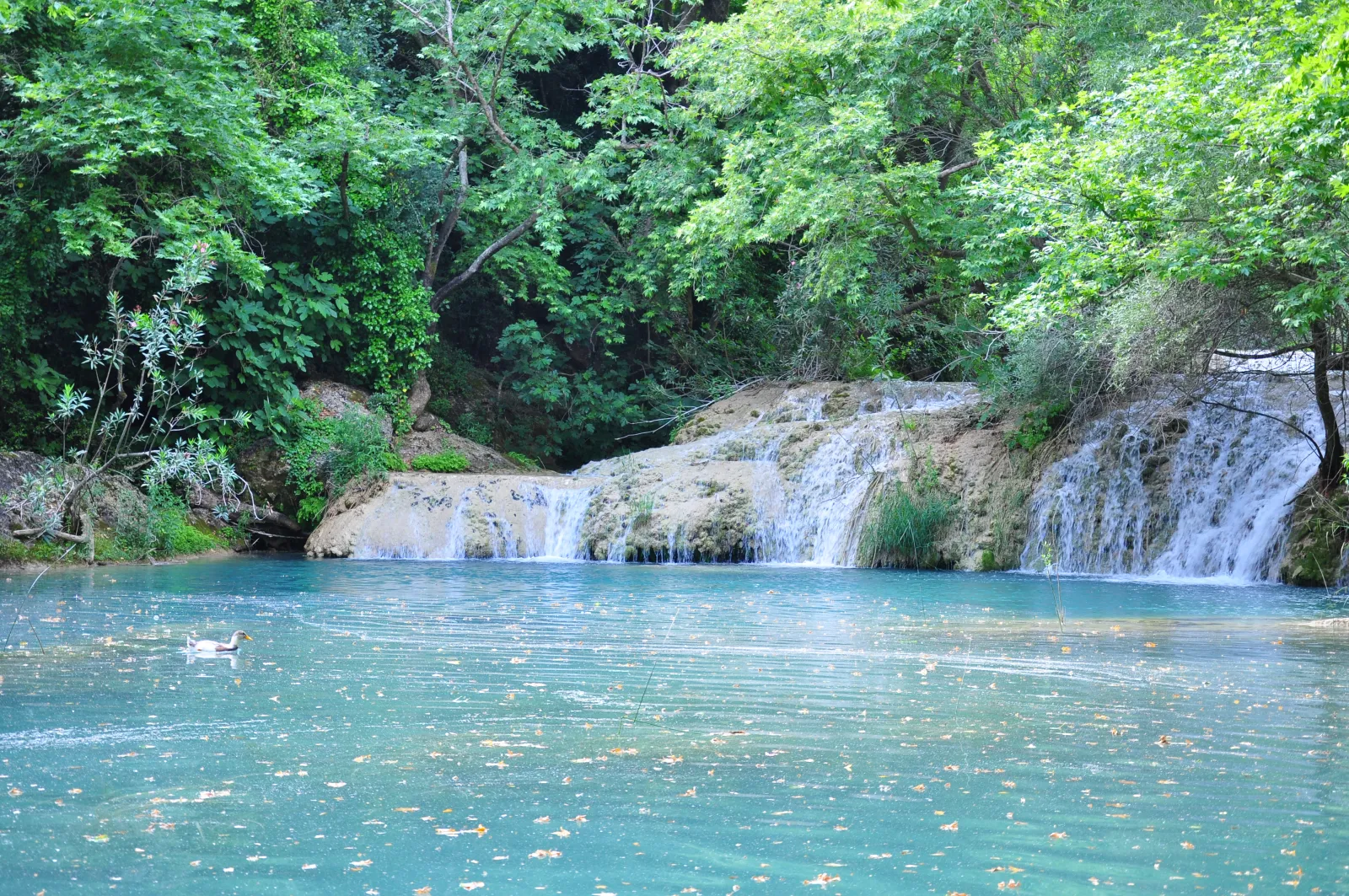
The park supports more biodiversity than its modest size might suggest. The combination of forest, flowing water, and rocky gorge creates microhabitats. Turtles are common in and around the pools — freshwater terrapins sunning themselves on rocks are one of the park’s quiet attractions. Ducks and other water birds frequent the stream. The forest is home to woodpeckers, jays, and smaller songbirds that you hear more than see in the canopy.
The vegetation in the gorge is lush — ferns, mosses, and trailing plants cling to the wet rock faces near the waterfall, creating a green vertical garden that contrasts with the drier pine forest above. In spring, wildflowers appear along the forest floor and the stream banks. The travertine deposits along the water create pale, textured surfaces covered in bright green moss — a combination of mineral and botanical processes that is quietly beautiful.
Why Kurşunlu Instead of Düden
The Düden Waterfalls are Antalya’s famous waterfalls, and they are genuinely worth visiting — particularly walking behind the Upper Düden and seeing the Lower Düden from the sea. But Düden’s popularity means crowds, especially during summer and on weekends. Kurşunlu offers a different proposition: a forest setting rather than a city park, a complete walking circuit rather than a single viewpoint, and a quieter atmosphere that lets you hear the water and the birds rather than other visitors.
The trade-off is that Kurşunlu’s waterfall is smaller and the journey from the city center is slightly longer. But if what you want from a waterfall visit is the feeling of being in nature — walking through forest, stopping by pools, watching turtles, breathing cooler air — Kurşunlu delivers that experience more fully than the more accessible Düden sites.
For visitors with children, Kurşunlu is particularly well-suited. The paths are manageable, the turtles and ducks provide natural entertainment, the park has picnic areas with tables and benches, and the overall scale — not too big, not too small — matches the attention span and energy of younger visitors.
Picnic Culture
Kurşunlu is a popular picnic destination for Antalya families, and the park is set up to accommodate this. Picnic tables and benches are scattered through the forest, some near the stream, others in clearings among the trees. On weekends and holidays, Turkish families arrive with baskets, blankets, and sometimes portable grills (in designated areas). The social atmosphere on these days is warm — food is shared, children run between the trees, and the waterfall is almost secondary to the gathering.
Visiting on a weekday, you get the quieter version. The picnic areas are mostly empty, the paths are yours, and the waterfall has the quality of a private discovery. Both versions have their appeal. When I plan an Antalya day for travelers who have already done the archaeological circuit, I often slot Kurşunlu in mid-morning on a weekday — you get the forest almost to yourself and enough time afterward for lunch in Kaleiçi.
Practical Information
Getting there: Kurşunlu Waterfall is 24km northeast of Antalya city center, about 30-35 minutes by car. Take the Antalya-Isparta highway (D685) and follow the signs for Kurşunlu Şelale. There is a parking area at the park entrance. Public transport options are limited — the most practical approach without a car is a taxi or a guided tour.
How much time: Allow 1 to 1.5 hours for the walking circuit, photography, and time by the pools. If you plan to picnic, add accordingly. The park is not large — you will not need a full day, but rushing through defeats the purpose.
When to go: Spring (March–May) for the strongest water flow and wildflowers. Summer is hotter but the forest canopy and gorge provide shade and cooler air. Weekdays are quieter than weekends. Early morning on any day gives you the most peaceful experience.
Official resource: Kurşunlu Nature Park — Ministry of Agriculture and Forestry
Combining with other visits: Kurşunlu is on the same side of Antalya as Perge (about 15 minutes apart by car). A morning at Perge followed by lunch and a walk at Kurşunlu makes a natural half-day pairing — ancient history and natural beauty, both northeast of the city. For visitors based in central Antalya, Kaleiçi and Hadrian’s Gate are natural afternoon additions.
Entrance fee: The nature park charges a small entrance fee (typically around 20-30 TL). Hours are generally sunrise to sunset, but check locally as they can shift seasonally.
Plan Your Antalya Visit
Kurşunlu is the kind of place that does not headline a trip but improves one — a forest walk, a waterfall, turtles in a pool, and an hour of quiet between busier visits. If you would like to include it in a day that balances history and nature around Antalya, tell us your interests and we will build the itinerary.